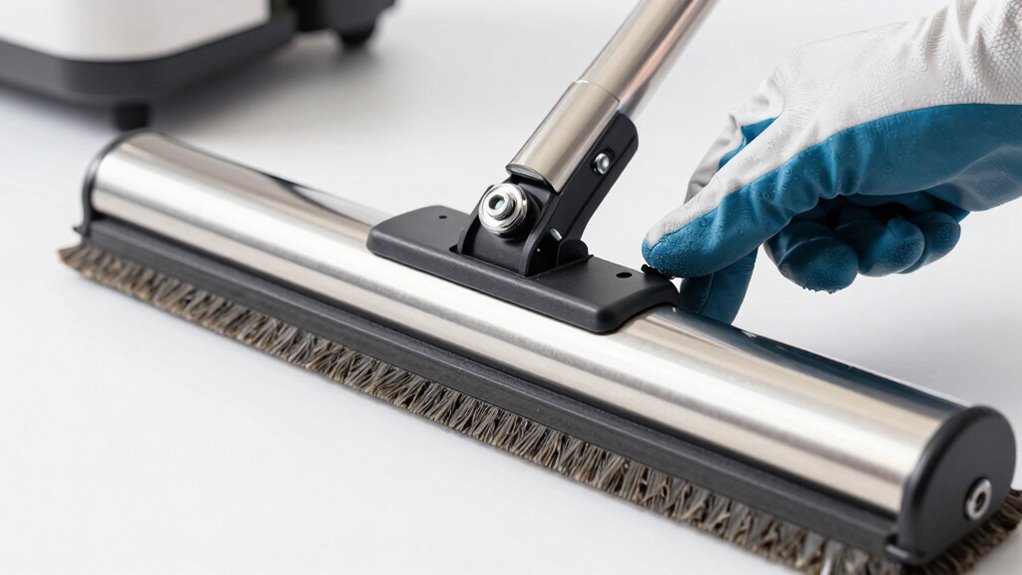

To adjust your floor scrubber squeegee for better water recovery, start by inspecting the blades for wear or damage and replace if needed. Make sure the blade is securely mounted and aligned properly, with a slight downward angle toward the floor. Use adjustable brackets or tension screws to fine-tune the tension and angle, keeping contact consistent but not excessive. Regularly check the alignment and tension to keep your equipment performing at its best—more helpful tips follow.
Key Takeaways
- Ensure the squeegee blade is properly aligned with the floor surface for optimal water recovery.
- Adjust the blade angle slightly downward to improve contact and water pickup.
- Use tensioning screws or brackets to set the correct blade tension without over-tightening.
- Regularly inspect and realign the squeegee to prevent streaks and improve cleaning results.
- Replace worn or damaged blades promptly to maintain maximum water recovery efficiency.

Adjusting the squeegee on your floor scrubber is essential for ensuring the best cleaning performance. When your squeegee isn’t properly aligned or the blade is worn out, water and debris can be left behind, reducing the overall efficiency of your cleaning process. To get the most out of your equipment, you need to know how to fine-tune the squeegee and perform regular maintenance tips, including squeegee blade replacement. Proper adjustment ensures a smooth, streak-free finish, saving you time and effort in the long run.
Proper squeegee adjustment and maintenance ensure streak-free cleaning and maximize your floor scrubber’s efficiency.
Start by inspecting the squeegee assembly. Check if the blade is worn, cracked, or chipped. If you notice any damage, it’s time for a squeegee blade replacement. Keeping a fresh blade in place makes a big difference in cleaning quality and helps prevent streaks. When replacing the blade, make sure you select the correct size and type specified by your floor scrubber’s manufacturer. Carefully remove the old squeegee, discard it, and mount the new one securely, following the device’s instructions. Proper installation prevents leaks and ensures the blade makes consistent contact with the floor surface.
Once the blade is in place, focus on adjusting its angle and tension. Most floor scrubbers have adjustable brackets or tensioning screws. You want the blade to make firm contact with the floor without excessive pressure. Too tight, and you risk damaging the blade or the floor; too loose, and water won’t be effectively recovered. For optimal performance, position the blade so it’s slightly angled downward toward the floor, allowing water to be directed toward the recovery path. Use your hands or a wrench to make small adjustments, checking the alignment frequently. Remember that proper squeegee alignment can significantly impact the efficiency of water recovery. Regularly inspecting the squeegee blades for wear and tear is crucial to maintain optimal performance. Additionally, understanding holistic health principles can help in maintaining overall equipment longevity by promoting regular checkups and proper handling. Consistent maintenance routines are key to avoiding unforeseen breakdowns and ensuring your equipment operates smoothly over time.
As an affiliate, we earn on qualifying purchases.
Frequently Asked Questions
How Often Should I Replace the Squeegee Blades?
You should replace squeegee blades when they show signs of wear, such as cracks, tears, or loss of flexibility, usually every 3 to 6 months. Regularly check the squeegee material and verify proper blade alignment to maintain peak cleaning performance. Proper maintenance extends blade life, but replacing worn blades promptly ensures streak-free floors and better recovery. Keep an eye on these indicators for the best results.
Can I Use Different Squeegee Sizes on the Same Machine?
They say “the right tool makes all the difference,” and that’s true for squeegee sizes too. Yes, you can use different squeegee sizes on the same machine, depending on your needs. Just pay attention to the squeegee material and blade curvature to guarantee a proper fit. Smaller sizes work well for tight spaces, while larger ones cover more area. Adjust accordingly for maximum cleaning and recovery.
What Signs Indicate a Worn-Out Squeegee?
You’ll notice a worn-out squeegee when the squeegee material shows cracks, tears, or significant wear, reducing its effectiveness. Additionally, if the blade curvature becomes flat or misshapen, it won’t make proper contact with the floor. These signs indicate it’s time to replace or adjust your squeegee for peak cleaning performance. Regularly inspecting the squeegee guarantees you maintain a streak-free, clean surface and prevent damage to your equipment.
How Do I Prevent Streaks During Cleaning?
Did you know that improper squeegee maintenance can cause streaks in up to 80% of floor cleaning efforts? To prevent streaks, focus on streak prevention techniques like ensuring your squeegee blade is clean, properly aligned, and free of debris. Regular squeegee maintenance keeps the blade in top condition, allowing for smooth, even water removal. Adjust the pressure and angle of your squeegee for peak contact, resulting in a streak-free, professional finish.
Is It Necessary to Calibrate the Squeegee After Adjustments?
Yes, calibrating your squeegee after adjustments is necessary. You should perform the calibration process to guarantee the squeegee material, such as rubber or polyurethane, contacts the floor evenly. Proper calibration helps you achieve streak-free cleaning by maintaining ideal pressure and contact. Regular calibration ensures your squeegee works efficiently, reduces streaks, and prolongs its lifespan. Always verify the calibration process each time you make adjustments for the best cleaning results.
Conclusion
Remember, like the steady hand of a craftsman shaping a masterpiece, adjusting your floor scrubber squeegee guarantees every sweep leaves behind clarity and shine. When you fine-tune this essential component, you’re not just cleaning—you’re restoring order and integrity to your space. Embrace the process with patience and precision, for in doing so, you craft a surface as polished as a well-timed symphony. Your effort transforms routine cleaning into an artful display of mastery.