To stop your floor scrubber recovery tanks from smelling, make certain you clean and rinse the tank thoroughly after each use with warm water and a mild cleaner. Dry the interior completely to prevent moisture and mold from forming. Consider improving tank design features for better drainage and airflow, and regularly inspect for buildup or damaged parts. Consistent maintenance, proper storage of cleaning solutions, and strategic use of disinfectants will keep odors at bay—there’s more to guarantee long-term freshness.

Get cleaning gear delivered free with Prime
- Fast, free delivery on millions of items
- Prime Video, Amazon Music and more included
- Member-only deals all year
Key Takeaways
- Regularly empty, rinse, and disinfect the tank to prevent residue buildup and foul odors.
- Ensure thorough drying and wiping of the tank interior after cleaning to eliminate moisture.
- Improve tank design with better drainage and ventilation to reduce trapped moisture and mold growth.
- Schedule routine deep cleaning and inspect seals and corners for hidden residues or mold.
- Store cleaning solutions properly and use deodorizing agents to maintain a fresh tank environment.
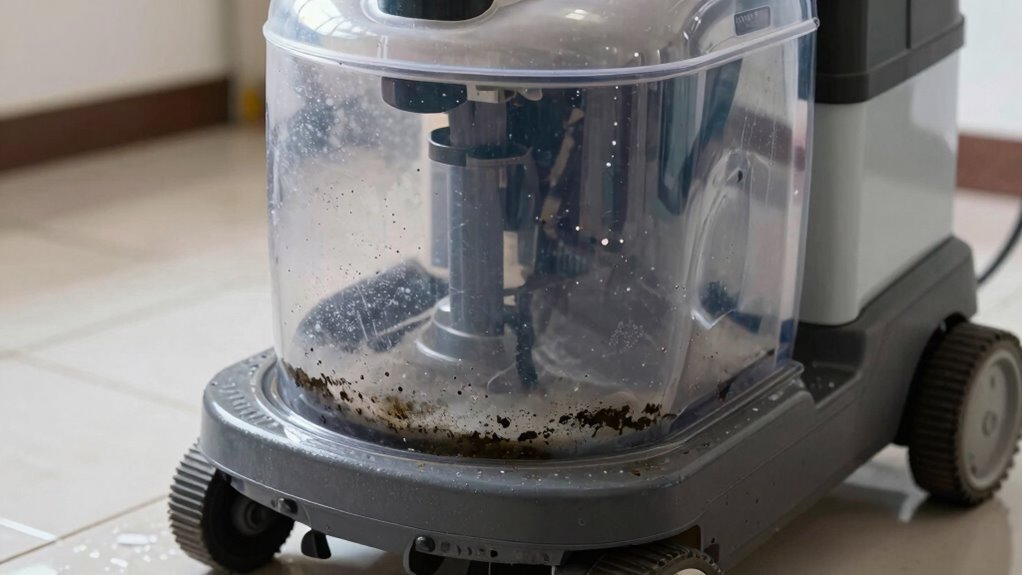
If your floor scrubber tanks start to develop unpleasant odors, it’s a sign that residue and bacteria are building up inside. These smells aren’t just annoying—they can also indicate that your equipment isn’t being properly cleaned, which could lead to hygiene issues and reduced cleaning efficiency. To prevent this, you need to focus on regular tank maintenance and using the right cleaning solutions.
Start by emptying and rinsing the tank thoroughly after each use. Residue from cleaning solutions, dirt, and grime can linger if not properly flushed out, creating an ideal environment for bacteria to grow. Use warm water and a mild, compatible cleaning solution to break down stubborn residues. Avoid harsh chemicals that might damage your equipment or leave behind residues that contribute to odors. Instead, opt for cleaning solutions specifically designed for floor scrubbers or general-purpose disinfectants that effectively eliminate bacteria and odors.
Once you’ve rinsed the tank, drain all remaining water and wipe down the interior with a clean cloth to remove any residual moisture. Moisture left inside the tank can promote bacterial growth and cause foul smells over time. For added freshness, you might consider adding a disinfectant or deodorizer designed for commercial cleaning equipment during the final rinse. This helps neutralize odors at the source and keeps your tank smelling clean longer. Additionally, understanding how bacterial growth occurs inside the tank can help you implement more effective cleaning routines. Implementing proper tank design features can also reduce the likelihood of odor buildup by improving drainage and airflow. Incorporating ventilation improvements can further help in minimizing trapped moisture, which is crucial for odor control.
Regular tank maintenance is essential. Set a routine schedule for deep cleaning, especially if you’re using the scrubber frequently. Periodically, disassemble and inspect the tank for any buildup or mold. Pay close attention to corners and seals where residue can hide. If you notice persistent odors despite cleaning, it might be worth checking the drainage system or replacing worn parts that can harbor bacteria.
Finally, keep your cleaning solutions stored in a cool, dry place to prevent contamination or spoilage. Proper storage ensures the solutions remain effective and won’t contribute to odors when used in your tank. Remember, consistent cleaning routines, proper use of cleaning solutions, and diligent tank maintenance are your best strategies for preventing foul smells. By doing so, you’ll extend the life of your equipment, maintain a hygienic environment, and guarantee your cleaning process remains efficient and odor-free.
Products Worth Considering

Arlo Ultra 4K HDR Wireless Security Camera (3rd Gen), 3-Camera Kit with SmartHub

Philips Hue Starter Kit with Bridge Pro and 4 Retrofit LED Recessed Downlights

Arlo Pro Wireless Security Camera, 2K HDR, 6th Gen, 4-Camera Kit
As an affiliate, we earn on qualifying purchases.
Frequently Asked Questions
Can Using Deodorizers Prevent Tank Odors?
Using deodorizers like air fresheners or odor absorbers can help prevent tank odors from becoming overwhelming. You should add these products regularly to neutralize smells before they build up. Air fresheners provide a pleasant scent, while odor absorbers trap and eliminate odors at the source. Combining these methods keeps your recovery tank smelling fresh, ensuring a cleaner, more pleasant environment during and after cleaning sessions.
How Often Should I Clean the Recovery Tank?
They say “an ounce of prevention is worth a pound of cure,” so it’s best to clean your recovery tank regularly. For effective odor prevention, clean the tank after every shift or at least weekly, depending on usage. Regular tank cleaning prevents buildup and odors, ensuring your equipment stays fresh and functional. Staying consistent with cleaning schedules helps you avoid unpleasant smells and keeps your workflow smooth.
Are There Natural Remedies for Tank Odor?
Yes, you can use plant-based solutions and essential oils to combat tank odors naturally. Fill the tank with warm water and add a few drops of essential oils like tea tree, eucalyptus, or lemon for their antimicrobial properties and fresh scent. You might also consider mixing in plant-based cleaning solutions to break down residues. Regularly cleaning and using these natural remedies can keep your recovery tank smelling fresh without harsh chemicals.
Does Tank Size Affect Smell Buildup?
Imagine your tank as a tiny, enclosed forest — the bigger it is, the more space for odors to linger and grow. Yes, tank size affects smell buildup; larger tanks demand better ventilation to prevent odor absorption. Proper tank ventilation allows fresh air to circulate, reducing trapped smells. Smaller tanks naturally resist odor accumulation, but regular cleaning and ventilation are key, regardless of size, to keep smells at bay and your workspace fresh.
Can Improper Disposal Cause Persistent Smells?
Yes, improper disposal can cause persistent smells. Chemical reactions from leftover cleaning solutions or waste buildup create odors that linger if not thoroughly cleaned or disposed of correctly. To prevent this, you should use proper ventilation techniques during and after cleaning to help dissipate fumes. Regularly empty and rinse the tank, ensuring no residues remain. Proper disposal and good ventilation are key to stopping persistent odors from developing in recovery tanks.
Conclusion
If you follow these simple steps, your floor scrubber recovery tanks will stay fresh and odor-free forever—no more terrifying stench that could wake the dead! Imagine a world where your cleaning equipment smells as good as a spring breeze, not like a swamp monster’s lair. Keep up with regular cleaning, use the right solutions, and stay vigilant. Say goodbye to foul smells and hello to a fresh, inviting workspace that’ll make everyone breathe a sigh of relief!