Choosing a green vacuum with a HEPA filter can make a real difference in your cleaning. HEPA filters capture tiny airborne allergens like pollen, pet dander, and dust mites, helping improve your indoor air quality and reduce allergy flare-ups. Green vacuums also focus on energy efficiency, saving you money and helping the environment. Combining these features, a HEPA-filtered green vacuum provides thorough cleaning with healthier air. Keep exploring to discover how these innovations can benefit your home.
Key Takeaways
- HEPA filters effectively trap tiny allergens, improving indoor air quality compared to standard filters.
- Green vacuums often combine HEPA filtration with energy-efficient technology for healthier, eco-friendly cleaning.
- Conventional vacuums may lack HEPA filters, allowing allergens to circulate and impacting respiratory health.
- HEPA filters enhance allergen control, reducing allergy symptoms and respiratory irritations.
- Energy-efficient green vacuums lower environmental impact while maintaining effective allergen removal.
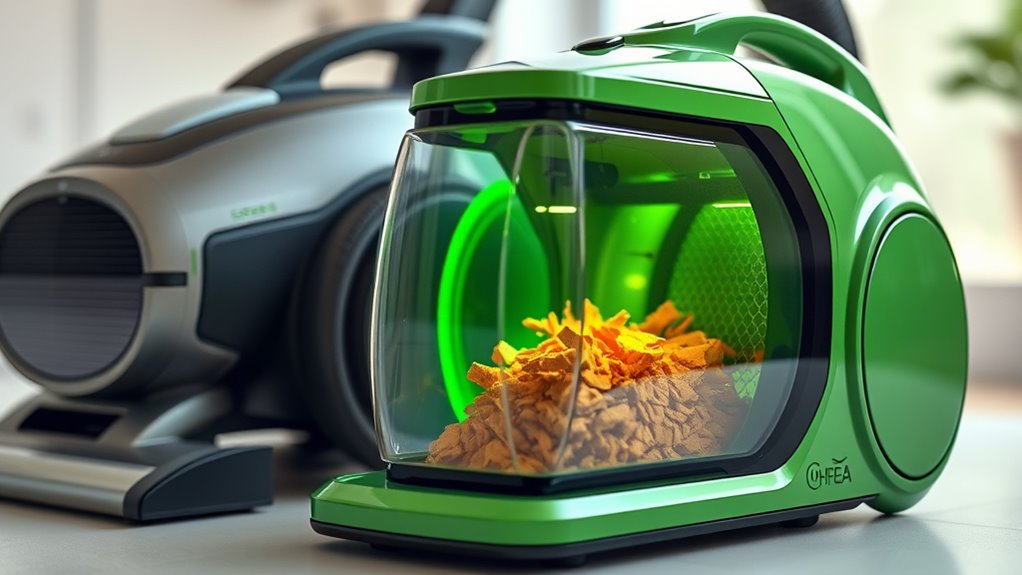
When choosing a vacuum cleaner, you might wonder whether a green, eco-friendly model or a conventional one is the better option. A key factor to weigh is how well the vacuum filters dust and allergens, especially if you or family members have allergies or respiratory issues. HEPA filtration plays a significant role here. HEPA filters are designed to trap tiny particles, including pollen, pet dander, and dust mites, which often escape standard filters. If maintaining a healthier indoor environment is a priority, opting for a vacuum with HEPA filtration makes a big difference. It guarantees airborne allergens are captured effectively, reducing the chances of respiratory irritation and allergy flare-ups.
In addition to filtration, energy efficiency is another critical aspect. Green vacuums tend to focus on reducing energy consumption, often boasting high energy efficiency ratings. They use advanced motor technology and design features that allow them to perform well while using less power. This means you can clean your home effectively without skyrocketing your electricity bill or contributing heavily to energy waste. Conventional vacuums may still be powerful, but they often consume more energy, especially older models. Choosing an eco-friendly vacuum with high energy efficiency not only benefits the environment but also saves you money in the long run.
Furthermore, advances in robotic vacuum technology have made cleaning even more convenient, allowing for consistent maintenance with minimal effort. When comparing green versus conventional vacuums, take into account how HEPA filtration and energy efficiency work together. A green vacuum equipped with HEPA filters provides you with a cleaner home and healthier air quality, all while minimizing your environmental impact. These models are designed to deliver powerful cleaning performance without the unnecessary energy drain, making them a smarter choice for eco-conscious consumers. Conventional vacuums may lack these features or prioritize power over efficiency, which can lead to higher energy bills and less effective allergen control.
Ultimately, the difference often lies in the details. A vacuum that combines HEPA filtration with energy-efficient technology offers a balanced approach — cleaning thoroughly while supporting your health and the planet. When you’re making your decision, think about your specific needs: Are you concerned about allergens? Do you want to lower your energy footprint? If so, a green vacuum with HEPA filtration and high energy efficiency can make a noticeable difference. Not only will you enjoy a cleaner home, but you’ll also contribute to a more sustainable environment.
Frequently Asked Questions
How Long Does a HEPA Filter Typically Last Before Needing Replacement?
You’re wondering about the filter lifespan and replacement frequency of a HEPA filter. Typically, HEPA filters last between 6 to 12 months, depending on usage and the environment. To maintain peak performance, you should check your vacuum’s recommendations and replace the filter when it looks dirty or clogged. Regular replacements ensure your vacuum continues to trap harmful particles effectively, keeping your home cleaner and healthier.
Are Green Vacuums as Powerful as Conventional Models?
Did you know green vacuums often match conventional models in power? You might wonder if filter efficiency affects their performance. In most cases, green vacuums are designed to be eco-friendly without sacrificing suction strength. While some may have slightly less power, many use advanced motors to stay competitive. Overall, the power comparison shows green vacuums can clean just as effectively, making them a smart, sustainable choice.
Do HEPA Filters Capture Viruses and Bacteria Effectively?
You might wonder if HEPA filters effectively capture airborne pathogens like viruses and bacteria. The truth is, HEPA filters are highly efficient, trapping particles as small as 0.3 microns, including many airborne pathogens. Their filter efficiency guarantees that harmful microbes are removed from the air you breathe, making them a great choice for improving indoor air quality and reducing health risks associated with airborne contaminants.
What Is the Environmental Impact of Disposing HEPA Filters?
When you dispose of HEPA filters, you face recycling challenges because they often contain trapped pollutants that complicate recycling efforts. Additionally, filter manufacturing uses materials like fiberglass and pleated media, which can be environmentally taxing. Proper disposal and recycling help reduce environmental impact, but the process isn’t always straightforward. Being mindful of these factors encourages more sustainable choices when replacing or discarding your HEPA filters.
Can a HEPA Filter Improve Indoor Air Quality Significantly?
Imagine you’re in the 1800s with a dusty carriage—now, modern air purification with HEPA filters can dramatically improve your indoor air quality. Yes, a HEPA filter substantially filters out allergens, dust, and pollen, offering allergy relief and cleaner air. This advanced technology traps tiny particles that standard filters miss, making your indoor environment healthier. So, investing in a HEPA-equipped vacuum really does make a noticeable difference for your air quality.
Conclusion
Switching to a vacuum with a HEPA filter can considerably improve indoor air quality, especially if you suffer from allergies. Did you know that HEPA filters can trap 99.97% of particles as small as 0.3 microns? That means fewer allergens and pollutants circulating in your home. So, investing in a green vacuum with a HEPA filter isn’t just eco-friendly; it’s a smart choice for healthier living. Make the switch and breathe easier today!