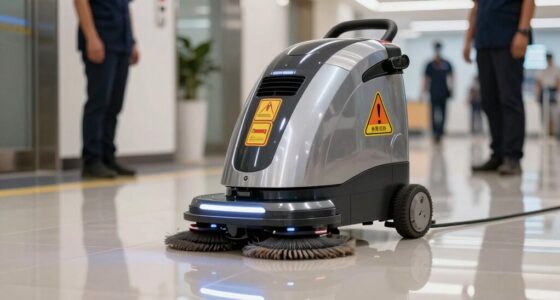
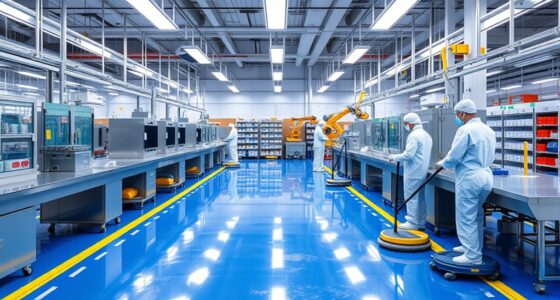
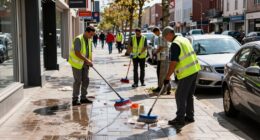
Implementing boot washers and shoe sanitizers at your entryway is key to keeping floors cleaner and preventing contamination. These systems are designed for heavy-duty use, efficiently removing dirt, mud, and germs before they spread further. When integrated into your routine, they help eliminate risks to health and maintain hygiene standards. Properly operated and maintained, they protect your workspace and floors. Keep going to discover how to optimize these entryway setups for maximum effectiveness.
Key Takeaways
- Properly installed boot washers and sanitizers create an effective entryway system to remove dirt and germs before entering clean zones.
- Using industrial-grade equipment ensures thorough cleaning and sanitization, reducing floor contamination and cross-contamination risks.
- Integrating boot washers into standard protocols and staff training maintains high hygiene standards consistently.
- Regular maintenance and sanitizer replenishment keep equipment functioning optimally and ensure maximum cleanliness.
- A well-designed entryway promotes safer, cleaner environments, minimizing contamination and enhancing overall operational safety.

Keeping your boots and shoes clean is crucial for maintaining hygiene and preventing the spread of germs, especially in environments like farms, laboratories, or food processing plants. Implementing effective boot washers and shoe sanitizers at entry points is a practical way to guarantee that contaminated footwear doesn’t compromise your clean workspace. These systems serve as the first line of defense, reducing the risk of cross-contamination and safeguarding both your staff and your operations.
When you choose boot washers and shoe sanitizers, you need to contemplate industrial equipment designed specifically for heavy-duty use. Quality equipment ensures durability, ease of use, and reliable cleaning performance. Industrial-grade systems often feature powerful brushes, jets, or scrubbing mechanisms that remove dirt, mud, and organic matter from footwear, preparing them for the sanitizing phase. By integrating these systems into your entryway, you establish a controlled process aligned with your cleaning protocols, which are critical in environments where contamination control is non-negotiable.
Your cleaning protocols should clearly specify how footwear is to be cleaned before entering sensitive areas. These protocols might include steps like removing excess soil, using designated boot washers, and applying shoe sanitizers. When you follow these guidelines consistently, you help maintain a high standard of hygiene and reduce the likelihood of spreading bacteria, viruses, or other pathogens. Properly maintained boot washers should be regularly inspected and cleaned to prevent bacterial buildup, and sanitizers should be replenished as needed to guarantee maximum efficacy.
Training staff on the correct operation of these systems is essential. You want everyone to understand how to properly step into the washers, how long to leave their shoes in the sanitizers, and how to handle the equipment correctly. This not only maximizes cleaning efficiency but also prolongs the lifespan of your industrial equipment. Additionally, establishing a routine maintenance schedule helps ensure that your boot washers and shoe sanitizers function at their best, preventing breakdowns that could compromise hygiene standards.
Investing in well-designed entryway systems for footwear sanitation is a proactive step toward safeguarding your environment. When you integrate industrial equipment that aligns with your cleaning protocols, you create a seamless process that promotes cleanliness, safety, and compliance. This setup minimizes the risk of contamination, keeps your floors cleaner, and reinforces your commitment to high standards of hygiene. Ultimately, a thoughtful approach to footwear sanitation can make a significant difference in maintaining a healthy, safe workspace.
A comprehensive cleaning process with proper sanitation protocols further enhances the effectiveness of your entryway setup.

MDS47123605 Washer Door Boot Gasket Oem Rubber Seal Replacement for LG WM3470HVA WM3470HWA WM3570HVA WM3770HWA WM3370HWA WM3575CV series by Techecook
【MDS47123605 WASHER DOOR BOOT SEAL GASKET】MDS47123605 Door Boot Seal is the crucial of maintaining the efficiency of washer….
As an affiliate, we earn on qualifying purchases.
As an affiliate, we earn on qualifying purchases.
Frequently Asked Questions
How Often Should I Clean My Boot Washer?
You should clean your boot washer weekly to maintain ideal cleaning effectiveness. Follow the usage guidelines to guarantee it functions properly and stays hygienic. Regular cleaning prevents buildup of dirt and bacteria, which could reduce its efficiency. If you notice heavy dirt or any odors, increase cleaning frequency accordingly. Consistent maintenance keeps your entryway cleaner and extends the lifespan of your boot washer, making it a reliable part of your sanitation routine.
Are Shoe Sanitizers Safe for All Shoe Types?
Imagine a healthcare worker using a shoe sanitizer that’s safe for rubber boots but damages leather shoes. Shoe sanitizers are generally safe for many shoe types, but you must check the product’s shoe material safety. Effectiveness varies, so choose a sanitizer compatible with your shoes to prevent damage. Always read labels and test on a small area first, ensuring both safety and sanitizer effectiveness for different shoe materials.
Can Boot Washers Be Used Outdoors?
Yes, you can use boot washers outdoors if they’re designed for outdoor durability and weather resistance. Look for models made with sturdy, rust-proof materials like stainless steel or heavy-duty plastics. These features guarantee your boot washer can withstand rain, snow, and dirt without rusting or breaking down. Proper outdoor use keeps your shoes clean and prevents mud and debris from tracking inside, maintaining a tidy, safe entryway.
What Maintenance Is Required for Shoe Sanitizers?
Did you know that regular maintenance enhances shoe sanitizer effectiveness by up to 30%? To keep your shoe sanitizer working well, clean its surface weekly and check the disinfectant levels regularly. For boot washer durability, inspect and tighten any loose parts monthly, and replace worn brushes or nozzles as needed. Proper upkeep guarantees peak sanitation and extends the lifespan of your equipment, maintaining a cleaner, safer entryway.
Are There Eco-Friendly Options Available?
Yes, eco-friendly options are available. You can choose shoe sanitizers that use biodegradable solutions and plant-based disinfectants, which are safer for the environment and effective against germs. These alternatives diminish chemical runoff and harmful impacts, making them ideal for sustainable setups. By opting for eco-friendly disinfectants, you support greener practices while maintaining a clean, safe entryway. Always check product labels to guarantee they meet eco-conscious standards.

2 in 1 Disinfecting Sanitizing Floor Entrance Doormats, Wet Dry Shoe Mat, Disinfection Entry Rug Shoe Sanitizer, Indoor Outdoor Rug, Shoe Sole Cleaning Mat (Grey – 17×31 inch)
It can be a Shoe bottom cleaning machine for keeping your floor clean.
As an affiliate, we earn on qualifying purchases.
As an affiliate, we earn on qualifying purchases.
Conclusion
By adding boot washers and shoe sanitizers to your entryway, you create a fortress against dirt and germs. Think of it as a shield protecting your home’s cleanliness and your loved ones’ health. Don’t wait for grime to take hold—act now and turn your entryway into a clean, safe sanctuary. Remember, a spotless home begins at the door, where small steps can lead to big cleanliness!

Shoe MGK Starter Shoe Cleaner Kit – Shoe Cleaner & Conditioner for All Shoes, Premium Shoe Brush
Elevate your Footwear Care: Introducing the Shoe MGK 4oz. Starter Shoe Cleaning Kit, your essential companion for maintaining…
As an affiliate, we earn on qualifying purchases.
As an affiliate, we earn on qualifying purchases.

Boot and Shoe Cleaner Scrubber Brush Scraper Mat for Home Entryways, Mud Room, and Garages By Stalwart (Doormats for Removing Dirt, Mud, and Grass)
GREAT FOR YEAR ROUND USE – Keep interior floors and carpet clean by preventing outdoor grass, dirt, mud,…
As an affiliate, we earn on qualifying purchases.
As an affiliate, we earn on qualifying purchases.