
To decode eco labels, look beyond the logo and check the certification details and standards behind them. Understand what criteria the label meets, such as responsible sourcing, environmental impact, or fair labor practices. Recognize that not all labels have the same credibility, so researching the issuing organization helps you judge their trustworthiness. By understanding these certifications, you can make more responsible shopping choices, and if you keep exploring, you’ll discover ways to support truly sustainable brands.
Key Takeaways
- Understand the certification standards and criteria behind each eco label for accurate interpretation.
- Research the issuing organization to assess the credibility and rigor of the certification.
- Read accompanying product information to grasp the scope of sustainability, social, or environmental commitments.
- Recognize that not all labels have equal standards; prioritize those with transparent, third-party verification.
- Use eco labels as a guide to support responsible brands committed to genuine sustainability and ethical practices.
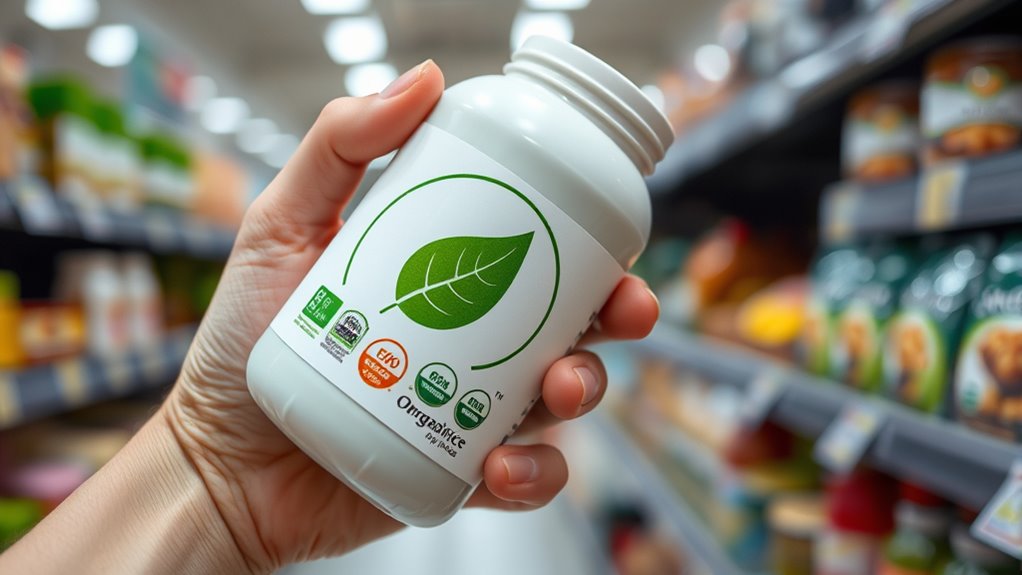
Have you ever wondered what those eco labels on products really mean? It’s easy to see a logo or badge and assume it guarantees something good for the environment, but understanding what’s behind these certifications can be a bit tricky. Eco labels are designed to communicate that a product meets specific standards, often related to sustainability, ethical sourcing, or environmental impact. To truly grasp their significance, you need to look at what the certifications stand for, especially focusing on sustainable sourcing and certification standards.
Eco labels indicate product standards but require understanding of their sustainability and certification details.
Sustainable sourcing is at the core of many eco labels. When a product bears a certification, it often means the raw materials were obtained responsibly, respecting ecosystems, local communities, and biodiversity. For example, sustainable sourcing ensures that forests aren’t overharvested or that fisheries aren’t depleting fish populations. It’s about making sure that natural resources are used efficiently and ethically, without causing long-term damage. By choosing products with these labels, you’re supporting companies that prioritize responsible procurement practices. But not all labels are created equal. Some focus solely on environmental impact, while others also consider social and economic factors.
That’s where certification standards come into play. These standards set the criteria a product must meet to earn an eco label. They are developed by independent organizations or industry groups that establish clear benchmarks for environmental performance, social responsibility, and transparency. For example, a certification might require a product to be free from harmful chemicals, produced with renewable energy, or sourced from farms that follow fair labor practices. When you see these labels, it’s essential to understand which organization issued them and what their standards entail. Certification standards vary widely, and some are more rigorous than others, so it’s worth doing a little research to know exactly what you’re supporting.
In essence, eco labels are useful tools for consumers who want to make informed choices. They serve as a shorthand for broader commitments—commitments to sustainable sourcing, environmental protection, and social responsibility. But don’t just rely on the label alone; take a moment to read the accompanying information. Look for details about the certification standards and the sourcing practices behind the product. Doing so empowers you to support brands that genuinely prioritize sustainability and ethical practices, making your purchasing decisions more impactful. Recognizing what certification standards involve can help you distinguish truly responsible products from those with only superficial claims. In the end, understanding these labels helps you contribute to a more sustainable world, one purchase at a time.

OxiClean White Revive Laundry Whitener & Stain Remover Power Paks, 24 Count
- Package Quantity: 24 Power Paks
- Effective Whitening: Whitens whites 40% better
- Oxygen-Based Formula: Water-activated bleach alternative
As an affiliate, we earn on qualifying purchases.
Frequently Asked Questions
How Do Eco Labels Impact Product Pricing?
Eco labels often lead to higher product prices because they build consumer trust in sustainability claims. When you see eco certifications, you’re more likely to pay a premium, as brands use these labels for price differentiation. This allows companies to justify increased costs, knowing that environmentally conscious consumers value verified eco-friendly practices. Ultimately, eco labels influence pricing strategies by highlighting product integrity and attracting buyers willing to invest in sustainable options.
Are Eco Labels Universally Recognized Across Countries?
Eco labels aren’t universally recognized across countries due to limited cross-country recognition and varying label standardization. You might find that a certification in one nation isn’t accepted elsewhere, making it tricky to compare products globally. To address this, look for internationally recognized eco labels or check if local labels follow global standards. This helps guarantee you’re making sustainable choices, regardless of where you shop.
Can Eco Labels Guarantee Complete Environmental Sustainability?
Think of eco labels like a compass guiding you, but they aren’t foolproof. They can’t guarantee complete environmental sustainability because greenwashing concerns still exist, and some labels may be misleading. As a consumer, your trust depends on researching credible certifications. Always look for well-known, transparent labels to avoid false claims and make more informed, eco-friendly choices. Remember, labels are helpful, but they aren’t the full story.
How Often Are Eco Certification Standards Updated?
Eco certification standards are typically updated through renewal processes initiated by certification bodies. These bodies regularly review and revise their criteria to keep up with new environmental insights and industry changes. You should check the specific certification body’s website for updates, as renewal periods vary. Staying informed guarantees your eco labels remain valid and trustworthy, helping you make more sustainable choices based on the latest standards.
Do Eco Labels Consider Social and Ethical Factors?
Eco labels often consider social responsibility and ethical sourcing, ensuring companies meet certain ethical standards. When you see these labels, it indicates the product was produced with fair labor practices, ethical sourcing, and social responsibility in mind. This means the company values workers’ rights and sustainable community development. By choosing products with these eco labels, you support brands that prioritize ethical sourcing and social responsibility, making a positive impact beyond environmental concerns.
Conclusion
By understanding eco labels, you hold the key to steering a forest of certifications, turning complexity into clarity. These labels are your compass, guiding you through the tangled underbrush of green promises toward genuine sustainability. As you decode their symbols, you become a savvy explorer, wielding knowledge like a lantern that illuminates true environmental efforts. Embrace this power, and watch your choices blossom into a garden of genuine eco-consciousness—where every decision roots in trust and integrity.