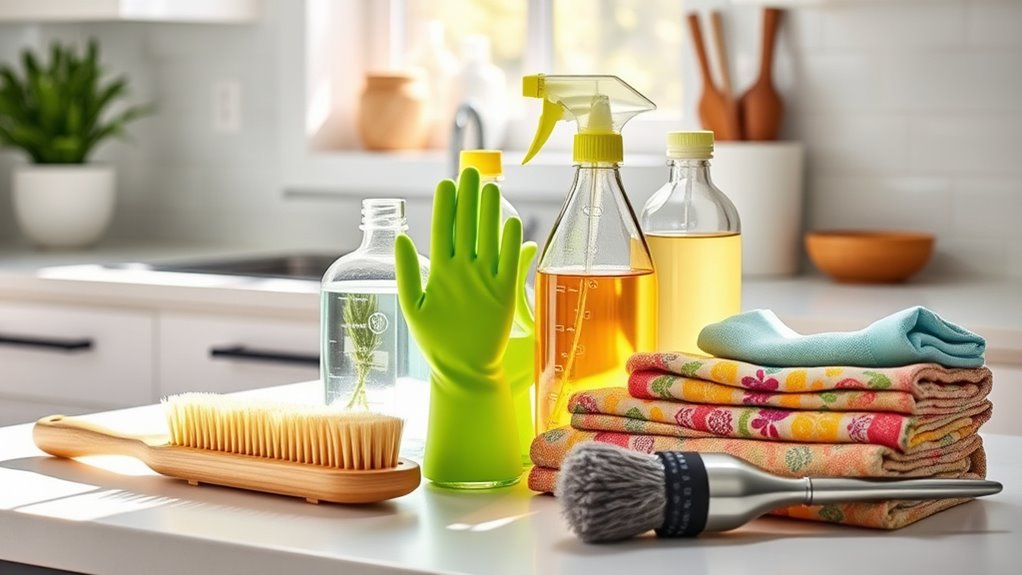

Switching to reusable cleaning tools helps you reduce waste and lower your environmental impact. Swap disposable paper towels for washable cloths, use bamboo or wooden brushes instead of plastic scrubbers, and opt for refillable spray bottles with eco-friendly cleaners. Concentrated products and biodegradable materials further lessen your footprint. Incorporating these sustainable practices makes your cleaning routine more eco-conscious. Keep exploring to discover how small changes can make a big difference for the planet.
Key Takeaways
- Reusable microfiber cloths effectively replace paper towels, reducing waste and chemical use.
- Bamboo or wooden scrub brushes serve as eco-friendly alternatives to plastic disposables.
- Refillable spray bottles and concentrated cleaners minimize packaging waste and shipping impacts.
- Washable rags and cloths can be reused multiple times, cutting landfill contributions.
- Sustainably sourced tools support eco-conscious routines that align with wellness and environmental goals.
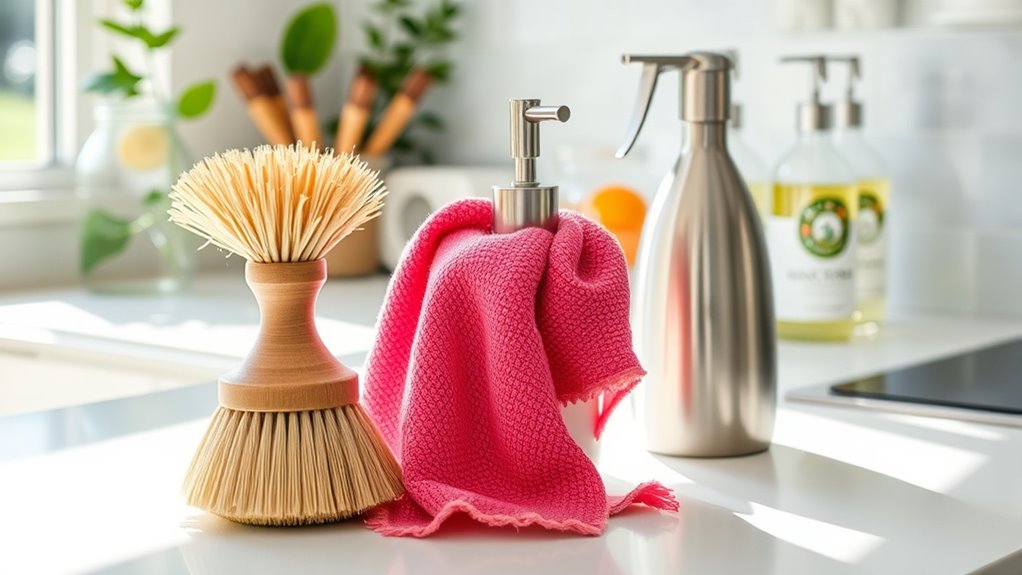
Have you ever wondered if your cleaning routine could be more eco-friendly? Making small changes can have a big impact, especially when it comes to switching from disposable to reusable items. Using eco friendly materials is a smart way to reduce waste and lessen your environmental footprint. Instead of relying on single-use sponges, paper towels, or wipes, you can opt for durable, reusable cleaning tools that serve the same purpose but last much longer. For example, microfiber cloths are an excellent choice because they are made from synthetic fibers designed for repeated use, yet they require less water and fewer cleaning chemicals to do the job effectively. When you choose these kinds of materials, you’re not only cutting down on waste but also limiting the demand for resource-intensive products. Additionally, incorporating vibrational alignment techniques—such as setting a positive intention or feeling gratitude—can make your sustainable cleaning efforts feel more fulfilling and aligned with your overall wellness goals.
Waste reduction techniques play an essential role in making your cleaning routine more sustainable. Instead of tossing out paper towels after each use, consider switching to washable cloths or rags. They can be used multiple times, washed, and reused, dramatically decreasing the amount of waste you generate. Additionally, replacing disposable scrub brushes with bamboo or wooden-handled brushes can help you cut down on plastic waste. These materials are biodegradable and often sourced sustainably, making them a better choice for the environment. By incorporating these reusable items into your cleaning arsenal, you’re actively reducing the volume of trash that ends up in landfills.
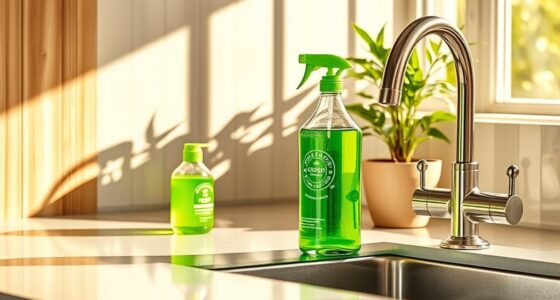
Another effective waste reduction technique is to invest in refillable cleaning bottles rather than purchasing new spray containers each time your cleaner runs out. Fill them with homemade or eco-conscious cleaning solutions, which often contain fewer harmful chemicals and are cheaper in the long run. This not only reduces plastic waste but also minimizes the number of packaging materials you throw away. Additionally, opting for concentrated cleaning products that require dilution means fewer packaging materials and less shipping energy. All of these small adjustments, when combined, profoundly decrease your ecological impact and promote a more sustainable lifestyle.
reusable microfiber cleaning cloths
As an affiliate, we earn on qualifying purchases.
As an affiliate, we earn on qualifying purchases.
Frequently Asked Questions
How Long Do Reusable Cleaning Tools Typically Last?
Reusable cleaning tools’ durability varies based on material and usage, but generally, they last several months to years. To determine their lifespan, you should look at durability testing results and lifespan estimation from manufacturers. Proper care, like regular cleaning and avoiding harsh chemicals, can extend their life. With good maintenance, your reusable tools can serve you well for a long time, making them a smart eco-friendly choice.
Are Reusable Cleaning Products Safe for Sensitive Skin?
Reusable cleaning products can be safe for sensitive skin, especially if you choose items made from hypoallergenic materials and chemical-free options. These materials reduce irritation and avoid harsh chemicals often found in disposable cleaners. Always check labels to ensure they’re free from fragrances and dyes. By selecting gentle, eco-friendly options, you can clean effectively without compromising your skin’s health or the environment.
Can Reusable Items Effectively Replace All Disposable Cleaning Supplies?
You can definitely replace most disposable cleaning supplies with reusable items, but it depends. Reusable tools like cloths and brushes eliminate single-use plastics and reduce waste. They’re effective at cleaning when paired with eco-friendly cleaning chemicals. However, some disposables are designed for specific tasks or hygiene reasons, so you might need a mix of reusable and disposable items. Overall, with proper care, reusable tools can greatly cut down waste and environmental impact.
What Is the Best Way to Clean and Maintain Reusable Tools?
Imagine your trusty reusable sponge as a superhero in disguise—dirty and tired after a tough battle. To keep it fighting fit, you need a solid cleaning routine. Rinse thoroughly after each use, squeeze out excess water, and air-dry completely to prolong tool longevity. Occasionally, soak it in vinegar or bleach for deep cleaning. This simple routine guarantees your reusable tools stay effective, saving you money and the environment!
Are There Any Environmental Drawbacks to Reusable Cleaning Tools?
You might wonder if reusable cleaning tools have environmental drawbacks. While they reduce waste, consider their chemical safety—using harsh cleaners can harm ecosystems. Also, they can require more water for thorough cleaning and maintenance. However, when you choose eco-friendly cleaning products and wash them efficiently, you minimize water usage and chemical impact. Overall, reusable tools are more sustainable if you manage their cleaning carefully and prioritize safe, water-efficient practices.
Conclusion
Switching to reusable cleaning tools not only helps the environment but also saves you money over time. Yes, at first, it might seem inconvenient, but once you get into the habit, you’ll appreciate the reduced waste and effort. Plus, many reusable items work just as well as disposables, if not better. So, give it a try—you’ll make a positive impact without sacrificing convenience, and your cleaning routine will become more sustainable and eco-friendly.