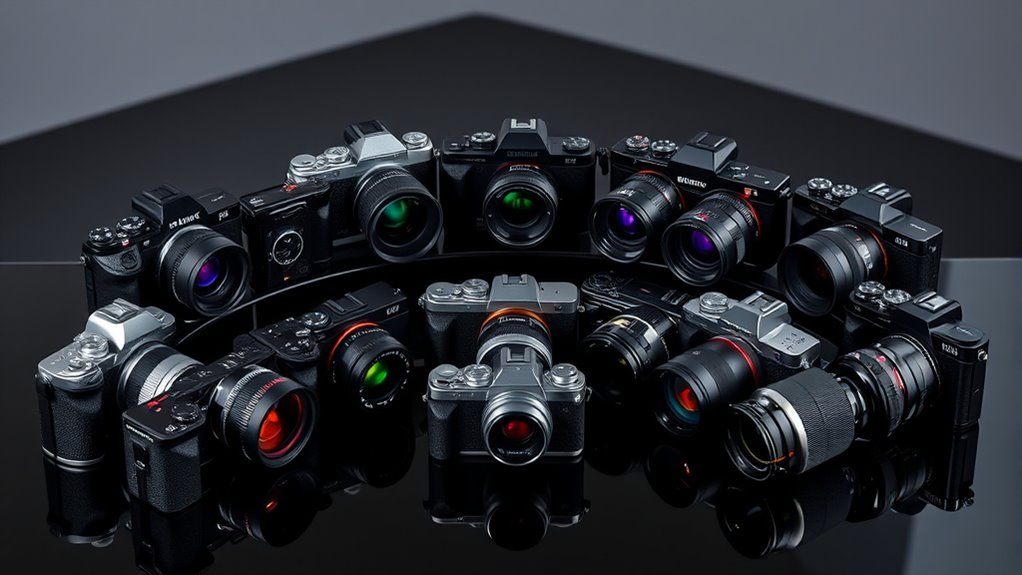

Choosing the right mirrorless camera as a creator involves balancing features like video quality, ease of use, and versatility. The Sony a6700 stands out as the best overall pick for its excellent autofocus and compact design, ideal for on-the-go shooting. The Canon EOS R50 V offers a user-friendly experience perfect for beginners, while the Sony Alpha 7 IV provides professional-grade image quality for more advanced creators. Each option involves tradeoffs: higher-end models bring better performance but at a higher cost, while entry-level options sacrifice some features for affordability. Keep reading for a detailed breakdown of these cameras and what makes each suitable for different creator needs.

Get cleaning gear delivered free with Prime
- Fast, free delivery on millions of items
- Prime Video, Amazon Music and more included
- Member-only deals all year
Complete the kit


Key Takeaways
- Top performers balance video features with ease of use, making them suitable for a wide range of creators.
- Compact models like the Sony ZV-E10 excel for vlogging and mobile content creation, but may lack advanced controls.
- Full-frame options like the Sony Alpha 7 IV deliver superior image quality but come with higher price tags and larger bodies.
- Entry-level cameras such as the Canon EOS R50 provide great value but may have limitations in low-light performance and lens options.
- Choosing the right camera depends heavily on your primary content type, budget, and experience level.
| Sony a6700 Mirrorless Vlogger Camera with 16-50mm Lens & Tripod Bundle |  | Best for Video Creators Seeking Versatility | Lens: 16-50mm II Power Zoom | Video Recording: UHD 4K at 120p, Full HD at 240p | Autofocus: Real-Time Tracking with 759-point phase detection | VIEW ON AMAZON | See Our Full Breakdown |
| Canon EOS R50 V Mirrorless Camera (Body Only) |  | Best for Creators Building a Custom Lens Kit | Sensor: 24.2 MP APS-C CMOS | Processor: DIGIC X | Video Recording: Up to 4K 59.94p, 4K 29.97p full-width | VIEW ON AMAZON | See Our Full Breakdown |
| Sony Alpha 7 IV Full-frame Mirrorless Interchangeable Lens Camera |  | Best for Professionals and Serious Enthusiasts | Sensor: 33MP full-frame Exmor R CMOS | Video Recording: Up to 4K 60p 10-bit 4:2:2 | Image Processor: BIONZ XR | VIEW ON AMAZON | See Our Full Breakdown |
| Canon EOS R7 Mirrorless Camera (Body Only) |  | Best for Action and Vlogging on the Go | Sensor: 32.5 MP APS-C CMOS | Autofocus: Dual Pixel CMOS AF with 651 zones | Max FPS: 15 fps mechanical, 30 fps electronic | VIEW ON AMAZON | See Our Full Breakdown |
| Sony ZV-E10 Mirrorless Camera with 16-50mm Lens & Tripod Bundle |  | Best for Budget-Friendly Content Creation | Sensor: APS-C | Lens: 16-50mm II Power Zoom | Video Resolution: 4K | VIEW ON AMAZON | See Our Full Breakdown |
| Sony Alpha A6100 Mirrorless Camera with 16-50mm Zoom Lens, Black |  | Best Overall for Creators Who Need Speed and Flexibility | Sensor: 24.2MP APS-C Exmor | Lens: 16-50mm Zoom | Viewfinder: Electronic | VIEW ON AMAZON | See Our Full Breakdown |
| Nikon Z50 II with Two Lenses – Compact Mirrorless Camera with 20.9MP Sensor, 4K Video, and Wireless Sharing |  | Best Value with Two Lenses for Versatile Creators | Sensor: 20.9 MP APS-C | Video: 4K UHD/60p | Lenses Included: 16-50mm f/3.5-6.3 VR, 50-250mm f/4.5-6.3 VR | VIEW ON AMAZON | See Our Full Breakdown |
| Sony Alpha ZV-E10 APS-C Interchangeable Lens Mirrorless Vlog Camera Kit – Black |  | Best for Vloggers and Content Creators Focused on Video | Sensor: 24.2MP APS-C | Video Recording: 4K oversampled from 6K | Features: Product Showcase, Background Defocus | VIEW ON AMAZON | See Our Full Breakdown |
| Sony ZV-E10 II APS-C Mirrorless Creator Camera with 16-50mm Lens |  | Best for Creators Needing Advanced Autofocus and Flexibility | Sensor: 26 MP APS-C Exmor R CMOS | Video: 4K at 60 fps | Lens: Interchangeable (16-50mm kit lens included) | VIEW ON AMAZON | See Our Full Breakdown |
| Sony Alpha a6100 Mirrorless Camera with 16-50mm Lens Black |  | Best Compact for Creators Who Value Portability | Sensor Type: BSI CMOS | Sensor Resolution: 24.2 MP | Sensor Size: APS-C | VIEW ON AMAZON | See Our Full Breakdown |
| Nikon Z 30 Compact Mirrorless Camera with 16-50mm Lens and Creator’s Kit |  | Best Overall for Versatile Content Creation | Sensor: 20.9MP CMOS | Lens: NIKKOR 16-50mm | ISO Range: 100-51200 | VIEW ON AMAZON | See Our Full Breakdown |
| Sony Alpha a6400 Mirrorless Camera with 16-50mm Lens |  | Best for Fast Shooting and Versatile Video | Sensor: 20.1MP APS-C | Autofocus: Real-Time Eye AF | Video: 4K | VIEW ON AMAZON | See Our Full Breakdown |
| Sony Alpha a6400 APS-C Mirrorless Camera Body 4K Black |  | Best for Professionals and Advanced Users | Sensor Type: CMOS | Sensor Resolution: 24.2 MP | Maximum Shutter Speed: 1/4000 seconds | VIEW ON AMAZON | See Our Full Breakdown |
| Canon EOS R100 Mirrorless Camera RF-S 18-45mm F4.5-6.3 IS STM Lens Kit |  | Best for Beginners and Entry-Level Creators | Sensor: 24.1 MP APS-C CMOS | Video: 4K at 24 fps | Autofocus: Dual Pixel CMOS AF | VIEW ON AMAZON | See Our Full Breakdown |
| Canon EOS RP Mirrorless Camera RF24-105mm Lens Kit |  | Best for Versatile All-in-One Content Creation | Lens: RF24-105mm F4-7.1 IS STM | Image Stabilization: Yes, up to 5 stops | Maximum Magnification: 0.4x | VIEW ON AMAZON | See Our Full Breakdown |
| mirrorless cameras for creator | Sensor | Autofocus |
|---|---|---|
| Sony a6700 Mirrorless Vlogger | — | Real-Time Tracking with 759-point phase detection |
| Canon EOS R50 V Mirrorless Cam | 24.2 MP APS-C CMOS | Dual Pixel CMOS AF II |
| Sony Alpha 7 IV Full-frame Mir | 33MP full-frame Exmor R CMOS | — |
| Canon EOS R7 Mirrorless Camera | 32.5 MP APS-C CMOS | Dual Pixel CMOS AF with 651 zones |
| Sony ZV-E10 Mirrorless Camera | APS-C | — |
| Sony Alpha A6100 Mirrorless Ca | 24.2MP APS-C Exmor | — |
| Nikon Z50 II with Two Lenses | 20.9 MP APS-C | Subject detection and tracking |
| Sony Alpha ZV-E10 APS-C Interc | 24.2MP APS-C | — |
| Sony ZV-E10 II APS-C Mirrorles | 26 MP APS-C Exmor R CMOS | Real-time Eye AF |
| Sony Alpha a6100 Mirrorless Ca | — | — |
| Nikon Z 30 Compact Mirrorless | 20.9MP CMOS | Auto Area AF, Eye-Detection AF |
| Sony Alpha a6400 Mirrorless Ca | 20.1MP APS-C | Real-Time Eye AF |
| Sony Alpha a6400 APS-C Mirrorl | — | — |
| Canon EOS R100 Mirrorless Came | 24.1 MP APS-C CMOS | Dual Pixel CMOS AF |
| Canon EOS RP Mirrorless Camera | — | — |
More Details on Our Top Picks
Sony a6700 Mirrorless Vlogger Camera with 16-50mm Lens & Tripod Bundle
The Sony a6700 stands out for its impressive video capabilities, including 4K 120p recording and in-body stabilization, making it ideal for vloggers and content creators who prioritize smooth, high-quality footage. Its advanced autofocus system ensures sharp focus on moving subjects, surpassing models like the Sony ZV-E10 in autofocus precision. The bundled accessories provide an all-in-one setup, but this complexity may be overwhelming for new users. While the powerful features deliver professional results, the learning curve might deter casual shooters.
Pros:- Exceptional 4K 120p video with slow-motion options
- Advanced autofocus with real-time subject tracking
- In-body 5-axis stabilization for steady footage
- Includes comprehensive accessories for immediate content creation
Cons:- Complex feature set might be daunting for beginners
- Bundled accessories could be excessive for casual use
Best for: Content creators who prioritize high-quality video and need a versatile, all-in-one camera setup
Not ideal for: Casual hobbyists or beginners who prefer simple, plug-and-play solutions without extensive accessories
- Lens:16-50mm II Power Zoom
- Video Recording:UHD 4K at 120p, Full HD at 240p
- Autofocus:Real-Time Tracking with 759-point phase detection
- Image Stabilization:5-axis in-body stabilization
- Screen:3-inch vari-angle LCD touchscreen
- Color Depth Output:10-bit 4:2:2
Our verdict“This camera is perfect for experienced creators demanding top-tier video quality and stabilization, despite its learning curve.”
Canon EOS R50 V Mirrorless Camera (Body Only)
The Canon EOS R50 V offers a flexible platform with its 24.2 MP APS-C sensor and extensive lens options, making it suitable for creators who want to tailor their setup. Its user-friendly interface and features like a vertical video tripod mount and front record button appeal to those focusing on social media content. Compared to the Sony a6700, it trades some advanced video features for a more approachable design but requires additional investment in lenses, which can add up. New users will appreciate its clarity, but the need for extra gear may be a barrier for casual users.
Pros:- High-resolution 24.2 MP sensor for detailed imagery
- Dual Pixel CMOS AF II with subject detection
- Designed with social media creators in mind, including vertical video support
- Upgradeable lens system for customization
Cons:- Requires additional lenses for full functionality
- No built-in flash, limiting low-light versatility
- Learning curve for users unfamiliar with interchangeable lens systems
Best for: Creators who want a customizable, high-resolution camera with a focus on social media and versatility
Not ideal for: Beginners seeking an all-in-one kit or those who prefer an integrated lens system
- Sensor:24.2 MP APS-C CMOS
- Processor:DIGIC X
- Video Recording:Up to 4K 59.94p, 4K 29.97p full-width
- Autofocus:Dual Pixel CMOS AF II
- Design Features:Vertical Video tripod mount, Front Record button
Our verdict“Ideal for creators wanting a flexible, high-res camera that supports social media workflows, despite needing extra lenses.”
Sony Alpha 7 IV Full-frame Mirrorless Interchangeable Lens Camera
The Sony Alpha 7 IV delivers a significant leap in image quality with its 33MP full-frame sensor and highly capable 4K 60p recording with 10-bit 4:2:2. It’s designed for those who demand professional-grade results, combining exceptional stills with high-end video features. Compared to smaller-sensor options like the Canon EOS R50, it offers superior depth of field and low-light performance, but at a higher cost and bulkier size. While perfect for high-stakes content, this camera might be overkill for casual or beginner creators due to its complexity and price.
Pros:- High-resolution 33MP full-frame sensor for stunning detail
- 4K 60p video with 10-bit 4:2:2 for rich color grading
- Robust build quality and professional color profiles
- Versatile for both photography and videography
Cons:- Higher price point limits accessibility
- Heavier and bulkier than APS-C models like the R7
- Complex menu system may intimidate newcomers
Best for: Professional creators looking for high resolution and advanced video features in one package
Not ideal for: Beginner content creators or those on a tight budget who don’t need professional-grade equipment
- Sensor:33MP full-frame Exmor R CMOS
- Video Recording:Up to 4K 60p 10-bit 4:2:2
- Image Processor:BIONZ XR
- Operating Temperature:0 to 40 °C
Our verdict“This camera suits advanced creators who need top-tier image quality and are ready to handle a more complex setup.”
Canon EOS R7 Mirrorless Camera (Body Only)
The Canon EOS R7 excels with its 32.5 MP APS-C sensor and rapid autofocus, making it a strong choice for action, wildlife, and vlogging. Its high-speed shooting up to 15 fps and in-body stabilization outpace many competitors like the Sony ZV-E10 for fast-paced scenarios. However, its recording limit of over 30 minutes and the need for separate lenses mean extra investment and potential hassle for spontaneous shoots. It’s a capable all-rounder but may require additional gear for full vlogging flexibility.
Pros:- High-resolution 32.5 MP sensor for detailed images
- Fast autofocus with extensive zone coverage
- High continuous shooting rate for action
- In-body 5-axis stabilization for steady footage
Cons:- Recording time limited to over 30 minutes, requiring external solutions
- No included lens, adding to initial costs
- Steep learning curve for complex features
Best for: Vloggers and action shooters needing speed, stabilization, and a lightweight form factor
Not ideal for: Beginners or those seeking an all-in-one kit without additional lens purchases
- Sensor:32.5 MP APS-C CMOS
- Autofocus:Dual Pixel CMOS AF with 651 zones
- Max FPS:15 fps mechanical, 30 fps electronic
- Video Recording:4K UHD
- Image Stabilization:5-Axis In-body IS
- Weight:Lightweight and compact
Our verdict“This camera suits creators needing speed, stabilization, and portability, with some additional investment in lenses.”
Sony ZV-E10 Mirrorless Camera with 16-50mm Lens & Tripod Bundle
The Sony ZV-E10 offers a compelling package for creators on a budget, featuring a large APS-C sensor and 4K video recording with real-time autofocus. Its vari-angle touchscreen provides flexible framing for vlogging and social media clips. Compared to the Sony a6700, it’s more approachable and affordable but sacrifices some advanced features like higher frame rate options and in-body stabilization. The bundled accessories make it ready to shoot immediately, but battery life may fall short during extended sessions, requiring extra power solutions.
Pros:- Excellent 4K video with real-time autofocus
- Flexible vari-angle touchscreen for creative angles
- Includes accessories such as SD card, tripod, and cleaning kit
- Compact and lightweight for handheld use
Cons:- Battery life can be limited during long shoots
- Lacks in-body stabilization, relying on lens or external stabilization
- Complex menu system may challenge newcomers
Best for: Beginner creators or vloggers seeking a versatile, budget-friendly camera with a comprehensive starter kit
Not ideal for: Advanced professionals or those needing extensive control over video settings and stabilization
- Sensor:APS-C
- Lens:16-50mm II Power Zoom
- Video Resolution:4K
- Included Accessories:SD card, soft bag, tripod, cleaning kit
Our verdict“This camera offers great value for entry-level creators who want a ready-to-go setup with solid video quality.”
Sony Alpha A6100 Mirrorless Camera with 16-50mm Zoom Lens, Black
The Sony Alpha A6100 stands out for its lightning-fast autofocus and real-time tracking, making it ideal for capturing dynamic scenes and fast-moving subjects. Compared with the Sony ZV-E10, it offers a slightly more refined viewfinder and a more robust build, but it sacrifices some ease of use for videographers. Its 24.2MP sensor delivers stunning detail, and the tiltable touchscreen adds versatility for creative angles. However, its battery life is limited, which could be a drawback during long shoots, and it lacks in-body stabilization, making handheld video less smooth. This camera is well-suited to creators who prioritize speed and image quality but don’t mind carrying an extra battery or handling some post-shoot stabilization.
Pros:- Fast autofocus with real-time tracking
- High-resolution 24.2MP sensor for detailed images
- Tiltable touchscreen for flexible shooting angles
Cons:- Limited battery life for extended sessions
- No built-in image stabilization
Best for: Creators who focus on fast-paced photography, vlogging, or hybrid photo/video work needing quick autofocus.
Not ideal for: Long-format videographers or those needing in-body stabilization for smooth handheld footage.
- Sensor:24.2MP APS-C Exmor
- Lens:16-50mm Zoom
- Viewfinder:Electronic
- Touchscreen:3-inch tiltable LCD
- ISO Range:up to 51200
- Continuous Shooting:11fps
Our verdict“This is a strong choice for creators who need speed, high image quality, and flexible shooting angles, accepting some tradeoffs in stabilization and battery longevity.”
Nikon Z50 II with Two Lenses – Compact Mirrorless Camera with 20.9MP Sensor, 4K Video, and Wireless Sharing
The Nikon Z50 II offers an excellent balance of portability and features, especially with its included zoom lenses, making it ideal for creators who want a ready-to-shoot kit. Compared to the Sony ZV-E10, it provides better in-camera autofocus for subjects and a more extensive lens kit, but its lenses have limited aperture ranges, which can restrict creative depth of field. Its 20.9MP sensor captures fine detail, and 4K video at 60p supports high-quality content. The absence of in-body stabilization is a drawback, and battery life can be limiting during extended shoots. This camera suits creators who need a compact, all-in-one solution with multiple lenses but are willing to accept some limitations in low-light performance and stabilization.
Pros:- High-resolution 20.9MP sensor for detailed images
- Includes two versatile zoom lenses
- 4K UHD video with slow-motion support
Cons:- Limited aperture range on included lenses
- No in-body stabilization
Best for: Content creators seeking a versatile, portable kit with multiple lenses and solid video features.
Not ideal for: Pro videographers needing in-body stabilization or low-light performance for cinematic productions.
- Sensor:20.9 MP APS-C
- Video:4K UHD/60p
- Lenses Included:16-50mm f/3.5-6.3 VR, 50-250mm f/4.5-6.3 VR
- Autofocus:Subject detection and tracking
- Connectivity:Wireless via SnapBridge
- Built-in Flash:Yes
Our verdict“Ideal for creators who want a compact, all-in-one kit capable of both photo and video, accepting some limitations in low-light and stabilization.”
Sony Alpha ZV-E10 APS-C Interchangeable Lens Mirrorless Vlog Camera Kit – Black
The Sony ZV-E10 is designed specifically for vlogging and content creation, featuring a 24.2MP sensor and user-friendly video tools like background defocus and product showcase modes. Compared with the Sony Alpha a6100, it emphasizes ease of use with dedicated vlogging features, but it doesn’t include a lens in the kit, which adds to initial setup costs. Its 4K video is oversampled from 6K, delivering impressive clarity, but the absence of in-body stabilization means handheld footage can be shaky. The menu system can be complex for new users, which might slow down quick content production. This model is best suited for creators who prioritize streamlined video features and are comfortable with a bit of setup and post-processing.
Pros:- High-quality 24.2MP sensor for sharp images
- 4K oversampled video for clarity
- Dedicated modes for product showcase and background defocus
Cons:- No included lens in the kit
- Limited in-body stabilization
Best for: Vloggers and content creators needing quick, high-quality video with minimal fuss.
Not ideal for: Pro filmmakers or hybrid shooters requiring extensive stabilization or advanced manual controls.
- Sensor:24.2MP APS-C
- Video Recording:4K oversampled from 6K
- Features:Product Showcase, Background Defocus
- Connectivity:Live streaming via USB
- No Lens Included:Yes
- Stabilization:Limited
Our verdict“Best suited for vloggers who want simple, high-quality video features, accepting some extra setup and stabilization limitations.”
Sony ZV-E10 II APS-C Mirrorless Creator Camera with 16-50mm Lens
The Sony ZV-E10 II enhances the original with a 26MP sensor and advanced autofocus, including Real-time Eye AF, making it a solid choice for detailed portrait and product shots. Compared to the Sony Alpha A6100, it offers a higher-resolution sensor and creative tools like Creative Looks and a flip-out LCD, designed to streamline content creation. Its interchangeable lens system provides flexibility for various shooting scenarios, but the menu system can be overwhelming for beginners. Its high-quality 4K and slow-motion video capabilities are strong points, though it still lacks in-body stabilization. This camera is best for creators who want a versatile, feature-rich tool for both photography and video, especially when autofocus precision is a priority.
Pros:- High-resolution 26 MP sensor for sharp images
- Interchangeable lenses for maximum versatility
- Excellent autofocus with Real-time Eye AF
Cons:- Complex menu system can be challenging for newcomers
- No in-body stabilization
Best for: Intermediate to advanced creators seeking high-resolution images and flexible lens options for diverse content.
Not ideal for: Beginners or casual users who prefer simple, all-in-one solutions or need in-body stabilization for handheld shooting.
- Sensor:26 MP APS-C Exmor R CMOS
- Video:4K at 60 fps
- Lens:Interchangeable (16-50mm kit lens included)
- Autofocus:Real-time Eye AF
- Display:Flip-out vari-angle LCD
- Connectivity:Advanced audio features
Our verdict“Designed for creators who want high detail, versatile lenses, and advanced autofocus, accepting some complexity and stabilization limitations.”
Sony Alpha a6100 Mirrorless Camera with 16-50mm Lens Black
The Sony Alpha a6100 remains a favorite for its compact size combined with high performance. It offers fast autofocus and a high-quality 24.2MP sensor, comparable to the Sony Alpha A6100 reviewed earlier, but with a slightly different configuration emphasizing portability. Its 4K video and tiltable touchscreen support diverse shooting styles, although the limited battery life and absence of in-body stabilization mean it’s less suited for long, handheld shoots. Its small form factor makes it perfect for creators on the go, but it might require extra accessories to compensate for battery and stabilization needs. This model makes the most sense for those prioritizing travel-friendly gear without sacrificing core image quality.
Pros:- Compact and lightweight design
- Fast autofocus with real-time tracking
- 4K video recording
Cons:- Limited battery life
- No in-body stabilization
Best for: Travelers and on-the-move creators needing a lightweight, capable camera for quick shots and videos.
Not ideal for: Studio shooters or those needing prolonged shooting sessions without extra batteries or stabilization gear.
- Sensor Type:BSI CMOS
- Sensor Resolution:24.2 MP
- Sensor Size:APS-C
- Maximum Shutter Speed:1/4000 seconds
- Video Resolution:2160p (4K)
- Display:3-inch LCD
Our verdict“Ideal for creators who need a portable, high-performance camera for mobile content, with some compromises on stabilization and power.”
Nikon Z 30 Compact Mirrorless Camera with 16-50mm Lens and Creator’s Kit
The Nikon Z 30 stands out as a well-rounded option for creators seeking a lightweight yet capable camera. Its 20.9MP CMOS sensor delivers sharp images, and the advanced autofocus with Eye-Detection ensures crisp focus during dynamic shoots. The camera’s support for high-quality 4K video and live streaming makes it a prime choice for streaming and vlogging. Compared to the Sony a6400, the Z 30 offers better autofocus tracking, but it falls short with no in-body stabilization, which could compromise smoothness during handheld shooting. Its compact design and intuitive vari-angle touchscreen make it especially appealing for on-the-go content producers. The main tradeoff is its limited battery life for extended sessions, requiring extra batteries for all-day shoots.
Pros:- Lightweight and compact design for easy portability
- Excellent autofocus with eye-tracking for sharp focus
- Supports 4K video and live streaming with high-quality audio
Cons:- Limited battery life for prolonged recording
- No in-body stabilization, which affects handheld footage stability
Best for: Content creators who prioritize portability, reliable autofocus, and live streaming capabilities.
Not ideal for: Vloggers or filmmakers who need in-body stabilization for handheld shots or plan long recording sessions without extra batteries.
- Sensor:20.9MP CMOS
- Lens:NIKKOR 16-50mm
- ISO Range:100-51200
- Autofocus:Auto Area AF, Eye-Detection AF
- Video Recording:Over 2 hours, 1080/60p, 4K/30p
- Live Streaming:Yes
Our verdict“This camera suits creators who want versatility and portability with strong autofocus and streaming features, but need to plan for extra power during extended shoots.”
Sony Alpha a6400 Mirrorless Camera with 16-50mm Lens
The Sony Alpha a6400 is a compact powerhouse, excelling in both photography and videography. Its 20.1MP APS-C sensor captures detailed images, and the real-time Eye AF ensures sharp focus on moving subjects, making it ideal for action or portrait work. The 4K video recording and tiltable LCD add to its versatility for creators who shoot on the move. In comparison to the Nikon Z 30, the a6400 offers faster burst shooting at 11 fps and a more established ecosystem of accessories, but it lacks in-body stabilization—a feature found in some higher-tier models like the Sony a6700. Its complex menu system can challenge beginners, but experienced creators will appreciate its speed and flexibility. Limited included accessories may require additional purchases for full workflow integration.
Pros:- Fast and accurate real-time Eye AF
- High-quality 4K video with a tiltable LCD screen
- Excellent for high-speed shooting at 11 fps
Cons:- No in-body stabilization, which affects handheld footage
- Limited included accessories and a complex menu system
Best for: Vloggers and mobile creators needing fast autofocus, high-speed shooting, and flexible video features.
Not ideal for: Beginners or those seeking built-in stabilization, as the a6400 does not include in-body stabilization and has a steeper learning curve.
- Sensor:20.1MP APS-C
- Autofocus:Real-Time Eye AF
- Video:4K
- Frame Rate:Up to 11 fps
- Display:Tiltable LCD
- Battery:NP FW50
Our verdict“This camera is perfect for creators who need speed and focus accuracy, but should be prepared for additional gear and a learning curve.”
Sony Alpha a6400 APS-C Mirrorless Camera Body 4K Black
The Sony a6400 (body only) offers a strong platform for professionals seeking high-speed shooting and precise autofocus. Its 24.2MP CMOS sensor delivers excellent detail, while the real-time tracking and Eye AF ensure sharp focus in complex scenes. The 2.36m-Dot OLED EVF and high-resolution 3-inch tilting screen support advanced shooting angles, making it suitable for professional workflows. Compared to the kit version, this body provides more control and flexibility but requires additional lenses and accessories. The absence of in-body stabilization can be a limiting factor for handheld videographers, and the complex menu system may challenge less experienced users. This model is best suited for those willing to invest in a full system for high-quality content creation.
Pros:- High-resolution 24.2MP sensor for detailed images
- Fast autofocus with real-time tracking
- High-quality OLED EVF and tilting LCD for flexible shooting
Cons:- No in-body stabilization, requiring stabilized lenses or accessories
- Complex menu system may be overwhelming for newcomers
Best for: Professional creators and advanced enthusiasts needing a high-performance, customizable mirrorless system.
Not ideal for: Beginners or casual shooters who prefer all-in-one kits or need in-body stabilization for smooth handheld videos.
- Sensor Type:CMOS
- Sensor Resolution:24.2 MP
- Maximum Shutter Speed:1/4000 seconds
- ISO Range:100 – 51200
- Viewfinder:2.36m-Dot OLED EVF
- Video Resolution:4K
Our verdict“Ideal for experienced creators who want a high-performance body with extensive control, provided they are prepared to build their system.”
Canon EOS R100 Mirrorless Camera RF-S 18-45mm F4.5-6.3 IS STM Lens Kit
The Canon EOS R100 offers a straightforward entry into mirrorless content creation with a 24.1MP APS-C sensor that captures crisp images. Its dual pixel CMOS autofocus with face and eye detection simplifies focus tasks, making it easier for beginners to produce professional-looking content. The 4K video at 24 fps and the versatile RF-S 18-45mm lens make it suitable for a range of styles, from vlogs to casual shoots. Compared with the Canon EOS RP, the R100 is lighter and more beginner-friendly, but it lacks in-body stabilization and has a limited aperture range, which can affect low-light performance. Its compact size and intuitive controls make it ideal for those just starting out or creating on the go.
Pros:- Compact and lightweight for portability
- High-quality 24.1 MP sensor
- Effective autofocus with face and eye detection
Cons:- Limited lens options in the kit
- No in-body stabilization, affecting handheld stability
Best for: Beginners and hobbyists seeking an easy-to-use, portable camera for casual and social media content.
Not ideal for: Advanced users or those needing extensive lens options and better low-light performance, as the kit’s lens and aperture limit flexibility.
- Sensor:24.1 MP APS-C CMOS
- Video:4K at 24 fps
- Autofocus:Dual Pixel CMOS AF
- Continuous Shooting:6.5 fps
- Lens:RF-S 18-45mm F4.5-6.3 IS STM
Our verdict“This camera is a strong choice for newcomers eager to start creating with a simple, lightweight system, but may require upgrades for more advanced needs.”
Canon EOS RP Mirrorless Camera RF24-105mm Lens Kit
The Canon EOS RP offers a compact, lightweight package with a full-frame 26.2MP sensor that excels in both stills and video. Its RF24-105mm lens covers a broad zoom range, making it highly adaptable for various shooting scenarios. The 4K UHD video and optical image stabilization help produce smooth footage, while the macro capabilities add creative flexibility. Compared to smaller APS-C models like the Canon R100, the RP’s full-frame sensor delivers superior image quality and low-light performance, though it’s slightly larger and more expensive. The aperture range (F4-7.1) can limit low-light shooting and shallow depth-of-field effects. Overall, this camera is well-suited for creators seeking a portable yet powerful hybrid system, ready for both photography and videography.
Pros:- Full-frame sensor for high-quality images and better low-light performance
- Versatile RF24-105mm zoom lens
- Optical image stabilization for smooth video
Cons:- Aperture F4-7.1 limits extreme low-light capabilities
- No built-in flash and macro features require additional equipment
Best for: Dedicated creators wanting a full-frame mirrorless with versatile zoom and strong image quality for both photo and video projects.
Not ideal for: Beginners or those on a tight budget who may find the full-frame system and price point less accessible, or need very low-light performance.
- Lens:RF24-105mm F4-7.1 IS STM
- Image Stabilization:Yes, up to 5 stops
- Maximum Magnification:0.4x
- Minimum Focusing Distance:0.66 feet
- Video Resolution:4K UHD
Our verdict“This full-frame setup suits creators ready to invest in a flexible, high-quality system that balances photography and videography, with some limitations in low-light conditions.”

How We Picked
Our selection process focused on real-world relevance for content creators, emphasizing usability, video and photo performance, build quality, and value. We prioritized cameras that offer reliable autofocus, good image stabilization, and user-friendly interfaces, as these features significantly impact daily content production. We also considered versatility—cameras that perform well in both photo and video modes—and weighed tradeoffs like size, weight, and lens ecosystem. The ranking reflects a balance between advanced features for experienced creators and accessibility for newcomers, ensuring each pick serves a distinct creator profile.Factors to Consider When Choosing Mirrorless Cameras For Creators
When selecting a mirrorless camera for content creation, it’s vital to consider several key factors beyond raw specs. Understanding how features translate into real-world usability can prevent common pitfalls like overspending on unnecessary capabilities or choosing a camera that doesn’t fit your workflow. Here are the main considerations to keep in mind:Performance and Autofocus
For creators, reliable autofocus is essential, especially for vlogging, live streaming, or fast-paced shooting. Look for cameras with advanced eye-tracking and subject detection, which ensure sharp focus even on moving subjects. High-performance autofocus reduces the need for manual adjustments, allowing for smoother content. However, some budget models may lack this sophistication, leading to frustration or missed shots.
Video Capabilities
Video quality is often more important for creators than still photography, so prioritize cameras that support 4K recording with good bitrate and stabilization. Features like flip-out screens, microphone inputs, and headphone jacks add significant value for content production. Beware of entry-level models that cap recording time or lack stabilization, as these limitations can hinder your workflow and output quality.
Lens Ecosystem and Expandability
The availability and variety of lenses can greatly influence your creative options. Cameras with a broad ecosystem of affordable, high-quality lenses provide more flexibility for different shooting styles. For beginners, a kit lens might suffice, but advanced creators should consider investing in prime or zoom lenses for sharpness and versatility. Compatibility with third-party lenses can also extend your investment’s lifespan.
Size, Weight, and Ergonomics
Portability matters if you plan to shoot on the move or record for extended periods. Compact, lightweight models are easier to carry but may sacrifice some grip comfort or control. Conversely, larger cameras often feature better ergonomics and more physical controls, which can enhance usability during long shoots. Balance your need for mobility with the convenience of physical controls.
Budget and Future-Proofing
While it’s tempting to buy the most capable camera within your budget, consider how well it fits your long-term needs. Investing a bit more in a camera with better video features, superior autofocus, or a more robust lens selection can future-proof your setup as your skills grow. Conversely, overspending on features you won’t use can lead to buyer’s remorse, so identify your priority features and stick to them.
Frequently Asked Questions
Should I prioritize full-frame or crop-sensor cameras for content creation?
Choosing between full-frame and crop-sensor cameras depends on your specific needs and budget. Full-frame cameras generally offer better low-light performance and shallower depth of field, which can elevate the quality of your videos and photos. However, they tend to be larger, heavier, and more expensive. Crop-sensor cameras are often more affordable, lightweight, and still capable of delivering excellent results, especially with quality lenses. If portability and budget are priorities, a crop-sensor model may be the better fit; for professional-grade production, full-frame options provide advantages.
Is in-body stabilization necessary for content creators?
In-body stabilization (IBIS) can significantly improve handheld footage by reducing shake, making it especially valuable for vlogging or on-the-go shooting. While some cameras include effective IBIS, others rely solely on lens stabilization, which can be less flexible. If you frequently shoot without a tripod or gimbal, prioritizing a camera with IBIS can save time and effort. However, IBIS adds to the cost and complexity, so evaluate whether it aligns with your shooting style and budget.
Do I need a dedicated video camera or can a mirrorless camera do both?
Many mirrorless cameras are designed to excel at both stills and video, offering features like 4K recording, good autofocus, and articulating screens. For most creators, a versatile mirrorless camera can replace a dedicated video camera, especially if it includes features like microphone inputs and headphone jacks. However, some higher-end video-centric models may offer superior video codecs, better heat management, or advanced stabilization. If your primary focus is video, consider a model tailored for filmmaking, but for general use, a well-rounded mirrorless camera is typically sufficient.
How important is battery life for continuous shooting?
Battery life can be a limiting factor during long shooting sessions or outdoor shoots without easy access to power. Many mirrorless cameras tend to have shorter battery life compared to DSLRs, especially when recording 4K video or using live view extensively. Investing in extra batteries or external power options can mitigate this issue. When choosing a camera, check user reports and specifications for real-world battery performance, particularly if you plan to shoot extensively or in remote locations.
Should I buy a camera with built-in flash?
Most modern mirrorless cameras do not include built-in flashes, as they are less useful for professional content creation and can be an unnecessary bulk. Instead, investing in external lighting options such as softboxes, ring lights, or portable LEDs often provides better control over your lighting environment. If you do want a camera with a built-in flash for occasional use, verify that it is available, but remember that external lighting options usually yield more professional results.
Conclusion
For creators seeking the best overall performance and versatility, the Sony Alpha 7 IV remains a top choice, delivering exceptional image quality and robust features suitable for most workflows. Beginners or those on a tighter budget should consider the Canon EOS R50 V for its user-friendly interface and solid video capabilities. Content creators focused on vlogging or mobile filming will find the Sony ZV-E10 offers excellent portability and features tailored for on-the-go shooting. For those who prioritize professional-grade production, investing in full-frame options like the Sony Alpha 7 IV or Canon EOS R, despite their higher costs, can provide a significant edge. Ultimately, your choice depends on your content type, experience level, and budget, but this list ensures every creator finds a suitable fit.