To extend the lifespan of your compostable sponges and cloths, rinse them well after each use to remove food particles and soap residue. Air dry thoroughly and keep them dry when not in use to prevent mold and bacteria. Avoid harsh detergents like bleach or fabric softeners, as they can degrade materials. Proper care not only prolongs their usability but also guarantees they decompose safely when they’ve worn out. Keep exploring to learn more about caring for eco-friendly products.
Listen free for 30 days with Audible
Thousands of audiobooks and originals — cancel anytime.
As an affiliate, we earn on qualifying purchases.
Key Takeaways
- Rinse thoroughly after each use to remove food particles and soap residue.
- Air dry completely before storing to prevent mold and bacterial growth.
- Avoid harsh detergents, bleach, and fabric softeners to maintain material integrity.
- Proper care extends product lifespan, typically lasting several months with regular maintenance.
- When worn out, compost the sponge or cloth to ensure eco-friendly disposal.
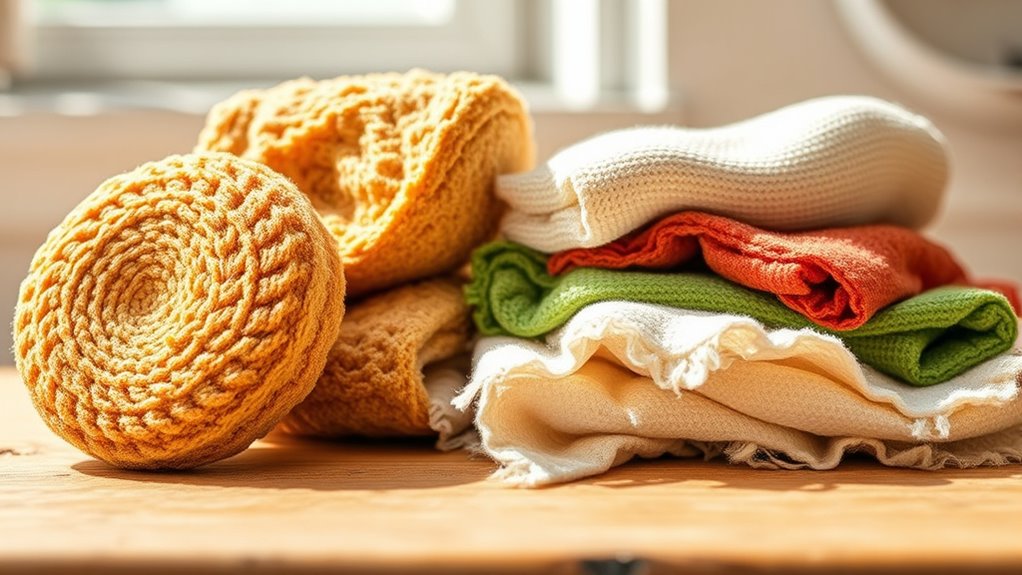
As more people seek sustainable cleaning options, compostable sponges and cloths offer an eco-friendly alternative to traditional products. These items are designed to break down naturally in compost, reducing landfill waste and minimizing environmental impact. To guarantee they truly are eco-friendly, manufacturers often conduct biodegradability testing, which measures how quickly and safely the materials decompose under composting conditions. This testing guarantees that the products won’t leave harmful residues and will fully return to the earth without polluting it. When choosing compostable cleaning supplies, it’s helpful to look for brands that prioritize eco friendly manufacturing practices, ensuring that the materials used are sourced responsibly and that the production process minimizes energy use and waste.
Compostable sponges and cloths decompose naturally, reducing landfill waste and environmental impact through responsible manufacturing and biodegradability testing.
The lifespan of your compostable sponge or cloth depends on several factors, including how often you use and care for it. While these products are built to last through normal household cleaning tasks, they won’t endure indefinitely like synthetic counterparts. Typically, a high-quality compostable sponge can last a few months if rinsed thoroughly after each use and kept dry when not in use. Cloths made from natural fibers tend to be more durable, especially if they’re washed properly without harsh detergents. Proper care extends their usability, so avoid using bleach or fabric softeners that can weaken the fibers or interfere with the compostability process.
To maximize your compostable sponge or cloth’s lifespan, rinse it well after each use to remove food particles and soap residue. Allow it to air dry completely to prevent mold and bacteria growth, which can degrade the material faster. When it reaches the end of its useful life—usually when it starts to break apart or looks worn—don’t throw it in the trash. Instead, add it to your compost bin, where it will biodegrade along with other organic waste. Remember, the key is that these products are designed to break down quickly in a compost environment, but only if they’ve been cared for properly.
Choosing products with transparent biodegradability testing results and eco friendly manufacturing credentials ensures you’re making a responsible choice. By caring for your compostable sponges and cloths properly, you not only extend their lifespan but also contribute to a more sustainable lifestyle. It’s a small change with a big impact, especially when you consider how much waste traditional cleaning tools generate. With mindful use and proper disposal, your eco-friendly cleaning supplies will serve their purpose while helping to protect the planet.
As an affiliate, we earn on qualifying purchases.
Frequently Asked Questions
Are Compostable Sponges Safe for All Skin Types?
Yes, compostable sponges are generally safe for all skin types, but you should consider your skin sensitivity and allergen concerns. If you have sensitive skin or allergies, choose sponges made from natural, chemical-free materials to reduce irritation. Always test a small area first, and if you notice any redness or discomfort, discontinue use. Proper care and gentle cleaning help maintain their safety and lifespan for sensitive skin.
How Do Compostable Cloths Compare to Synthetic Alternatives?
Did you know that compostable cloths last about 20% longer than synthetic ones? You’ll find that biodegradable materials make compostable cloths eco-friendlier and safer for the environment. While they might have slight durability differences, they’re typically just as effective for cleaning. Plus, compostable cloths break down naturally after use, reducing waste. So, you get a sustainable, durable option that’s better for your health and the planet.
Can Compostable Sponges Be Used in Dishwasher Cleaning?
Yes, compostable sponges can be used in dishwasher cleaning, but you should verify their dishwasher compatibility first. Many are durable enough for dishwasher cycles, which can help with thorough cleaning and sanitization. Keep in mind, their cleaning effectiveness depends on the sponge’s material and design. Use them on the top rack, avoid high heat, and confirm they’re labeled dishwasher-safe for the best results.
What Is the Environmental Impact of Producing Compostable Sponges?
Imagine the days when seashells washed ashore—producing compostable sponges has a lower environmental impact because of the biodegradation process. Their raw material sourcing often uses renewable resources, reducing reliance on plastics. This means less pollution and waste in landfills. While manufacturing still consumes energy, choosing compostable sponges supports sustainability, helping you lessen your carbon footprint and protect ecosystems for future generations.
Are There Specific Storage Tips to Prolong Their Usability?
To prolong the usability of your compostable sponges and cloths, focus on moisture control and proper drying. After each use, squeeze out excess water and let them air dry in a well-ventilated area. Avoid leaving them in damp environments, as moisture promotes bacteria growth and shortens their lifespan. Store them in a dry, breathable container to keep them fresh and effective for longer.
Conclusion
By choosing compostable sponges and cloths, you’re making a sustainable impact—over 300 million pounds of synthetic sponges end up in landfills each year. With proper care, these eco-friendly options can last up to three times longer than traditional ones, saving you money and reducing waste. Keep them dry and rinse thoroughly after each use to maximize their lifespan. Making small changes like this helps protect our planet for future generations.
Fall yard work Picks
leaf blowers
As an affiliate, we earn on qualifying purchases.