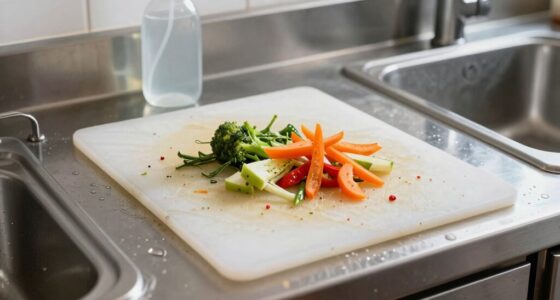
To avoid backfiring, guarantee you rinse recyclables thoroughly to prevent contamination and reject non-recyclables that could spoil batches. Properly separate your waste to keep compost and recycling streams clean, and only compost appropriate materials like fruit peels and yard waste. Be mindful of your habits, like avoiding pouring oily or meat scraps down the drain unless your system allows it. Keep learning more tips to refine your eco-friendly routine and make it truly effective.

Get cleaning gear delivered free with Prime
- Fast, free delivery on millions of items
- Prime Video, Amazon Music and more included
- Member-only deals all year
Key Takeaways
- Rinse recyclables thoroughly to prevent contamination and ensure proper processing.
- Avoid disposing of oily or meat waste in the sink to prevent odors and pests.
- Use compostable scraps like fruit peels and coffee grounds to reduce landfill waste effectively.
- Follow local recycling guidelines to prevent incorrect sorting and resource contamination.
- Regularly maintain and clean sink drains to prevent clogs and odors that compromise eco-friendly routines.

Have you ever thought about how your daily kitchen sink habits impact the environment? Small actions, like rinsing dishes or disposing of waste, can add up to make a significant difference. To keep your eco-friendly kitchen sink routine from backfiring, you need to be mindful of your recycling practices and composting methods. These are two essential steps that can help reduce waste and prevent unintended environmental harm.
First, pay close attention to your recycling practices. Properly sorting recyclables ensures that materials like plastics, metals, and paper are processed correctly and don’t end up in landfills. Many people unknowingly contaminate their recyclables by placing dirty or non-recyclable items in the bin, which can lead to entire batches being rejected. To avoid this, rinse containers thoroughly and familiarize yourself with your local recycling guidelines. Using designated bins for different types of recyclables makes the process easier and reduces waste going to the trash. Remember, recycling isn’t just about tossing items into a bin; it’s about doing it correctly to maximize environmental benefits. Being aware of contamination in recycling can help you improve your sorting practices.
Alongside recycling, adopting effective composting methods is vital. Composting turns kitchen scraps into nutrient-rich soil, reducing the amount of waste sent to landfills and decreasing methane emissions. When you dispose of food scraps, be sure to use a compost bin with a tight-fitting lid to avoid attracting pests or emitting odors. Composting methods vary from simple countertop bins to outdoor compost piles, but whichever you choose, be consistent. Avoid composting meat, dairy, or oily foods unless your system is designed for it, as these can cause odors and attract pests. Instead, focus on fruit and vegetable scraps, coffee grounds, eggshells, and yard waste. Properly balancing green and brown materials ensures your compost breaks down efficiently without causing problems.
reusable food storage containers
As an affiliate, we earn on qualifying purchases.
As an affiliate, we earn on qualifying purchases.
Frequently Asked Questions
Can Eco-Friendly Cleaning Products Damage My Plumbing?
Eco-friendly cleaning products usually don’t damage your plumbing because they’re designed to minimize harmful chemical reactions that can corrode pipes. Unlike harsh chemical cleaners, these products have a lower environmental impact and are gentler on your plumbing system. However, always read labels to verify they’re compatible with your pipes. Using eco-friendly products correctly helps protect both your plumbing and the environment, preventing long-term damage and reducing chemical reactions that harm your eco-conscious routine.
How Often Should I Clean My Eco-Friendly Kitchen Sink?
A stitch in time saves nine, so you should clean your eco-friendly kitchen sink weekly. Regular cleaning prevents buildup that could hinder your biodegradable utensils or composting habits. Use gentle, eco-conscious cleaners to keep your sink fresh and bacteria-free. This routine helps maintain an efficient system, ensuring your sustainable habits stay effective without backfiring. Consistency is key to supporting your eco-friendly lifestyle and keeping your sink in top shape.
Are Natural Drain Cleaners Effective Long-Term?
Natural drain cleaners can be effective long-term because they use natural bacteria to break down organic waste, reducing buildup over time. Unlike chemical reactions from harsh cleaners, these bacteria gradually digest grease and debris, maintaining a healthy drain. However, for best results, you should use them regularly and avoid chemical clog removers, which can kill the bacteria and hinder long-term effectiveness. Consistency is key to keeping your drains clear naturally.
What Are Common Mistakes in Eco-Friendly Sink Routines?
Don’t let eco-friendly sink routines become a sinking ship. You often mistake biodegradable packaging for eco-essentials, neglecting reusable scrub brushes that cut down waste. Overusing natural cleaners can also harm your plumbing, turning eco efforts into eco errors. Remember, simplicity is key—use minimal, effective products, and prioritize reusable tools. This way, you keep your routine sustainable without unintended setbacks, making your eco-kitchen truly green.
Does Water Conservation Affect Sink Drainage Efficiency?
Reducing water usage can affect sink drainage if you drastically limit flow, leading to slower drain flow or clogs. However, using efficient fixtures and avoiding excessive water use helps maintain proper drain flow while conserving water. You should be mindful of your habits, like not pouring grease or large food particles down the drain, which can clog pipes despite lower water flow. Proper maintenance balances water conservation with effective drainage.
Conclusion
Remember, a stitch in time saves nine. Keep your eco-friendly kitchen sink routine simple and consistent, and you’ll avoid backfires and waste. Stay mindful of your water and product choices, and don’t be discouraged by small setbacks. By sticking to your plan and being patient, you’ll build habits that benefit both your wallet and the planet. An eco-friendly routine isn’t just a trend—it’s a lasting commitment to making a difference, one sink at a time.
Evergreen bestsellers Picks
bestsellers
As an affiliate, we earn on qualifying purchases.