For high-end headphones and monitors, I’d make the Sony MDR-M1 my best overall pick for closed-back reference listening, while the Sennheiser HD 560S stands out for open-back detail and the Audio-Technica ATH-M50x for versatile studio use. This lineup spans closed and open-back headphones, wired in-ear monitors, and a wireless noise-cancelling model, so the right choice depends on where and how you listen. The main tradeoffs are isolation versus an open soundstage, studio-focused accuracy versus everyday convenience, and full-size comfort versus compact IEMs. Higher-end features matter most when they solve a real need, such as preventing sound bleed during recording or making long editing sessions more comfortable. Read on for the full breakdown, ranking logic, and recommendations by buyer type.

Get cleaning gear delivered free with Prime
- Fast, free delivery on millions of items
- Prime Video, Amazon Music and more included
- Member-only deals all year
Complete the kit


Key Takeaways
- The Sony MDR-M1 leads for closed-back reference use: it is the clearest fit for buyers who need isolation while monitoring, while open-back picks are better suited to quiet rooms.
- Open-back models serve different listening priorities: the Sennheiser HD 560S favors an accessible route to analytical listening, while the Sony MDR-MV1 and beyerdynamic DT 990 Pro X are alternatives for buyers focused on reference and studio use.
- Audio-Technica’s M-series offers a practical step-up path: the ATH-M20x and ATH-M30x cover straightforward studio monitoring, the ATH-M40x adds versatility, and the ATH-M50x is the more all-purpose choice.
- IEMs trade earcup comfort for compact isolation: the KZ ZAS, KZ ZS10 Pro, and CCA C12 suit portable or stage-oriented use, but fit and tuning preferences matter more than driver counts alone.
- The Marshall Monitor III A.N.C. fills a different role: it prioritizes wireless convenience and noise cancellation rather than serving as a direct substitute for wired studio reference headphones.
| Sony MDR-M1 Professional Reference Closed Monitor Headphones | 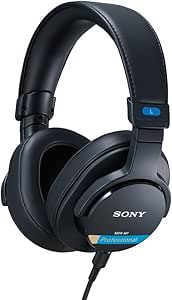 | Best Closed-Back Reference Pick | Type: Closed-back monitor headphones | Connectivity: Wired | Frequency response: 5 Hz–80 kHz | VIEW ON AMAZON | See Our Full Breakdown |
| Audio-Technica ATH-M40x Professional Studio Monitor Headphones |  | Best for DJ and Tracking Flexibility | Type: Wired over-ear headphones | Driver size: 40 mm | Frequency range: 15–24,000 Hz | VIEW ON AMAZON | See Our Full Breakdown |
| FIFINE HD18 Lite Open-Back Wired Monitoring Headphones |  | Best for Monitoring with Voice Chat | Model: HD18LITEBP | Design: Open-back, over-ear | Driver size: 53 mm | VIEW ON AMAZON | See Our Full Breakdown |
| Sennheiser HD 560S Open-Back Over-Ear Wired Headphones |  | Best for Open-Back Reference Listening | Type: Open-back over-ear headphones | Driver type: Dynamic | Driver size: 38 mm | VIEW ON AMAZON | See Our Full Breakdown |
| Audio-Technica ATH-M20x Professional Studio Monitor Headphones, White |  | Best for Straightforward Closed-Back Monitoring | Model: ATH-M20XWH | Design: Over-ear, circumaural, closed-back | Driver type: Dynamic | VIEW ON AMAZON | See Our Full Breakdown |
| KZ ZAS 7BA+1DD In-Ear Monitor for Musicians – 36dB Isolation, Stage |  | Best for High-Isolation In-Ear Monitoring | Driver configuration: 7 balanced armature + 1 dynamic driver | Isolation: Up to 36 dB passive | Cable: Detachable 2-pin, 200-core silver-plated wire | VIEW ON AMAZON | See Our Full Breakdown |
| Audio-Technica ATH-M30x Professional Studio Monitor Headphones |  | Best for Portable Studio Tracking | Driver type: Dynamic | Driver size: 40 mm | Impedance: 38 ohm | VIEW ON AMAZON | See Our Full Breakdown |
| Linsoul KZ ZS10 Pro Wired In-Ear Monitors, 4BA + 1DD, Black |  | Best Hybrid In-Ear Pick for Bright Detail | Driver configuration: 4 balanced armature drivers + 1 dual-magnetic dynamic driver | High-frequency extension: Beyond 40 kHz | Faceplate material: 304 stainless steel | VIEW ON AMAZON | See Our Full Breakdown |
| Audio-Technica ATH-M50x Professional Studio Monitor Headphones | 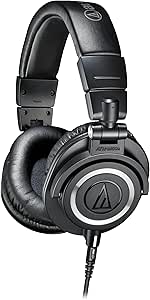 | Best for Versatile Closed-Back Monitoring | Type: Wired over-ear studio monitor headphones | Driver type: Dynamic | Driver size: 45 mm | VIEW ON AMAZON | See Our Full Breakdown |
| beyerdynamic DT 990 Pro X 48 Ohm Open-Back Studio Headphones | 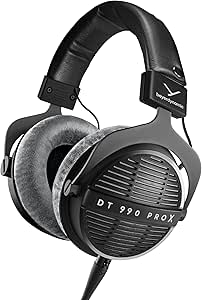 | Best for Open-Back Mixing and Imaging | Design: Open-back, over-ear | Driver type: Dynamic STELLAR.45 | Driver size: 45 mm | VIEW ON AMAZON | See Our Full Breakdown |
| Sony MDR-MV1 Open-Back Reference Monitor Headphones |  | Best for Spatial Audio Mixing | Model: MDR-MV1 | Design: Open-back, over-ear | Driver: 40 mm dynamic | VIEW ON AMAZON | See Our Full Breakdown |
| CCA C12 Hybrid In-Ear Monitor Headphones |  | Best Hybrid-Driver In-Ear Monitor | Driver configuration: 5 balanced armature and 1 dynamic driver per side | Impedance: 24 ohms | Sensitivity: 112 dB | VIEW ON AMAZON | See Our Full Breakdown |
| Marshall Monitor III A.N.C. Wireless Over-Ear Headphones, Cream |  | Best for Long-Haul Wireless Listening | Model: Monitor III A.N.C. (1009077) | Type: Wireless over-ear headphones | Color: Cream | VIEW ON AMAZON | See Our Full Breakdown |
| highend headphones and monitor | Impedance | Warranty | Sensitivity | Driver size |
|---|---|---|---|---|
| Sony MDR-M1 Professional Refer | 50 ohm | 1 year | — | — |
| Audio-Technica ATH-M40x Profes | 35 ohm | 2 years on parts and labor | 98 dB | 40 mm |
| FIFINE HD18 Lite Open-Back Wir | — | 1 year | — | 53 mm |
| Sennheiser HD 560S Open-Back O | 120 ohm | 2 years | 110 dB | 38 mm |
| Audio-Technica ATH-M20x Profes | 47 ohm | — | 96 dB | 40 mm |
| KZ ZAS 7BA+1DD In-Ear Monitor | — | 1 year | — | — |
| Audio-Technica ATH-M30x Profes | 38 ohm | 2 years on parts and labor | 100 dB | 40 mm |
| Linsoul KZ ZS10 Pro Wired In-E | — | — | — | — |
| Audio-Technica ATH-M50x Profes | 38 ohm | 2 years on parts and labor | 99 dB | 45 mm |
| beyerdynamic DT 990 Pro X 48 O | 48 ohm | — | 97 dB | 45 mm |
| Sony MDR-MV1 Open-Back Referen | 24 ohms | — | 100 dB | — |
| CCA C12 Hybrid In-Ear Monitor | 24 ohms | — | 112 dB | — |
| Marshall Monitor III A.N.C. Wi | — | 1 year | — | — |
More Details on Our Top Picks
Sony MDR-M1 Professional Reference Closed Monitor Headphones
The Sony MDR-M1 is the strongest fit here for buyers who need a closed-back monitor with a particularly broad stated frequency range. Its 5 Hz–80 kHz response and sound-isolating design suit production work where limiting headphone bleed and outside noise matters more than an open, room-like presentation. At approximately 216 g, it is lighter than the 261 g Audio-Technica ATH-M20x listed here, and its two detachable cables offer more replacement or setup flexibility than a single-cable design.
The tradeoff is straightforward: this is a wired-only studio tool, not a portable wireless listening option. Buyers seeking an open soundstage should look instead at the Sennheiser HD 560S, while those who want swiveling earcups for one-ear DJ monitoring may prefer the ATH-M40x. The MDR-M1 makes the most sense when closed-back isolation, low weight, and a wide stated range lead the brief.
Pros:- Closed-back design helps reduce outside noise during production
- Stated 5 Hz–80 kHz frequency response
- Approximately 216 g, lighter than the ATH-M20x in this group
- Two detachable cables and replaceable earpads support upkeep and setup flexibility
Cons:- Wired connectivity limits movement away from the source
- Closed-back construction does not offer the open presentation of the Sennheiser HD 560S
Best for: Studio producers and recording engineers who need lightweight closed-back isolation and detachable cable options.
Not ideal for: Listeners who need wireless freedom or an open-back presentation for spacious monitoring.
- Type:Closed-back monitor headphones
- Connectivity:Wired
- Frequency response:5 Hz–80 kHz
- Impedance:50 ohm
- Weight:216 g
- Connector:3.5 mm stereo jack; 6.3 mm adapter included
- Included cables:2 detachable cables
- Warranty:1 year
Our verdict“Choose the MDR-M1 for lightweight, isolated studio monitoring with flexible cabling, but skip it if wireless use or open-back spaciousness is a priority.”
Audio-Technica ATH-M40x Professional Studio Monitor Headphones
The Audio-Technica ATH-M40x earns its place for practical studio handling rather than an unusually broad frequency specification. Its 90-degree swiveling earcups make one-ear monitoring easier for DJs and tracking sessions, while the foldable frame and included coiled and straight cables suit different workspaces. Compared with the Sony MDR-M1, it offers a clearer operational advantage for cueing and cable choice; the Sony is lighter and has a much wider stated frequency range.
The ATH-M40x remains a wired, closed-back monitor, so it cannot match the open-air presentation of the Sennheiser HD 560S, and its cable still tethers the listener to a source. Its 15–24,000 Hz range is less expansive on paper than the MDR-M1’s. I would choose this model for hands-on tracking, DJ monitoring, and easy packing—not for buyers prioritizing wireless convenience or open-back listening.
Pros:- 90-degree swiveling earcups support one-ear monitoring
- Includes detachable coiled and straight cables
- Foldable construction is easier to pack and store
- Sound-isolating design suits tracking environments
Cons:- Wired connection restricts movement
- 15–24,000 Hz stated range is narrower than the Sony MDR-M1’s
- Closed-back design does not provide the spacious presentation of the HD 560S
Best for: DJs and home-studio users who want swiveling cups, foldability, and both coiled and straight cable options.
Not ideal for: Listeners who need wireless mobility or prioritize a broad stated frequency range over monitoring controls.
- Type:Wired over-ear headphones
- Driver size:40 mm
- Frequency range:15–24,000 Hz
- Impedance:35 ohm
- Sensitivity:98 dB
- Cable:Detachable; 1.2–3.0 m coiled and 3.0 m straight cables included
- Features:Sound isolation, 90-degree swiveling earcups, foldable design
- Warranty:2 years on parts and labor
Our verdict“Pick the ATH-M40x for flexible DJ and tracking work, especially when swiveling cups and two cable styles matter more than wireless use.”
FIFINE HD18 Lite Open-Back Wired Monitoring Headphones
The FIFINE HD18 Lite takes a less conventional place in this studio-oriented group: it combines an open-back listening design with a detachable boom microphone. That mix suits creators who switch between monitoring and spoken communication without adding a separate headset mic. Its 53 mm drivers and breathable ear cups are intended to support a spacious stereo image and longer sessions, while the 3.5 mm plug connects to common interfaces, mixers, and other audio devices.
Compared with the Sennheiser HD 560S, the FIFINE adds a microphone but provides less published technical detail here, including no listed impedance or frequency range. Its open construction also leaks sound and does little to block surrounding noise, making it a poor fit for recording near a live microphone. Choose it over the Sony MDR-M1 when voice chat and an open presentation matter more than isolation; choose the Sony for quieter, closed-back tracking.
Pros:- Open-back design is intended to create a spacious stereo image
- Detachable boom microphone supports voice communication
- 53 mm drivers and breathable ear cups suit extended sessions
- 3.5 mm connection works with interfaces, mixers, and compatible devices
Cons:- Open-back construction provides little isolation and can leak sound
- Wired connection limits mobility
- Published data omits frequency range and impedance
Best for: Streamers, home creators, and hobbyist musicians who want open-back monitoring with a detachable boom mic.
Not ideal for: Recording musicians in noisy rooms or anyone needing strong isolation and reduced headphone sound leakage.
- Model:HD18LITEBP
- Design:Open-back, over-ear
- Driver size:53 mm
- Connectivity:Wired, 3.5 mm plug
- Microphone:Detachable boom microphone
- Controls:Push button
- Color:Black and purple
- Warranty:1 year
Our verdict“Choose the HD18 Lite if you want open-back monitoring and an included detachable mic, but use a closed-back model for noisy tracking rooms.”
Sennheiser HD 560S Open-Back Over-Ear Wired Headphones
The Sennheiser HD 560S is the clearest choice in this group for buyers who want an open-back presentation for reference listening. Its natural, accurate sound and wide soundstage are aimed at hearing placement and detail without the enclosed feel of closed-back options such as the Sony MDR-M1 or Audio-Technica ATH-M40x. Clear bass is part of the stated design, while the detachable cable and included 3.5 mm adapter make it usable with different headphone outputs.
That presentation comes with a firm limit: open-back headphones do not control outside noise and can let sound escape, so these are unsuitable for noisy commutes or recording beside a sensitive microphone. The listed 120-ohm impedance also makes source matching more relevant than with the ATH-M40x’s 35 ohms. Choose the HD 560S for quiet-room monitoring and listening, not for portable isolation.
Pros:- Open-back design supports a wide soundstage
- Natural, accurate sound is suited to reference listening
- Detachable cable and included 3.5 mm adapter
- Clear bass is part of the stated sound profile
Cons:- Open construction offers no noise control and can leak sound
- Wired-only connection limits mobility
- 120-ohm impedance may call for more attention to source compatibility than the ATH-M40x
Best for: Home-studio users and detail-focused listeners who work in a quiet space and want open-back reference sound.
Not ideal for: Commuters, performers recording near microphones, and buyers who need closed-back isolation.
- Type:Open-back over-ear headphones
- Driver type:Dynamic
- Driver size:38 mm
- Impedance:120 ohm
- Frequency range:6 Hz–38 kHz
- Sensitivity:110 dB
- Connector:6.3 mm jack with 3.5 mm adapter
- Cable:Detachable
- Warranty:2 years
Our verdict“Choose the HD 560S for open, accurate listening in a quiet room, but select a closed-back model when isolation is needed.”
Audio-Technica ATH-M20x Professional Studio Monitor Headphones, White
The Audio-Technica ATH-M20x is the straightforward closed-back option for buyers who want basic wired monitoring without the ATH-M40x’s swiveling cups and dual-cable flexibility. Its 40 mm drivers are tuned for enhanced low frequencies, which may suit tracking and general production where a fuller low end is welcome. The circumaural earcups help isolate sound, and the single-side cable exit keeps the connection routed from one side rather than across both earcups.
Compared with the Sony MDR-M1, the ATH-M20x has a higher listed weight at 261 g and does not include the Sony’s stated 5 Hz–80 kHz range or replaceable earpads in the supplied data. It also lacks the ATH-M40x’s swiveling earcups for one-ear cueing. The white finish distinguishes this version, but its wired connection and emphasis on low frequencies make it less suited to buyers seeking wireless convenience or a neutral open-back presentation like the HD 560S.
Pros:- Circumaural closed-back design helps isolate sound
- 40 mm drivers are tuned for enhanced low-frequency performance
- Single-side cable exit suits monitoring and tracking setups
- Two-year warranty is listed
Cons:- Wired-only design limits mobility
- Lacks the ATH-M40x’s swiveling earcups and included cable choice
- At 261 g, it is heavier than the Sony MDR-M1 listed here
Best for: Home-studio beginners and tracking users who want closed-back isolation, a single-side cable, and low-frequency emphasis.
Not ideal for: DJs needing swiveling earcups, wireless listeners, or reference users seeking an open-back presentation.
- Model:ATH-M20XWH
- Design:Over-ear, circumaural, closed-back
- Driver type:Dynamic
- Driver size:40 mm
- Impedance:47 ohm
- Sensitivity:96 dB
- Connectivity:Wired, 3.5 mm headphone jack
- Cable:Single-side exit
- Weight:261 g
Our verdict“Choose the ATH-M20x for simple closed-back tracking with low-frequency emphasis, but move to the ATH-M40x for DJ-friendly swiveling cups.”
KZ ZAS 7BA+1DD In-Ear Monitor for Musicians – 36dB Isolation, Stage
The KZ ZAS pairs seven balanced armature drivers with a 10 mm dynamic driver, making it the most driver-heavy in-ear option here. That setup is aimed at listeners who want detail alongside dynamic bass, while its stated 36 dB passive isolation gives it an advantage over the KZ ZS10 Pro’s 26 dB rating for noisy rehearsal spaces. Its over-ear cable routing also helps keep the earpieces in place during movement. This is a wired monitor, not a general-purpose headset: there is no microphone, and the small housings may not suit larger ear canals. Compared with the ATH-M50x, the ZAS is more compact and isolating, but it does not offer the same over-ear format or swiveling cups. The detachable cable is useful for replacement, though its connectors need careful handling.
Pros:- Seven balanced armature drivers and one dynamic driver target detailed sound with dynamic bass.
- Up to 36 dB of stated passive isolation suits noisy monitoring settings.
- Over-ear cable routing helps keep the earbuds secure during movement.
- Detachable 2-pin cable can be replaced or upgraded.
Cons:- No built-in microphone for calls.
- Small earbud size may be uncomfortable for some larger ear canals.
- Detachable cable connectors call for careful handling.
Best for: Musicians who need compact wired monitors with substantial passive isolation for rehearsals or stage use.
Not ideal for: Listeners who need a built-in microphone, dislike in-ear fit, or have larger ear canals that may not suit the small housings.
- Driver configuration:7 balanced armature + 1 dynamic driver
- Isolation:Up to 36 dB passive
- Cable:Detachable 2-pin, 200-core silver-plated wire
- Connectivity:3.5 mm headphone jack
- Fit:In-ear with over-ear cable routing
- Color:Black
- Weight:27 g
- Warranty:1 year
Our verdict“Choose the KZ ZAS if stage isolation and an in-ear fit matter more than call features or over-ear comfort.”
Audio-Technica ATH-M30x Professional Studio Monitor Headphones
The ATH-M30x is a straightforward closed-back choice for tracking and recording on the move. Its 40 mm dynamic drivers and clear mid-range definition suit vocal and instrument monitoring, while the over-ear cups help limit sound bleed into nearby microphones. A collapsible design and included protective case make it easier to carry than a fixed, studio-only setup. Compared with the ATH-M50x, the M30x is the simpler pick: the M50x adds larger 45 mm drivers, detachable cables and swiveling earcups for one-ear monitoring, while the M30x keeps its cable attached. That tradeoff matters if cable replacement or DJ-style cueing is part of the routine. The M30x is wired and geared toward studio work, so it is a poor match for buyers seeking wireless listening or a feature-rich everyday headset.
Pros:- Clear mid-range presentation supports vocal and instrument tracking.
- Closed-back over-ear design helps reduce sound bleed.
- Collapsible construction and included case aid transport.
- Includes a screw-on adapter for compatible studio connections.
Cons:- No wireless connectivity is listed.
- Cable is single-side exit and not listed as detachable.
- Studio-focused tuning and design may be less suited to buyers seeking wireless everyday convenience.
Best for: Home-recording musicians and mobile creators who want closed-back headphones for tracking, clear mids, and an easy-to-pack design.
Not ideal for: Buyers who need wireless use, a detachable cable, or swiveling earcups for one-ear monitoring.
- Driver type:Dynamic
- Driver size:40 mm
- Impedance:38 ohm
- Frequency response:20 Hz–20,000 Hz
- Sensitivity:100 dB
- Fit:Over-ear
- Noise control:Passive noise cancellation
- Warranty:2 years on parts and labor
Our verdict“Pick the ATH-M30x for portable, closed-back tracking; choose the ATH-M50x if detachable cables and swiveling cups matter more.”
Linsoul KZ ZS10 Pro Wired In-Ear Monitors, 4BA + 1DD, Black
The KZ ZS10 Pro offers a hybrid design with four balanced armature drivers and a dual-magnetic dynamic driver, a more compact driver array than the seven-BA KZ ZAS. Its described bright highs and dynamic bass make it a fit for listeners who want an energetic, detail-forward in-ear presentation rather than the room-filling openness of the beyerdynamic DT 990 Pro X. The detachable gold-plated cable supports replacement, and the stainless steel faceplate with resin housing gives the earpieces a distinct material mix. Isolation is rated up to 26 dB, less than the KZ ZAS’s stated 36 dB, so the ZS10 Pro is the less compelling of the two for very noisy stages. There is no microphone, and the cable’s appearance may vary by version.
Pros:- Four balanced armature drivers and a dual-magnetic dynamic driver combine detail with dynamic bass.
- Detachable cable supports replacement.
- Ergonomic fit is designed for extended wear.
- Up to 26 dB of stated noise isolation helps reduce ambient sound.
Cons:- No microphone is included.
- Its 26 dB isolation rating is lower than the KZ ZAS’s stated 36 dB.
- Cable appearance may vary by version.
Best for: Listeners and musicians seeking wired hybrid in-ear monitors with a lively presentation and replaceable cable.
Not ideal for: Buyers who need a microphone, maximum stated isolation, or an open-back soundstage for critical room-like listening.
- Driver configuration:4 balanced armature drivers + 1 dual-magnetic dynamic driver
- High-frequency extension:Beyond 40 kHz
- Faceplate material:304 stainless steel
- Housing material:Imported resin
- Cable:Detachable, gold-plated ODC cable
- Noise isolation:Up to 26 dB
- Microphone:Not included
- Color:Black
Our verdict“Choose the ZS10 Pro for a bright, hybrid in-ear monitor with a replaceable cable, but favor the KZ ZAS when stronger stated isolation is the priority.”
Audio-Technica ATH-M50x Professional Studio Monitor Headphones
The ATH-M50x is the most flexible closed-back over-ear pick in this group for listeners who switch between mixing, tracking and one-ear cueing. Its 45 mm drivers, stated 20 Hz–28,000 Hz response and deep bass give it a broader listed range than the ATH-M30x, while sound-isolating cups help contain playback around microphones. Swiveling earcups support one-ear monitoring, and detachable cables make replacement easier than on the M30x. That extra versatility comes with a wired-only setup and no water resistance, so it is not built for workouts or wet conditions. Compared with the open-back DT 990 Pro X, the M50x keeps more sound contained and is better suited to shared rooms, but it cannot provide the same open presentation for critical listening.
Pros:- 45 mm dynamic drivers and deep bass suit monitoring across a range of material.
- Sound-isolating earcups help limit sound leakage.
- 90-degree swiveling earcups support one-ear monitoring.
- Detachable cable makes replacement easier.
Cons:- Wired connectivity only.
- Not water resistant.
- Closed-back isolation offers a different, less open presentation than the DT 990 Pro X.
Best for: Recording musicians, engineers, and DJs who want closed-back monitoring with detachable cables and one-ear cueing.
Not ideal for: Listeners who need wireless playback, water resistance, or the spacious presentation of open-back headphones.
- Type:Wired over-ear studio monitor headphones
- Driver type:Dynamic
- Driver size:45 mm
- Frequency response:20 Hz–28,000 Hz
- Impedance:38 ohm
- Sensitivity:99 dB
- Connectivity:Wired, 3.5 mm headphone jack
- Warranty:2 years on parts and labor
Our verdict“Choose the ATH-M50x for adaptable closed-back studio work, especially when detachable cables and one-ear monitoring are useful.”
beyerdynamic DT 990 Pro X 48 Ohm Open-Back Studio Headphones
The DT 990 Pro X takes a different approach from the closed-back ATH-M50x: its open-back construction is designed to give mixing and editing a wide, natural soundstage, rather than contain sound for tracking in shared spaces. The 45 mm STELLAR.45 driver and 48-ohm impedance make it usable with common devices without a dedicated headphone amp, while the detachable 3 m mini-XLR cable adds flexibility for desk setups. Its open design is also the main limitation: sound leaks out and outside noise comes in, making it a poor fit beside a live microphone or in a noisy room. The supplied adapter supports 1/4-inch connections, but the listed frequency response is only given as 5 Hz, so the data does not provide a full range for direct specification comparison.
Pros:- Open-back design is intended to create a wide, natural soundstage.
- 48-ohm impedance supports use with laptops, phones, interfaces, and consoles without a dedicated headphone amp.
- Detachable 3 m mini-XLR cable and included 1/4-inch adapter suit desk and studio connections.
- Velour ear pads provide a soft contact surface.
Cons:- Open-back construction lets sound in and out, limiting use in noisy or shared spaces.
- Not water resistant.
- The supplied frequency-response figure is listed only as 5 Hz, limiting direct range comparison.
Best for: Mixers and critical listeners working in a quiet room who want open-back imaging and a wired connection usable with common devices.
Not ideal for: Recording performers near live microphones, commuters, or anyone needing sound isolation or water resistance.
- Design:Open-back, over-ear
- Driver type:Dynamic STELLAR.45
- Driver size:45 mm
- Impedance:48 ohm
- Frequency response:5 Hz (as listed)
- Sensitivity:97 dB
- Cable:Detachable 3 m mini-XLR
- Weight:10.3 ounces
- Included accessories:1/4-inch adapter and black carrying pouch
Our verdict“Pick the DT 990 Pro X for open-back mixing in a quiet setting; choose the ATH-M50x when sound containment is more important.”
Sony MDR-MV1 Open-Back Reference Monitor Headphones
The Sony MDR-MV1 is the most purpose-built pick here for producers who need to judge stereo placement and spatial mixes. Its open-back design gives sound room to breathe, unlike the closed-back Sony MDR-M1, which is better suited to containing sound during recording. A stated 5 Hz–80 kHz frequency response and 40 mm dynamic drivers make this a reference-oriented choice, while the 226 g build and suede pads support longer sessions. The tradeoff is that an open construction leaks sound both ways, so it is a poor fit for noisy rooms or recording beside a microphone. Its wired connection also keeps it at a workstation rather than serving as a flexible travel option. I’d choose it over the Sennheiser HD 560S when spatial-production intent is the priority.
Pros:- Open-back construction is designed for spatial and stereo production
- Wide stated frequency response supports detailed monitoring
- Lightweight 226 g build and soft suede ear pads suit extended sessions
- Detachable cable can be replaced
Cons:- Open-back design offers no isolation and leaks sound
- Wired connection restricts movement away from the listening setup
- Studio-focused design is less suited to everyday use in noisy environments
Best for: Mixers and mastering engineers working on stereo or spatial audio in a quiet studio who want a lightweight, wired open-back reference headphone.
Not ideal for: Commuters, vocalists recording near a live microphone, or anyone monitoring in a shared or noisy space where sound leakage is a problem.
- Model:MDR-MV1
- Design:Open-back, over-ear
- Driver:40 mm dynamic
- Frequency response:5 Hz–80 kHz
- Impedance:24 ohms
- Sensitivity:100 dB
- Connection:Wired, 3.5 mm jack
- Weight:226 g
- Construction:Aluminum; detachable cable
Our verdict“Choose the MDR-MV1 for quiet-room spatial mixing; choose a closed-back option such as the Sony MDR-M1 when isolation matters more.”
CCA C12 Hybrid In-Ear Monitor Headphones
The CCA C12 puts a multi-driver monitoring setup into a compact in-ear form: each side combines five balanced armature drivers and one dynamic driver. That configuration is intended to balance detailed highs and mids with substantial bass, a different proposition from the broad, open presentation of the Sony MDR-MV1. Its sound-isolating fit makes it more practical for stage use or listening where open-back headphones would leak sound, and the detachable eight-strand cable can be replaced if damaged. The compromises are a wired connection and a tuning that may not suit every listener; driver count alone does not guarantee a preferred tonal balance. Compared with the KZ ZAS in this roundup, the C12 is another multi-driver IEM choice, so buyers should focus on fit and sound preference rather than treating either as universally neutral.
Pros:- Six-driver hybrid configuration per side is designed for full-range detail
- Sound-isolating in-ear fit suits stage and everyday listening
- Detachable eight-strand cable is replaceable
- Zinc alloy and resin construction combines metal and lightweight materials
Cons:- Wired connection limits movement compared with wireless headphones
- Warm, bass-forward tuning may not suit listeners seeking a neutral reference sound
- In-ear fit may be uncomfortable for buyers who prefer over-ear headphones
Best for: Musicians, DJs, and detail-oriented listeners seeking wired in-ear monitors with sound isolation and a replaceable cable.
Not ideal for: Listeners who prefer an open, spacious over-ear presentation, want wireless freedom, or need a reliably neutral tuning without auditioning first.
- Driver configuration:5 balanced armature and 1 dynamic driver per side
- Impedance:24 ohms
- Sensitivity:112 dB
- Connection:Wired, 3.5 mm jack
- Cable:Detachable 8-strand cable
- Noise control:Sound isolation
- Fit:In-ear
- Materials:Zinc alloy cover and resin
Our verdict“Pick the C12 if you want an isolating, multi-driver wired IEM for music, DJ use, or monitoring and are comfortable choosing by sound preference.”
Marshall Monitor III A.N.C. Wireless Over-Ear Headphones, Cream
The Marshall Monitor III A.N.C. takes a different route from the studio-first Sony MDR-MV1: it is built for wireless listening, with active noise cancellation, Transparency mode, and up to 70 hours of playback with ANC or 100 hours without it. That endurance makes it the practical choice here for frequent travel and long stretches away from a charger, while its foldable design and protective case help with packing. Three ANC levels and adjustable sound settings offer more everyday flexibility than the wired reference models, and the included detachable audio cable provides a wired fallback. It is not the specialist pick for mixing: the supplied details emphasize convenience and listening features rather than reference monitoring. Its 14.24-ounce weight is also worth weighing against the lighter 226 g Sony MDR-MV1, especially for extended wear.
Pros:- Up to 70 hours of playback with ANC or 100 hours without
- Three ANC levels and Transparency mode allow different listening situations
- Foldable design includes a protective case
- Detachable audio cable offers a wired listening option
Cons:- At 14.24 ounces, it is heavier than the 226 g Sony MDR-MV1
- Wireless convenience and ANC do not make it a dedicated reference monitor
- ANC and wireless use depend on battery charge
Best for: Frequent travelers and wireless listeners who want adjustable noise control, long battery life, and the option to connect by cable.
Not ideal for: Studio mixers who need a reference-focused wired monitor, or weight-sensitive listeners seeking a lightweight over-ear design.
- Model:Monitor III A.N.C. (1009077)
- Type:Wireless over-ear headphones
- Color:Cream
- Playback time:Up to 70 hours with ANC; up to 100 hours without ANC
- Noise control:Active noise cancellation with three levels; Transparency mode
- Features:Foldable design, Soundstage spatial audio, Dynamic Loudness
- Weight:14.24 ounces
- Included accessories:Protective case, USB-C charging cable, detachable USB-C to 3.5 mm audio cable, user manual
- Warranty:1 year
Our verdict“Choose the Monitor III A.N.C. for travel-friendly wireless listening and long battery life, not for studio reference work.”

How We Picked
I ranked these high-end headphones and monitors by how clearly each product serves a real listening job: reference work, recording, critical listening, stage or portable monitoring, or everyday wireless use. I weighed design type, intended use, connection needs, isolation, likely comfort for extended wear, and how much flexibility a buyer gets from each model. I also considered whether a product’s strengths are useful to its intended buyer, rather than treating extra drivers or a professional label as proof of better performance.
The order favors options with a clear role and broad usefulness, then distinguishes more specialized picks from entry-level studio models and portable IEMs. That does not mean one tuning or design is right for everyone: open-back headphones leak sound and admit room noise, while closed-back models can feel less spacious. The Marshall sits lower for reference-focused buyers because wireless features address a different priority; it may still be the better choice for travel. Since fit, sound preference, and listening environment can change the decision, I call out the tradeoffs rather than treating the ranking as universal.
Factors to Consider When Choosing Highend Headphones And Monitors
Before choosing from this list, match the headphone design to your room, source, and work. The label “monitor” does not guarantee that a model will suit every recording, mixing, or casual-listening task. I’d use these factors to narrow the field before comparing individual models.
Choose open-back or closed-back around your room
Open-back headphones let sound pass through the earcups, which can make them appealing for quiet-room listening, but that openness also means music can leak into a microphone and outside noise can reach your ears. Closed-back designs better contain sound and block some ambient noise, making them more practical for tracking vocals, shared rooms, and travel. A common mistake is choosing open-back headphones for recording simply because they are described as spacious or detailed. If you regularly record near a microphone, isolation may matter more than a broad presentation. If your room is quiet and you mainly listen or edit, an open-back design may be a more comfortable fit for the task.
Separate reference work from enjoyment listening
Reference headphones are intended to help you hear balance and detail, while an enjoyable everyday tuning may emphasize the qualities you personally like. Neither approach is automatically better; the problem comes when a sound signature colors decisions in a way that does not translate to other speakers or headphones. New buyers often assume that a product called a monitor will provide neutral sound for every listener. Use familiar recordings to learn how a headphone presents bass, vocals, and treble before relying on it for critical judgments. If you mainly listen for pleasure, comfort and a sound you enjoy can matter more than chasing a supposedly flat response.
Check the whole signal chain before paying more
Headphone choice is only one part of the listening setup: your computer, interface, phone, and any adapters affect convenience and compatibility. Check the connection type and the listening level you can reach comfortably with your actual source. A frequent buying mistake is spending on a more specialized headphone before checking whether the current source can drive it to a useful level or whether the cable fits the intended setup. Do not assume that higher cost or more drivers automatically mean better results for your needs. Put money toward an upgrade only when it addresses a real limitation, such as a connector mismatch, unwanted noise, or a need for more isolation.
Treat comfort and fit as performance factors
Long sessions make clamp force, headband pressure, earcup size, weight, and heat as relevant as sound. For IEMs, the seal and ear-tip fit affect both comfort and bass response, so a model that looks capable on paper may not suit your ears. Buyers sometimes focus on the number of drivers or the product’s studio credentials while overlooking whether they can wear it for an entire session. If possible, check the return policy and allow time to confirm fit with clean tips and ordinary listening. A comfortable option you can wear consistently may serve you better than a more elaborate model that causes fatigue.
Pay for features that match your actual routine
Wireless playback and active noise cancellation make travel easier, but they do not replace the advantages of a wired studio connection for every monitoring task. Conversely, a wired reference model can be an awkward choice if your priority is commuting without cables. Decide whether you need isolation, portability, a detachable cable, or freedom from charging before comparing premium features. A common mistake is buying one headphone to cover studio mixing, stage monitoring, and travel without checking the compromises each job demands. Paying more makes sense when a feature removes friction you encounter often; it makes less sense when it adds capability you will rarely use.
Frequently Asked Questions
Can open-back headphones work for recording vocals?
They can work in some setups, but sound from open-back earcups may leak into a nearby microphone. That can complicate vocal takes, especially during quiet passages or when the headphones are played loudly. For tracking, a closed-back model is usually the safer starting point because it contains more sound. Open-back headphones may still suit editing or playback after recording, when leakage is no longer a concern. Choose based on microphone placement and room conditions, not on the assumption that one design is always more accurate.
Should I choose full-size headphones or in-ear monitors for portable monitoring?
Full-size headphones are often easier to wear for extended sessions, while IEMs take up less space and can provide useful isolation when their tips fit well. IEMs also depend heavily on a secure seal; a poor fit can weaken bass and make listening less consistent. Full-size closed-back headphones may be preferable if you dislike inserting tips or want a familiar over-ear feel. For stage or travel use, think about how securely the product stays in place and how easily you can carry it. Comfort and fit can outweigh technical specifications when you use the gear for hours.
Is the ATH-M50x a better choice than the ATH-M40x for every studio buyer?
No. The ATH-M50x is the more all-purpose option in this lineup, but that does not make it the right match for every workflow or sound preference. The ATH-M40x is a strong alternative for buyers who want a more focused studio-monitoring pick without stepping up to the M50x. The M20x and M30x serve simpler monitoring needs and may be enough for basic recording or practice. Compare how you will use the headphones, how often you move between tasks, and which fit you prefer. Buying the highest-positioned model in a family is not a substitute for matching it to your work.
Do I need a headphone amplifier for the models in this roundup?
Not every listener will need a separate amplifier, and the answer depends on the headphone, source, and listening level you want. Start by checking whether your existing interface or device can play the headphones at a comfortable level without audible strain or noise. If the output is too quiet, or if you hear unwanted distortion at your normal listening level, a suitable headphone amp may address that limitation. Avoid buying one just because a model is marketed for studio use. Confirm compatibility with your actual setup first, then upgrade only if you can identify a practical shortfall.
Can wireless noise-cancelling headphones replace studio monitors?
They can be convenient for everyday listening, travel, and checking audio away from a desk, but wireless noise-cancelling models serve a different purpose from wired reference headphones. Noise cancellation helps reduce outside sound, while wireless features add convenience; neither automatically makes a headphone a dependable reference for mixing. If you work on audio, keep a wired monitoring option available for decisions that need consistent playback. A wireless model can still complement a studio setup as a secondary check or travel pair. Choose it as a replacement only if convenience matters more than dedicated reference use.
Conclusion
For the broadest fit among these high-end headphones and monitors, I’d choose the Sony MDR-M1 as best overall for closed-back reference listening. The Audio-Technica ATH-M40x is my best-value pick for practical wired studio monitoring, while the Audio-Technica ATH-M20x is the most straightforward starting point for beginners. For a premium open-back reference direction, compare the Sony MDR-MV1 and beyerdynamic DT 990 Pro X against the more approachable Sennheiser HD 560S. Choose the KZ ZAS if stage-oriented IEM isolation is your priority, the KZ ZS10 Pro or CCA C12 for compact wired listening, and the Marshall Monitor III A.N.C. for wireless travel and noise cancellation. The best match comes down to where you listen and whether you value isolation, an open presentation, portability, or wireless convenience most.