To handle cleaning in shared kitchens and breakrooms, you should establish clear responsibilities and stick to a consistent schedule. Make sure everyone washes their hands, wipes down surfaces, and cleans shared appliances after use. Use separate utensils and avoid cross-contamination. Posting reminders and encouraging feedback helps maintain routines. Regular cleaning, proper waste disposal, and good ventilation are essential for a hygienic environment. Keep exploring for more tips on creating a clean, healthy shared space.

Get cleaning gear delivered free with Prime
- Fast, free delivery on millions of items
- Prime Video, Amazon Music and more included
- Member-only deals all year
Key Takeaways
- Establish a clear, posted cleaning schedule with assigned responsibilities for all users.
- Encourage regular handwashing and utensil use to prevent cross-contamination.
- Promote routine surface and appliance wiping after each use to maintain hygiene.
- Ensure proper food storage, waste disposal, and ventilation to reduce germs and odors.
- Foster a culture of responsibility and cooperation through reminders and feedback.
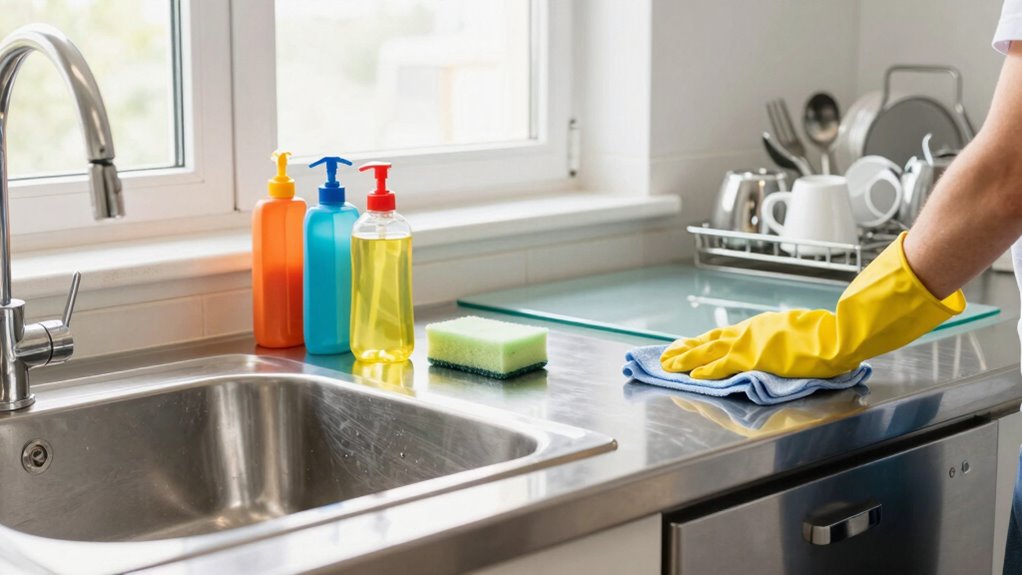
Shared kitchens and breakrooms are common spaces where germs and messes can quickly spread if not regularly cleaned. When you’re using these areas, it’s essential to prioritize personal hygiene and maintain a clean environment. Washing your hands before and after preparing food helps prevent the transfer of germs, and wiping down surfaces after use minimizes bacteria buildup. These simple habits play a critical role in keeping shared spaces safe for everyone. But personal hygiene isn’t enough on its own—you need a reliable cleaning schedule to guarantee the entire space stays hygienic and organized.
Implementing a consistent cleaning schedule is key to managing shared kitchens and breakrooms effectively. Whether it’s daily, weekly, or bi-weekly, a clear plan keeps everyone accountable. Assign specific tasks, like wiping down countertops, cleaning sinks, and emptying trash bins, so each person knows their responsibilities. When everyone pitches in, it reduces the workload for individuals and ensures the space remains tidy. Regular cleaning also helps prevent unpleasant odors and the growth of bacteria, which can become health hazards if neglected. Proper ventilation and air circulation also play a vital role in reducing airborne contaminants and maintaining fresh indoor air quality. Additionally, understanding the importance of hygienic practices can significantly contribute to a healthier environment. Maintaining proper food storage habits is equally essential to prevent pest issues and cross-contamination. Incorporating proper waste disposal techniques also supports overall cleanliness and hygiene. Regular cleaning can also help to identify potential issues early, such as leaks or mold, preventing more serious problems later on.
It’s important that everyone understands the importance of adhering to the cleaning schedule. Posting a visible chart or reminder can reinforce these routines and encourage compliance. When you see your responsibilities clearly outlined, you’re more likely to follow through consistently. Additionally, encourage feedback from colleagues about the schedule—adjustments might be necessary to fit everyone’s routines, but the goal remains the same: a clean, healthy environment.
Don’t forget that personal hygiene extends beyond handwashing. Using separate utensils, avoiding cross-contamination, and properly storing food are also essential. Wiping down shared appliances like microwaves, refrigerators, and coffee machines after use helps prevent the spread of germs. Keeping counters free of crumbs and spills is another simple yet effective way to maintain cleanliness. Remember, a clean breakroom isn’t just about appearances; it’s about creating a safe space where everyone feels comfortable and healthy. Encouraging awareness about germ transmission can motivate individuals to adopt better hygiene habits and contribute to overall cleanliness.
Ultimately, maintaining a tidy shared kitchen or breakroom requires cooperation and commitment. By practicing good personal hygiene and sticking to a well-structured cleaning schedule, you contribute to a healthier workplace. Consistency is your best tool—regular cleaning reduces the risk of illness and makes shared spaces more pleasant for everyone. When each person takes responsibility for their part, the entire environment benefits, fostering a culture of cleanliness and respect.
shared kitchen cleaning supplies
As an affiliate, we earn on qualifying purchases.
As an affiliate, we earn on qualifying purchases.
Frequently Asked Questions
Who Is Responsible for Purchasing Cleaning Supplies?
You’re responsible for ensuring cleaning supplies are purchased, as part of your responsibility delegation and cleaning protocols. It’s best to establish clear guidelines about who handles procurement, whether it’s the facilities team or employees. By doing this, everyone understands their role in maintaining cleanliness. Regularly check supplies and restock promptly. This proactive approach keeps the shared space sanitary, encouraging everyone to follow proper cleaning protocols and take ownership of the cleanliness.
How Often Should Shared Appliances Be Disinfected?
You should disinfect shared appliances at least once a day to maintain a proper disinfection schedule and prevent bacteria buildup. After each use, especially for appliances like microwaves, refrigerators, and coffee makers, wipe down surfaces. Regular appliance maintenance helps guarantee they function properly and stay hygienic. By sticking to a consistent disinfection schedule, you create a cleaner environment, reducing the risk of germs spreading among coworkers.
What Should I Do if Someone Leaves a Mess?
If someone leaves a mess, you should promptly address it to maintain a clean environment. Practice responsible sharing by gently reminding your colleagues about mess management and the importance of keeping common areas tidy. Offer to help if needed, and suggest creating a cleaning schedule to encourage responsibility sharing. Clear communication and collective effort guarantee everyone contributes, making the shared space pleasant and hygienic for all.
Are There Recommended Cleaning Products for Shared Spaces?
For shared spaces, opt for eco-friendly solutions like biodegradable cleaners and natural disinfectants to keep the environment safe. Keep cleaning supplies organized with storage solutions like labeled bins or caddies, making it easy for everyone to access and maintain cleanliness. Using these products and organization methods encourages shared responsibility, ensuring the space stays tidy and inviting for all users. Regularly replenish supplies to promote consistent cleanliness.
How Can We Encourage Consistent Cleaning Habits?
To encourage consistent cleaning habits, you should focus on motivating your team by establishing clear routines. Set specific cleaning schedules and assign responsibilities to foster accountability. Recognize and reward those who maintain cleanliness, creating a positive environment. Regular reminders and visual cues can also reinforce routines. When everyone understands their role and feels motivated, maintaining a clean shared space becomes a natural part of daily operations.
Conclusion
Keeping shared kitchens and breakrooms tidy isn’t just about cleanliness—it’s about creating a welcoming space for everyone. When you take a little extra time to tidy up, you’re gently ensuring that everyone feels comfortable and appreciated. Remember, a little effort from each person can turn a cluttered area into a cheerful haven. So, embrace the small acts of kindness; they make all the difference in making your shared space a place people love to enjoy.
Halloween Picks
halloween
As an affiliate, we earn on qualifying purchases.