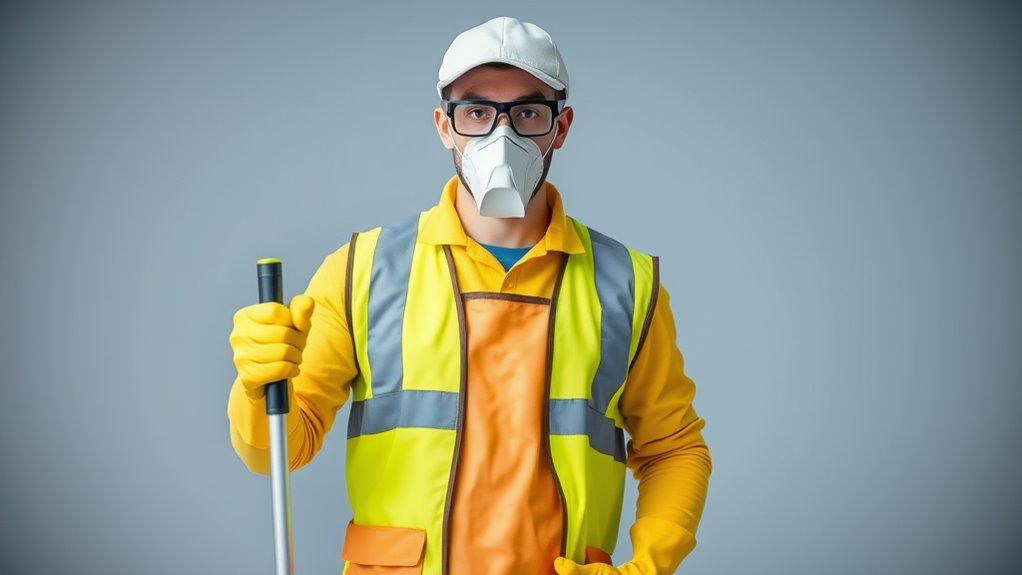

To stay safe during janitorial tasks, wear appropriate PPE like chemical-resistant gloves, goggles or safety glasses, and respirators to protect against fumes and splashes. Use slip-resistant shoes and ergonomic tools to prevent falls and reduce strain. Choosing PPE that fits properly and suits the specific hazards is key. Proper use of PPE, combined with ergonomic practices, helps prevent injuries and ensures your safety on the job—learn more about the best options for your needs.
Key Takeaways
- Select chemical-resistant gloves, goggles, masks, and protective clothing appropriate for specific janitorial chemicals and hazards.
- Ensure PPE fits properly to enhance safety, comfort, and reduce the risk of tears or slips during cleaning tasks.
- Use ergonomic tools and supportive footwear to prevent musculoskeletal injuries and promote comfort during extended shifts.
- Incorporate slip-resistant shoes and protective gear to prevent falls, splashes, and skin or eye injuries.
- Follow safety protocols by maintaining good posture, proper lifting techniques, and selecting high-quality PPE for prolonged use.

Have you ever wondered what protective gear janitorial workers need to stay safe on the job? When you’re handling cleaning tasks, you’re often exposed to hazardous chemicals that can cause skin irritation, respiratory issues, or other health problems. That’s why wearing the right personal protective equipment (PPE) is essential. Proper PPE acts as a barrier between you and these chemicals, reducing your risk of injury or illness. But just as important as protecting yourself from chemical hazards are ergonomic considerations, which help prevent musculoskeletal injuries caused by repetitive motions, awkward postures, or heavy lifting. Combining chemical safety with ergonomic awareness ensures you can work efficiently without compromising your health.
Protect yourself with PPE and ergonomic practices to stay safe and healthy while cleaning.
To start, gloves are your first line of defense against hazardous chemicals. Nitrile or latex gloves prevent skin contact with corrosive or toxic substances, especially when you’re handling cleaning agents like acids, bleach, or disinfectants. It’s vital to select gloves that are chemical-resistant and fit well, so they don’t tear or slip during use. Eye protection, such as goggles or safety glasses, is equally important. Chemicals can splash or vaporize, and eye contact can result in burns or irritation. Wearing protective eyewear ensures you don’t inadvertently expose your eyes to harmful substances, especially when mixing solutions or working in areas with poor ventilation.
Respirators or masks are essential when you’re working with aerosolized chemicals or in poorly ventilated spaces. They help prevent inhalation of hazardous fumes or particles that can cause respiratory issues over time. Be sure to select the appropriate type, such as a N95 mask or a more specialized respirator, depending on the chemicals you’re using. In addition to chemical protection, ergonomic considerations should be a key part of your PPE routine. Using padded gloves or ergonomic tools can reduce strain on your wrists and hands. Adjustable mops, lightweight buckets, and ergonomic handles make repetitive tasks less taxing and minimize injury risk. Wearing supportive footwear with slip-resistant soles helps prevent falls, especially on wet floors, and provides stability during long shifts.
Furthermore, aprons or coveralls can shield your clothing and skin from splashes or spills. When you’re working with strong chemicals, these barriers are a simple yet effective way to stay safe. Remember, maintaining good posture and using proper lifting techniques are integral parts of ergonomic considerations. Avoid bending awkwardly or twisting your body when lifting heavy cleaning equipment or trash bags. Instead, use your legs to lift and keep your back straight. This approach minimizes strain and prevents injuries that could sideline you from work. Additionally, selecting high-quality, ergonomically designed PPE can significantly enhance comfort and safety during extended work periods.
Frequently Asked Questions
How Should PPE Be Stored When Not in Use?
You should store PPE properly when not in use by following good storage practices and maintaining PPE organization. Keep your equipment in a clean, dry, and designated area away from contaminants. Use labeled bins or shelves to prevent cross-contamination and guarantee PPE remains in good condition. Regularly inspect and clean your storage space to maintain safety standards, making it easy to access and ensuring your PPE stays effective and ready for use.
Can PPE Be Reused After Cleaning?
Yes, reusable PPE can be reused after proper cleaning. Follow your cleaning protocols carefully to guarantee safety and sanitation. Rinse, disinfect, and dry gear thoroughly to eliminate contaminants. Regularly inspect PPE for damage or wear and replace when necessary. Adhering to these steps guarantees your gear remains good as new, providing protection and peace of mind during each use. Reusable PPE, when properly cleaned, keeps you safe and sanitized.
Are There Specific PPE Requirements for Different Cleaning Chemicals?
Yes, there are specific PPE requirements for different cleaning chemicals. You need to make certain the PPE you choose offers chemical resistance and is compatible with the chemicals you’re using. For example, some gloves protect against acids, while others are better for solvents. Always read the chemical labels and manufacturer guidelines to select PPE that provides proper protection, preventing skin contact and chemical burns effectively.
How Often Should PPE Be Inspected for Damage?
You should inspect your PPE regularly, ideally before each use, to guarantee safety. Proper PPE maintenance involves checking for damage such as tears, cracks, or wear that could compromise protection. The inspection frequency depends on how often you work with chemicals or in hazardous environments, but a thorough inspection at least weekly is recommended. Promptly replace any damaged equipment to maintain your safety standards and ensure effective protection during janitorial tasks.
What Are the Signs That PPE Needs Replacing?
You notice your gloves have tears or holes, signaling they’re no longer providing proper protection. Such signs indicate your PPE’s durability has compromised, and it’s time for replacement. Regularly checking for cracks, fraying, or discoloration helps maintain safety. Follow a consistent replacement schedule based on PPE type and usage. For example, if gloves show damage after three months, replace them to guarantee maximum protection and safety during janitorial tasks.
Conclusion
By wearing the right PPE, you protect your health, prevent accidents, and maintain safety. By choosing the appropriate gloves, masks, and eyewear, you reduce exposure and minimize risks. By staying informed, following protocols, and using protective gear consistently, you create a safer work environment. Remember, your safety depends on your actions. Prioritize PPE every day, stay vigilant, and take responsibility—because your well-being is worth it.