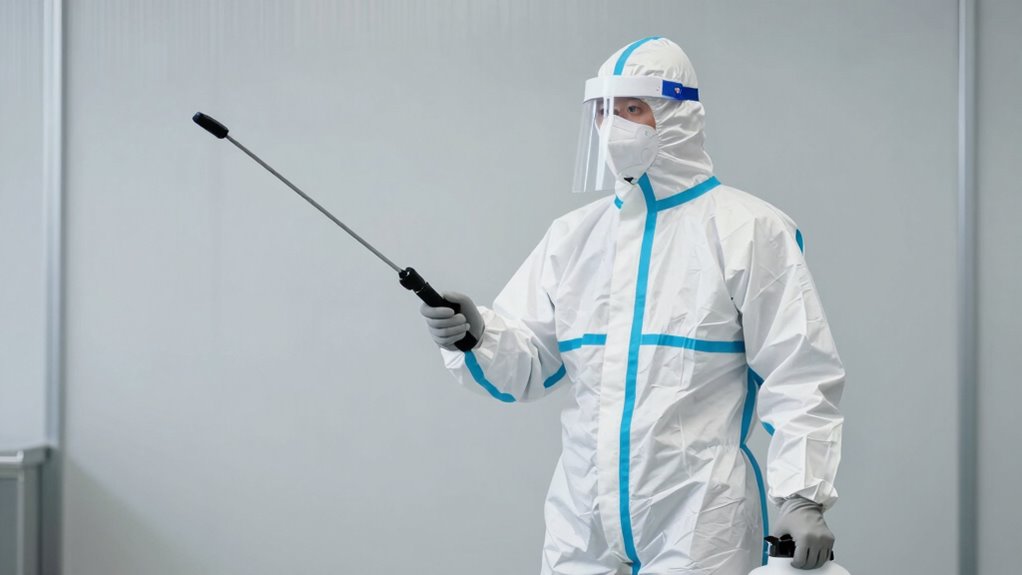
For disinfection jobs, wearing essential PPE is key to safety and practicality. You should always use gloves, preferably chemical-resistant ones, to protect your skin. A well-fitting mask or respirator is necessary to avoid inhaling harmful fumes, especially in poorly ventilated areas. Goggles or eye protection help prevent chemical splashes. By combining these basics with good ventilation and proper procedures, you’ll stay safer. Keep going to learn more about additional safety measures that make sense.
Key Takeaways
- Wear chemical-resistant gloves and goggles to protect skin and eyes from disinfectant splashes.
- Use a properly fitted mask or respirator to prevent inhalation of harmful fumes, especially in poorly ventilated areas.
- Ensure full coverage with disposable coveralls or long-sleeved clothing to minimize skin contact.
- Check PPE integrity and fit before starting work to ensure maximum protection.
- Combine PPE with proper ventilation practices for comprehensive safety during disinfection tasks.

Are you prepared to handle disinfection jobs safely? Ensuring your safety starts with understanding the essentials of personal protective equipment (PPE) and how it plays a crucial role in your work. One of the first considerations is the importance of proper ventilation. Good ventilation isn’t just about comfort; it’s a critical safety factor that helps disperse airborne chemicals and reduce inhalation risks. When you’re working with disinfectants, fumes can accumulate quickly, especially in enclosed spaces. Adequate airflow helps dilute these vapors, decreasing the likelihood of respiratory irritation or more severe health issues. Always assess the environment before starting and, if possible, open windows, use exhaust fans, or activate ventilation systems to create a safer workspace. This simple step can markedly reduce your exposure to potentially harmful chemicals.
Additionally, understanding the importance of ventilation and chemical safety influences how you plan your disinfection tasks. For instance, if you’re working in a poorly ventilated area, you might need to limit the amount of disinfectant used or schedule work during times when airflow can be maximized. You should also be aware of the specific hazards associated with each chemical, including potential reactions with other substances or materials in the environment. Proper chemical safety protocols and PPE use are essential to protect yourself effectively. Always have your PPE ready before starting, and double-check that it fits correctly and provides complete coverage. Remember, PPE is your last line of defense—don’t rely solely on it, but combine it with good practices like proper ventilation, thorough training, and cautious handling of chemicals.
Frequently Asked Questions
How Often Should PPE Be Replaced During a Disinfection Job?
You should replace PPE during a disinfection job whenever it shows signs of wear, damage, or contamination. Regular PPE maintenance is vital to stay effective and protect you properly. Follow safety protocols by inspecting gear before each use, and discard or sanitize items as needed. Don’t wait until PPE is visibly damaged; replace it promptly to guarantee continuous safety and minimize risks during disinfection tasks.
Are There Specific PPE Requirements for Different Types of Disinfectants?
Absolutely, some PPE requirements are as unique as your favorite disinfectant’s chemistry. You gotta check disinfectant compatibility before choosing gloves or masks, because not all PPE plays nice with every chemical. Follow PPE storage guidelines to keep gear effective and safe. So, whether you’re dealing with bleach or alcohol-based disinfectants, make sure your PPE matches the task, or you might end up with more than just a disinfected space—like chemical burns.
Can PPE Be Reused After Disinfection Tasks? if So, How?
Yes, PPE can be reused after disinfection tasks if you follow proper PPE decontamination procedures. You should clean reusable protective gear thoroughly with appropriate disinfectants, ensuring all surfaces are sanitized. Allow the gear to dry completely before reuse. Regularly inspect for damage or wear, and replace any compromised items. Proper PPE decontamination minimizes contamination risks, making reusable protective gear safe for continued use in disinfection jobs.
What Are the Signs of PPE Failure During a Job?
Did you know that over 60% of PPE failures are due to unnoticed tears or contamination? You’ll spot PPE failure when durability diminishes, like tears, holes, or cracks, compromising protection. Look for contamination indicators such as visible residues or discoloration. Regularly inspecting PPE during your job helps catch these signs early, ensuring your safety isn’t compromised and that your PPE remains effective throughout disinfection tasks.
How Do Weather Conditions Affect PPE Effectiveness and Safety?
Weather impact can substantially affect PPE effectiveness and safety. Extreme heat can cause PPE materials to degrade or become uncomfortable, leading you to adjust or remove gear prematurely. Cold weather may reduce flexibility and impair seal integrity, risking contamination. Wet or humid conditions accelerate PPE degradation, weakening protective barriers. Always assess weather conditions before starting your job, choose appropriate gear, and inspect PPE regularly to confirm it maintains its protective qualities.
Conclusion
Remember, the right PPE isn’t just gear—it’s your shield against unseen threats. Think of it as your armor in a battlefield where cleanliness fights chaos. When you wear what’s needed, you’re not just protecting yourself; you’re safeguarding everything you touch. So, suit up with purpose, because each piece of PPE is a symbol of your commitment to safety and a cleaner, healthier world. Stay vigilant, stay protected, and let your gear be the lighthouse guiding your way.