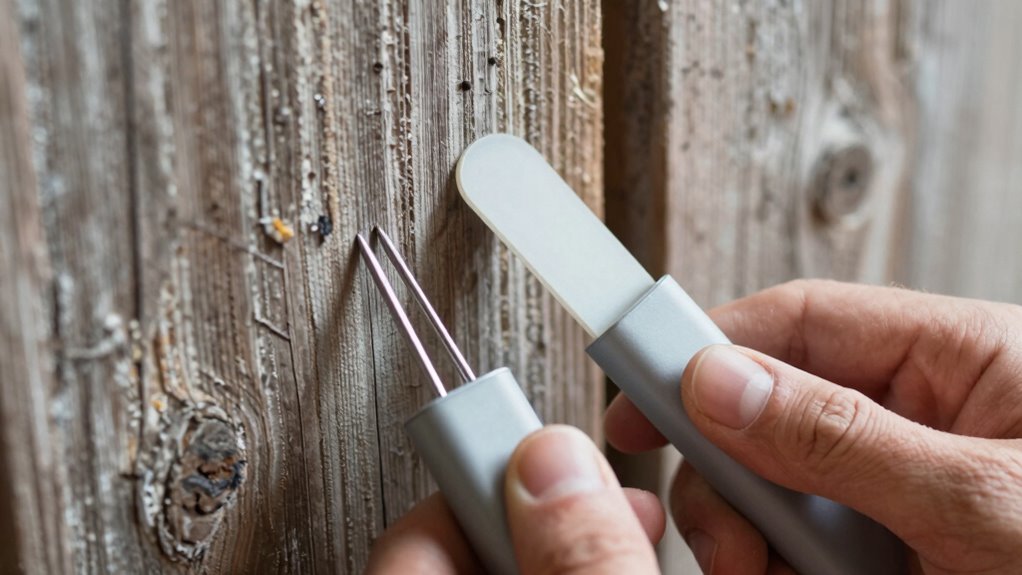

Moisture meters help you measure moisture levels in materials like wood and drywall. Pin meters use metal pins inserted into the material for accurate, localized readings, making them great for detailed inspections. Pinless meters scan surfaces without penetration, ideal for quick, non-destructive checks on drywall or large wooden surfaces. Knowing when to use each type guarantees better results and prevents damage. Keep exploring to discover more about choosing the right moisture meter for your project.

Get cleaning gear delivered free — and shop member deals
- Fast, free delivery on millions of items
- Access to Prime Big Deal Days deals on October 6–7
- Prime Video, Amazon Music and more included
Key Takeaways
- Pin moisture meters provide highly accurate, localized readings by inserting pins into the material, ideal for detailed wood assessments.
- Pinless meters scan the surface electromagnetically, offering quick, non-destructive inspections suitable for drywall and large surfaces.
- Use pin meters when precise moisture content in specific spots is needed; choose pinless for broad, surface-level screening.
- Pin meters may leave small holes, making them less suitable for finished surfaces; pinless meters are damage-free.
- Combining both types gives a comprehensive understanding of moisture issues, selecting based on material thickness and project requirements.
Moisture meters are essential tools for accurately measuring the moisture content in a variety of materials, from wood and drywall to soil and concrete. When it comes to woodworking, understanding wood moisture is critical because it affects the stability, strength, and appearance of your projects. Using a moisture meter helps you determine if your wood is properly dried before cutting or joining, reducing the risk of warping or cracking later on. Similarly, drywall testing with moisture meters allows you to identify hidden moisture issues behind walls, which is crucial for preventing mold growth and structural damage. Whether you’re a DIY enthusiast or a professional, choosing the right type of moisture meter makes a significant difference in your results.
Moisture meters help detect hidden issues in wood, drywall, and more for safer, more durable projects.
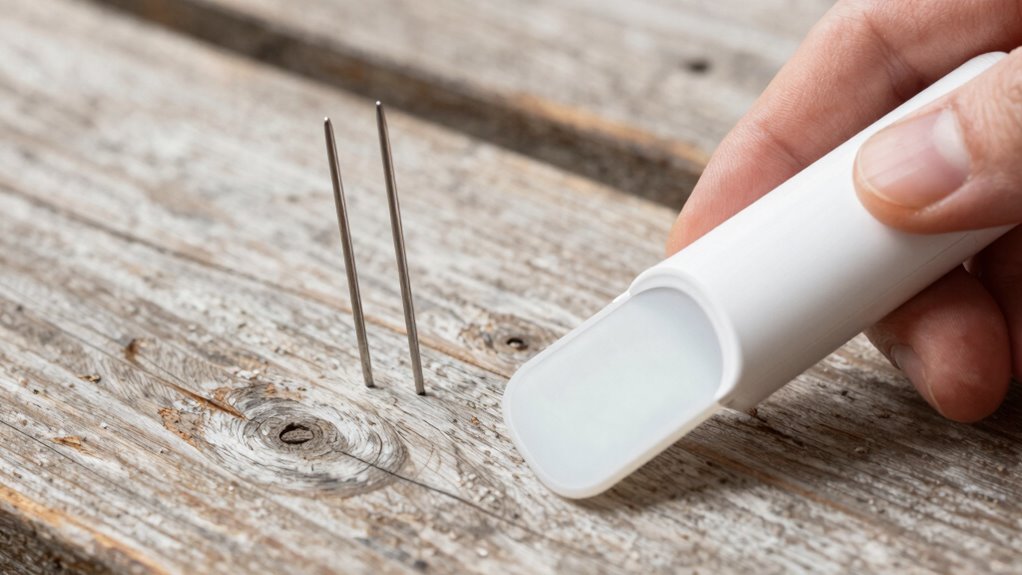
Pin-type moisture meters, often called pin meters, work by inserting metal pins into the material. They measure the electrical resistance between the pins, which correlates with moisture content. This method is highly accurate for wood moisture because it measures moisture directly within the material’s cells. If you’re working with thick or dense wood, pin meters provide reliable, localized readings, helping you decide if the wood is ready for use. They’re also effective for drywall testing, especially if you suspect moisture intrusion behind the surface. However, pin meters can cause small, permanent holes in the material, which might be undesirable in finished surfaces or delicate projects.
On the other hand, pinless moisture meters use electromagnetic sensors to scan the material’s surface without penetrating it. These tools are quick and convenient, making them ideal for broad inspections. For drywall testing, pinless meters allow you to quickly scan large areas for moisture without damaging the wall surface. They are also useful for checking the moisture level of larger wooden beams or panels without leaving marks. However, pinless meters tend to be less precise for wood moisture measurements, especially in thick or uneven materials, because their readings can be influenced by surface density and electrical properties. They work best for general assessments rather than pinpoint accuracy.
Choosing between pin and pinless moisture meters depends on your specific needs. If accuracy in wood moisture measurement is paramount—for example, when preparing lumber for furniture or flooring—pin meters are your best bet. For quick, non-invasive drywall testing or broad surface scans, pinless meters offer a practical advantage. Keep in mind that combining both types can give you a thorough understanding of moisture issues in your project, ensuring your work remains durable and free from moisture-related problems. Ultimately, understanding when each type is accurate helps you make smarter decisions and achieve professional results. Additionally, understanding the contrast ratio of your moisture meter can help you interpret readings more effectively, especially when assessing subtle moisture differences in materials.
As an affiliate, we earn on qualifying purchases.
Frequently Asked Questions
Can Moisture Meters Detect Moisture Behind Walls?
Yes, a moisture meter can detect moisture behind walls during wall inspection, but it depends on the type. Pinless meters use electromagnetic signals to measure moisture penetration through surfaces, making them ideal for non-invasive checks. Pin meters require inserting pins into the material, which is more accurate for specific spots. So, choose the right meter based on your wall inspection needs to effectively identify hidden moisture behind surfaces.
Are Moisture Meters Suitable for Measuring Soil Moisture?
Moisture meters are suitable for measuring soil moisture, helping you keep your plants well-hydrated. While traditional moisture meters can work, soil sensors are often more accurate and provide continuous readings. These tools ensure you’re not flying blind when it comes to plant hydration, allowing you to optimize watering schedules and prevent over- or underwatering. Keep an eye on your garden’s health with the right moisture measurement tool!
How Do Environmental Conditions Affect Meter Accuracy?
Environmental conditions like humidity influence moisture meter accuracy by affecting readings, especially in pinless models. High humidity can cause calibration challenges, making measurements less reliable. To guarantee precision, you should regularly calibrate your meter under different environmental conditions and avoid testing in extreme weather. Keep the meter dry and store it properly, as moisture exposure itself can distort readings and reduce overall accuracy.
Can Moisture Meters Be Used on Wet or Damp Surfaces?
Using a moisture meter on wet or damp surfaces is like trying to read a map through fog—you may get skewed results. Surface moisture can hinder accuracy, especially if the material isn’t compatible with the meter type. Pinless meters tend to work better on damp surfaces because they measure deeper without penetrating, but always check material compatibility first to ensure reliable readings.
What Is the Lifespan of a Typical Moisture Meter?
A typical moisture meter lasts around 5 to 10 years, depending on usage and care. You should calibrate it annually to verify accuracy, especially if you use it regularly. Its durability depends on build quality and how well you maintain it. Avoid dropping or exposing it to extreme conditions, as this can shorten its lifespan. Proper calibration and careful handling help maximize your device’s longevity and reliability.
Conclusion
Choosing between pin and pinless moisture meters depends on your needs. While pins give pinpoint accuracy in specific spots, pinless meters offer quick, non-invasive readings over larger areas. Neither is inherently better—you just need to know when each shines. So, whether you’re checking a small patch or a broad surface, understanding their differences helps you make smarter, more confident decisions. Ultimately, mastering both guarantees you’re always equipped to measure moisture precisely when it counts.
Fall Picks
fall essentials
As an affiliate, we earn on qualifying purchases.