
To keep your medical office waiting room clean and safe, emphasize proper hand hygiene, place sanitizer stations at key points, and encourage patients to use them. Regularly disinfect high-touch surfaces like doorknobs, light switches, and armrests using EPA-approved disinfectants. Train your staff on thorough cleaning techniques and maintain a cleaning log for accountability. A consistently sanitized environment reduces infection risks and boosts patient confidence—continue to explore effective strategies for maintaining a healthy, inviting space.
Key Takeaways
- Place hand sanitizer stations at entrances and throughout the waiting area to promote frequent hand hygiene.
- Regularly disinfect high-touch surfaces like door handles, armrests, and tabletops using EPA-approved disinfectants.
- Train staff on proper cleaning techniques and proper hand hygiene before and after cleaning tasks.
- Maintain a cleaning log to ensure consistent cleaning routines and accountability.
- Keep the waiting room clean and sanitized to prevent infections and foster a safe, welcoming environment.
Maintaining a clean waiting room in a medical office is essential for ensuring patient safety and creating a welcoming environment. One of the most effective ways to achieve this is by emphasizing proper hand hygiene and robust infection control practices. When patients and staff consistently wash their hands or use hand sanitizer, you substantially reduce the spread of germs and bacteria that can cause infections. This simple act plays a pivotal role in keeping everyone safe, especially in high-traffic areas like waiting rooms where multiple individuals touch shared surfaces.
Proper hand hygiene and infection control reduce germs, ensuring patient safety in high-traffic waiting areas.
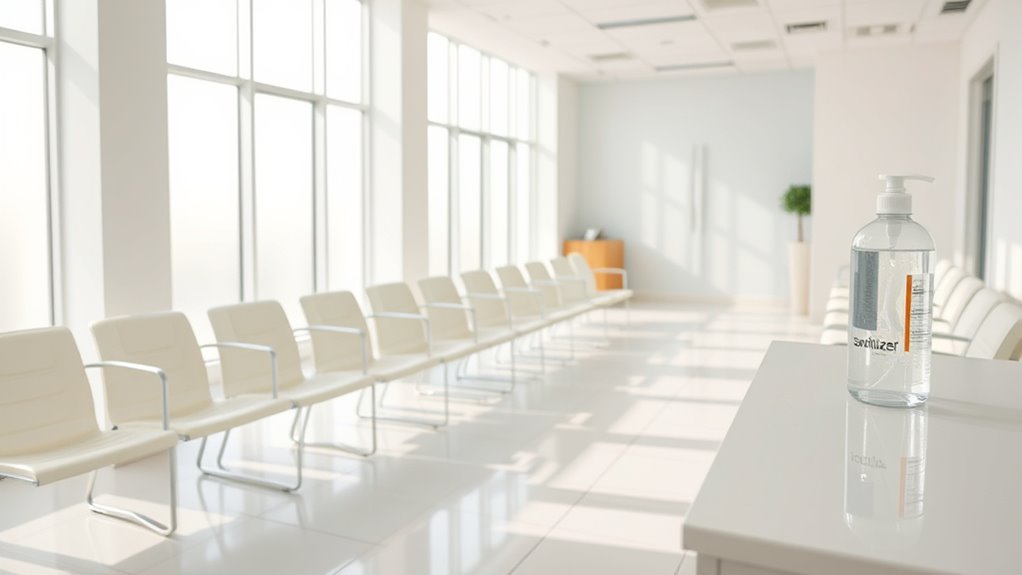
As a staff member responsible for the cleanliness of the waiting area, you should guarantee that hand sanitizer stations are strategically placed and well-stocked at entrances and throughout the space. Encourage patients to use hand sanitizer upon arrival and before touching any shared items like magazines, pens, or seating. Hand hygiene isn’t just about individual responsibility; it’s a collective effort that directly impacts infection control. When everyone follows hand hygiene protocols, you minimize the risk of cross-contamination, which is essential in preventing the spread of illnesses, particularly respiratory infections or gastrointestinal bugs.
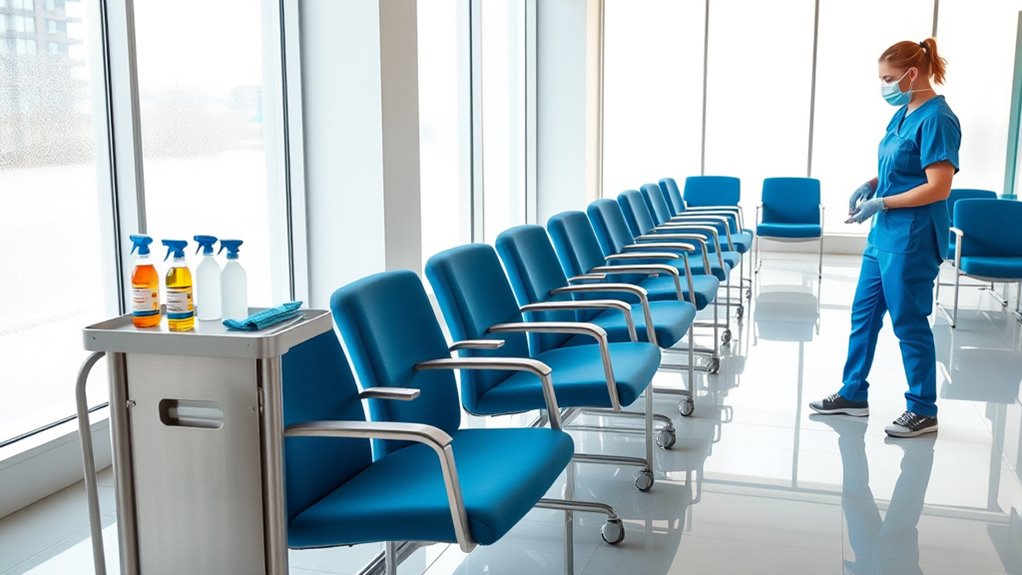
Cleaning routines should prioritize high-touch surfaces such as door handles, light switches, armrests, and tabletops. These are the spots where germs tend to accumulate and transfer easily from person to person. Use EPA-approved disinfectants and follow the manufacturer’s instructions for proper contact times to guarantee germs are effectively killed. Regular cleaning, especially during flu season or outbreaks, reinforces infection control standards and reassures patients that their health and safety are your top priorities. Incorporating hand hygiene practices as part of your routine can significantly improve the overall safety of your environment.
Training staff on proper cleaning techniques and infection control procedures is equally important. Educate everyone about the importance of thorough hand hygiene before and after cleaning tasks, as well as the correct way to disinfect surfaces. Keeping a cleaning log helps guarantee consistency and accountability, giving you a record that surfaces are sanitized regularly and effectively. Additionally, remind staff to avoid touching their face or personal items while cleaning, further reducing contamination risks.
Incorporating these practices into your daily routine not only helps prevent infections but also fosters a sense of trust among patients. They’ll appreciate the effort you put into maintaining a safe environment, which can enhance their overall experience. Remember, a clean waiting room isn’t just about appearance; it’s a critical component of infection control that protects everyone who visits your medical office. Consistent hand hygiene and diligent cleaning practices are your best tools in creating a healthy, safe, and welcoming space for all.
Frequently Asked Questions
How Often Should Waiting Rooms Be Disinfected?
You should disinfect your waiting room at least daily to guarantee patient comfort and reduce germs. High-touch surfaces like chairs, doorknobs, and counters need more frequent cleaning, especially during flu season. Incorporate decorating ideas that promote cleanliness and calming vibes, like easy-to-clean furniture and soothing colors. Regular disinfection reassures patients, making their visit more comfortable and safe, while maintaining a welcoming environment.
What Cleaning Products Are Safest for Medical Environments?
You should use disinfectants with antimicrobial agents and eco-friendly disinfectants that are safe for medical environments. These products effectively eliminate germs while minimizing harmful chemical exposure for patients and staff. Always check labels for EPA approval and confirm the disinfectant is suitable for high-touch surfaces. Regularly switch between products to prevent resistance, and follow manufacturer instructions for proper use. This approach keeps your waiting room safe and clean without risking patient or staff health.
How to Handle High-Touch Surface Cleaning?
Think of high-touch surfaces as battlegrounds where germs fight to survive. To win the war, you must follow strict disinfection protocols and guarantee staff training is of the highest quality. Regularly wipe down doorknobs, armrests, and shared devices with approved disinfectants, paying close attention to contact points. Empower your team with proper techniques and schedules, turning your waiting room into a fortress of cleanliness where germs don’t stand a chance.
Are There Regulations for Waiting Room Cleanliness?
Yes, there are regulations for waiting room cleanliness that you need to follow. They aim to guarantee patient comfort and safety, requiring regular cleaning of high-touch surfaces and proper sanitation protocols. Staff training is vital, so your team understands these standards and maintains compliance consistently. By adhering to these regulations, you create a hygienic environment that reassures patients and promotes health, ultimately enhancing their overall experience.
How to Prevent Cross-Contamination During Cleaning?
You might find it surprising, but preventing cross-contamination during cleaning is straightforward. Always prioritize hand hygiene by washing or sanitizing your hands before and after cleaning. Use disinfected equipment and sterilize tools regularly to eliminate germs. Avoid cross-contact by using disposable wipes and changing cleaning cloths frequently. By staying vigilant and following proper protocols, you guarantee a safer environment for everyone in the waiting room.
Conclusion
Keeping your waiting room spotless is like tending a delicate garden—every detail matters. Regular cleaning not only creates a welcoming atmosphere but also shields your patients from germs. By staying vigilant and maintaining high standards, you turn your waiting area into a safe haven where everyone feels cared for. Remember, a clean space is the foundation of trust and health—your first line of defense in providing exceptional care.