To clean around occupied workspaces without slowing everyone down, plan your tasks during natural breaks or quieter times, like mornings or after-hours. Use quick, discreet routines such as wiping high-touch surfaces with microfiber cloths and eco-friendly sprays. Keep supplies organized and close by, so you move efficiently between areas. Communicate your schedule clearly to coworkers to avoid interruptions. If you follow these tips, you’ll learn simple strategies to keep the workspace spotless without disrupting productivity.

Get cleaning gear delivered free with Prime
- Fast, free delivery on millions of items
- Prime Video, Amazon Music and more included
- Member-only deals all year
Key Takeaways
- Schedule cleaning during natural breaks or quieter periods to minimize workflow disruption.
- Focus on high-touch areas with quick, targeted wipe-down routines to save time.
- Use organized, accessible cleaning supplies to streamline movement and efficiency.
- Notify colleagues in advance to coordinate cleaning efforts and avoid interference.
- Incorporate eco-friendly, fast-acting products for effective cleaning without lingering odors or fumes.
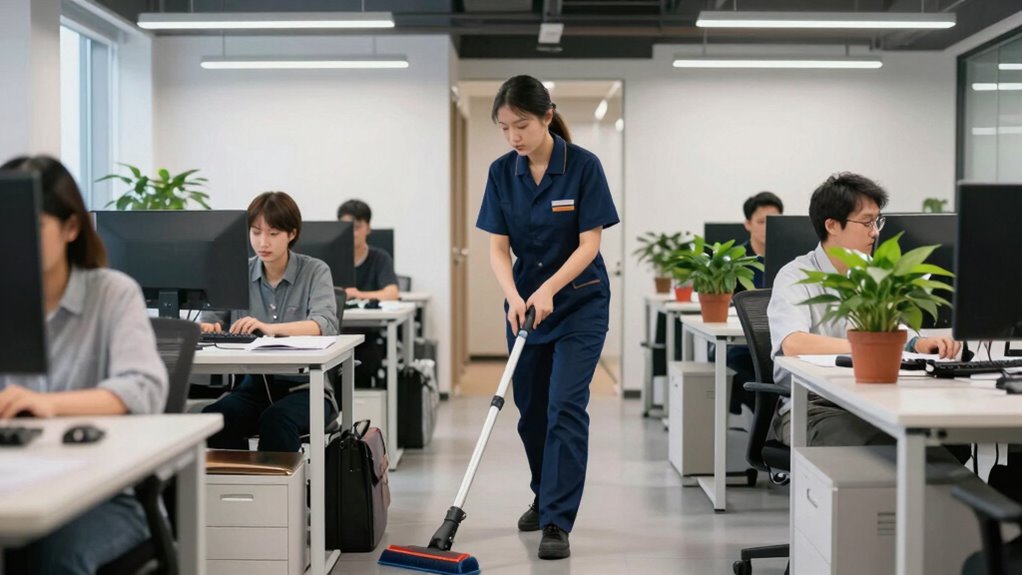
Have you ever wondered how to keep your workspace clean without disrupting your daily tasks? The key is to adopt eco-friendly cleaning methods combined with time-efficient strategies that minimize interruptions. Eco-friendly cleaning not only benefits the environment but also creates a healthier workspace for everyone. Using natural cleaning products, like vinegar, baking soda, and plant-based solutions, reduces the risk of fumes or strong odors that could distract or discomfort colleagues. It’s a smart way to maintain cleanliness while respecting everyone’s health and comfort.
Eco-friendly cleaning with natural products keeps your workspace healthy and distraction-free.
When working around occupied desks, your goal is to be quick and thorough without causing chaos. Start by planning your cleaning schedule during natural breaks or quieter periods. For example, early mornings, lunch breaks, or after-hours are ideal times to perform deeper cleaning tasks. This way, you avoid pulling employees away from their work and keep the workflow smooth. Additionally, setting clear routines helps everyone know when cleaning will happen, reducing surprises and confusion. Incorporating efficient cleaning strategies ensures that your efforts are both effective and minimally disruptive. Establishing a consistent routine can also help make cleaning a seamless part of the workday, encouraging everyone to participate in maintaining a tidy environment.
To be truly time efficient, focus on high-touch areas first, like doorknobs, keyboards, light switches, and shared surfaces. Using microfiber cloths combined with eco-friendly cleaning sprays allows you to wipe down these hotspots swiftly and effectively. Microfiber cloths are reusable, reducing waste, and they pick up more dirt and germs with less product. Incorporating quick cleaning routines into your day, perhaps a five-minute wipe-down of key areas before or after peak hours, ensures surfaces stay sanitized without taking up too much time. Regularly reviewing your process can also help identify areas for further improvement, making your routine even more efficient. When cleaning is part of a well-organized system, it becomes easier to sustain over time with minimal effort. Additionally, leveraging number formatting tools can help you keep track of cleaning schedules and inventory, saving time and reducing confusion.
Communication plays an essential role. Let your coworkers know your cleaning plans in advance. A simple notice or a shared schedule helps set expectations and ensures everyone is prepared. If you’re cleaning during busy hours, be discreet and efficient—use quiet tools and avoid loud noises that could disturb concentration. Also, encourage colleagues to maintain their personal spaces by regularly tidying up, which makes your job easier and reduces the amount of cleaning needed later. When everyone participates in maintaining cleanliness, it becomes a shared responsibility that benefits the entire team. Clear communication and cooperation create a cleaner environment without sacrificing productivity.
Finally, streamline your process by keeping all cleaning supplies in accessible, organized containers. This prevents wasting time searching for tools and allows you to move quickly from one area to another. Incorporating eco-friendly cleaning products further supports sustainable practices and enhances the overall safety of your workspace. Combining eco-friendly products with smart, time-efficient strategies enables you to keep your workspace spotless without slowing anyone down. It’s about working smarter, respecting the environment, and maintaining a professional, productive environment for everyone. Developing a comprehensive cleaning plan can help sustain these practices long-term and ensure consistency across the team.
microfiber cleaning cloths for office
As an affiliate, we earn on qualifying purchases.
As an affiliate, we earn on qualifying purchases.
Frequently Asked Questions
How Can Noise Be Minimized During Cleaning?
To minimize noise during cleaning, you should use soundproof barriers to block sound transfer and implement quiet cleaning methods, like using low-noise vacuum cleaners and soft-bristle brushes. Communicate with coworkers about cleaning schedules to avoid peak hours. Additionally, opt for manual tools over loud machinery whenever possible. Combining these strategies helps guarantee cleaning doesn’t disrupt work while maintaining a peaceful environment.
What Safety Precautions Are Necessary When Cleaning Near Employees?
When cleaning near employees, you should prioritize safety by using ergonomic techniques to prevent strain and injury. Always communicate your plans clearly to avoid surprises, and guarantee you’re following chemical safety protocols by properly labeling and storing cleaning agents. Wear appropriate personal protective equipment, like gloves and masks, and keep walkways clear to prevent accidents. This approach protects everyone’s well-being while maintaining a smooth cleaning process.
How Do You Prevent Cross-Contamination in Shared Spaces?
Think of contamination prevention as a fortress protecting your space. You prevent cross-contamination by following strict cleaning protocols, like changing tools between areas and disinfecting high-touch surfaces often. Use color-coded cloths and mops to avoid spreading germs, and always wash hands thoroughly. By implementing these steps, you keep shared spaces safe and clean, ensuring germs stay confined and don’t invade other areas, maintaining a healthy environment for everyone.
What Are the Best Tools for Discreet Cleaning?
For discreet cleaning, use silent equipment like battery-powered vacuums and quiet microfiber cloths. Employ stealth techniques such as working during breaks or slow periods, and moving softly to avoid drawing attention. Compact tools allow you to clean efficiently without disrupting others. These methods help you maintain cleanliness while respecting coworkers’ focus, ensuring a seamless, unobtrusive cleaning process in busy work environments.
How Often Should Cleaning Be Scheduled for Busy Areas?
Imagine a lively office where busy area maintenance keeps everything shining without disruption. You should schedule cleaning at least daily in high-traffic zones to prevent buildup and maintain hygiene. For less crowded spaces, a few times a week suffices. A well-planned cleaning schedule guarantees cleanliness without slowing work, making sure your environment stays fresh and professional. Regular upkeep keeps everyone happy and productive.
Conclusion
So, next time you’re faced with the formidable task of cleaning around bustling workspaces, remember: patience, a sprinkle of humor, and a dash of stealth are your best friends. Who knew that wiping down desks could turn into a covert operation? Just think of yourself as a ninja of cleanliness—silent, swift, and slightly mysterious. With these tips, you’ll keep the chaos contained without turning your workplace into a disaster zone. Happy cleaning, secret agent!
Fall Picks
fall essentials
As an affiliate, we earn on qualifying purchases.