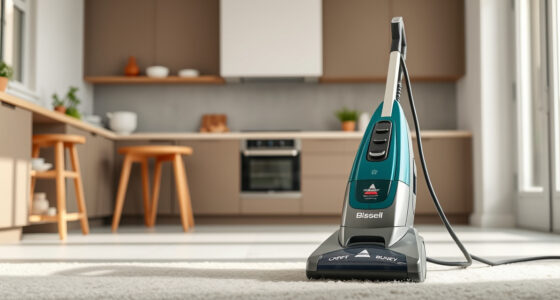
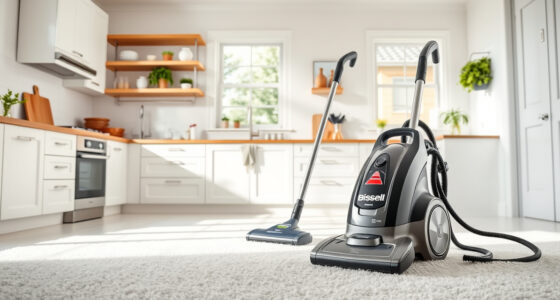
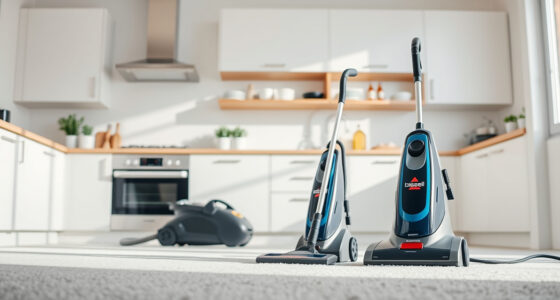
Battery-powered cleaning equipment offers portability and quick setup, making it ideal for small or outdoor jobs, but it depends on battery life, which can limit runtime. Corded devices provide steady, uninterrupted power, perfect for heavy-duty tasks, but they restrict movement due to cords. Your choice impacts convenience and performance, and understanding these differences helps you pick the right tool. Keep exploring to discover how technological advances are shaping both options for better efficiency.

Get cleaning gear delivered free with Prime
- Fast, free delivery on millions of items
- Prime Video, Amazon Music and more included
- Member-only deals all year
Key Takeaways
- Battery-powered devices offer portability but have limited runtime due to battery capacity, unlike steady corded power.
- Corded equipment ensures consistent, uninterrupted power suitable for heavy-duty or large-area cleaning.
- Advances in battery tech improve charging times and reliability, narrowing performance gaps with corded devices.
- Corded cleaners are more durable and free from battery maintenance issues, providing long-term reliability.
- Choice depends on cleaning needs: portability and quick access favor cordless, while continuous power favors corded models.
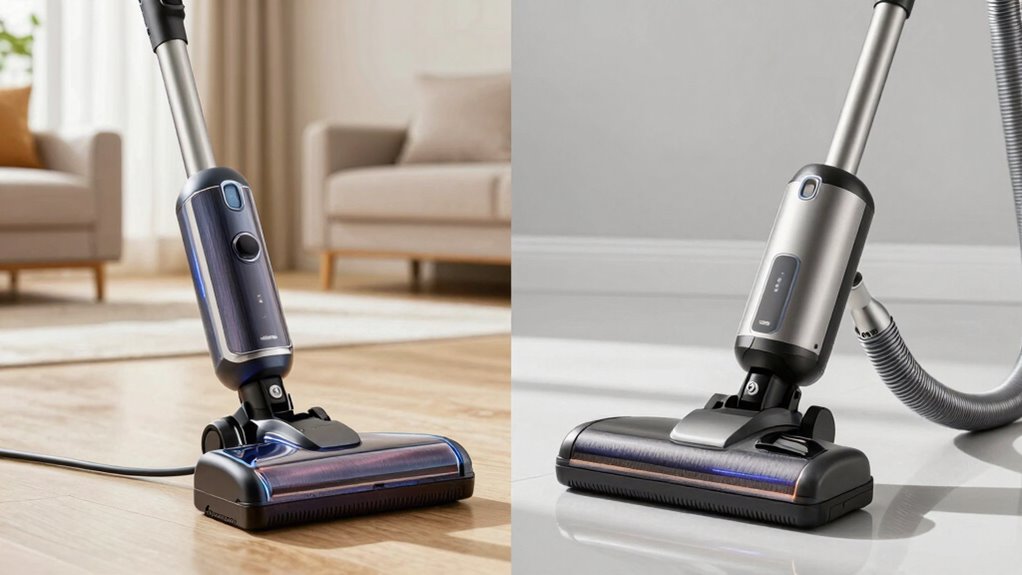
Ever wondered how different cleaning equipment stack up when it comes to power? When you’re choosing between battery-powered and corded devices, understanding what truly changes can help you make the best decision for your needs. One of the main differences lies in battery lifespan. With cordless equipment, the battery’s lifespan plays a vital role in your overall experience. Over time, batteries lose their capacity to hold a charge, which means your device might not last as long on a single charge as it did when it was new. This can be frustrating, especially if you’re in the middle of a cleaning session and suddenly run out of power. On the other hand, a corded device doesn’t have this issue. It provides consistent power as long as it’s plugged in, so you don’t have to worry about the battery dying unexpectedly.
However, corded equipment isn’t without its limitations. Its power consistency is generally more reliable because it’s directly connected to an electrical outlet. This means you get a steady stream of power without dips or fluctuations, which is especially important if you’re tackling tough stains or large areas. You won’t have to pause mid-clean to recharge or swap batteries, making corded options ideal for heavy-duty tasks. Still, the cord itself can become a hindrance—getting tangled, limiting your range of movement, or creating safety concerns if you’re not careful. Additionally, understanding battery health and maintenance can help prolong the lifespan of cordless devices, ensuring better long-term performance. Knowing how to properly maintain and store batteries can also extend their lifespan, saving you money and ensuring consistent power over time. Furthermore, advancements in battery technology continue to improve the overall reliability and efficiency of cordless cleaning devices. Moreover, considering the energy efficiency of your equipment can also impact your long-term costs and environmental footprint.
A further consideration is that newer battery innovations are helping to reduce charging times, making cordless devices more convenient for quick or repeated tasks. Battery-powered cleaners are more portable, giving you the freedom to move around without worrying about outlets or cords. This portability makes them perfect for quick clean-ups, outdoor jobs, or areas where outlets are scarce. But, their convenience comes with the trade-off of limited runtime, which depends heavily on battery lifespan. Once the battery wears out, you’ll need to replace it or buy a new device, adding to long-term costs. Conversely, corded models tend to be more durable over time, with fewer parts that wear out, but they restrict your mobility, which can slow down your cleaning process.
In the end, your choice hinges on what matters most—whether it’s the uninterrupted power of a corded device or the flexibility of a cordless one. If you prefer steady, dependable power without interruption, a corded cleaner might be your best bet. But if you value portability and ease of use, and are okay with managing battery health and runtime, then a battery-powered cleaner could suit you better. Understanding these differences helps you pick equipment that aligns with your cleaning style and the demands of your space.
cordless handheld vacuum cleaner
As an affiliate, we earn on qualifying purchases.
As an affiliate, we earn on qualifying purchases.
Frequently Asked Questions
How Does Battery Life Affect Cleaning Performance Over Time?
As your battery degrades over time, your cleaning performance may decline, causing shorter run times and less power. Battery degradation impacts power consistency, making it harder to maintain ideal cleaning results. You might notice the equipment struggles to pick up dirt or run as long as it used to. Regularly replacing or maintaining the battery can help you keep consistent performance and avoid the frustration of decreased cleaning effectiveness over time.
Are Cordless Tools as Durable as Corded Ones?
Cordless tools can be as durable as corded ones if they have good battery longevity and maintain power consistency. Modern batteries last longer and provide steady performance, making cordless equipment reliable for many tasks. However, frequent use or demanding jobs might wear down batteries faster, affecting durability. You should consider the quality of the battery and the tool’s design to guarantee it meets your durability needs over time.
What Are the Environmental Impacts of Battery Disposal?
You face environmental impacts when disposing of batteries, as they contain toxic chemicals that can pollute soil and water. Recycling programs help reduce these dangers by safely processing batteries and recovering valuable materials. Without proper disposal, toxic chemicals can leach into the environment, harming wildlife and human health. By supporting recycling initiatives and choosing eco-friendly options, you can minimize your environmental footprint and promote a cleaner, healthier planet.
Can Battery-Powered Equipment Match Corded Power for Heavy-Duty Jobs?
You might find that battery-powered equipment struggles to match corded power for heavy-duty jobs due to battery limitations and power consistency issues. While advances improve performance, batteries often lack the sustained power corded tools provide during prolonged, demanding tasks. For short, less intense jobs, batteries work well, but for continuous, heavy-duty cleaning, corded equipment remains more reliable and effective, ensuring consistent power without interruption.
How Do Charging Times Influence Cleaning Efficiency?
Charging times are like the heartbeat of your cleaning routine, directly impacting your efficiency. Faster charging speed means your equipment stays ready, ensuring consistent power during heavy-duty tasks. If charging takes too long, your workflow stalls, and cleaning slows down. You need reliable power consistency, so your tools perform at their best without interruption. Quick charges keep your momentum flowing, turning cleaning into a seamless, uninterrupted dance.
Conclusion
You stand in your cleaning space, choosing between the freedom of cordless and the steady strength of corded equipment. Imagine the cordless vacuum as a swift eagle, soaring untethered across rooms, while the corded cleaner is a dependable train, chugging steadily along its track. Both get the job done, but your choice shapes your cleaning journey—either soaring freely or moving with unwavering power. In the end, it’s about what suits your style and needs best.
Fall Picks
fall essentials
As an affiliate, we earn on qualifying purchases.