

To help your cleaner understand problem areas quickly, be specific and clear about exact locations, like “grease on the stovetop” or “pet hair on the sofa.” Use visual aids such as photos, videos, and arrows to highlight trouble spots. Combine these with detailed descriptions and organized checklists to guarantee nothing gets missed. Focusing on precise descriptions improves efficiency. Keep exploring ways to communicate effectively, and you’ll find your cleaning sessions become smoother and more thorough.

Get cleaning gear delivered free — and shop member deals
- Fast, free delivery on millions of items
- Access to Prime Big Deal Days deals on October 6–7
- Prime Video, Amazon Music and more included
Key Takeaways
- Use specific location details, like “top corner of the fridge” instead of “kitchen corner.”
- Highlight problem areas with photos, arrows, or circles for quick visual recognition.
- Clearly state the issue, such as “stubborn coffee stain on the countertop.”
- Provide a step-by-step checklist focusing on problematic spots to ensure thoroughness.
- Combine visual aids with written descriptions for comprehensive, easy-to-understand instructions.
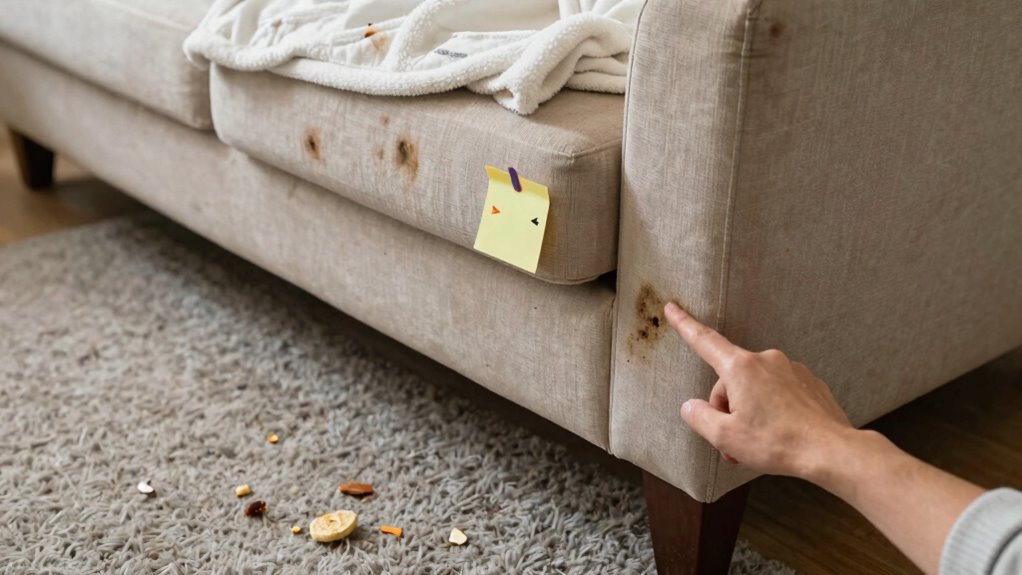
Visual aids are a powerful tool in this process. Photos or videos taken of problem areas can eliminate confusion, especially if your cleaner isn’t familiar with your home. Point out specific spots that are stubborn stains, hard-to-reach corners, or delicate surfaces. When sharing visual aids, be precise—highlight the exact spots with arrows or circles, so your cleaner understands what to target. This approach minimizes guesswork and guarantees your expectations are clear.
You should also be specific when describing problem areas. Instead of saying “the kitchen needs attention,” specify which parts—like the greasy stove top, the grimy sink, or the sticky fridge handle. Mention any particular issues, such as mold spots in the shower or pet hair on the furniture. This detailed communication helps your cleaner prioritize tasks and allocate the right amount of time to each issue. Clear communication is essential for effective home cleaning and maintaining a tidy space.
It’s also helpful to create a checklist or a room-by-room guide, especially if you’re sharing instructions with a new cleaner. List problem areas and include notes about how you want them addressed. For example, “remove soap scum from the shower door” or “vacuum under the sofa.” This structured approach guarantees nothing gets overlooked. Including visual aids can significantly improve communication and efficiency. Additionally, providing detailed descriptions of problem areas ensures that even visual cues are supported with clear instructions. Incorporating organized checklists can further streamline the process and ensure nothing is missed during cleaning. Using clear, concise language helps prevent misunderstandings and makes instructions easier to follow.
visual cleaning checklist for home
As an affiliate, we earn on qualifying purchases.
As an affiliate, we earn on qualifying purchases.
Frequently Asked Questions
How Detailed Should My Descriptions Be for Each Problem Area?
You should be as detailed as necessary to guarantee your cleaning priorities are clear and communication remains precise. Focus on specific issues, like stains or clutter, and mention their exact locations. Avoid overwhelming your cleaner with too much information, but don’t leave important details out. Clear, concise descriptions help your cleaner understand problem areas quickly, making the cleaning process more efficient and ensuring your expectations are met every time.
Should I Use Photos or Diagrams to Explain Problem Areas?
Yes, using photos or diagrams as visual aids can greatly improve communication clarity with your cleaner. Visual aids help pinpoint problem areas precisely, reducing misunderstandings and saving time. They give your cleaner a clear picture of what needs extra attention, especially for tricky spots. Incorporate these visuals alongside your descriptions for the most effective communication. This approach guarantees your cleaner understands your expectations quickly and accurately, leading to better results.
How Often Should I Update My Problem Descriptions?
You should update your problem descriptions whenever you notice new issues or if your cleaning schedule changes. Regular updates guarantee your cleaner understands current priorities and problem areas. Incorporate maintenance tips to keep problem spots manageable, and communicate clearly when adjustments are needed. By staying proactive, you help your cleaner work efficiently, preventing bigger problems and maintaining a cleaner space. Frequent updates foster better understanding and consistent results.
What’s the Best Way to Communicate Urgent Cleaning Issues?
When you spot urgent cleaning issues, don’t beat around the bush—be clear and direct. Use your cleaning protocols and maintenance schedules to highlight the problem, emphasizing its urgency. Communicate promptly through your preferred method, like a quick call or text, ensuring your cleaner understands the gravity. This way, you prevent issues from snowballing and keep everything running smoothly, because a stitch in time saves nine.
How Can I Ensure My Cleaner Remembers All Problem Areas?
To guarantee your cleaner remembers all problem areas, create clear cleaning schedules highlighting specific spots needing extra attention. Use feedback strategies like quick check-ins or written notes to reinforce these priorities regularly. Mention problem areas during each visit and encourage your cleaner to ask questions or confirm understanding. Consistent communication and detailed schedules help your cleaner retain what needs fixing, making the cleaning process more efficient and thorough over time.
Conclusion
So, next time you think describing problem areas is just about pointing out the mess, remember—sometimes, it’s the details you omit that cause the biggest confusion. Your cleaner’s understanding hinges on clarity, yet we often assume they see what we see. Ironically, in trying to save time, you might end up wasting more, fixing misunderstandings. Clear, specific instructions save everyone’s time—because, after all, who wouldn’t want a spotless home without the hassle?
Fall Picks
fall essentials
As an affiliate, we earn on qualifying purchases.