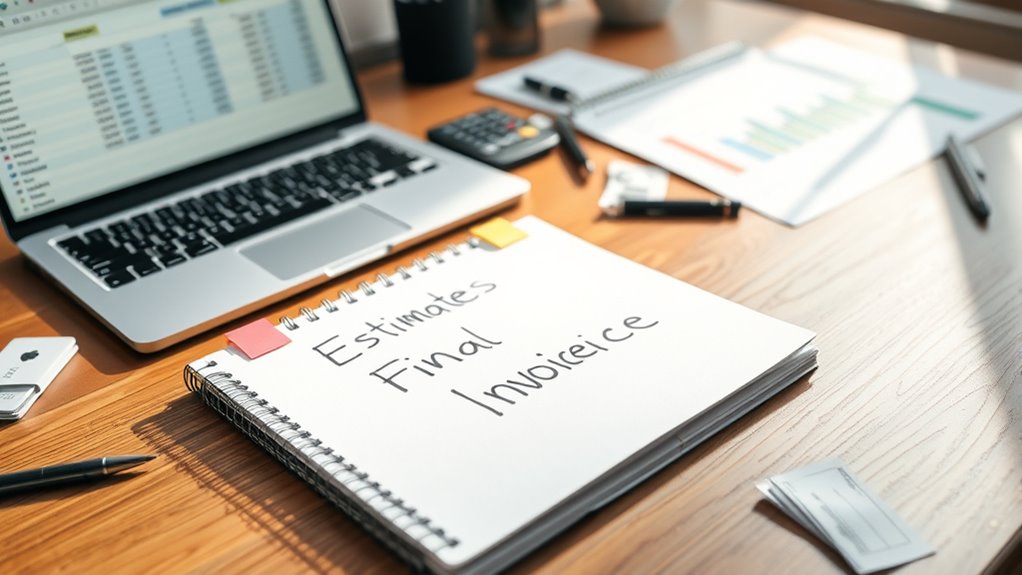

Understanding estimates and final invoices helps you manage your project costs better. An estimate gives you a preliminary idea of expenses based on initial info, but it’s flexible and can change as work progresses. The final invoice shows the actual amount owed after completion, including any adjustments. Comparing both helps you stay on budget and spot discrepancies. Keep in mind how these documents differ—they’re key to controlling your finances and making informed decisions. If you continue, you’ll learn more about effectively using both tools.

Get cleaning gear delivered free — and shop member deals
- Fast, free delivery on millions of items
- Access to Prime Big Deal Days deals on October 6–7
- Prime Video, Amazon Music and more included
Key Takeaways
- Estimates provide a preliminary, flexible cost range based on initial project details, while final invoices specify actual, fixed charges after completion.
- Estimates help plan budgets and resources but are subject to change; final invoices record the definitive amount owed.
- Clear communication ensures understanding of potential cost variations and prevents discrepancies between estimates and invoices.
- Comparing estimates to final invoices helps assess budgeting accuracy and financial decision-making.
- Requesting detailed estimates before starting work and reviewing final invoices carefully ensures transparency and avoids hidden charges.

When managing a project or hiring a service, understanding the difference between estimates and final invoices is essential. These two documents serve distinct purposes in the financial process, and knowing how they relate helps you manage expectations and avoid surprises. An estimate is a preliminary calculation of costs based on initial information. It’s your first glimpse at what the project or service might cost, created through careful cost estimation. This process considers factors like labor, materials, and potential overhead to give you a ballpark figure. Keep in mind that estimates are not fixed; they’re flexible and may change as the project progresses or as more detailed information becomes available.
As you move forward, the importance of invoice billing comes into play. An invoice is a formal request for payment issued after services are rendered or work is completed. Unlike the estimate, the invoice reflects the actual costs incurred, which can differ from the original estimate. This is why clear communication throughout the process is vital—if costs are expected to exceed the initial estimate, you should be informed beforehand. Final invoices detail every charge, including additional expenses or adjustments that may have arisen during the project. They serve as a record for both parties, ensuring transparency and accountability.
Understanding the difference between these two documents also helps you plan your budget more effectively. When you receive an estimate, you get an idea of the financial scope, allowing you to allocate funds accordingly. However, because estimates are based on initial assumptions, they shouldn’t be considered final. When the project concludes, the final invoice provides the concrete amount owed. If there’s a discrepancy, it’s important to review the invoice carefully and communicate with the service provider or contractor to clarify any differences. This process ensures that the final billing aligns with the agreed-upon scope of work and that there are no hidden charges.
In terms of practical application, always ask for detailed estimates before starting work. This way, you establish a clear understanding of potential costs and avoid surprises. During the project, keep track of any changes or additional work that might affect the final invoice billing. When the job is complete, compare the final invoice to the initial estimate to understand what adjustments were made. This comparison helps you evaluate the accuracy of your cost estimation and improves your budgeting for future projects. Ultimately, knowing how estimates and final invoices relate empowers you to make informed financial decisions and maintain control over your project or service expenses. Additionally, understanding how cost estimation impacts the final billing can help you better negotiate and plan your budget effectively.
As an affiliate, we earn on qualifying purchases.
Frequently Asked Questions
How Can I Dispute a Final Invoice I Believe Is Incorrect?
To dispute a final invoice you believe is incorrect, start by requesting an invoice review from the provider. Follow the dispute process outlined in your agreement, clearly listing the items you find inaccurate. Communicate your concerns in writing and provide supporting documentation if possible. Keep records of all correspondence, and if needed, escalate the issue to a higher authority or seek third-party mediation to resolve the dispute effectively.
What Should I Do if My Estimate Significantly Exceeds the Final Invoice?
If your estimate considerably exceeds the final invoice, you should review the pricing transparency and compare it with the original estimate. Contact the service provider using clear communication strategies, ask for a detailed explanation, and request an itemized breakdown of charges. This proactive approach helps you understand any discrepancies, ensuring transparency and fostering trust. If issues remain, consider negotiating or seeking advice from a consumer protection agency.
Are There Common Reasons for Unexpected Charges on a Final Invoice?
Unexpected charges often surprise you like a sudden storm, revealing hidden fees or pricing discrepancies. These differences happen when additional work, unforeseen issues, or miscommunications arise after the estimate. Sometimes, costs are added for extra services or materials not initially discussed. To avoid this, always review your final invoice carefully, ask for explanations on any unfamiliar charges, and confirm all agreed terms are clearly documented to keep surprises at bay.
How Early Should I Request an Estimate Before Starting a Project?
You should request an estimate at least a few weeks before starting your project to allow time for discussing the project scope and vendor communication. This lead time guarantees you can review the estimate thoroughly, clarify any questions, and make adjustments as needed. Early communication helps prevent surprises on the final invoice, giving you confidence that the project meets your expectations and budget.
Can Estimates Be Revised Once a Project Has Begun?
Yes, estimates can be revised once a project has begun. If there are scope changes or contract adjustments, your contractor might update the estimate to reflect new costs or work. It’s important to communicate any changes promptly, so everyone stays on the same page. Keep in mind that revisions could affect your budget and timeline, so discussing these updates openly helps prevent surprises or misunderstandings later on.
Conclusion
Now that you understand estimates and final invoices, you’ll see the full picture clearly. While estimates give you a preview of costs, the final invoice reveals the actual expenses. It’s like reading the blueprint versus walking through the completed project. Knowing both guarantees you’re prepared and confident in managing your budget. So, embrace the process—because understanding the journey from estimate to invoice helps you stay in control every step of the way.
Fall Picks
fall essentials
As an affiliate, we earn on qualifying purchases.