Pressure washing isn’t safe for every surface around your home or business because high pressure and improper techniques can cause damage. For example, surfaces like wood, vinyl siding, or stucco can be gouged, warped, or cracked if you’re not careful. Harsh chemicals or incorrect equipment settings can also lead to discoloration or deterioration. To protect your property’s condition and appearance, it’s important to understand each surface’s specific needs—more details can help you avoid costly mistakes.

Get cleaning gear delivered free — and shop member deals
- Fast, free delivery on millions of items
- Access to Prime Big Deal Days deals on October 6–7
- Prime Video, Amazon Music and more included
Key Takeaways
- Different surfaces react uniquely to high-pressure water; some can be damaged, gouged, or warped.
- Inappropriate chemical use can cause discoloration, deterioration, or damage to protective coatings.
- Excessive pressure or wrong nozzle choice can crack vinyl siding or erode painted surfaces.
- Porous materials like wood can absorb moisture, leading to swelling, rot, or long-term deterioration.
- Proper surface assessment and equipment settings are essential to prevent costly repairs and property damage.
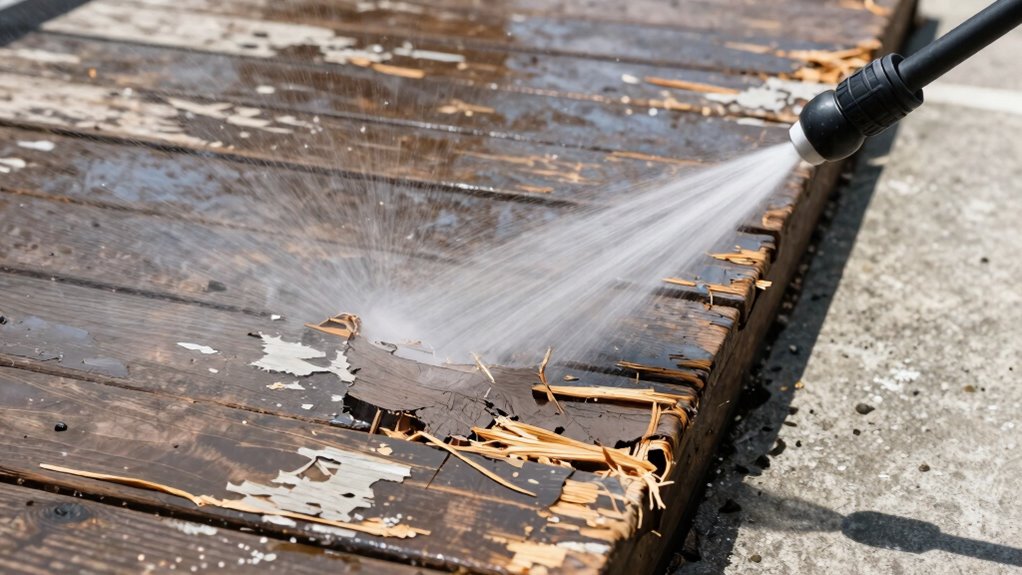
Pressure washing can quickly transform the look of your property, but it also comes with risks if you’re not careful. One of the biggest concerns is causing damage to surfaces that aren’t designed to withstand high-pressure water. Not all materials react the same way to pressure washing, and using the wrong technique or equipment can lead to costly repairs. You might think that blasting away dirt and grime is straightforward, but without understanding surface compatibility, you risk stripping paint, gouging wood, or even warping delicate surfaces like vinyl siding or stucco.
Pressure washing risks damage without proper technique and surface understanding.
Another critical issue is chemical damage. Many pressure washers incorporate or require cleaning solutions to tackle stubborn stains or mold. However, not all chemicals are suitable for every surface. For example, using harsh cleaners on brick or painted surfaces can cause discoloration or deterioration over time. It’s essential to choose cleaning agents that are compatible with the material you’re working on. If you skip this step, you might find yourself facing faded paint, stained concrete, or compromised seals, which can be expensive to repair.
Surface compatibility is often overlooked, but it’s essential to prevent damage. Different materials react differently to water pressure and cleaning agents. Wood, for instance, is porous and can absorb moisture, leading to swelling or rotting if pressure is too high or if water gets trapped beneath the surface. Conversely, concrete can withstand high pressure, but it’s still susceptible to surface etching or pitting if you’re not cautious. Vinyl siding, while durable, can crack or warp if the pressure is excessive or if the nozzle is held too close. Understanding the specific needs of each material helps you avoid unintentional damage. Additionally, awareness of surface material characteristics is crucial for selecting appropriate cleaning methods. Recognizing how different surface materials react to pressure and chemicals can help you choose the safest approach for each area. It’s also beneficial to familiarize yourself with common surface vulnerabilities to prevent accidental harm during cleaning. Knowing how surface materials respond to improper pressure can help you avoid costly mistakes and extend the lifespan of your property’s exterior. Properly assessing the surface type and condition before starting will ensure you use the correct pressure settings and nozzles.
Many homeowners and business owners underestimate the importance of adjusting pressure settings and choosing the correct nozzle for each surface. It’s tempting to use the same setup everywhere, but doing so risks chemical damage or physical harm to the surface. Always check manufacturer guidelines or consult professionals when in doubt. Proper surface assessment and the right cleaning products protect your property’s integrity and appearance, saving you money and headaches in the long run.
pressure washer for wood surfaces
As an affiliate, we earn on qualifying purchases.
As an affiliate, we earn on qualifying purchases.
Frequently Asked Questions
Can Pressure Washing Damage Delicate Outdoor Furniture?
Yes, pressure washing can damage delicate outdoor furniture if you’re not careful. The high pressure can strip paint, break apart fragile surfaces, or cause dents, especially if the furniture isn’t very durable. Surface durability varies, so it’s essential to use lower pressure and the right nozzle for delicate outdoor furniture. Always test a small, hidden area first to prevent costly damage and keep your furniture looking its best.
Is Pressure Washing Safe for Painted Surfaces?
Pressure washing can be safe for painted surfaces if you consider paint durability and proper surface preparation. You should use a gentle pressure setting and keep the nozzle at a safe distance to avoid stripping paint or causing damage. Always test a small, inconspicuous area first. If the paint is old or peeling, pressure washing might worsen the issue. Proper surface preparation makes certain the paint stays intact and looks fresh.
Can Pressure Washing Harm Plants or Landscaping?
Pressure washing can indeed harm plants or landscaping if you’re not careful. The powerful spray may cause landscaping damage and compromise plant safety, especially if you aim directly at vegetation or use too high pressure. To protect your landscape, always keep the nozzle at a safe distance, avoid spraying directly on delicate plants, and use eco-friendly, plant-safe cleaning solutions. Proper technique prevents damage and keeps your landscaping looking its best.
Are There Specific Surfaces That Should Never Be Pressure Washed?
Certain surfaces, like delicate wood, shingles, and antique bricks, should never be pressure washed due to their low surface durability. Using improper cleaning techniques can cause damage, including stripping paint or eroding material. Always assess the surface’s strength before pressure washing, and opt for gentler cleaning methods when dealing with fragile surfaces. This helps preserve your property’s integrity and prevents costly repairs.
How Do I Know if My Surface Needs Professional Pressure Washing?
Did you know that improper pressure washing can cause over $1 billion in damage annually? To determine if your surface needs professional pressure washing, do a thorough surface assessment. If you’re unsure about the material or worried about DIY risks, it’s best to call in experts. They can evaluate your surfaces properly and guarantee safe, effective cleaning without risking damage or injury.
Conclusion
While pressure washing can make your home or business look great, it’s not safe for every surface. If you’re worried about damaging delicate materials or causing costly repairs, it’s best to consult a professional. They can assess your surfaces and recommend safer cleaning methods. Don’t risk costly damage just to get a quick clean—sometimes, a gentle approach is all you need to keep your property looking its best without the risks.
Fall Picks
fall essentials
As an affiliate, we earn on qualifying purchases.