
To prepare for allergy-sensitive cleaning, start by clearing the area of clutter and removing items that trap dust and pet dander. Wear a mask and gloves to protect yourself from allergens. Use a HEPA-filter vacuum to deep clean carpets, rugs, and upholstery, and wash bedding and curtains in hot water. Keep windows open for fresh air and set indoor humidity between 30-50%. Continue with these steps to create a healthier environment step by step.
Key Takeaways
- Remove clutter and items that trap dust and pet dander before cleaning.
- Use a HEPA-filter vacuum and air purifier to reduce airborne allergens during cleaning.
- Wear a mask and gloves to minimize exposure to dust and pet allergens.
- Wash bedding, curtains, and soft furnishings in hot water prior to cleaning.
- Conduct cleaning in well-ventilated areas to promote fresh air circulation.
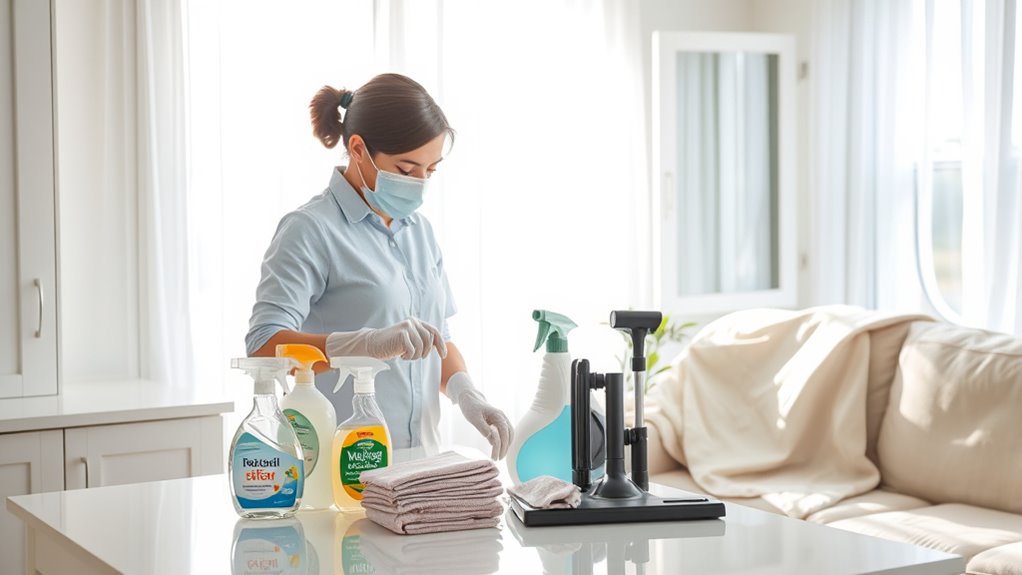
If you or someone in your household has allergies, preparing for allergy-sensitive cleaning is essential to create a safe and comfortable environment. Allergens like dust mites and pet dander are common triggers that can cause discomfort or worsen allergy symptoms. To minimize these irritants, you need a targeted cleaning plan that reduces their presence effectively.
Start by focusing on dust mites, which thrive in bedding, upholstery, and carpets. Washing all bedding, pillowcases, and blankets weekly in hot water—at least 130°F—helps kill dust mites and removes allergen buildup. Consider using allergen-proof covers on mattresses and pillows, as these create a barrier that prevents dust mites from settling and proliferating. Regularly vacuum carpets, rugs, and upholstered furniture with a high-efficiency particulate air (HEPA) filter vacuum cleaner. HEPA filters trap tiny particles, including dust mites and pet dander, preventing them from dispersing back into the air. Using HEPA filtration technology in your vacuum is especially effective for allergen control.
Washing bedding weekly at 130°F and using allergen-proof covers reduces dust mite allergens effectively.
Pet dander is another significant allergen, often lingering in the air and settling on surfaces. To manage it, establish a strict cleaning routine that includes vacuuming floors and furniture frequently, ideally daily. Use a vacuum equipped with a HEPA filter, which captures more allergens than standard models. Keep pets out of bedrooms and off furniture to reduce allergen accumulation in those high-traffic areas. Regularly bathing your pets can also help diminish dander levels, but be sure to use hypoallergenic pet shampoos and dry them thoroughly. Wiping down surfaces where pets spend time with a damp cloth can remove dander that has settled.
Air quality plays a critical role in allergy-sensitive cleaning. Use a HEPA air purifier in common areas and bedrooms to trap airborne allergens and improve indoor air quality. Keep windows open when weather permits to allow fresh air circulation, which can help dilute indoor allergens. Maintain low humidity levels—ideally between 30-50%—since dust mites and mold thrive in damp environments. A dehumidifier can assist in achieving this, especially in humid climates.
Finally, organize your cleaning schedule around these allergen-reduction strategies. Consistency is key, so stick to weekly routines and be diligent about cleaning surfaces, bedding, and air filters. By systematically targeting dust mites and pet dander and improving overall air quality, you’ll create a healthier environment that minimizes allergy symptoms and makes your home more comfortable for everyone.
Frequently Asked Questions
Are There Natural Cleaning Products Suitable for Allergy-Sensitive Households?
Yes, there are natural cleaning products suitable for allergy-sensitive households. Look for options made with hypoallergenic ingredients that avoid common irritants like artificial fragrances and harsh chemicals. Choose eco-friendly formulations that prioritize plant-based ingredients and avoid synthetic additives. These products help you maintain a clean, healthy home without triggering allergies, ensuring a safer environment for everyone in your household. Always check labels to confirm their suitability for allergy-sensitive needs.
How Often Should Allergy-Sensitive Surfaces Be Cleaned?
You should clean allergy-sensitive surfaces at least twice a week to reduce dust mites and mold spores. Regular dusting with a damp cloth helps trap allergens, while vacuuming with a HEPA filter removes particles from carpets and upholstery. Pay special attention to bedding, curtains, and bathroom areas, as these can harbor mold spores. Consistent cleaning minimizes allergen buildup, creating a safer environment for allergy sufferers.
Can Air Purifiers Reduce Allergens During Cleaning?
Yes, air purifiers can reduce allergens during cleaning if you maintain them properly. Regular air purifier maintenance, like changing filters as recommended, guarantees maximum allergen filtration effectiveness. When you turn on your purifier during cleaning, it captures airborne allergens like dust, pollen, and pet dander, creating a cleaner environment. Keep your device running efficiently, and you’ll notice a significant reduction in allergens, making your space safer and more comfortable.
What Are the Best Storage Practices for Allergy-Safe Cleaning Supplies?
Picture your cleaning supplies nestled safely in airtight containers, their scent sealed away from your home’s air. You should store allergy-safe cleaning supplies in airtight containers to prevent dust and allergens from escaping. Use clear labeling systems so you can quickly identify each item without opening boxes, reducing exposure. Keep these containers in a cool, dry place away from children, ensuring a safe, allergen-free environment every time you clean.
How Do I Identify Hidden Sources of Allergens in My Home?
You can identify hidden sources of allergens by regularly inspecting your home for hidden mold in damp areas like bathrooms and basements, and checking for pet dander in carpets, upholstery, and bedding. Use a flashlight to spot mold growth and consider a professional mold inspection if needed. Vacuum thoroughly with a HEPA filter and wash pet bedding frequently to reduce pet dander, creating a healthier environment.
Conclusion
Now that you’re ready to tackle allergy-sensitive cleaning, imagine the moment you finish—every surface spotless, free from irritants, and breathing easier. But beware: hidden allergens could still be lurking, waiting to surprise you. Stay vigilant, keep your routine consistent, and don’t let your guard down. With each careful sweep, you’re not just cleaning—you’re creating a safe haven where allergens can’t hide. The peace of pure, fresh air is closer than you think.