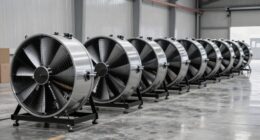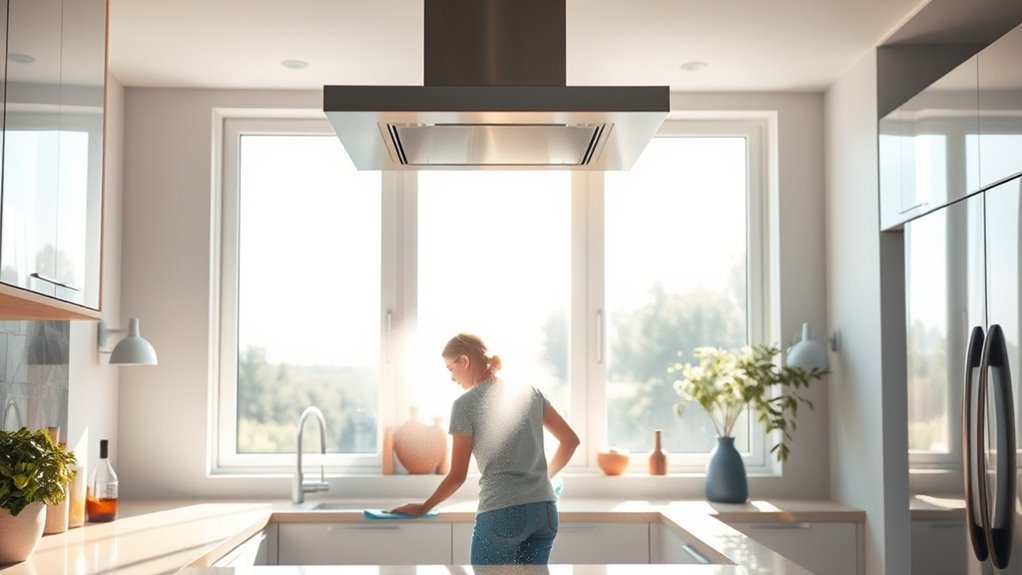

During cleaning, you should open windows and turn on exhaust fans to create good airflow and remove airborne dust, fumes, and chemicals. Keep ventilation systems running throughout the process and afterward to help dilute and eliminate lingering pollutants. Combining natural ventilation with air purifiers equipped with HEPA filters can greatly improve indoor air quality and protect your respiratory health. Continuing to follow proper ventilation practices can help maintain a healthier indoor environment—learn more about how to optimize your cleaning routines.
Key Takeaways
- Start cleaning by opening windows and activating exhaust fans to improve airflow and reduce airborne pollutants.
- Keep ventilation systems running throughout cleaning to dilute and remove dust, fumes, and chemicals effectively.
- Use exhaust fans in kitchens and bathrooms to vent fumes and dust directly outside during cleaning activities.
- Continue ventilation after cleaning to help settle and remove residual particles from indoor air.
- Combine the use of air purifiers with proper ventilation for optimal removal of airborne contaminants and improved indoor air quality.

Cleaning can release dust, chemicals, and other pollutants into the air, which may impact your indoor air quality. When you scrub, sweep, or use cleaning products, tiny particles and fumes become airborne, potentially causing respiratory irritation or exacerbating allergies. To counteract this, you should consider using air purifiers during and after cleaning. These devices help trap airborne particles, chemicals, and allergens, markedly improving the air you breathe. Choose an air purifier with a HEPA filter for ideal removal of dust and allergens, and ensure it’s appropriately sized for your space. Running an air purifier during cleaning can help capture pollutants at their source, preventing them from settling back into the air.
In addition to air purifiers, proper ventilation methods are crucial to maintain good indoor air quality. Ventilation methods involve exchanging stale indoor air with fresh outdoor air, reducing the concentration of airborne contaminants. When cleaning, open windows and doors to create cross-ventilation, allowing pollutants to escape and fresh air to circulate. If outdoor air quality is poor or weather conditions don’t permit, use exhaust fans in areas like the kitchen and bathroom to vent fumes and dust outside. Running these fans during cleaning helps draw pollutants out of your indoor environment, minimizing their lingering effects.
You might also consider creating a systematic approach to ventilation during deep cleaning sessions. For example, start by opening windows and turning on exhaust fans before you begin cleaning activities. Keep them running throughout the process, and continue for a while afterward to ensure any residual particles are removed. This continuous airflow helps dilute pollutants, preventing them from accumulating in your indoor air. Additionally, incorporating high-efficiency filtration technology can significantly enhance pollutant removal, ensuring cleaner air during and after cleaning. If you have mechanical ventilation systems, ensure they are well-maintained and functioning correctly, as dirty filters can hinder their effectiveness. Regularly replacing or cleaning filters ensures maximum airflow and pollutant removal.
Integrating air purifiers with effective ventilation methods provides a thorough strategy for maintaining healthy indoor air during cleaning. By actively removing airborne particles with purifiers and exchanging indoor air with fresh outdoor air, you considerably reduce your exposure to dust, fumes, and chemicals. This approach not only improves indoor air quality during cleaning but also supports your overall respiratory health. Remember, maintaining good ventilation and using air purifiers are simple, proactive steps that make a noticeable difference, especially if you or your family members have allergies, asthma, or sensitivities. Proper ventilation methods and air purifiers work together to keep your indoor environment cleaner, healthier, and more comfortable during and after every cleaning session.
Frequently Asked Questions
How Often Should I Ventilate During Cleaning?
You should ventilate during cleaning at least every 15-20 minutes to guarantee proper air exchange and effectively remove odors. Keep windows and doors open or use exhaust fans to let fresh air in and push out indoor pollutants. This continuous airflow helps reduce the buildup of cleaning fumes and allergens, making your space safer and more comfortable. Regular ventilation during cleaning is key for maintaining good indoor air quality.
Are There Specific Cleaning Products That Improve Indoor Air Quality?
Think of your cleaning routine as a refreshing gust for your home. Using products labeled as low-VOC or natural, like vinegar or baking soda, helps keep indoor air quality high. Pair these with natural ventilation—opening windows or using air purifiers—to clear out any lingering chemical fumes. This combo creates a healthier, more inviting space, ensuring your home feels as fresh as a spring breeze.
Can Ventilation Eliminate All Indoor Pollutants During Cleaning?
Ventilation can’t eliminate all indoor pollutants during cleaning, but it plays a vital role in air exchange and pollutant removal. By increasing airflow, you reduce airborne contaminants and improve air quality. However, some pollutants, like volatile organic compounds, can linger despite good ventilation. To maximize effectiveness, combine proper ventilation with using low-emission cleaning products, ensuring a healthier environment during and after cleaning.
What Is the Best Way to Ventilate Small or Enclosed Spaces?
Imagine opening a window, sunlight streaming in, as fresh air floods your small space. To maximize air exchange and boost ventilation effectiveness, keep windows and doors open on opposite sides, creating a cross-breeze. Use a fan to direct airflow outward, pulling stale air out. If possible, add an exhaust fan or air purifier. This combination guarantees quick, thorough ventilation, reducing indoor pollutants and making your enclosed space safer during cleaning.
How Does Ventilation Impact Allergen Levels During Cleaning?
Proper ventilation reduces allergen levels during cleaning by increasing air exchange, which helps remove airborne allergens like dust, pet dander, and pollen. When you ventilate well, it prevents allergen dispersion from settling on surfaces or becoming trapped in the air. You should open windows or use exhaust fans to promote airflow, ensuring pollutants are carried outside quickly. This way, you breathe cleaner air and minimize allergy flare-ups during cleaning.
Conclusion
Remember, proper ventilation acts like an inhalation of fresh air for your home, sweeping away harmful particles and odors. When you open windows or turn on fans during cleaning, you’re clearing out invisible toxins that lurk in the air. Think of your space as a living lungs—keeping it well-ventilated ensures it can breathe easily. So, make clean air your cleaning partner; together, you’ll create a healthier, happier home where germs can’t hide.