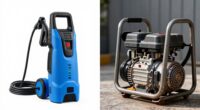
When comparing PSI and GPM, understand that PSI measures the water pressure force, while GPM indicates how much water flows through the system. High PSI isn’t always better if GPM is low, and vice versa—both work together to determine cleaning power. For tough stains, higher PSI helps, but for rinsing large areas quickly, higher GPM is key. To truly maximize your pressure washer’s effectiveness, uncover the perfect balance—there’s more to learn below.

Get cleaning gear delivered free with Prime
- Fast, free delivery on millions of items
- Prime Video, Amazon Music and more included
- Member-only deals all year
Key Takeaways
- PSI measures water pressure force, while GPM measures water volume flow; both are essential for effective cleaning.
- High PSI alone doesn’t guarantee better cleaning; GPM determines rinsing effectiveness and coverage.
- Combining moderate PSI with high GPM often yields the best cleaning results and surface safety.
- Focusing solely on high PSI can damage surfaces; balancing it with appropriate GPM prevents harm.
- Understanding the interaction between PSI and GPM ensures optimal pressure washer performance and cleaning efficiency.
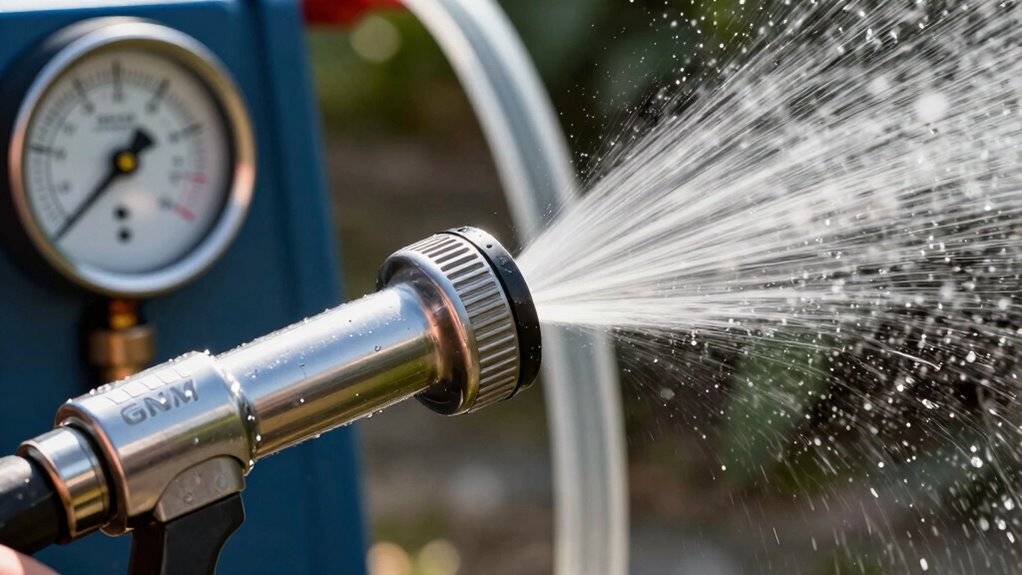
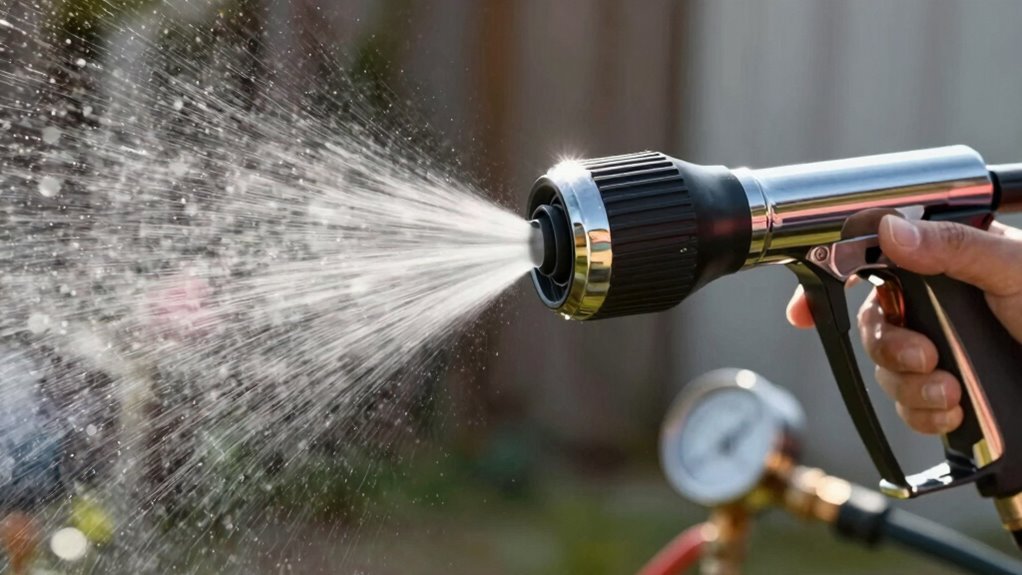
Have you ever wondered what the difference is between PSI and GPM when it comes to measuring water flow and pressure? Understanding these two terms is essential when choosing a pressure washer, as they directly influence how effectively you clean. PSI, or pounds per square inch, measures the pressure of the water coming out of the nozzle. Think of it as the force pushing water onto a surface. The higher the PSI, the harder the water hits, which helps dislodge dirt and grime. On the other hand, GPM, or gallons per minute, indicates how much water flows through the system every minute. This is all about water volume, and it determines the overall water flow. When combined, PSI and GPM give you a complete picture of a pressure washer’s cleaning power.
Many people mistakenly believe that a higher PSI always means better cleaning results. While PSI is vital for breaking down stubborn dirt, it’s not the only factor to consider. If a pressure washer has a high PSI but low GPM, the water hits hard, but there’s not enough water volume to rinse away loosened debris effectively. Conversely, a machine with a lower PSI but higher GPM can deliver a more thorough clean because it provides a consistent flow of water that rinses away dirt more efficiently. Think of it like a spray from a garden hose versus a fire hose: the fire hose may have a higher PSI, but if the flow is limited, it won’t clean as well as a steady, high-volume stream.
Water flow, or GPM, fundamentally impacts cleaning power because it determines how much water is available to carry away dirt and debris. When you increase GPM, you’re essentially increasing the amount of water that rinses surfaces, making the process faster and more effective. This is especially important for larger areas or stubborn grime, where a steady flow of water ensures dirt doesn’t just get loosened but also gets flushed away. So, when selecting a pressure washer, don’t just look at PSI; consider both PSI and GPM. The right combination depends on what you’re cleaning. For instance, delicate surfaces like cars benefit from moderate PSI with high GPM for gentle yet effective cleaning, whereas concrete driveways need higher PSI to break through tough stains.
Additionally, understanding how pressure and water flow work together can help prevent damage to surfaces and ensure efficient cleaning. Ultimately, understanding how water flow and pressure work together helps you choose a pressure washer that matches your cleaning needs. A balance of PSI and GPM ensures you maximize cleaning power without wasting water or risking damage to surfaces. Remember, it’s not about having the highest numbers, but about finding the right mix that delivers effective, safe, and efficient cleaning results.
pressure washer with adjustable PSI and GPM
As an affiliate, we earn on qualifying purchases.
As an affiliate, we earn on qualifying purchases.
Frequently Asked Questions
How Does Water Temperature Affect Pressure Washer Performance?
Water temperature affects your pressure washer performance by influencing cleaning efficiency and safety. Warmer water can break down grime faster, making cleaning easier, but it may also cause damage if too hot. Cold water pressure washers are generally safer and suitable for most tasks. Always check your pressure washer’s specifications to make certain it handles the water temperature you’re using, and avoid exceeding recommended limits to prevent damage.
Can High PSI Damage Delicate Surfaces?
Think of high PSI like a powerful jet of water; it can easily chip away at delicate surfaces if you’re not careful. Yes, high PSI can cause surface damage, especially on softer materials like wood or paint. To protect your equipment and ensure safety, always adjust pressure settings appropriately and use the right nozzle. This approach keeps your surfaces intact and prolongs your pressure washer’s lifespan.
What Is the Ideal GPM for Residential Cleaning?
For residential cleaning, you should aim for a GPM of around 1.5 to 2.5, balancing water flow and water pressure. This range provides enough cleaning power without harming surfaces. Higher GPM means more water flow, helping lift dirt effectively, while proper water pressure ensures thorough cleaning. Adjust your pressure washer accordingly, depending on the surface you’re cleaning, to avoid damage and achieve the best results.
How Do Nozzle Types Influence Cleaning Efficiency?
Think of nozzle types as different brushes in your cleaning toolkit. The nozzle spray pattern and size directly influence how efficiently you clean; a wide spray covers large areas quickly, while a narrow spray targets stubborn grime. Choosing the right nozzle size guarantees your spray has enough power without damaging surfaces. Adjusting your nozzle type lets you control the pressure and coverage, making your cleaning more effective and safe.
Is a Higher PSI Always Better for Cleaning Tough Stains?
A higher PSI isn’t always better for cleaning tough stains because it can cause pressure damage or surface compatibility issues. You need to balance PSI with GPM and nozzle type to avoid damaging delicate surfaces or stripping paint. Too much pressure risks surface damage, so always choose the right PSI for your specific task. Use lower PSI for softer materials and higher PSI only when necessary and safe.
Conclusion
Remember, PSI and GPM are the yin and yang of pressure washing—one measures force, the other flow. Without understanding both, you’re sailing a ship without a compass. Think of it like baking a cake: too much of one ingredient can ruin the whole batch. So, next time you pick a pressure washer, consider both numbers carefully. Mastering this math turns a messy job into a breeze, making your cleaning efforts as smooth as silk.
Evergreen bestsellers Picks
bestsellers
As an affiliate, we earn on qualifying purchases.