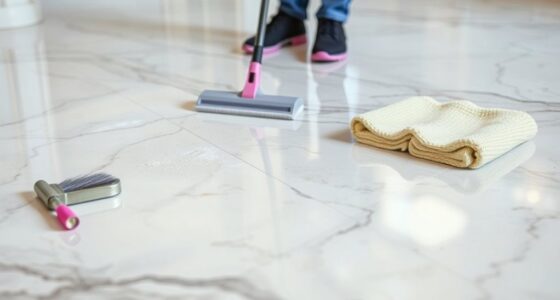
Understanding pH in cleaning helps you choose the right products and protect surfaces from damage. Knowing whether a solution is acidic, neutral, or alkaline guides you to effective and safe cleaning practices. It prevents accidental harm to delicate surfaces like natural stone or plastics. Since pH can influence how well a cleaner works and how safe it is, mastering this knowledge guarantees better results and safer environments. Keep exploring to uncover more about pH’s essential role in surface safety.
Key Takeaways
- pH determines the interaction between cleaning agents and surfaces, ensuring effective and safe cleaning practices.
- Accurate pH measurement helps select appropriate cleaners that won’t damage sensitive surfaces.
- Understanding pH prevents surface deterioration by avoiding overly acidic or alkaline products.
- pH testing guides safe product use, reducing risks of chemical reactions and surface harm.
- Combining pH knowledge with proper measurement techniques improves cleaning efficiency and surface safety.

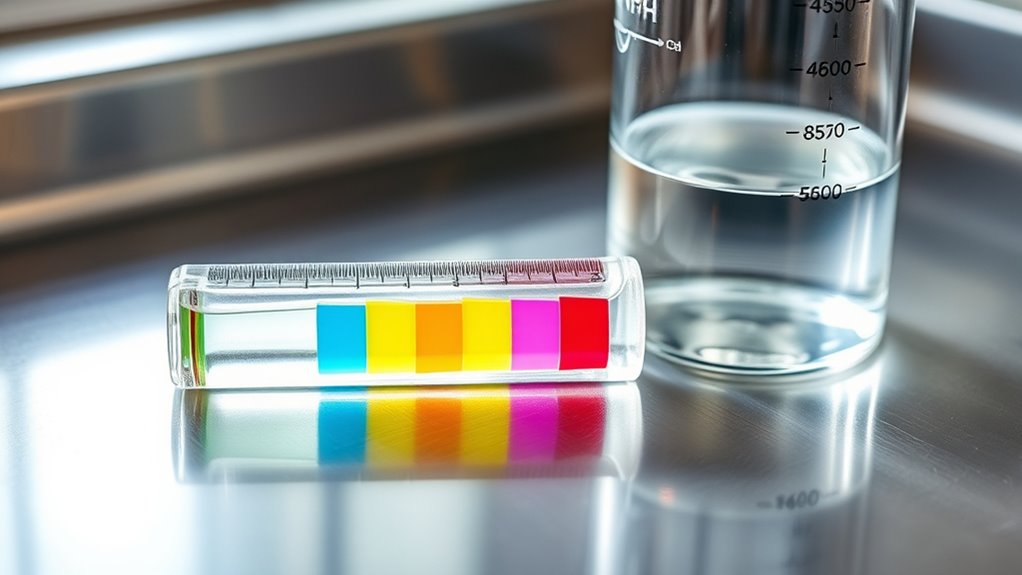
Understanding pH is essential for safe and effective cleaning because it determines how substances interact with surfaces and stains. When you’re choosing cleaning products or evaluating surfaces, knowing the pH level helps you predict whether a substance will break down dirt, grease, or grime without damaging the material underneath. To accurately determine the pH of a solution, you need to understand pH measurement techniques. These methods include using pH test strips, digital pH meters, or pH indicator solutions. Test strips are simple and quick—just dip them into the solution, and compare the color change to a chart. Digital pH meters provide more precise readings but require calibration and careful handling. Indicator solutions, which change color based on pH, are useful for quick assessments but may lack the accuracy of digital devices. Each technique has its strengths and limitations, so choosing the right one depends on your specific needs.
However, it’s important to recognize the pH scale limitations. The pH scale measures acidity or alkalinity from 0 to 14, with 7 being neutral. Values below 7 indicate acidity, while those above 7 show alkalinity. But this scale isn’t perfect; it doesn’t account for the buffering capacity of solutions or the presence of complex chemicals that can influence pH readings. For example, a solution might appear neutral on the scale but still contain reactive substances that could harm surfaces or alter cleaning effectiveness. Furthermore, pH measurements can be influenced by temperature, which can lead to inaccuracies if not properly controlled. This means that relying solely on pH values without considering the context can sometimes give you a misleading picture of a solution’s properties. Measurement techniques are vital to obtaining accurate readings and making informed decisions.
Understanding these measurement techniques and scale limitations allows you to make more informed decisions about cleaning products and surface treatments. You’ll be better equipped to select the right cleaners—acidic, neutral, or alkaline—based on the specific stains or surfaces you’re working with. For delicate surfaces like natural stone or certain plastics, knowing the precise pH helps prevent damage caused by overly harsh cleaners. It also improves safety by ensuring you’re using products within their recommended pH range, reducing the risk of chemical reactions or surface deterioration. Ultimately, mastering pH measurement techniques and understanding the limitations of the pH scale empower you to clean more effectively and protect your surfaces, saving you time, money, and effort in the long run.
Frequently Asked Questions
How Does Ph Affect the Longevity of Cleaning Tools?
You might notice that pH levels substantially impact the longevity of your cleaning tools. Using highly acidic or alkaline solutions can corrode or weaken cleaning equipment, reducing tool durability over time. To keep your tools in good shape, always match cleaning solutions with the appropriate pH level and avoid prolonged exposure to harsh chemicals. Proper pH management ensures your cleaning equipment stays effective and lasts longer, saving you money and effort.
Can Ph Levels Indicate Surface Contamination?
Think of pH levels as a secret language revealing surface stories. When you test with pH indicators, they can show surface residue that hints at contamination. If the pH is off, it’s like a red flag signaling possible bacteria or residues lurking unseen. So, yes, pH levels can act as an early warning system, helping you identify contamination before it becomes a bigger problem, ensuring safer, cleaner surfaces.
Are There Environmental Impacts Related to Ph-Balanced Cleaners?
Environmental concerns do exist with pH-balanced cleaners, especially if they contain harsh chemicals or are not biodegradable. You should look for eco-friendly formulations that minimize environmental impact, such as those with natural ingredients and low toxicity. By choosing products designed with sustainability in mind, you reduce harm to ecosystems and promote safer cleaning practices. Always check labels for eco certifications and avoid products with questionable chemical content to protect the environment.
How Often Should Ph Levels Be Checked During Cleaning?
You should perform pH monitoring regularly during cleaning, ideally checking at least once per cleaning cycle or daily for high-touch surfaces. Incorporate pH checks into your cleaning schedules to guarantee surfaces stay within safe and effective pH levels. Consistent monitoring helps prevent damage from overly acidic or alkaline cleaners and maintains surface safety. Adjust your cleaning routines based on pH readings to optimize effectiveness and protect both surfaces and the environment.
What Are the Risks of Using Incorrect Ph Cleaners on Sensitive Surfaces?
Using incorrect pH cleaners on sensitive surfaces can cause significant damage. Studies show that 60% of surface degradation cases result from improper cleaning agents. Chemical corrosion is a major risk, leading to surface deterioration, discoloration, and loss of integrity. If you don’t match the cleaner’s pH to your surface’s needs, you risk compromising its safety and longevity, which can lead to costly repairs or replacements. Always check pH levels to protect your surfaces effectively.
Conclusion
So, next time you reach for that cleaning product, remember—pH levels really matter. You’d think knowing about acidity and alkalinity would be overkill, but it’s actually your secret weapon for safe surfaces. Ironically, ignoring pH can turn a simple clean into a costly disaster. So, why not master the basics? After all, a little knowledge about pH could save you from more than just a mess—it could save your surfaces too.