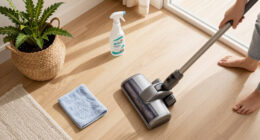
Dwell time is essential for effective disinfection because it guarantees the disinfectant stays on surfaces long enough to kill germs and viruses thoroughly. If you wipe or spray disinfectants without allowing them to sit for the recommended period, you risk incomplete sanitation. Following the proper contact time guarantees the disinfectant reaches its full potential. Keep in mind, the right dwell time varies, and understanding these details will help you disinfect more effectively.

Get cleaning gear delivered free — and shop member deals
- Fast, free delivery on millions of items
- Access to Prime Big Deal Days deals on October 6–7
- Prime Video, Amazon Music and more included
Key Takeaways
- Proper dwell time ensures disinfectants fully eliminate pathogens for effective sanitation.
- Following label instructions maintains the disinfectant’s full chemical efficacy.
- Adequate contact duration allows disinfectants to penetrate cell walls and deactivate germs.
- Environmental factors like surface type and humidity may require adjusting dwell time.
- Rushing disinfection or skipping dwell time compromises hygiene and safety outcomes.

Understanding how long disinfectants need to stay on a surface is essential for effective cleaning. This time frame, known as dwell time, directly impacts the chemical efficacy of the disinfectant. If you don’t give the disinfectant enough contact duration, it won’t have sufficient time to kill germs and viruses effectively. Conversely, leaving it on too long might not provide additional benefits and could even damage certain surfaces. Knowing the proper dwell time ensures you’re maximizing the disinfectant’s power without wasting product or risking harm to your environment.
Chemical efficacy depends heavily on contact duration because disinfectants need a specific period to penetrate cell walls and deactivate pathogens. For example, some disinfectants require only a few seconds, while others need several minutes to achieve full effectiveness. When you follow the manufacturer’s instructions, you’re allowing the disinfectant to reach its full potential, ensuring that bacteria, viruses, and fungi are thoroughly eliminated. Skipping or rushing this step is a common mistake that compromises sanitation efforts. By understanding the importance of dwell time, you make sure the disinfectant works as intended, providing a safer environment for everyone.
Proper dwell time ensures disinfectants fully eliminate pathogens and maximize cleaning effectiveness.
In practical terms, this means you should pay close attention to the labels on disinfectant bottles or sprays. They will specify the contact duration needed to achieve the desired level of disinfection. For instance, if the label states a 10-minute dwell time, you’ll want to keep the surface visibly wet for that entire period. This might involve reapplying the disinfectant if necessary or waiting before wiping it away. Remember, simply applying the product isn’t enough; it’s the contact duration that determines whether the germs are effectively neutralized. Not adhering to this timing can result in incomplete disinfection, which defeats the purpose of cleaning.
Additionally, environmental factors can influence dwell time effectiveness. Surfaces that are porous or textured may require longer contact durations because the disinfectant has to reach into crevices or absorb into materials. Temperature and humidity can also affect chemical reactions, so in more challenging conditions, it’s wise to follow guidelines closely and allow for extra contact time if needed. By understanding these nuances, you’re better equipped to ensure your disinfection process is both efficient and effective.
Ultimately, grasping the importance of dwell time and contact duration helps you make smarter cleaning decisions. It’s not just about applying disinfectant; it’s about giving it enough time to do its job. When you respect these principles, you’re taking critical steps toward maintaining a healthier, safer space. Proper dwell time isn’t just a recommendation—it’s a fundamental aspect of effective disinfection that can’t be overlooked. Additionally, awareness of global perspectives and diverse philosophies in health practices can enhance your understanding of comprehensive sanitation strategies.
As an affiliate, we earn on qualifying purchases.
Frequently Asked Questions
How Is Dwell Time Affected by Different Disinfectant Types?
Different disinfectant types require varying dwell times based on their concentration and contact duration. You need to follow manufacturer instructions, as some disinfectants act faster with higher concentrations, reducing dwell time. Others may need longer contact durations regardless of concentration. To guarantee effective disinfection, you should adjust dwell time according to the specific disinfectant’s guidelines, optimizing both concentration and contact duration for maximum pathogen elimination.
Can Dwell Time Be Shortened Without Losing Effectiveness?
You can sometimes shorten dwell time without losing effectiveness by choosing disinfectants with high surface compatibility and chemical stability. These products are formulated to work efficiently at shorter contact times, but always check the manufacturer’s instructions first. Keep in mind that improper use or incompatible surfaces might compromise disinfection, so testing on small areas and following guidelines guarantees safety and effectiveness while reducing dwell time.
Does Surface Material Influence Required Dwell Time?
Imagine disinfectant settling into a sponge—that’s surface porosity at play. Yes, surface material influences dwell time; porous materials like wood may require longer, while smooth surfaces like glass need less. Material compatibility also matters, as some disinfectants may not work effectively on certain surfaces. You should modify dwell times based on these factors to guarantee proper disinfection without compromising surface integrity.
Are There Safety Concerns With Longer Dwell Times?
Longer dwell times can raise safety concerns if safety protocols aren’t followed, especially regarding chemical stability. You should make certain proper ventilation and wear protective gear to prevent chemical exposure. Extended contact might increase risks of skin or respiratory irritation. Always adhere to manufacturer guidelines and safety protocols to minimize hazards. Proper training helps you understand how to handle disinfectants safely, even with longer dwell times, ensuring effective disinfection without compromising safety.
How Does Dwell Time Vary for Viruses Versus Bacteria?
Think of dwell time as a dance step—faster for bacteria, slower for viruses. You’ll find viral persistence often demands a longer wait, as viruses cling stubbornly, while bacteria may succumb quicker. Dwell time varies because of their different survival skills; viruses hide in cells, needing more time to break down, whereas bacteria are more exposed. Modifying dwell time ensures you effectively tackle both, preventing lingering threats.
Conclusion
Now that you understand the importance of dwell time, imagine what could happen if you overlook it. Will your surfaces stay truly disinfected, or will lurking germs find a way to survive? The secret is in the details—waiting just long enough might be the key to real protection. So, next time, don’t rush. Stay mindful of dwell time, and you could be one step closer to keeping your space safer than ever before.
Fall Picks
fall essentials
As an affiliate, we earn on qualifying purchases.