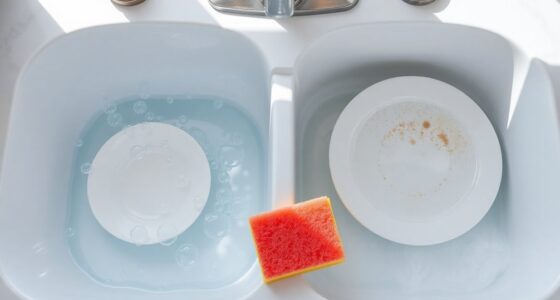
To tackle different soil types effectively, identify whether you’re dealing with water-soluble, organic, mineral-based, or greasy soils. For water-soluble and organic soils, eco-friendly solutions like vinegar or baking soda work well, especially when pre-treated and gently scrubbed. Mineral deposits such as rust or hard water stains respond to acids like vinegar or citric acid, while greasy soils need plant-based degreasers and warm water. Keep in mind, selecting the right approach makes cleaning easier—get ready to learn more about each soil type and how to handle them!
Key Takeaways
- Identify soil type (water-soluble, organic, mineral, greasy) to select appropriate eco-friendly cleaning methods.
- Use natural solutions like vinegar or baking soda for organic soils, applying pre-treatment and gentle scrubbing.
- Employ acidic agents such as vinegar or citric acid to dissolve mineral deposits and prevent surface damage.
- For greasy soils, utilize plant-based degreasers with warm water and soft brushes to break down fats safely.
- Match cleaning techniques to soil characteristics to ensure effective removal while protecting surfaces and the environment.

Have you ever wondered how different soil types affect cleaning methods? Understanding the nature of the soil you’re dealing with is vital for choosing the most effective approach. For example, some soils are water-soluble, while others are greasy or mineral-based, requiring specific stain removal techniques. Recognizing these differences helps you avoid wasting time or using harsh chemicals that may damage surfaces or harm the environment. When tackling various soils, it’s important to contemplate eco friendly cleaning solutions that are effective yet gentle. These solutions often rely on natural ingredients like vinegar, baking soda, or plant-based enzymes, which can break down different types of soils without the harshness of traditional chemicals.
If you’re dealing with organic soils like food spills or mud, you’ll find that simple stain removal techniques such as pre-treating with a mixture of eco friendly cleaning solutions can make a big difference. For instance, applying a paste of baking soda and water can lift stains effectively, especially when combined with gentle scrubbing. Using eco friendly solutions like white vinegar diluted with water can also help dissolve organic soils without leaving harmful residues. The key is to act quickly; the longer soils sit, the harder they become to remove. For stubborn stains, a combination of natural stain removal techniques—like enzymatic cleaners—can break down proteins and fats, making cleanup easier and safer for the environment.
Additionally, understanding the contrast ratio of your cleaning products can help you select solutions that effectively remove soil without damaging delicate surfaces. On the other hand, mineral-based soils, such as hard water deposits or rust stains, require different strategies. These often involve acidic solutions, like vinegar or citric acid, which can dissolve mineral buildup without damaging the surface. For metal stains, using soft cloths and gentle cleaning techniques prevents scratches while effectively removing the soil. When it comes to oil or grease soils, you’ll need to employ degreasing agents. Eco friendly degreasers made from plant-based surfactants can cut through greasy soils without the toxic effects of traditional solvents. Applying these with a bit of warm water and scrubbing with a soft brush can usually take care of the mess.
Frequently Asked Questions
How Do I Identify My Soil Type Accurately at Home?
To identify your soil type at home, start with simple soil testing and classification. Collect a small soil sample and add water to make a muddy consistency. If it forms a sticky ball, your soil is high in clay; if it crumbles easily, it’s sandy; and if it holds shape but breaks apart easily, it’s loamy. Use these observations to classify your soil and determine the best cleaning approach.
Can Certain Cleaning Products Damage Specific Soil Types?
Yes, certain cleaning products can damage specific soil types by causing unwanted chemical reactions. For example, alkaline cleaners can alter soil pH levels, leading to deterioration of delicate soils like clay or organic matter. Acidic cleaners may harm mineral-rich soils like limestone. Always check the product’s ingredients and consider your soil’s pH and composition to avoid damaging your soil, ensuring safe and effective cleaning.
Are Eco-Friendly Cleaning Methods Effective on All Soil Types?
Eco-friendly cleaning methods are like gentle rain nourishing different soil types, but their effectiveness varies. Biodegradable solutions often work well on lighter soils, breaking down dirt without harsh chemical interactions. However, stubborn stains in dense soils may need stronger treatments. While eco-friendly methods are generally effective, understanding your soil’s unique nature helps you choose the right approach, ensuring your cleaning efforts are both kind to the environment and efficient.
How Often Should I Clean Different Soil Types in My Home?
You should clean different soil types in your home based on their soil testing results and your cleaning schedule. For everyday dirt, aim to tidy up weekly, but for more stubborn soil or stains, clean as needed—possibly bi-weekly or monthly. Regular cleaning prevents buildup, especially on high-traffic surfaces. Adjust your cleaning frequency according to soil type and how often your household generates soil to keep your home fresh and hygienic.
What Are the Signs of Soil Deterioration Requiring Special Cleaning?
If your soil looks sad, unstable, or shows signs of nutrient depletion, it’s time for a cleanup. You’ll notice soil stability decreasing, with crumbling patches or erosion, and plants struggling to grow. These signs mean the soil’s health is compromised, requiring special cleaning to restore balance. Don’t ignore these clues—otherwise, your soil’s future will be as bleak as a desert after a drought.
Conclusion
Just like different soils require unique treatments to reveal their true beauty, your cleaning approach must match the stain’s nature. Think of each mess as a seed buried beneath the surface—some needing gentle watering, others a strong burst of sunlight. By choosing the right method, you’re nurturing clarity and freshness, allowing your space to bloom again. Remember, your careful touch is the key to turning dirt into a thriving garden of cleanliness.