
To stay safe, never mix bleach with ammonia, as it creates toxic chloramine vapors that can harm your lungs. Avoid combining bleach with acidic cleaners like vinegar or lemon juice, because it produces dangerous chlorine gas. Mixing different chemical cleaners can lead to harmful fumes and reactions you may not expect. Stick to simple, natural options and follow label instructions. If you continue, you’ll learn more essential tips to keep your home safe and clean.
Key Takeaways
- Never mix bleach with ammonia; combining them produces toxic chloramine vapors harmful to respiratory health.
- Avoid mixing bleach with acidic cleaners like vinegar or lemon juice to prevent the release of dangerous chlorine gas.
- Do not combine different chemical cleaners, as reactions can produce toxic fumes, posing health risks during cleaning.
- Refrain from mixing multiple cleaning products unless explicitly instructed, to prevent hazardous chemical reactions.
- Use natural solutions like vinegar and baking soda separately, avoiding unsafe combinations for safe, effective cleaning.
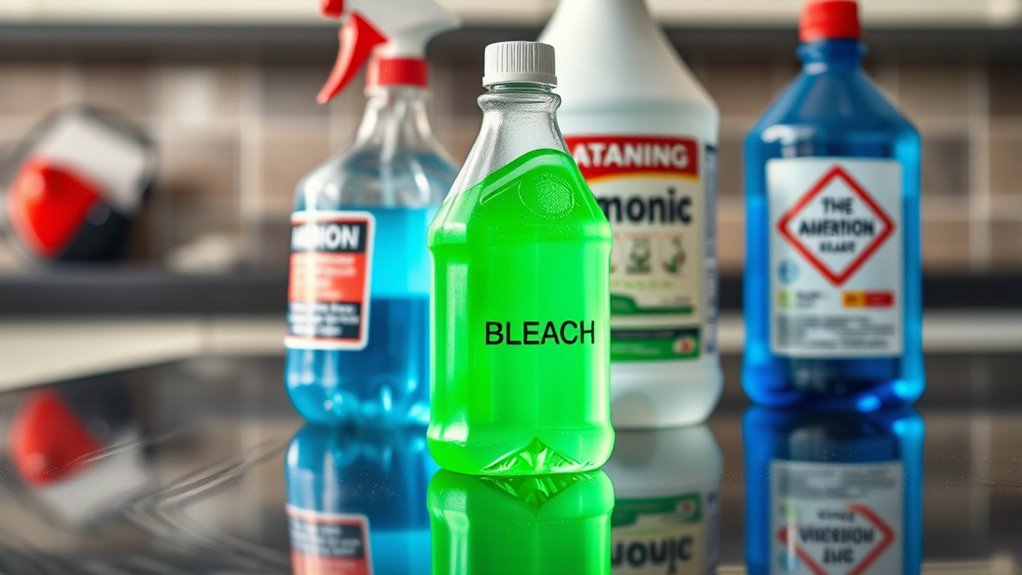
Many household cleaning mistakes can lead to dangerous chemical reactions, especially when you mix products without knowing the risks. It’s tempting to combine different cleaners in an attempt to tackle tough stains or save time, but this often results in hazardous outcomes. Instead, you can turn to DIY cleaning hacks and eco friendly solutions that are safe and effective. Knowing which combinations to avoid is vital for your safety and the health of your home. Mixing bleach with ammonia, for example, produces chloramine vapors that can cause respiratory issues, chest pain, and even pneumonia. Many people are unaware that these fumes are highly toxic, and inhaling them—even in small amounts—can have serious health repercussions. Similarly, combining bleach with acidic cleaners like vinegar or lemon juice creates chlorine gas, which irritates your eyes, throat, and lungs. It’s a dangerous reaction that can happen quickly, especially in poorly ventilated spaces. Understanding chemical reactions is essential to prevent accidental hazards in your cleaning routine.
You might think that more cleaning power means mixing different products, but the truth is, it often leads to unintended chemical reactions. Instead of risking your health, look for eco friendly solutions that are safe for both your family and the environment. For instance, white vinegar and baking soda work wonders as natural cleaning agents that can handle everything from kitchen counters to bathroom tiles. These ingredients are non-toxic, biodegradable, and affordable. Plus, they’re simple to use and don’t require any hazardous fumes. You can use vinegar to disinfect surfaces or sprinkle baking soda to absorb odors and scrub away grime. When combined in the right way, they create a powerful yet safe cleaning duo. Many DIY cleaning hacks leverage these ingredients because they’re effective, safe, and eco friendly.
Another common mistake is mixing different chemical cleaners in the hope of amplifying their cleaning power. This is not only ineffective but also dangerous. Always read labels and follow instructions carefully. If you’re unsure, stick to single-ingredient solutions like castile soap, lemon juice, or hydrogen peroxide, which are generally safe and versatile. Remember, your goal should be to clean efficiently without risking exposure to harmful fumes or chemical reactions. Using natural, eco friendly solutions can give you peace of mind while keeping your home spotless. By understanding what combinations to avoid and choosing safer alternatives, you protect yourself, your loved ones, and the environment. Avoid mixing bleach with anything aside from water, and steer clear of combining ammonia with acids. Instead, focus on simple, safe DIY cleaning hacks that deliver excellent results without putting anyone at risk.
Frequently Asked Questions
Can Mixing These Products Cause Long-Term Health Issues?
Mixing cleaning products can definitely cause long-term health issues. You might be exposing yourself to harmful chemical exposure, which can lead to respiratory risks over time. For example, combining bleach and ammonia creates toxic fumes that can damage your lungs. Always read labels and avoid mixing products to protect your health. Staying cautious helps prevent potential long-term effects, ensuring your home stays clean and safe without risking your well-being.
What Should I Do if I Accidentally Combine Dangerous Cleaners?
Think of a chemical reaction as a ticking time bomb—you need to act fast. If you accidentally combine dangerous cleaners, immediately open windows for ventilation. Don’t try to neutralize the reaction yourself; instead, perform first aid by rinsing your skin with water if contact occurs. Call emergency services if you experience breathing problems or severe symptoms. Remember, quick action prevents harm and keeps everyone safe from potential long-term health issues.
Are Natural Cleaning Products Safer to Mix?
You might think natural cleaning products are safer to mix because they contain natural ingredients, but it’s still best to avoid combining them. Even eco-friendly solutions can produce harmful reactions, like releasing fumes or creating skin irritants. Always read labels and stick to single ingredients or approved combinations. Mixing natural products can lead to unexpected hazards, so it’s safest to use them separately and follow manufacturer instructions for a truly safe cleaning routine.
How Can I Identify Harmful Chemical Reactions Visually?
Did you know that 75% of chemical accidents show visible signs? To identify harmful chemical reactions visually, watch for hazardous signs like bubbling, color changes, or unusual odors. Chemical reaction visuals can include foam, sizzling, or gas release. Recognizing these signs helps you stay safe. Always read labels and avoid mixing products that could produce these hazardous signs, preventing dangerous reactions in your home.
Is It Safe to Use Multiple Cleaning Products Sequentially?
You should always be cautious when using multiple cleaning products sequentially. Chemical reactions can occur if you don’t rinse thoroughly, especially if labels don’t clearly warn against mixing. Always read product labeling carefully to understand potential interactions. If you’re unsure, it’s safest to wait between applications or stick to one product at a time. This approach helps prevent dangerous chemical reactions and keeps your home safe and clean.
Conclusion
Always remember, mixing certain cleaning products is like playing with fire—dangerous and unpredictable. Just as oil and water don’t mix, combining these chemicals can create harmful fumes or explosions. Keep your home safe by reading labels carefully and sticking to one product at a time. Think of it as walking a tightrope—you want to stay balanced and avoid risky shortcuts. When in doubt, it’s better to be cautious than regretful. Stay safe and clean smart!