Before buying commercial robotic cleaners, you should compare their initial cost against potential savings in labor, maintenance, and safety. Calculate how much manual cleaning currently costs and estimate the efficiency gains you’d get. Consider long-term durability and if the device’s features improve hygiene standards. Doing this math helps you determine if the investment pays off now or in the future. For detailed steps, explore more insights to make an informed choice.
Key Takeaways
- Calculate initial purchase costs versus long-term savings on labor and maintenance expenses.
- Evaluate how robotic cleaners can improve staff productivity and reduce manual cleaning hours.
- Compare ongoing operational costs of robots with outsourcing or additional manual staff.
- Assess safety improvements and potential reduction in workplace accidents and associated costs.
- Determine the payback period by analyzing efficiency gains and hygiene standard improvements.
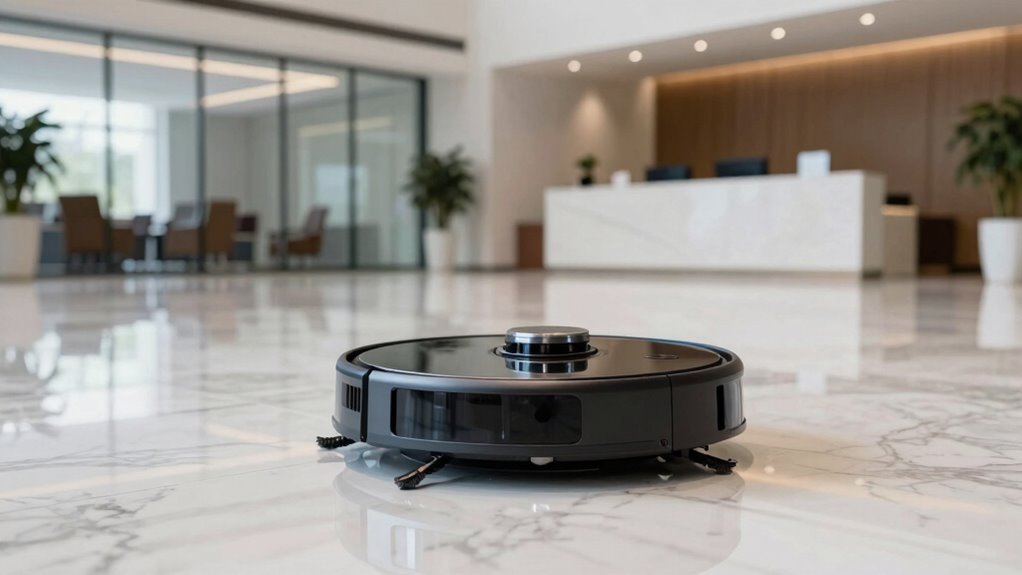
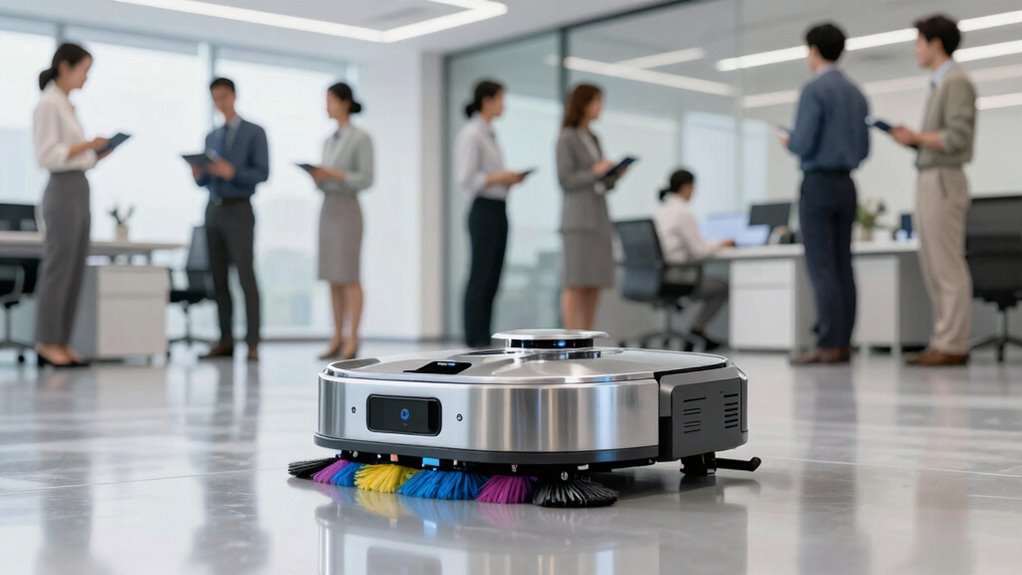
Commercial robotic cleaners are transforming how businesses maintain cleanliness by offering efficient and hands-free solutions. When considering these machines, it’s essential to evaluate their impact on your overall operations, especially regarding maintenance costs and employee productivity. Unlike traditional cleaning methods, robotic cleaners can operate continuously, reducing the need for manual labor and freeing up staff for more critical tasks. This shift not only streamlines cleaning routines but also minimizes disruptions, allowing your team to focus on core responsibilities without being bogged down by routine cleaning duties.
One of the most compelling reasons to invest in robotic cleaners is their potential to lower maintenance costs over time. While the initial purchase price might seem significant, these machines usually require less ongoing expenditure compared to employing additional cleaning staff or outsourcing cleaning services. They have durable components designed for frequent use, and many models come with self-maintenance features, which further cut expenses. Plus, because they are programmed to clean during off-hours or at scheduled intervals, you can avoid the costs associated with cleaning during peak hours, preventing interference with daily operations. Over the long term, this efficiency can translate into substantial savings, making the upfront investment more justifiable.
Moreover, robotic cleaners positively influence employee productivity. When your staff isn’t tasked with manual cleaning chores, they can dedicate their time and skills to more value-added activities. This shift boosts overall efficiency, especially in environments where cleanliness directly impacts customer experience or operational safety. Employees no longer need to juggle cleaning schedules or worry about maintaining sanitation standards—they can focus on delivering better service or improving workflow. The presence of robotic cleaners also reduces the likelihood of workplace accidents related to wet floors or clutter, creating a safer environment that minimizes downtime caused by injuries or safety violations.
Additionally, robotic cleaners operate consistently and thoroughly, ensuring a higher standard of cleanliness without fatigue or lapses in attention. This consistency helps maintain hygiene standards, which is essential in industries like healthcare, food service, or hospitality. As a result, your team can concentrate on their core work without being diverted by cleaning concerns, leading to improved overall productivity. Incorporating smart‑home integrations can further enhance their efficiency through remote monitoring and scheduling, making maintenance even more streamlined.
Before making a purchase, it’s essential to do the ROI math by weighing the initial costs against these benefits. Consider how much you currently spend on manual cleaning, the potential savings from reduced labor and maintenance costs, and the productivity gains your team could realize. When you do this analysis accurately, you’ll have a clearer picture of whether a robotic cleaner makes financial sense for your business now and in the future.
Frequently Asked Questions
How Do Robotic Cleaners Handle Different Floor Types?
Robotic cleaners handle different floor types through their floor adaptability, adjusting their cleaning settings automatically or manually. They offer excellent cleaning versatility, seamlessly shifting from carpets to hard floors like tile or wood. You’ll find most models equipped with sensors and adjustable brushes that optimize performance across various surfaces. This guarantees thorough cleaning without needing multiple devices, saving you time and effort while maintaining a high standard of cleanliness.
What Maintenance Is Required for Commercial Robotic Cleaners?
A stitch in time saves nine, so staying on top of maintenance is key. You’ll need to follow regular maintenance schedules, including cleaning sensors, brushes, and filters. Keep spare parts available, like batteries and brushes, to avoid downtime. Check for software updates and replace worn components promptly. Proper upkeep guarantees your robotic cleaner runs smoothly, extends its lifespan, and keeps your floors spotless without unexpected breakdowns.
Can Robotic Cleaners Replace Manual Cleaning Staff Entirely?
Robotic cleaners can markedly reduce manual cleaning, but they shouldn’t replace staff entirely. You still need staff training to operate and troubleshoot the robots effectively. They work best when integrated into your cleaning schedules, handling routine tasks efficiently. While they improve productivity and consistency, human oversight remains essential for deep cleaning and addressing unforeseen issues, ensuring your facility maintains high standards.
How Do Robotic Cleaners Impact Overall Cleaning Quality?
Robotic cleaners boost cleaning efficiency, ensuring consistent performance and thoroughness, which improves overall cleaning quality. You’ll notice that they maintain a high standard of cleanliness and reduce missed spots, leading to increased user satisfaction. By automating routine tasks, these robots free up staff for more complex jobs, ultimately enhancing the quality of your cleaning process. This consistent, reliable performance makes your environment cleaner and your users happier.
Are There Safety Concerns With Deploying Robotic Cleaners Commercially?
You should consider safety concerns when deploying robotic cleaners commercially. Make certain you follow strict safety protocols and conduct thorough hazard assessments to identify potential risks like collisions or electrical issues. Regular maintenance and staff training help prevent accidents. By proactively addressing these safety measures, you minimize risks, ensuring a safe environment for both your staff and the robotic cleaners, ultimately protecting your investment and maintaining smooth operations.
Conclusion
Before investing in a commercial robotic cleaner, remember that it’s not just a purchase—it’s planting a seed for future efficiency. Do the math, weigh the costs against the harvest of saved time and labor, and you’ll see your decision bloom into a smart investment. Like a seasoned gardener tending to a delicate bloom, your careful calculation guarantees your business reaps the rewards without letting costs wither your growth. Make it count, and watch your ROI blossom.