
When choosing a commercial dishwasher, you need to take into account if high-temp or low-temp sanitizing suits your needs. High-temp models use very hot water (around 180°F) to kill germs quickly, but they use more energy and need more maintenance. Low-temp models rely on chemical sanitizers and lower temperatures, which reduce costs but may take a bit longer to sanitize. Keep these differences in mind to pick the best option for your business and guarantee you get the most from your machine.

Get cleaning gear delivered free — and shop member deals
- Fast, free delivery on millions of items
- Access to Prime Big Deal Days deals on October 6–7
- Prime Video, Amazon Music and more included
Key Takeaways
- High-temp dishwashers sanitize dishes using very hot water (around 180°F+), while low-temp models use chemicals and lower heat.
- High-temp models generally consume more energy and have higher maintenance costs due to heat-related wear and tear.
- Low-temp dishwashers are more energy-efficient and easier to maintain, making them cheaper to operate long-term.
- High-temp units are ideal for quick, maximum sanitation, but cost more to run and maintain.
- Choosing between them depends on your business needs, budget, and emphasis on sanitation speed and cost savings.
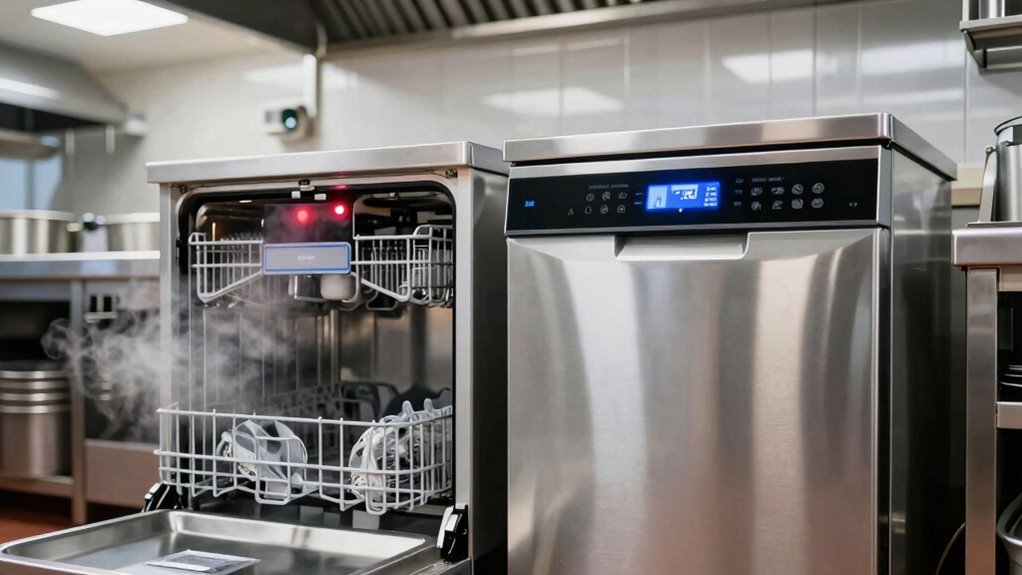
Commercial dishwashers are essential tools for restaurants, cafeterias, and other food service businesses that handle large volumes of dishes daily. When choosing between high-temp and low-temp sanitizing models, you need to contemplate several factors, including energy efficiency and maintenance costs. High-temp dishwashers use very hot water, typically around 180°F or higher, to sanitize dishes, while low-temp models rely on chemical sanitizers and lower water temperatures. Both types have their advantages, but understanding their impact on your operation helps you make an informed decision.
Energy efficiency is a major concern because it directly affects your utility bills. High-temp dishwashers tend to consume more energy due to the need to heat water to higher temperatures. This increased energy use can lead to higher operational costs over time. However, some high-temp models are designed with advanced insulation and energy-saving features that help offset these costs, so you should compare the energy ratings of different units before buying. On the other hand, low-temp dishwashers generally use less energy because they operate at lower water temperatures. They also often incorporate energy-efficient wash cycles, which can reduce operating expenses and make them a more economical choice for businesses aiming to cut costs.
Energy use impacts operational costs; high-temp models consume more, but advanced features can offset expenses.
Maintenance costs are another critical factor. High-temp dishwashers require regular maintenance to ensure they operate safely and efficiently. The heating elements and thermostats need periodic inspection and replacement, and the high temperatures can cause wear and tear on components faster than in low-temp models. Additionally, because high-temp dishwashers generate steam and heat, they may require more frequent cleaning of filters and vents to prevent buildup and ensure proper operation. Low-temp dishwashers tend to have fewer parts that wear out quickly, and because they don’t rely on boiling water, they often have lower maintenance costs overall. However, chemical sanitizers used in low-temp models must be carefully managed and replaced regularly to maintain hygiene standards, which can add to ongoing expenses.
Ultimately, your decision will depend on your specific needs and budget. If your priority is quick turnaround and maximum sanitation, and you’re prepared for higher energy and maintenance costs, a high-temp dishwasher may be the right choice. If you’re looking to minimize operational expenses and prefer a system that’s easier to maintain, a low-temp model could suit you better. Regardless of your choice, always factor in the long-term costs of energy and maintenance to ensure your investment delivers the best value over time.
As an affiliate, we earn on qualifying purchases.
Frequently Asked Questions
How Long Does Each Sanitizing Cycle Typically Last?
A high-temp sanitizing cycle usually lasts about 45 to 90 seconds, while a low-temp cycle takes around 2 to 4 minutes. The cycle duration depends on your dishwasher’s settings and sanitation standards. You should also consider cycle frequency; running these cycles regularly guarantees dishes stay hygienic. Always follow the manufacturer’s instructions to uphold effective sanitizing and avoid overuse.
Can High-Temp Dishwashers Damage Delicate Glassware?
You might think high-temp dishwashers are a double-edged sword, but they can damage delicate glassware if you’re not careful. The intense heat can cause glassware safety issues like cracking or clouding, which means dishwasher damage over time. To keep your fragile items safe, consider using low-temp cycles or adding protective racks. Don’t throw the baby out with the bathwater—choose the right settings to protect your glassware while ensuring cleanliness.
Are Low-Temp Dishwashers More Energy-Efficient?
Yes, low-temp dishwashers are typically more energy-efficient because they use less heat and water, leading to significant energy savings. By consuming less power, you reduce your environmental impact and lower operating costs. These dishwashers also often have faster cycle times, which helps streamline your workflow. If you’re looking to cut down on energy use and lessen your environmental footprint, a low-temp dishwasher is a smart choice.
What Maintenance Is Required for High-Temp Sanitizing Units?
You’ll need to regularly check your high-temp sanitizing unit for calcium buildup, which can cause clogs and reduce efficiency. Keep an eye on the heating elements and replace gaskets when they show signs of wear to prevent leaks. Cleaning the spray arms and filters often is also essential. Staying proactive with maintenance guarantees your dishwasher runs smoothly, saving energy and extending its lifespan, especially during busy restaurant nights.
Do Different Dishes Require Different Sanitizing Temperatures?
You don’t need different sanitizing temperatures for every dish, but temperature customization can help if you’re washing delicate or heat-sensitive items. Consider dish material considerations; for example, plastic or delicate china might not tolerate high temperatures, so opting for low-temp sanitizing can prevent damage. Always follow manufacturer guidelines and sanitizing standards to guarantee proper cleanliness while protecting your dishes from heat-related harm.
Conclusion
So, whether you choose high-temp or low-temp sanitizing, remember that both options can keep your dishes clean and safe. Some worry that high-temp might damage dishes or be too costly, but with proper maintenance, it’s a reliable choice. Low-temp machines save energy and are gentler on your ware. Ultimately, pick the one that fits your business needs and budget. Either way, you’ll serve up spotless, sanitized dishes every time.
Fall Picks
fall essentials
As an affiliate, we earn on qualifying purchases.