To speed up drying, you need to position your air movers correctly. Proper placement maximizes airflow efficiency, directs steady air toward wet surfaces, and avoids obstructions from furniture or walls. If you place fans haphazardly or too close to surfaces, their effectiveness drops. Calibrating equipment and understanding airflow patterns also matter. When you fine-tune both placement and settings, you’ll see faster drying results. Keep exploring to learn how to optimize your setup for the best outcome.
Key Takeaways
- Proper placement ensures continuous airflow circulation, which is essential for faster drying.
- Incorrect positioning can create airflow obstructions, reducing drying efficiency.
- Equipment calibration guarantees fans operate at optimal speeds for effective moisture removal.
- Room layout and obstacles influence airflow patterns, requiring strategic positioning.
- Combining correct placement with calibration maximizes airflow effectiveness and speeds up drying.

Have you ever wondered why some carpets dry faster than others? The answer often comes down to how well you position your air movers. Proper placement isn’t just about pointing fans in the general direction of a wet surface; it’s about maximizing airflow efficiency. When air movers are correctly positioned, they create a steady, directed flow of air that accelerates moisture evaporation. But if they’re placed haphazardly or too far away, their effectiveness drops markedly, leading to prolonged drying times. Achieving maximum airflow efficiency requires understanding the dynamics of air movement and how best to channel it toward wet areas.
Properly positioning air movers maximizes airflow, speeds drying, and prevents prolonged moisture issues.
Another key factor is equipment calibration. When your air movers are calibrated correctly, they operate at ideal speeds and airflow volumes, ensuring consistent performance. Proper calibration means your fans aren’t underperforming or working too hard, which can lead to energy waste and subpar drying results. It’s essential to regularly check and adjust your equipment settings, especially when you change room configurations or move to different types of surfaces. Calibration also helps prevent over-drying, which can damage carpets or padding, and under-drying, which prolongs moisture presence and invites mold growth. Understanding airflow dynamics is crucial for optimizing drying efficiency. Additionally, understanding proper airflow patterns** can help you distribute airflow more evenly across the entire wet area. Recognizing and adjusting for airflow resistance can further improve the effectiveness of your setup. Being aware of humidity levels** and how they influence airflow can also play a significant role in fine-tuning your drying process.
Positioning your air movers involves more than just placing them directly on wet areas. You need to take into account the room’s layout, furniture placement, and airflow patterns. For example, placing fans too close to walls or furniture can obstruct airflow and reduce efficiency. Conversely, positioning them too far from the wet surface minimizes the impact of their airflow. The ideal setup often involves creating a balanced system where air movers are spaced evenly and angled properly to promote a continuous, circulating airflow. This ensures moisture is drawn out from deep within the fibers and padding rather than just the surface. Recognizing airflow patterns can help you optimize your setup for faster drying times.
Keeping your equipment calibrated and positioning your air movers correctly go hand-in-hand. When you adjust the placement, you should also verify that each unit is operating at the right settings. This synergy maximizes airflow efficiency, speeds up the drying process, and reduces energy consumption. Remember, the goal isn’t just to move air but to move it effectively. Proper positioning and calibration allow the fans to work smarter, not harder, delivering faster results and helping you get the job done right the first time. If you neglect these details, even the best equipment won’t make a noticeable difference. In the end, it’s all about understanding how to harness airflow efficiently and fine-tuning your setup for the fastest, safest drying possible.
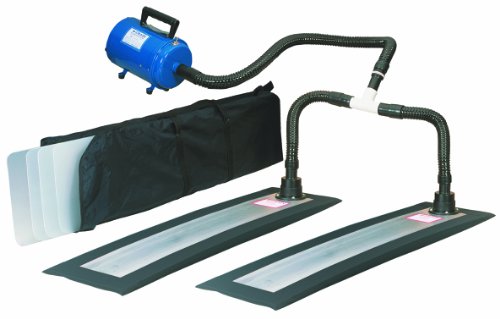
Bon Tool – Air Lifter Moving System – 800 lbs / 365 kg capacity Heavy Duty Appliance & Furniture Lifting Tool
Works like a hovercraft to lift heavy furniture or appliances. Only air contacts your floor so no matter…
As an affiliate, we earn on qualifying purchases.
As an affiliate, we earn on qualifying purchases.
Frequently Asked Questions
How Long Should an Air Mover Run for Optimal Drying?
You should run an air mover for about 24 to 48 hours for ideal drying, but it depends on humidity control and the area’s moisture level. Keep monitoring the moisture content regularly and guarantee the equipment is well-maintained to prevent inefficiencies. Proper positioning of the air movers accelerates drying, so adjust placement as needed. Stopping too soon can cause secondary damage, so patience and proper setup are key for effective drying.
Can Multiple Air Movers Improve Drying Times Effectively?
Yes, using multiple air movers can improve drying times, but only if you optimize airflow and equipment placement. When you strategically position each unit, you create a powerful airflow pattern that accelerates moisture removal. However, if you ignore proper placement, even multiple units won’t make a difference. The key is understanding how to direct airflow efficiently, ensuring each air mover works together to maximize drying speed and effectiveness.
Are Certain Room Layouts Better Suited for Air Mover Placement?
Certain room layouts are better suited for air mover placement because furniture placement and ceiling height impact airflow. If furniture blocks vents or airflow paths, drying slows down. High ceilings require more strategically placed air movers to evenly circulate air, while low ceilings need fewer units. You should position air movers to maximize airflow around furniture and guarantee unobstructed circulation, improving drying efficiency regardless of the room’s layout.
What Safety Precautions Should Be Taken When Using Air Movers?
To guarantee safety while using air movers, you must prioritize ventilation safety and electrical precautions. Always keep the area well-ventilated to prevent overheating, and never block vents or airflow paths. Check cords and plugs for damage, avoiding overloading outlets. Keep moisture away from electrical components, and use GFCI outlets when possible. These steps might seem simple, but neglecting them could lead to hazardous situations—stay vigilant to protect yourself and others.
How Do Different Types of Air Movers Compare in Drying Efficiency?
Different air movers vary in drying efficiency based on air flow and design. Axial fans produce high air flow, ideal for large spaces, while centrifugal models focus on directed, concentrated airflow. To maximize drying, you must guarantee proper equipment maintenance, keeping blades clean and motors functioning well. Correct positioning also plays an essential role. When used effectively, each type can considerably improve drying times, but neglecting maintenance or placement hampers their performance.

Global Industrial Air Mover, 2 Speed, 2200 CFM, 1/2 HP
Engineered to provide a fast response at a low power draw
As an affiliate, we earn on qualifying purchases.
As an affiliate, we earn on qualifying purchases.
Conclusion
Now that you know the importance of proper air mover placement, don’t underestimate its impact on drying time. One wrong move could slow the process or leave moisture behind. Are you ready to test your skills and see how quickly you can master the art of positioning? Remember, the right placement isn’t just a detail—it’s the secret to faster, more effective drying. Get it right, and watch the results unfold. The difference is waiting to be discovered.

VEVOR Air Mover, 1/4 HP 1000 CFM Carpet Dryer for Cooling and Ventilating, Portable Floor Blower Fan with 4 Blowing Angles and Time Function, for Janitorial, Home, Commercial Use
3 Blow Speeds: Power: 1/4 hp, 115V/60Hz. This carpet dryer offers three adjustable airflow options: 600, 800, and…
As an affiliate, we earn on qualifying purchases.
As an affiliate, we earn on qualifying purchases.
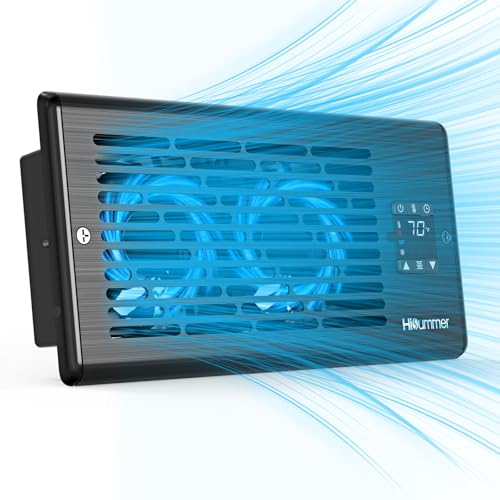
Hisummer Register Booster Fan for 4" x 10" Floor Register, Quiet 10-Speed Vent Fan Booster with Temp Sensor, 150 CFM Airflow, Improves Heating & Cooling, Remote Control, Only Fits 4×10 Duct Openings
Powerful Airflow to Your Bed: More Even Upstairs Comfort: Hot upstairs or stuffy/chilly bed corners? This register booster…
As an affiliate, we earn on qualifying purchases.
As an affiliate, we earn on qualifying purchases.