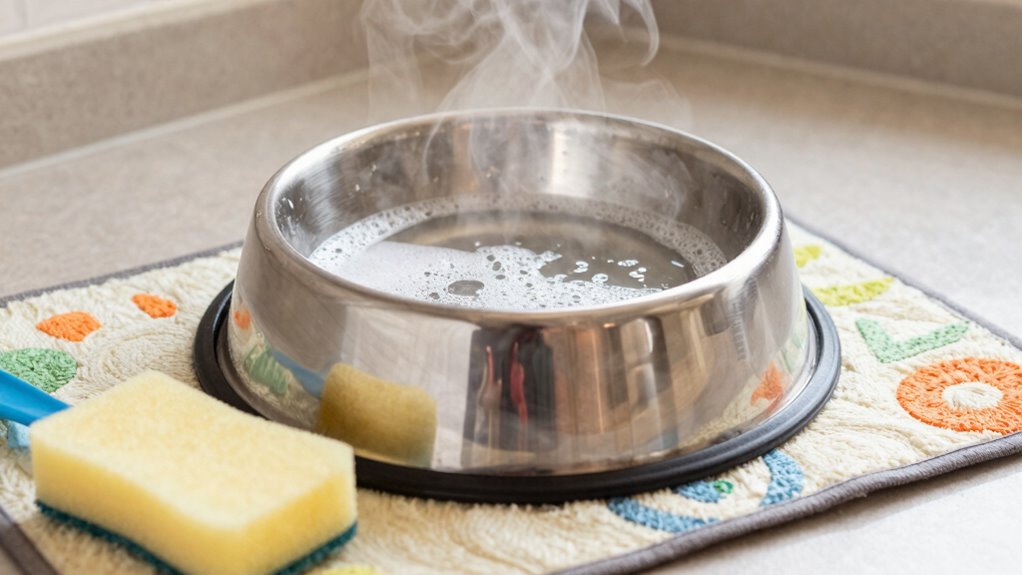

To clean pet bowls and feeding mats safely, wash each item thoroughly with hot, soapy water, using non-abrasive tools suited for the material. Regularly disinfect with pet-safe solutions like vinegar or mild disinfectants, especially after illness or staining. Replace plastic bowls every few months and check for chips or scratches that can hide bacteria. Keep the surrounding area clean by sweeping and storing food properly. If you want to guarantee maximum hygiene, there’s more helpful advice ahead.

Get cleaning gear delivered free — and shop member deals
- Fast, free delivery on millions of items
- Access to Prime Big Deal Days deals on October 6–7
- Prime Video, Amazon Music and more included
Key Takeaways
- Use pet-safe disinfectants or vinegar solutions to thoroughly sanitize bowls and mats after each use.
- Regularly wash stainless steel and silicone items with hot, soapy water or in the dishwasher for thorough cleaning.
- Replace plastic bowls every few months to prevent bacterial buildup from scratches and stains.
- Check for damages or chips in ceramic bowls and discard if small crevices develop.
- Clean surrounding feeding areas frequently to prevent contamination and maintain a hygienic environment.
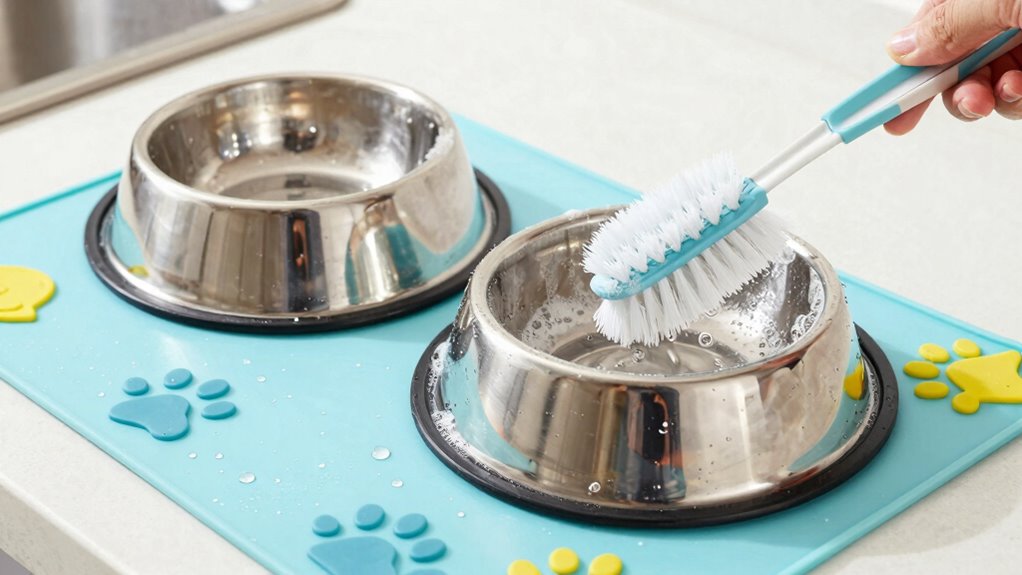
Ever wonder if you’re cleaning your pet’s bowls and mats thoroughly enough? It’s a common concern, especially when you want to keep your furry friend healthy. The key is understanding the different pet bowl materials and how they influence your cleaning routine. Whether your pet’s bowls are ceramic, stainless steel, plastic, or silicone, each material requires a specific approach to maintain feeding area hygiene. For example, plastic bowls can develop scratches that harbor bacteria, making them harder to clean thoroughly. Stainless steel bowls, on the other hand, are durable and non-porous, so they’re less likely to trap germs. Ceramic bowls, often decorative, can chip or crack, creating tiny crevices where bacteria can hide. Knowing these differences helps you choose the right cleaning methods for each type, ensuring your pet’s feeding area stays hygienic.
Regular cleaning isn’t just about wiping down the bowls and mats; it’s about doing so effectively to prevent bacteria buildup. For stainless steel, a simple wash with hot, soapy water or a dishwasher cycle often suffices. Use a scrub brush if needed to remove stuck-on food or residue. With ceramic bowls, check for chips and wash carefully with hot water and mild detergent. Plastic bowls should be replaced every few months if they become scratched or stained, as bacteria can settle in these marks. Silicone mats, which are flexible and easy to rinse, can be cleaned with warm soapy water and should be sanitized regularly. You might also consider using pet-safe disinfectants or vinegar solutions to verify all germs are eradicated, especially if your pet has been ill. Additionally, understanding the material properties of pet bowls can help you select the most effective cleaning methods and extend their lifespan. Incorporating appropriate cleaning tools like non-abrasive sponges or brushes designed for pet dishes can also make a significant difference in maintaining hygiene. Using the right cleaning techniques ensures you eliminate bacteria more effectively and protect your pet’s health.
Feeding area hygiene goes beyond just washing the bowls and mats. It’s essential to clean the surrounding surfaces regularly, vacuum or sweep the area, and store pet food properly to prevent contamination. Keep the feeding station in a clean, dry spot away from dirt or pests. After each meal, rinse bowls and mats thoroughly to remove residual food and saliva, which can harbor bacteria. Deep cleaning your pet’s feeding accessories weekly with hot water and non-toxic disinfectants will further minimize health risks. Remember, a clean feeding area not only helps prevent illnesses but also encourages your pet to eat happily from clean dishes. By paying attention to pet bowl materials and maintaining good hygiene practices, you’re safeguarding your pet’s health while keeping their feeding space fresh and safe.
As an affiliate, we earn on qualifying purchases.
Frequently Asked Questions
How Often Should I Replace My Pet’s Feeding Mats?
You should replace your pet’s feeding mats every 6 to 12 months, depending on their Pet bowl material and Feeding mat durability. Regular use, scratches, and stains can harbor bacteria, making replacement necessary for your pet’s health. Keep an eye out for signs of wear, such as tears or persistent odors. Upgrading when needed guarantees your pet eats from a clean, safe surface, promoting better hygiene and comfort.
Can I Use Regular Dish Soap to Clean Pet Bowls?
Yes, you can use regular dish soap to clean pet bowls. Think of it as a gentle wave washing away stubborn stains and odor buildup, leaving your pet’s dishes fresh and safe. Focus on thorough stain removal and odor control to prevent bacteria growth. Just rinse well to remove any soap residue, ensuring no harmful leftovers remain that could upset your pet’s stomach or cause lingering smells.
Are There Eco-Friendly Cleaning Options for Pet Accessories?
Yes, there are eco-friendly cleaning options for pet accessories. You can use biodegradable detergents, which break down naturally and reduce environmental impact. Natural disinfectants like vinegar or tea tree oil diluted with water are effective at sanitizing without harmful chemicals. These options are safe for your pet’s health and better for the planet, making it easy to keep their bowls and mats clean while supporting sustainability.
How Do I Prevent Mold Growth on Feeding Mats?
To prevent mold growth on feeding mats, you should focus on mold prevention and proper feeding mat maintenance. After each use, wash the mat thoroughly with warm, soapy water and dry it completely before your pet eats again. Regularly inspect for any damp spots or mold signs, and guarantee the mat stays dry and clean. Using eco-friendly cleaning solutions can also support mold prevention and keep your pet safe.
What Are Signs of Allergic Reactions to Cleaning Products?
You might notice allergic symptoms like sneezing, itchy eyes, or skin irritation if you’re reacting to cleaning products. Irritant exposure can cause coughing or wheezing, especially if you have sensitivities. Pay attention to these signs after cleaning, and if they occur, stop using the product immediately. Consider switching to hypoallergenic or natural cleaning options to reduce the risk of allergic reactions and keep both yourself and your pets safe.
Conclusion
Now that you know the safest way to clean your pet’s bowls and mats, imagine your furry friend happily munching from sparkling, germ-free dishes that shine brighter than the sun itself. With every scrub and rinse, you’re creating a fortress of cleanliness that could withstand even the most relentless pet messes. Keep up this routine, and you’ll turn your pet’s feeding area into a pristine paradise—so spotless, even the messiest of pets will be left in awe!
Fall Picks
fall essentials
As an affiliate, we earn on qualifying purchases.