HEPA filters in hand dryers help by trapping airborne bacteria and particles during air intake, reducing the risk of environmental contamination and promoting better hygiene. However, they don’t eliminate germs on your hands or replace proper handwashing. The filters also don’t guarantee complete sterilization or remove bacteria already on your skin. Maintaining the filters regularly is key to their effectiveness. Continue exploring to discover how these filters fit into overall hand hygiene.

Get cleaning gear delivered free with Prime
- Fast, free delivery on millions of items
- Prime Video, Amazon Music and more included
- Member-only deals all year
Key Takeaways
- HEPA filters in hand dryers trap airborne bacteria and particles, reducing environmental contamination during air intake.
- They do not eliminate germs on hands themselves or replace proper handwashing practices.
- Regular filter maintenance is essential to ensure optimal hygiene and prevent bacteria dispersal.
- HEPA filters improve overall hygiene but do not guarantee complete sterilization of the environment.
- Proper hand hygiene remains necessary, as filters only target airborne bacteria, not surface germs on skin.
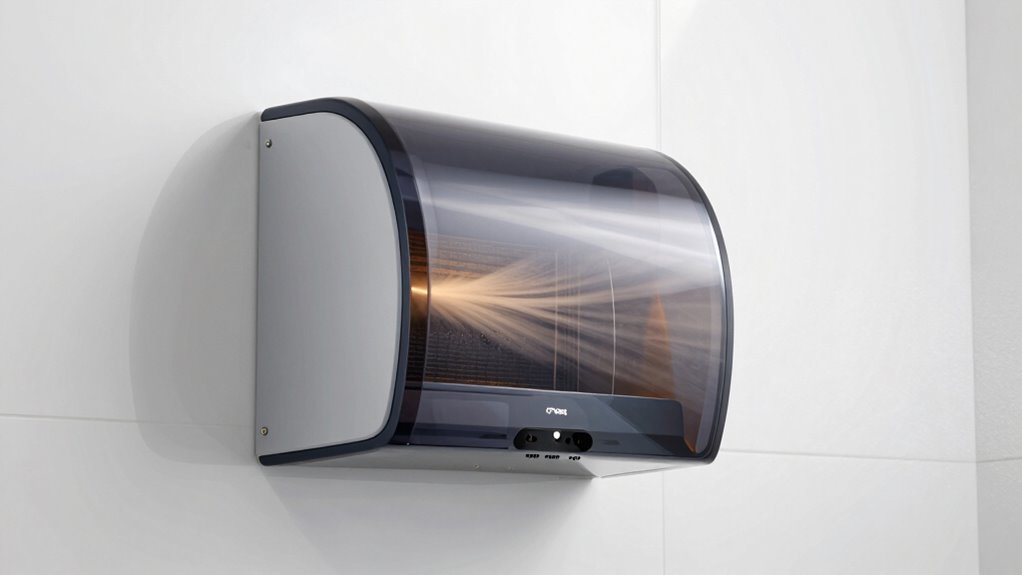
HEPA hand dryers are an innovative solution for drying hands quickly and hygienically. They use high-efficiency particulate air (HEPA) filters to trap airborne bacteria, reducing the spread of germs in public restrooms. When you use a HEPA hand dryer, you might assume that the filter provides complete protection against airborne bacteria, but it’s important to understand what it does and doesn’t do. The filter’s primary role is to capture particles as the air is drawn into the dryer, preventing bacteria and other contaminants from being expelled into the environment. This considerably improves hygiene standards and minimizes cross-contamination. However, the effectiveness of the filter depends heavily on regular filter maintenance. Over time, filters can become clogged with dirt and debris, which reduces their ability to trap airborne bacteria effectively. If you neglect filter maintenance, the dryer’s hygiene benefits diminish, and the device may even become a source of bacteria dispersal rather than containment.
Proper filter maintenance involves routine checks and replacements, usually recommended by the manufacturer. If you notice a decrease in drying efficiency or an increase in foul odors, it’s a sign that the filter needs attention. Regular maintenance ensures the HEPA filter continues to perform at the best possible levels, trapping airborne bacteria and keeping the environment cleaner. It also prolongs the life of the dryer itself, preventing unnecessary breakdowns caused by accumulated dirt and debris. When you replace filters, make sure to dispose of the used ones safely to avoid contaminating other areas.
It’s essential to understand that HEPA filters mainly target airborne bacteria and particles suspended in the air. They do not eliminate all germs on the hands themselves, which is why thorough handwashing remains necessary before using the dryer. The filter enhances hygiene by reducing the bacteria in the air surrounding your hands as they dry, but it doesn’t replace proper hand hygiene practices. Moreover, the filter’s ability to trap airborne bacteria doesn’t mean it can remove bacteria already present on your skin. It’s an additional layer of safety, not a substitute for good handwashing. Additionally, the filter’s efficiency can vary depending on the quality of the filter and how well it is maintained over time.
HEPA hand dryer filter replacement
As an affiliate, we earn on qualifying purchases.
As an affiliate, we earn on qualifying purchases.
Frequently Asked Questions
Do HEPA Hand Dryers Remove Bacteria From the Hands?
No, HEPA hand dryers don’t remove bacteria from your hands directly. Their air filtration system helps reduce bacteria in the surrounding air, which can improve overall hygiene in the environment. However, for effective hand hygiene, you should wash your hands thoroughly before using the dryer. HEPA filters primarily prevent bacteria from spreading through the air, but they don’t sanitize your hands themselves. Proper hand washing remains essential.
Can HEPA Filters Eliminate Viruses in the Air?
Research shows that HEPA filters can remove 99.97% of airborne particles, including some viruses, aiding in air purification. While they can reduce viral transmission in enclosed spaces, they don’t eliminate all viruses present in the air. You’ll benefit from improved air quality, but it’s essential to combine HEPA filtration with other measures like good hygiene and ventilation to effectively lower virus spread around you.
How Often Should HEPA Filters Be Replaced?
You should replace the HEPA filter according to the recommended replacement schedule, usually every 6 to 12 months, depending on usage and environment. Keep an eye on the filter’s lifespan and signs of wear, like decreased performance or visible dirt. Regular replacement guarantees peak filtration, maintaining air quality and hygiene. Following this schedule helps prevent buildup and keeps your hand dryer functioning effectively.
Are HEPA Hand Dryers More Energy-Efficient Than Traditional Dryers?
Think of HEPA hand dryers as the marathon runners of washrooms—they’re more energy-efficient than traditional dryers, using less energy per use. Their advanced technology reduces energy consumption and boosts cost efficiency, making them a smart choice for busy facilities. You’ll notice lower electricity bills and eco-friendly operation, all while keeping hands hygienically dry. So, switching to a HEPA hand dryer is like choosing a sustainable, cost-effective path forward.
Do HEPA Hand Dryers Produce Less Noise Than Non-Hepa Models?
You’ll find that HEPA hand dryers generally produce less noise than non-HEPA models, enhancing user comfort. Their advanced technology often results in quieter operation, making them more pleasant in busy restrooms. Noise levels vary by model, but many HEPA dryers are designed with sound reduction features. So, if you prioritize a quieter environment, choosing a HEPA hand dryer can help maintain a more comfortable experience for everyone.
Conclusion
So, next time you use a HEPA hand dryer, remember the filter’s role in catching germs—it’s like a knight defending your hands from unseen foes. While it doesn’t turn your bathroom into a sterile fortress or banish every bacteria, it’s a handy tool in reducing germs in the air. Think of it as a trusty squire, helping keep things cleaner, even if it can’t stop every tiny invader. Stay smart, dry safely, and keep those germs at bay!
Halloween Picks
halloween
As an affiliate, we earn on qualifying purchases.