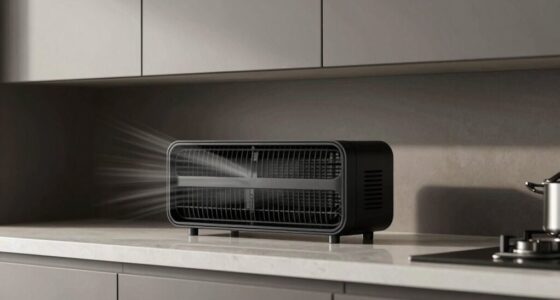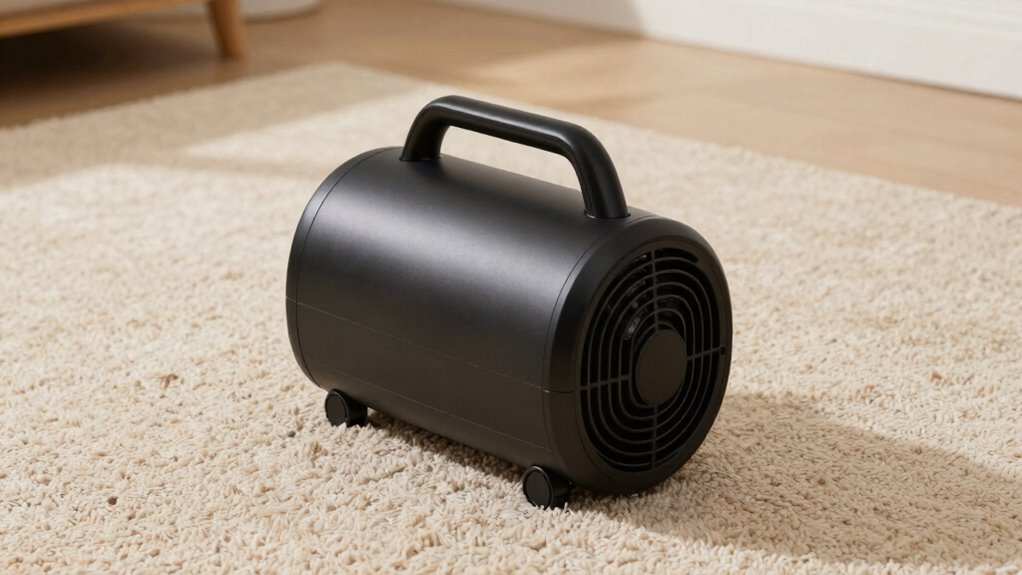

A low profile air mover for under carpet drying works by sliding a slim, high-velocity blower under a lifted carpet edge or floating the carpet, pushing dry air across the wet pad and subfloor so everything dries in hours instead of days. The Dri-Eaz Velo PRO (F505) takes my best overall spot because it balances a professional-grade build, adjustable airflow angles, and a housing thin enough for tight carpet float setups. For buyers watching budgets, the MOUNTO 1/4 HP 1200 CFM 2-Speed delivers comparable under-carpet airflow at a fraction of the cost, while the Dri-Eaz Dri-Pod Pro is the standout specialty pick for drying glue-down carpet and hard floors from above with no carpet lift needed. The main tradeoff in this category is between raw CFM power (which big 1 HP blowers have) and the slim, maneuverable profile that actually fits under lifted carpet. Read on for the full breakdown of all 15 models and which one fits your drying scenario.

Get cleaning gear delivered free with Prime
- Fast, free delivery on millions of items
- Prime Video, Amazon Music and more included
- Member-only deals all year
Complete the kit


Key Takeaways
- Ultra-high CFM doesn’t win here: the 1 HP 4000 CFM blower and Mounto 3000 CFM model move massive air but their tall housings make under-carpet work awkward, so they ranked lower despite raw power.
- Rugged rotomolded housings (Dri-Eaz Velo PRO, OdorStop OS2800) survive job-site abuse far better than the lighter ABS plastic shells on budget MOUNTO and BSMTEK units, which crack if stacked heavy.
- Daisy-chain GFCI outlets were the deciding factor for multi-room drying setups — models like the XPOWER PL-700A and MOUNTO let you run 3-4 fans from one wall outlet.
- The Dri-Pod Pro fills a niche the axial and centrifugal blowers can’t: omnidirectional top-down drying for glue-down carpet where lifting isn’t possible.
- Timers and hour meters (XPOWER PL-700A, the 1100 CFM 3-Speed with Timer) matter more than they seem — they prevent motor burnout during overnight unattended drying.


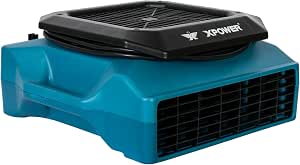


| low profile air mover for under carpet drying | Airflow | Speeds |
|---|---|---|
| MOUNTO 1/4 HP 1200 CFM Low Pro | — | — |
| Dri-Eaz Velo PRO Air Mover | 885 CFM | — |
| Dri-Eaz Dri-Pod Pro Omnidirect | 750 CFM | — |
| PURAERO Low Profile Air Mover | — | 2 |
| 1 HP 4000 CFM Air Mover Blower | 4000 CFM | 3 |
| ALORAIR 900 CFM Low-Profile Ai | Up to 950 CFM | — |
| OdorStop OS2800 Heavy Duty Air | 2,800 CFM | — |
| MOUNTO 1/4 HP 1200 CFM 2-Speed | 1,200 CFM | 2 |
| Dri-Eaz Velo Air Mover F504 | 885 CFM | 2 |
| 1/4 HP Air Mover | 1,200 CFM | 2 |
| Mounto 3-Speed 3/4 HP 3000 CFM | 3000 CFM | — |
| XPOWER PL-700A 1/3HP 1050 CFM | 1050 CFM | 3 |
| XPOWER PL-650A Professional Lo | 650 CFM | — |
| BSMTEK Air Mover Blower Fan | 1200 CFM | 3 |
| 1100 CFM 3-Speed Industrial Ai | — | 3 adjustable |
More Details on Our Top Picks
MOUNTO 1/4 HP 1200 CFM Low Profile Air Mover, 2-Speed Carpet Dryer Floor Fan with Dual GFCI Outlets
The MOUNTO 1200 CFM air mover hits the sweet spot between airflow, safety features, and price for under-carpet drying. Its 25-foot 14 AWG cord means fewer extension cords snaking across a wet job site, and the dual GFCI outlets let you daisy-chain multiple units while protecting against ground faults — a genuinely useful safeguard when electricity and water share a room. Compared with the PURAERO PA-250-LP, it moves slightly more air (1200 vs. 1100 CFM) and adds GFCI protection, though both are limited to two speeds. Against the Dri-Eaz Velo PRO, the MOUNTO trades away variable speed control but gains raw drying power and a longer cord. The roto-molded housing and 22 lb weight keep it durable yet manageable, and stacking up to five units simplifies transport between jobs.
Pros:- 1200 CFM output dries carpet and padding faster than most low-profile rivals
- Dual GFCI outlets allow safe daisy-chaining on wet job sites
- 25 ft 14 AWG cord reduces dependence on extension cords
- Stackable up to 5 units for compact storage and transport
Cons:- Only two speed settings limit fine-tuning of airflow
- 1/4 HP motor is undersized for very large or severe flooding jobs
Best for: Restoration contractors and homeowners tackling moderate water damage who want serious airflow with built-in electrical safety
Not ideal for: Buyers who need fine airflow control for delicate materials or want to run many fans quietly in occupied homes
- Horsepower:1/4 HP
- Air Flow:1200 CFM
- Speed Settings:2
- Power Cord:25 ft (14 AWG)
- Outlets:Dual GFCI
- Circuit Breaker:12 A built-in
- Weight:22 lbs
- Certification:ETL
Our verdict“This is the pick for anyone who wants dependable, high-output under-carpet drying with job-site electrical safety at a reasonable cost.”
Dri-Eaz Velo PRO Air Mover (F505) – Professional Water Damage Carpet Dryer
What sets the Dri-Eaz Velo PRO apart is efficiency, not brute force. Its 885 CFM is lower than the MOUNTO’s 1200 CFM, but it draws only 1.2–1.9 amps, which means you can run up to ten units from a single outlet — a decisive advantage when a residential circuit would trip with three conventional blowers. The variable speed control also lets you dial down airflow for drying sensitive carpet or newly finished floors, something the two-speed MOUNTO and PURAERO units can’t do. This model makes the most sense for professionals covering large flooded areas where total air circulation matters more than any single fan’s output. The tradeoff: on severe saturation, it works best paired with a dehumidifier, and its lower CFM means each unit covers less ground individually.
Pros:- Very low power draw (1.2–1.9 A) allows up to 10 daisy-chained units per outlet
- Variable speed control protects delicate flooring and carpets
- Lightweight with an integrated carry handle for easy repositioning
- Trusted professional brand with a strong restoration-industry track record
Cons:- 885 CFM is lower than comparably priced low-profile rivals
- Requires a separate dehumidifier for severe water damage
Best for: Restoration pros drying large areas who need to run many fans on limited residential circuits
Not ideal for: Homeowners with a single small water leak who need maximum airflow from one unit
- Airflow:885 CFM
- Power Draw:1.2 – 1.9 A
- Speed Control:Variable
- Daisy-Chain Capacity:Up to 10 units per outlet
- Portability:Lightweight with carry handle
Our verdict“Choose this if your drying strategy depends on running multiple fans simultaneously without overloading circuits.”
Dri-Eaz Dri-Pod Pro Omnidirectional Floor and Carpet Dryer
The Dri-Pod Pro takes a completely different approach from directional blowers like the MOUNTO or Velo PRO. Instead of pushing air one way, its 360-degree louvered grille radiates airflow across the entire floor around it — which is exactly what you want when a carpet corner has been lifted, a cabinet base is damp, or you’re drying inside a boat or RV. At 750 CFM it’s the weakest mover here, so it’s a supplement rather than a primary dryer. Compared with the low-profile wedge units, it trades raw power for uniform coverage and a footprint small enough to tuck into cupboards and crawlspaces. The lack of published noise and power specs is a genuine annoyance when you’re planning a multi-unit setup, so budget a bit of uncertainty there.
Pros:- Omnidirectional airflow dries evenly in all directions without repositioning
- Compact, lightweight form fits under cabinets and inside vehicles
- Stackable and easy to carry between jobs
- Versatile enough for residential, commercial, and marine use
Cons:- 750 CFM is the lowest output in this lineup
- No published noise level or power consumption specs
Best for: Anyone drying tight or awkward spaces — under cabinets, inside RVs and boats, or spot-drying lifted carpet sections
Not ideal for: Whole-room flood drying where you need maximum CFM and directional airflow
- Model:Dri-Pod Pro
- Airflow:750 CFM
- Air Direction:Omnidirectional (360°)
- Portability:Lightweight, stackable
- Applications:Floor, carpet, cabinet, boat, RV, residential, commercial
Our verdict“A specialist tool for targeted, all-direction drying in cramped spots — pair it with a bigger blower for whole-room jobs.”
PURAERO Low Profile Air Mover Carpet Dryer Blower Floor Fan (PA-250-LP) – 1/4 HP, 1100 CFM
The PURAERO PA-250-LP delivers nearly the same performance envelope as the MOUNTO — 1100 vs. 1200 CFM, same 1/4 HP class — while undercutting it on weight at 19 lbs and stacking up to six units instead of five. Its published 68 dB noise rating is refreshingly honest and tells you exactly what you’re getting: loud enough that you won’t want it running overnight in a bedroom. The five-year housing warranty signals real confidence in the rotomolded shell, and the 9-inch height slips under lifted carpet edges and low furniture where taller wedge fans won’t fit. Compared with the XPOWER sealed-motor options, it lacks GFCI outlets, which is the main safety tradeoff at this price. Two speeds keep it simple but coarse.
Pros:- 1100 CFM output rivals pricier name-brand low-profile movers
- Stacks up to six units for efficient storage and transport
- 5-year housing warranty reflects durable rotomolded construction
- 9-inch profile fits under carpet edges and low clearance areas
Cons:- 68 dB noise level is disruptive in occupied homes
- Two speeds only, with no GFCI outlet protection
Best for: Budget-conscious buyers and small restoration outfits who need multiple durable low-profile dryers without paying premium-brand prices
Not ideal for: Anyone drying carpet in occupied living spaces overnight due to the 68 dB noise level
- Motor Power:1/4 HP
- Air Flow:1100 CFM
- Noise Level:68 dB
- Speeds:2
- Dimensions:21″ × 17″ × 9″
- Weight:19 lbs
- Stackable:Up to 6 units
- Warranty:1 year parts & labor, 5 years housing
Our verdict“The smart money pick if you’re building a multi-unit drying kit and can tolerate the noise.”
1 HP 4000 CFM Air Mover Blower Fan
When a job outgrows the 1/4 HP class entirely, this 1 HP, 4000 CFM blower is the escalation pick. It moves roughly three times the air of the MOUNTO or PURAERO, and its 0–180 minute timer lets you set an unattended drying cycle instead of babysitting a switch — something no other unit in this batch offers. Three speeds plus 0°, 20°, and 90° angle positions make it far more versatile than the fixed-orientation low-profile wedges. The tradeoffs are real: at 20 inches tall it won’t slide under lifted carpet the way a 9-inch PURAERO will, it demands 750 watts of corded power, and 4000 CFM aimed at damp carpet can be overkill that stirs up dust. Use it for the room, and pair it with a true low-profile unit for under the carpet itself.
Pros:- 4000 CFM output dwarfs everything else in this lineup
- Built-in 0–180 minute timer enables unattended operation
- Three speeds and three angle positions offer real flexibility
- ETL listed with overload and dual thermal protection plus a 2-year warranty
Cons:- 20-inch height prevents true under-carpet or low-clearance placement
- Corded 750 W power requirement limits where it can run
Best for: Contractors and property managers drying large saturated areas fast, or anyone needing an unattended timed drying cycle
Not ideal for: Precise under-carpet drying in tight spaces — it’s too tall and too powerful for that job
- Motor:1 HP
- Airflow:4000 CFM
- Speeds:3
- Adjustable Angles:0°, 20°, 90°
- Timer:0–180 minutes
- Power Cord:25 ft
- Noise Level:45 dB
- Dimensions:15.8 × 19 × 20 in
- Warranty:2 years, ETL listed
Our verdict“Buy this for raw drying muscle and timed operation on big jobs — not for slipping beneath carpet edges.”
ALORAIR 900 CFM Low-Profile Air Mover Floor Dryer Fan
What makes this ALORAIR stand out is its appetite for linked setups: at just 1.8 amps max draw, I could theoretically run eight of these on a single 15-amp circuit — double what the Dri-Eaz Velo F504 manages. For anyone drying multiple rooms of soaked carpet after a pipe burst, that scaling advantage is the whole story. The LCD display with hour meter also gives me a way to log drying time across jobs, something neither the MOUNTO nor the OdorStop offers, and the 10-year roto-molded housing warranty signals serious build confidence.
The tradeoff is raw airflow. Compared with the OdorStop OS2800’s 2,800 CFM, this fan is a specialist in coverage, not brute force. The listed airflow also wavers between 900 and 950 CFM depending on where you read it, so I’d treat its output as modest rather than exact.
Pros:- Extremely low 1.8-amp draw allows daisy-chaining up to 8 units on one circuit
- LCD display with hour meter tracks job time precisely
- Five drying positions for angled or flat drying setups
- 10-year housing warranty and rugged roto-molded construction
Cons:- Airflow (900–950 CFM) is low relative to similarly sized rivals
- Stated CFM is inconsistent between title and description, creating spec confusion
Best for: Restoration techs and property managers drying several rooms at once who need to link many fans on limited circuits
Not ideal for: Anyone drying a single heavily saturated carpet fast — its airflow is outclassed by high-output rivals like the OS2800
- Airflow:Up to 950 CFM
- Maximum current:1.8 amps
- Drying positions:5
- Daisy chain capacity:Up to 8 fans on a 15-amp circuit
- Controls:Variable speed with LCD display and hour meter
- Safety:Circuit breaker protector and GFCI receptacle
- Housing:Roto-molded, 10-year warranty
- Certification:cETL listed
Our verdict“This pick makes the most sense for multi-room jobs where linking fans efficiently matters more than single-unit power.”
OdorStop OS2800 Heavy Duty Air Mover and Carpet Dryer
If the job calls for maximum airflow, nothing else in this lineup matches the OS2800’s 2,800 CFM from a thermally protected 3/4 HP motor. That’s more than double the output of the MOUNTO or the generic 1/4 HP 1200 CFM blower, which translates directly into faster extraction of moisture trapped under pad and subfloor. The multi-position carpet clamp is a genuine restoration feature — it lets me seal the nozzle right to the carpet edge, forcing air through the fibers rather than across them, and neither the ALORAIR nor the Dri-Eaz Velo includes one.
The compromises are real, though. At 35 pounds, it’s nearly twice the weight of the Velo F504, and it draws 6.8 amps, capping daisy-chains at three units. This is a heavy-duty tool for serious water damage, not a lightweight everyday dryer.
Pros:- Class-leading 2,800 CFM airflow for the fastest carpet drying
- Multi-position carpet clamp forces air directly into carpet fibers
- 25-ft cord with lighted end and GFCI outlet for flexible setups
- Thermally protected 3/4 HP motor built for sustained duty
Cons:- Heavy at 35 pounds, the bulkiest unit in this batch
- 6.8-amp draw limits daisy-chaining to just 3 units
Best for: Restoration professionals tackling severe water damage who need maximum airflow and direct-to-carpet clamping
Not ideal for: Homeowners or technicians who move equipment between sites constantly — 35 pounds gets tiring fast compared with the 18.6-pound Dri-Eaz Velo
- Motor:3/4 HP, thermally protected
- Airflow:2,800 CFM
- Amps:6.8 A at 115 V
- Power cord:25 ft with lighted end
- GFCI outlet:Yes, daisy chain up to 3 units
- Carpet clamp:Multi-position, included
- Weight:35 lbs
- Dimensions:17 x 16 x 14 in
Our verdict“Choose this one when raw drying power matters more than portability — it’s the workhorse of the group.”
MOUNTO 1/4 HP 1200 CFM 2-Speed Low-Profile Air Mover Floor Carpet Dryer Blower Fan
The MOUNTO hits a sweet spot between the underpowered ALORAIR and the overkill OdorStop: 1,200 CFM from a compact, van-friendly body that still offers three blowing angles (0°, 20°, 90°) for flat under-carpet work or angled wall drying. Running at 68 dB, it sits on the quieter end of this batch, which matters when I’m drying a carpet in an occupied office or hotel room. Dual outlets keep daisy-chaining options open, and the 25-foot cord matches the OdorStop’s reach without the weight penalty.
Where it falls short is headroom. The 1/4 HP motor won’t push air through thick pad and saturated subfloor the way the OS2800’s 3/4 HP motor does, and having only two speeds gives me less dial-in than the ALORAIR’s variable control. For routine jobs, though, the balance is hard to argue with.
Pros:- 1,200 CFM output in a compact, low-profile body that stacks in a van
- Quiet 68 dB operation suits occupied spaces
- Three selectable angles from flat to 90 degrees
- Dual outlets support daisy-chaining for wider coverage
Cons:- 1/4 HP motor lacks power for heavy saturation jobs
- Only two speeds limit fine airflow control
Best for: Small restoration crews and facility managers who want solid CFM, quiet operation, and easy van storage at a mid-tier commitment
Not ideal for: Contractors facing deep saturation on large commercial losses — the 1/4 HP motor runs out of push
- Motor:1/4 HP
- Airflow:1,200 CFM
- Speeds:2
- Blowing angles:0°, 20°, 90°
- Power cord:25 ft with cord wrap
- Noise level:68 dB
- Construction:Dual roto-molded plastic, low-profile design
Our verdict“This model is better suited to everyday restoration jobs where balance — not brute force — wins the day.”
Dri-Eaz Velo Air Mover F504, 885 CFM Carpet & Floor Dryer
Sometimes the spec that matters most is the one you feel at the end of a workday. At 18.6 pounds with a rugged carry handle, the Velo F504 is the lightest serious-duty option here — half the weight of the OdorStop OS2800 and easier to haul up stairs or across multiple job sites. Its 885 CFM output trails the MOUNTO’s 1,200, but the low 185-watt draw still lets me chain six units per 15-amp circuit, nearly matching the ALORAIR’s efficiency with a proven restoration pedigree behind it.
The drawbacks are honest ones: 69 dB is loud enough to bother occupants in quiet settings, and the plastic housing, while durable, doesn’t convey the tank-like feel of the OS2800. Two speeds also means less flexibility than variable-speed competitors. As a grab-and-go pro unit, though, it earns its place on trust.
Pros:- Featherweight 18.6 lbs with a rugged easy-carry handle
- 185-watt draw allows daisy-chaining up to 6 units per circuit
- ETL-certified build backed by a professional restoration brand
- High-velocity airflow pattern dries large areas effectively
Cons:- 885 CFM is the lowest airflow in this lineup
- 69 dB noise can disrupt occupied rooms
Best for: Solo restoration techs and cleaners who carry equipment between multiple job sites daily and value portability with pro-grade reliability
Not ideal for: Buyers chasing maximum airflow per dollar — the 885 CFM is the lowest in this batch and cheaper rivals move more air
- Model:F504 (125470)
- Airflow:885 CFM
- Speeds:2
- Power:185 watts, 115V AC
- Weight:18.6 lbs
- Noise level:69 dB
- Daisy chain capacity:6 units per 15-amp circuit
- Certification:ETL Certified
Our verdict“This pick makes the most sense for mobile pros who prioritize carrying comfort and brand trust over headline CFM numbers.”
1/4 HP Air Mover, 1200 CFM Low Profile Carpet Dryer & Floor Blower, 2-Speed Commercial Fan
Among fans in this batch, the quietest is often the most usable — and this 1/4 HP blower runs at roughly 65 dB, a notch below both the MOUNTO (68 dB) and the Dri-Eaz Velo (69 dB). That difference matters when I’m drying carpet in a bedroom or home office that people still need to use. It matches the MOUNTO’s 1,200 CFM output while adding a metal construction, an ergonomic handle, and dual GFCI outlets with a built-in circuit breaker, plus rated indoor/outdoor use that adds flexibility for porch or garage flooding.
The compromise is reach: its 15-foot cord is ten feet shorter than the MOUNTO’s and OS2800’s, so placement depends heavily on outlet proximity. Like the MOUNTO, the 1/4 HP motor also means it’s outgunned on deep-loss jobs. For residential-scale drying, though, the noise-to-airflow ratio is the standout.
Pros:- Quietest operation in this batch at roughly 65 dB
- Full 1,200 CFM output despite the low-profile, 22-lb body
- Dual GFCI outlets with built-in circuit breaker and indoor/outdoor rating
- Low-profile design slides under furniture and into tight spots
Cons:- 15-ft power cord is the shortest here and limits placement
- 1/4 HP motor is undersized for heavy commercial drying
Best for: Homeowners and small remediation outfits drying carpets in occupied living spaces where noise is the deciding factor
Not ideal for: Large or deep water losses — the motor class and short cord both become limitations fast
- Motor:1/4 HP
- Airflow:1,200 CFM
- Speeds:2
- Noise level:~65 dB
- Power cord:15 ft
- Voltage:110V AC
- Safety:Built-in circuit breaker, dual GFCI outlets
- Weight:22 lbs, stackable
- Usage:Indoor and outdoor rated
Our verdict“Choose this one for occupied-home drying where quiet operation and compact fit beat raw power and cord reach.”
Mounto 3-Speed 3/4 HP 3000 CFM Air Mover for Cooling, Drying, and Air Circulation
For under-carpet drying, the Mounto AM75 is the high-output choice in this group, with 3000 CFM and nozzle positions at 0°, 45°, and 90°. That airflow can move a lot of air across an exposed floor, but the supplied details do not describe a carpet-entry attachment or a specifically low-profile body, so it is less directly suited to pushing air beneath carpet edges than the XPOWER PL-700A, whose underside vents are designed to dry the surface below the unit. The Mounto makes more sense when a restoration crew also needs a powerful mover for broader room drying and cooling. Its 33-pound weight and stackable housing help with transport and storage, though its 19-inch height and unspecified noise level may be drawbacks in occupied homes. Choose it for versatility and volume, not for the most targeted under-carpet setup.
Pros:- 3000 CFM provides substantially more listed airflow than the low-profile XPOWER models in this batch.
- Three nozzle angles allow airflow to be aimed at floors, walls, or broader areas.
- Roto-molded housing and stacking support professional transport and storage.
- 15-foot cord offers more placement reach than the 10-foot cord on the compact 1100 CFM floor blower.
Cons:- Its 19-inch height is less convenient for positioning at carpet edges than a purpose-built low-profile dryer.
- At 33 pounds, it is heavier than the compact XPOWER PL-700A and the 10.5-pound 1100 CFM blower.
- Noise level is not provided, which makes it harder to judge for residential use.
Best for: Restoration crews who need one high-output air mover for room drying as well as floor-level cleanup.
Not ideal for: Homeowners focused on directing airflow beneath carpet, since the listed design lacks a low-profile shape or under-unit vents.
- Motor power:3/4 HP
- Airflow:3000 CFM
- Speed settings:3
- Adjustable angles:0°, 45°, 90°
- Weight:33 lbs
- Dimensions:19 x 16 x 19 inches
- Power cord:15 ft
- Housing:Roto-molded
Our verdict“Choose the Mounto when high airflow for mixed restoration tasks matters more than a low-profile design for under-carpet drying.”
XPOWER PL-700A 1/3HP 1050 CFM Air Mover – Sealed Motor Low Profile Carpet Dryer
The XPOWER PL-700A is the most directly targeted pick here for under-carpet work: its low-profile body has vents on the underside, so it can move air across the floor beneath the unit while its extended airflow serves nearby surfaces. Compared with the taller Mounto AM75, it gives up substantial airflow capacity, but its shape and vent placement better match the narrow clearance problem that makes carpet drying tricky. Three speeds let buyers adjust airflow, and dual outlets support daisy-chaining compatible equipment; those features are useful on a cleanup job with several drying points. It also stacks up to six units and can sit horizontally or vertically. The tradeoff is a modest 1050 CFM rating and plastic housing, so crews tackling large, wet areas may prefer the higher-output BSMTEK or Mounto models.
Pros:- Underside vents make its low-profile layout particularly relevant to floor and carpet drying.
- Three speeds provide some control over airflow for different drying conditions.
- Built-in outlets support daisy-chaining compatible equipment.
- Stacks up to six units and can be positioned horizontally or vertically.
Cons:- 1050 CFM is below the listed airflow of the Mounto AM75 and BSMTEK air movers.
- Polypropylene housing may feel less suited to rough handling than the Mounto’s roto-molded housing.
- The supplied product information does not give a weight or warranty term.
Best for: Homeowners and restoration technicians who need a compact floor dryer with vents intended to move air beneath the unit near carpet edges.
Not ideal for: Crews drying large, heavily saturated areas who need the higher listed airflow of the Mounto AM75 or BSMTEK.
- Motor:1/3 HP induction
- Airflow:1050 CFM
- Current draw:2.8 A
- Speeds:3
- Power:322 W
- Voltage:115 V
- Dimensions:17.7 x 17.7 x 8.3 inches
- Cord:15 ft
- Housing:Polypropylene
Our verdict“Pick the PL-700A when its under-unit vents and compact profile matter more than maximum airflow.”
XPOWER PL-650A Professional Low Profile Air Mover
The XPOWER PL-650A suits smaller jobs where low electrical draw matters more than moving air quickly across a large wet area. Its listed 650 CFM is notably below the PL-700A’s 1050 CFM, so buyers focused on faster coverage beneath carpet may find the PL-700A a more capable match. The PL-650A’s advantage is its 2.1 A draw and several positioning options, which make it easier to fit into a constrained drying setup or run alongside other equipment. It can also be stacked up to six units, and the dual outlets support daisy-chaining. The product details do not specify underside vents, though, so its low-profile label alone does not establish the same under-carpet airflow path described for the PL-700A. Its one-year limited warranty is also short for a professional-duty appliance.
Pros:- 2.1 A current draw is lower than the PL-700A’s listed 2.8 A.
- Flat, horizontal, and vertical positions give flexibility in tight work areas.
- Stacks up to six units and includes dual outlets for daisy-chaining.
- ETL and CETL certifications are listed.
Cons:- 650 CFM is the lowest airflow rating among the products in this batch.
- No underside vent detail is provided to confirm airflow beneath the unit.
- The listed one-year limited warranty is brief for professional use.
Best for: Small-job restoration operators who want a low-draw floor-level blower for localized drying and flexible positioning.
Not ideal for: Buyers who need a documented under-unit airflow path or higher airflow for broad carpet drying; the PL-700A is a closer fit.
- Model:PL-650A
- Power:250 W
- Current draw:2.1 A
- Airflow:650 CFM
- Positions:Flat, horizontal, vertical
- Stacking capacity:Up to 6 units
- Cord:15 ft
- Housing:Polypropylene plastic
- Warranty:1-year limited
Our verdict“Choose the PL-650A for modest, localized drying where low draw and positioning flexibility outweigh airflow capacity.”
BSMTEK Air Mover Blower Fan, Industrial 1/3 HP 1200 CFM Monster Floor Dryer
The BSMTEK combines a 1200 CFM rating with four airflow angles, giving it more direction choices than the three-angle Mounto AM75 or the compact 1100 CFM blower. That can help when a drying setup needs air aimed along a floor or toward a specific edge, though the supplied details do not identify underside vents or a dedicated under-carpet attachment. For that specific use, the XPOWER PL-700A has clearer evidence of airflow beneath the unit. BSMTEK instead makes its case with a GFCI interface and dual overheat protection, plus anti-slip feet and carpet fasteners for stable placement. Its 18.5-inch depth and 15.75-inch height take up more space than the compact timer model, and the available information does not state its weight. It is a versatile floor blower, but not the most compact carpet-edge option.
Pros:- 1200 CFM and four adjustable angles offer flexible airflow placement.
- GFCI interface and dual overheat protection are listed safety features.
- Anti-slip feet and carpet fasteners support stable positioning.
- Three speeds let operators tune airflow for different situations.
Cons:- Its listed dimensions make it less compact than the 1100 CFM timer blower.
- No underside vents or under-carpet attachment are specified.
- Weight is not provided, making portability harder to assess.
Best for: Cleanup crews who need a freestanding floor blower with multiple angle settings and listed electrical and thermal protections.
Not ideal for: Buyers seeking a compact unit specifically documented to push air beneath carpet; the PL-700A has a clearer fit for that task.
- Motor:1/3 HP
- Airflow:1200 CFM
- Speeds:3
- Maximum speed:1600 rpm
- Adjustable angles:4
- Cord:15 ft
- Dimensions:18.5 x 15.75 x 15.75 inches
- Safety features:GFCI interface, dual overheat protection, automatic trip above 12 A
Our verdict“Choose the BSMTEK for angle control and listed protections when compact size and a documented under-carpet airflow path are secondary.”
1100 CFM 3-Speed Industrial Air Mover Floor Blower Fan with Timer
With a listed weight of just 10.5 pounds and dimensions of 10.63 x 12.8 x 14.2 inches, this blower is the easiest option in the batch to carry between small drying jobs. Its 600, 800, and 1100 CFM settings, three tilt angles, and built-in timer offer useful control; the timer can shut the unit off after a set period without someone returning to the switch. Compared with the BSMTEK, it gives up 100 CFM at maximum and has fewer adjustable angles, but it is much smaller on paper. The 10-foot cord may constrain placement, especially if the outlet is far from a carpet edge. The description does not specify underside vents or a carpet-entry attachment, so for airflow directly beneath the unit, the PL-700A is the more clearly targeted choice.
Pros:- At 10.5 pounds, it is lighter than the other products in this batch with stated weights.
- Three airflow settings and tilt angles provide basic placement control.
- Built-in 0–180 minute timer supports unattended shutoff.
- Daisy-chain outlet and ETL listing are included.
Cons:- The 10-foot cord is shorter than the 15-foot cords listed for the XPOWER and BSMTEK models.
- No underside vents or dedicated under-carpet feature are specified.
- 1100 CFM is below the Mounto AM75 and BSMTEK airflow ratings.
Best for: Homeowners handling localized drying who want a lightweight blower with timed operation and easy storage.
Not ideal for: Restoration crews needing long cord reach, documented under-carpet vents, or higher capacity for broad wet areas.
- Airflow settings:600 / 800 / 1100 CFM
- Motor power:1/4 HP
- Speeds:3 adjustable
- Tilt angles:0°, 45°, 90°
- Cord:10 ft
- Timer:0–180 minutes
- Dimensions:10.63 x 12.8 x 14.2 inches
- Weight:10.5 lbs (4.7 kg)
- Housing:Polypropylene
Our verdict“Pick this compact blower for portable, timed drying around smaller areas, but choose the PL-700A for a more clearly specified under-carpet airflow design.”

How We Picked
I evaluated each air mover against the specific demands of under-carpet drying rather than general air circulation. The criteria that separated winners from losers: housing height and footprint (whether the unit actually fits under a floated carpet edge), airflow velocity concentrated at floor level (concentrifugal designs channel air flat, unlike axial fans that scatter it), motor durability for long run times, and practical job-site features like GFCI daisy-chaining, cord length, and stackability for transport.
I also weighed build material as a longevity signal — rotomolded polyethylene shells justify higher prices for daily-use restorers, while lighter plastic bodies make sense for occasional home use. Units were penalized when their design served general-purpose cooling or floor drying better than the specific under-carpet task, which is why some high-CFM models ranked below slimmer, weaker rivals. Finally, I factored in warranty coverage and parts availability, because an air mover that dies mid-job costs more than the price difference between tiers.
Factors to Consider When Choosing Low Profile Air Mover For Under Carpet Drying
Before pulling the trigger on any of these units, it helps to understand what actually drives drying speed under carpet — and where buyers most often go wrong.Profile Height vs. Airflow: The Core Tradeoff
The single most common mistake is buying the biggest CFM number available. Under lifted carpet, air has to travel flat along the floor plane, so a 6-7 inch low-profile centrifugal blower directing air sideways will often outperform a taller 3000-4000 CFM unit blasting air broadly. A tall housing also physically won’t slide under a floated carpet edge, turning the purchase into a floor fan you didn’t need. That said, if your work includes open-area flood extraction where you’ll point airflow across wet concrete, the bigger blowers earn their keep. Decide what percentage of your jobs involve actual under-carpet work before choosing, because this tradeoff shapes everything else about the machine.
Housing Material and Job-Site Durability
Air movers live a hard life: they get thrown in truck beds, stacked under equipment, and run for 24-hour stretches. Rotomolded polyethylene housings (Dri-Eaz, OdorStop) flex on impact and shrug off drops, while thinner blow-molded or ABS shells on budget models tend to crack at stress points — usually the handle or outlet bezel — within a season of professional use. For a homeowner drying one basement, a lighter plastic body is perfectly adequate and saves real money. Restorers should treat housing material as a business cost calculation: a cracked housing pulls air leaks that cut drying performance and can’t be field-repaired. Check whether the manufacturer sells replacement parts too, because a $15 switch shouldn’t retire a $400 blower.
Daisy-Chaining and Power Logistics
Real water damage jobs rarely involve one room, so power planning matters more than most buyers expect. Models with built-in GFCI outlets let you daisy-chain three or four units from a single wall circuit without tripping breakers, which is the difference between a one-setup day and constant cord shuffling. Amperage draw is the hidden number here — a 1 HP blower may eat nearly an entire 15-amp circuit alone, while quarter-horse models draw under 2 amps each. Also pay attention to cord length: a 15-foot cord (like on the BSMTEK) reaches most rooms from a hallway outlet, while short cords force you into extension cords, which most manufacturers warn against and which can void warranties.
Speeds, Timers, and Unattended Operation
Under-carpet drying usually runs overnight, which makes timer and hour-meter functions more than gimmicks. A timer shuts the unit down once the pad is dry, preventing motor wear and letting you leave the job site. An hour meter tracks total runtime, useful for billing restoration clients or scheduling brush replacement. Multiple speeds matter for a different reason: low speed runs quieter for occupied homes, while high speed handles the initial wettest hours. Two speeds cover most needs; three adds flexibility but rarely changes outcomes. Skip models with only one speed if you’ll work in residential settings where noise complaints are real — these blowers are loud at full tilt.
Weight, Stackability, and Transport
If you’ll move the unit between job sites, weight compounds fast — six stackable blowers at 18 pounds each is a very different daily load than six at 30 pounds. Interlocking stack designs (MOUNTO, XPOWER) let you build a stable tower in a van, while round or oddly shaped units like the Dri-Pod slide around in transit. Homeowners doing a single room can ignore this entirely and buy on price. One warning: don’t stack units while running, as intake restriction overheats motors — a mistake that voids most warranties and kills budget models quickly.
When to Choose an Omnidirectional Dryer Instead
Not every wet carpet can be lifted. Glue-down commercial carpet, LVP with seams, and glued underlay can’t be floated for a blower, and forcing a knife under them causes more damage than the water. That’s where pod-style omnidirectional dryers earn a spot: they pull warm room air down and push it radially across the surface at high velocity, accelerating evaporation without any carpet manipulation. They’re slower than true under-carpet airflow, so they’re a complement rather than a replacement. If your drying work includes commercial properties, owning at least one pod alongside your blowers covers scenarios the standard air movers simply can’t touch.
Frequently Asked Questions
How long does it take to dry carpet pad with a low profile air mover?
With the carpet properly floated and a low profile blower pushing air beneath it, most residential carpet and pad setups reach dryness in 6 to 24 hours, depending on pad thickness, saturation level, and ambient humidity. Dense rebond pad holds water longer than thin pad, and a slab floor in a cool basement dries slower than an upstairs room. Running a dehumidifier alongside the air mover dramatically shortens the timeline because the moist air gets pulled out of the room instead of reabsorbing into the carpet. If the pad is still wet after 48 hours of continuous airflow, you’re likely dealing with a wicking problem or hidden moisture in the subfloor, and replacing the pad becomes the safer call to prevent microbial growth.
How many air movers do I need for one room?
The general restoration standard is one air mover per 10-15 feet of affected wall space, plus extras for each doorway or heavily saturated section. For a simple 12×12 room with one wet corner, a single well-positioned low profile unit under a floated carpet often covers the job. Larger rooms or whole-floor saturation typically need three to six units working together, which is exactly why daisy-chainable models with GFCI outlets rank so highly in this roundup. Under-drying is the expensive mistake here — trapped moisture in pad leads to subfloor warping and mold remediation bills that dwarf the cost of one extra blower. When in doubt, rent a moisture meter and verify the pad reads dry before pulling equipment.
Can I use a regular floor fan or box fan instead of a low profile air mover?
You can, but the results usually disappoint. Household fans generate low static pressure, meaning they can’t push air through the resistance of a lifted carpet and damp pad — the air just bounces off. Air movers use centrifugal designs that concentrate velocity at the outlet, which is what forces dry air to travel the full length of the carpet cavity. A box fan pointed at a wet carpet surface will help evaporation on top, but it leaves the pad and subfloor wet for days longer. That said, for a very small spill on a thin rug, a household fan plus a dehumidifier can be enough, and it’s reasonable to try that before buying equipment. Anything involving saturated pad or standing water justifies a proper air mover.
Do I need a dehumidifier too, or will an air mover dry the carpet by itself?
An air mover alone in a closed room eventually stalls out, because it evaporates water into the air until the air becomes saturated and can’t hold more. A dehumidifier removes that moisture, letting the air mover keep pulling water out of the carpet and pad — together they cut drying times roughly in half. In dry climates or with windows you can open for cross-ventilation, an air mover alone may finish the job acceptably. In humid regions, basements, or during rainy-season floods, skipping the dehumidifier risks re-condensation on the pad and subfloor overnight. For serious water damage, the pairing isn’t optional; for minor spills, the blower alone is usually fine.
Is it worth paying more for a Dri-Eaz or XPOWER over a budget MOUNTO-style unit?
The honest answer depends on how often you’ll use it. Professional-grade units like the Dri-Eaz Velo PRO carry multi-year warranties, use sealed motors rated for thousands of run hours, and hold resale value in the restoration market — if this is your trade, the premium pays for itself within months. For a homeowner handling a one-time flooded basement or occasional accidents, the budget tier dries carpet nearly as fast, since airflow specs are similar, and the plastic housing’s fragility doesn’t matter when the unit lives in a closet. The middle ground (XPOWER, OdorStop) suits landlords and handymen doing several jobs a year. Where I’d draw the line: avoid the cheapest no-name imports for anything beyond light use, because motor failure mid-job is the failure mode that actually costs you money.
Conclusion
The right pick comes down to how you work. For best overall, the Dri-Eaz Velo PRO (F505) earns it with professional durability, flexible positioning, and a proven restoration pedigree. Best value goes to the MOUNTO 1/4 HP 1200 CFM 2-Speed, which delivers genuine under-carpet drying performance at a budget-friendly price with daisy-chain convenience. For the premium buyer, the XPOWER PL-700A stands out with its sealed motor, hour meter, and GFCI outlets built for unattended multi-unit jobs. Beginners facing a first-time flooded basement should grab the PURAERO PA-250-LP — simple two-speed operation, low profile, and nothing to overthink. Specific needs split by scenario: the Dri-Eaz Dri-Pod Pro for glue-down carpet that can’t be lifted, the 1 HP 4000 CFM blower for open-floor flood extraction and rapid surface drying, and the 1100 CFM 3-Speed with Timer for overnight jobs where automatic shutoff protects the motor. Match the machine to the moisture problem, and you’ll be pulling dry gear out of the room a day earlier than you expected.
Fall Picks
fall essentials
As an affiliate, we earn on qualifying purchases.