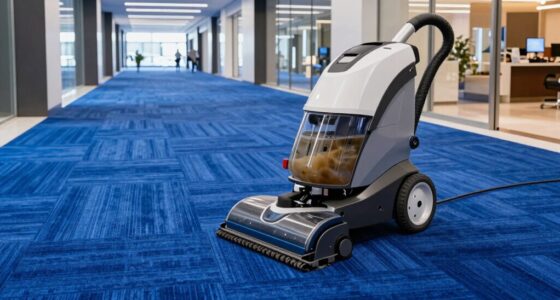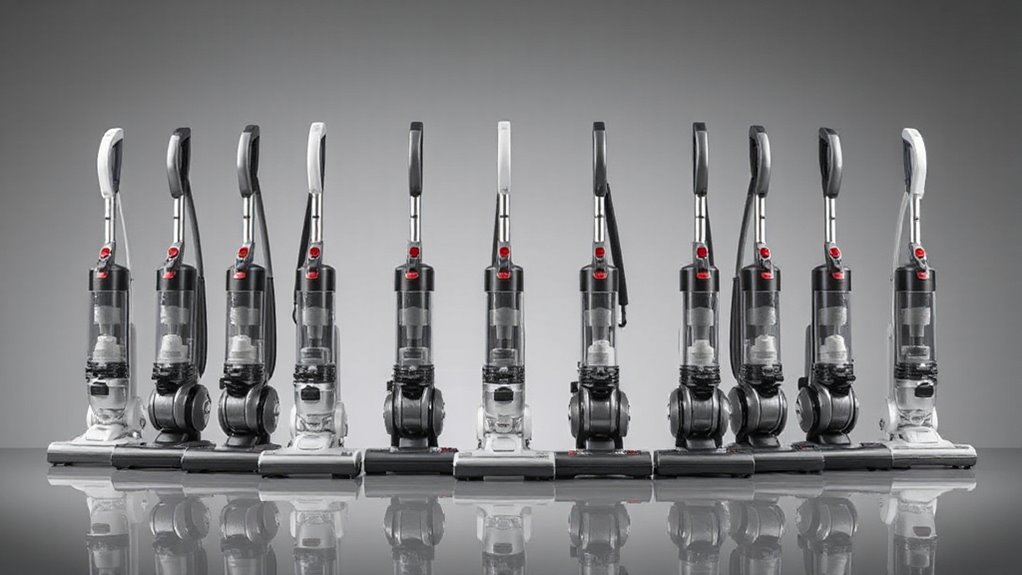

For a commercial vacuum for allergy sufferers, I put the Nilfisk GD930 HEPA Canister first for its HEPA filtration, with the Hoover HushTone standing out as a bagged upright and the Simplicity S20EZM Allergy as an allergy-focused option. The biggest tradeoff is between filtration and sealed dust handling, which matter for limiting exposure, and the maneuverability, capacity, and upkeep that shape everyday use. Bagged models can help contain dust during disposal, but a bag alone does not establish how well a vacuum filters exhaust. Canister designs can suit varied surfaces, while uprights may be simpler for large carpeted areas. Continue reading for my full breakdown of how these 10 models differ and which type of buyer each suits.

Get cleaning gear delivered free with Prime
- Fast, free delivery on millions of items
- Prime Video, Amazon Music and more included
- Member-only deals all year
Complete the kit


Key Takeaways
- The Nilfisk GD930 HEPA is the clearest pick when HEPA filtration is the main priority; the standard GD930 should not be treated as an equivalent filtration choice.
- Bagged designs dominate this lineup, giving buyers multiple options for dust collection, but bag use by itself does not confirm sealed-system performance or HEPA-level exhaust filtration.
- Uprights and canisters solve different cleaning problems: uprights favor broad carpet coverage, while the Nilfisk canisters offer a different format for varied surfaces and maneuvering around obstacles.
- The Simplicity S20EZM Allergy has a specifically allergy-oriented identity, while several commercial models are better understood as work-focused machines whose filtration details need checking.
- There is no single winner for every workplace: floor mix, dust-disposal routine, filtration documentation, and who operates the vacuum can outweigh commercial branding.
| Hoover HushTone Commercial Upright Vacuum Cleaner, 15-Inch, Bagged |  | Best Overall for Quieter, Flexible Cleaning | Type: Bagged upright vacuum | Cleaning width: 15 inches | Filtration: HEPA; listed as capturing 99% of matter down to 0.5 microns, with conflicting 5-micron claim in product information | VIEW ON AMAZON | See Our Full Breakdown |
| Windsor Sensor XP15 Commercial Upright Vacuum |  | Best for Fine-Particle Carpet Filtration | Type: Commercial upright vacuum | Filtration: HEPA; 99% of contaminants down to 0.3 microns | Filter bag: Triple-lined | VIEW ON AMAZON | See Our Full Breakdown |
| Sanitaire SC679K Tradition Commercial Upright Bagged Vacuum |  | Best Lightweight, High-Capacity Workhorse | Type: Commercial upright bagged vacuum | Power: 800 watts | Bag capacity: 18 quarts | VIEW ON AMAZON | See Our Full Breakdown |
| Nilfisk GD930 Canister Vacuum Cleaner |  | Best for Large-Site HEPA Coverage | Type: Canister vacuum | Filtration: Upstream H13 HEPA; 99.97% of particles down to 0.3 microns | Dust capacity: 4 gallons | VIEW ON AMAZON | See Our Full Breakdown |
| Nilfisk GD930 HEPA Canister Vacuum |  | Best for Quiet, Daily Commercial Cleaning | Type: Canister vacuum | Filter: HEPA | Dust bag capacity: 15 liters | VIEW ON AMAZON | See Our Full Breakdown |
| Kärcher Versamatic 14 Commercial Upright Vacuum Cleaner |  | Best Balanced Commercial Pick | Filtration: HEPA | Capacity: 1.4 gallons | Cleaning path: 14 inches | VIEW ON AMAZON | See Our Full Breakdown |
| Sanitaire TRADITION SC684G Commercial Bagged Upright Vacuum, Red |  | Best for Long Cleaning Routes | Collection type: Bagged upright with shake-out bag assembly | Capacity: 18 quarts | Filter type: Disk | VIEW ON AMAZON | See Our Full Breakdown |
| BISSELL Commercial PowerForce Bagged Upright Vacuum, BGU1451T |  | Best for Lightweight Tool-Based Cleaning | Weight: 12 pounds | Filtration: 3-stage | Motor: 10 amps | VIEW ON AMAZON | See Our Full Breakdown |
| Simplicity S20EZM Allergy Bagged Upright Vacuum |  | Best for Allergy-Focused Filtration | Collection type: Sealed bagged system | Filtration: Dual HEPA media; captures particles as small as 0.3 microns | Dust capacity: 4.3 liters | VIEW ON AMAZON | See Our Full Breakdown |
| Oreck Commercial XL Bagged Upright Vacuum Cleaner |  | Best Lightweight Carpet Pick | Weight: 9 pounds | Collection type: Bagged upright | Filter: HEPA | VIEW ON AMAZON | See Our Full Breakdown |
| commercial vacuum for allergy sufferer | Noise level | Weight | Filtration | Type |
|---|---|---|---|---|
| Hoover HushTone Commercial Upr | 69 dB | — | HEPA; listed as capturing 99% of matter down to 0.5 microns, with conflicting 5-micron claim in product information | Bagged upright vacuum |
| Windsor Sensor XP15 Commercial | 79 dB | 22 pounds | HEPA; 99% of contaminants down to 0.3 microns | Commercial upright vacuum |
| Sanitaire SC679K Tradition Com | 78 dB | 12.2 pounds | — | Commercial upright bagged vacuum |
| Nilfisk GD930 Canister Vacuum | — | 26 pounds | Upstream H13 HEPA; 99.97% of particles down to 0.3 microns | Canister vacuum |
| Nilfisk GD930 HEPA Canister Va | — | 26 pounds | — | Canister vacuum |
| Kärcher Versamatic 14 Commerci | 69.5 dB | — | HEPA | — |
| Sanitaire TRADITION SC684G Com | 79 dB | — | — | — |
| BISSELL Commercial PowerForce | 82 dB | 12 pounds | 3-stage | — |
| Simplicity S20EZM Allergy Bagg | 75 dB | 15.7 pounds | Dual HEPA media; captures particles as small as 0.3 microns | — |
| Oreck Commercial XL Bagged Upr | 80 dB | 9 pounds | — | — |
More Details on Our Top Picks
Hoover HushTone Commercial Upright Vacuum Cleaner, 15-Inch, Bagged
I rank the Hoover HushTone first for buyers who need commercial coverage without giving up a choice between lower-noise operation and stronger cleaning. Its HEPA filtration is listed as capturing 99% of particles down to 0.5 microns, a useful specification for dust-conscious indoor cleaning; the product information also gives a conflicting 5-micron claim, so I would verify that detail before buying. Unlike the carpet-focused Windsor Sensor XP15, Hoover is specified for carpet and several hard-floor surfaces. Hush Mode, a 4.5-quart bag, and a 40-foot replaceable cord suit extended routes where noise and interruptions matter. The tradeoff is corded operation, and its 69 dB claim should not be treated as proof of silent running.
Pros:- HEPA filtration is specified to capture 99% of particles down to 0.5 microns
- Hush and Boost modes let operators favor lower noise or stronger cleaning
- 40-foot replaceable cord supports longer cleaning routes
- Automatic motor shutoff is designed to help protect the belt
Cons:- Corded operation limits reach to areas near an outlet
- Product information conflicts between 0.5- and 5-micron filtration claims
- The 4.5-quart capacity is smaller than the Nilfisk GD930’s 4-gallon capacity
Best for: Commercial cleaners covering mixed carpet and hard floors who want selectable quieter and higher-performance modes plus HEPA filtration.
Not ideal for: Buyers who need cordless mobility or require an unambiguous, independently verified filtration particle-size specification.
- Type:Bagged upright vacuum
- Cleaning width:15 inches
- Filtration:HEPA; listed as capturing 99% of matter down to 0.5 microns, with conflicting 5-micron claim in product information
- Motor modes:Hush Mode and Boost Mode
- Capacity:4.5 quarts
- Cord length:40 feet; replaceable
- Hose length:8 feet
- Noise level:69 dB
Our verdict“Choose the Hoover for mixed-floor commercial cleaning when quieter operation and mode flexibility matter more than cordless freedom or a very large dust capacity.”
Windsor Sensor XP15 Commercial Upright Vacuum
For carpet-heavy sites where fine-particle capture takes priority, I place the Windsor Sensor XP15 ahead of simpler, single-speed commercial uprights. Its stated HEPA filtration captures 99% of contaminants down to 0.3 microns, and a triple-lined filter bag adds another dust-containment layer. That makes it a more specific allergy-focused choice than the Sanitaire SC679K, whose supplied specifications do not identify HEPA filtration. The 1.4-gallon capacity and 22-pound weight suit recurring commercial carpet routes, but Windsor is explicitly designed for indoor carpet rather than mixed surfaces. It also has only one speed and is listed at 79 dB, so operators get less control over noise and cleaning intensity than with the Hoover HushTone’s two modes.
Pros:- HEPA filtration is specified to capture 99% of contaminants down to 0.3 microns
- Triple-lined filter bag provides an additional dust-filtering layer
- 1.4-gallon capacity supports commercial carpet cleaning
- 22-pound weight is lighter than the Nilfisk GD930 canister
Cons:- Designed for indoor carpet, limiting its fit for mixed-floor sites
- Single speed offers less flexibility than the Hoover HushTone
- Listed noise level is 79 dB
Best for: Commercial operators cleaning mostly indoor carpet who prioritize a stated 0.3-micron HEPA specification and a layered filter bag.
Not ideal for: Teams cleaning substantial hard-floor areas or needing adjustable operating modes and lower listed noise.
- Type:Commercial upright vacuum
- Filtration:HEPA; 99% of contaminants down to 0.3 microns
- Filter bag:Triple-lined
- Capacity:1.4 gallons
- Weight:22 pounds
- Dimensions:15 × 11 × 46 inches
- Noise level:79 dB
- Power source:Corded electric
Our verdict“Pick the Windsor for carpet-dominant workplaces that value its detailed HEPA and bag specifications over mixed-floor versatility or mode choice.”
Sanitaire SC679K Tradition Commercial Upright Bagged Vacuum
The Sanitaire SC679K earns its place for crews who value easy handling and infrequent bag-emptying more than a specified fine-particle filter. At 12.2 pounds, it is substantially lighter than the 22-pound Windsor Sensor XP15, which can make repeated room-to-room work less taxing. Its 18-quart shake-out bag is also much larger than the Hoover HushTone’s 4.5-quart capacity, reducing stops on long carpet routes. That large bag is not the same as a sealed HEPA bag, however, and the provided specifications do not state HEPA filtration; allergy-focused buyers should favor the Windsor or Nilfisk GD930 when documented particle capture is the priority. Tool-free brush-roll and belt replacement help with upkeep, while the single power level and carpet-focused design limit flexibility.
Pros:- 12.2-pound weight is notably lower than the Windsor Sensor XP15’s 22 pounds
- 18-quart shake-out bag reduces emptying interruptions
- Brush roll and belt can be replaced without tools
- 30-foot cord provides a broad working reach
Cons:- Supplied specifications do not identify HEPA filtration or a fine-particle capture rate
- Shake-out bag may be less suitable for dust-sensitive disposal than a sealed HEPA bag
- Single power level and carpet-focused design limit cleaning flexibility
Best for: Commercial crews cleaning large carpeted areas who need a lightweight upright, a large shake-out bag, and straightforward brush-roll maintenance.
Not ideal for: Allergy-sensitive sites requiring a stated HEPA filtration rating or operators who need variable power and hard-floor versatility.
- Type:Commercial upright bagged vacuum
- Power:800 watts
- Bag capacity:18 quarts
- Cord length:30 feet
- Weight:12.2 pounds
- Dimensions:13.75 × 12.5 × 45 inches
- Noise level:78 dB
- Warranty:1 year, parts and labor
Our verdict“Choose the Sanitaire for lightweight, high-capacity carpet maintenance, but choose a model with specified HEPA filtration when allergy control is the main requirement.”
Nilfisk GD930 Canister Vacuum Cleaner
For buyers who need a documented filtration specification across both floors and furnishings, I rank the Nilfisk GD930 as the strongest large-site canister option here. Its upstream H13 HEPA filter is listed at 99.97% capture down to 0.3 microns, a more explicit fine-particle claim than the Hoover HushTone’s conflicting particle-size information. A 4-gallon capacity can also reduce bag-change interruptions compared with the Windsor Sensor XP15’s 1.4-gallon capacity. The canister format is specified for carpet, hard floors, and furniture, giving it more surface range than either carpet-focused upright. That reach and capacity come with a cost in handling: it weighs 26 pounds, and its 35-foot cord still ties the cleaning route to outlets. The listed 6-foot hose also may not suit every above-floor task.
Pros:- H13 HEPA filtration is specified to capture 99.97% of particles down to 0.3 microns
- 4-gallon dust capacity helps reduce changes during larger jobs
- Specified for carpet, hard floors, furniture, and bare floors
- 35-foot cord and 6-foot hose offer a broad cleaning radius
Cons:- 26-pound weight makes transport and frequent repositioning harder than with the Sanitaire SC679K
- Corded operation restricts the route to outlet access
- Canister format may be less convenient than an upright for repeated carpet-only cleaning
Best for: Facilities teams cleaning mixed surfaces and furnishings across large indoor areas that need a specified H13 HEPA filter and high capacity.
Not ideal for: Operators who prioritize a lightweight machine, cordless movement, or a dedicated upright for fast carpet-only passes.
- Type:Canister vacuum
- Filtration:Upstream H13 HEPA; 99.97% of particles down to 0.3 microns
- Dust capacity:4 gallons
- Motor power:1,000 watts
- Hose length:6 feet
- Power cord length:35 feet
- Weight:26 pounds
- Recommended surfaces:Carpet, hard floor, furniture, and bare floor
Our verdict“Choose the GD930 when high-capacity, explicitly rated HEPA cleaning across mixed indoor surfaces outweighs the burden of a heavier canister.”
Nilfisk GD930 HEPA Canister Vacuum
The Nilfisk GD930 HEPA is the lineup’s quieter-operation specialist for offices, retail spaces, and hospitality settings where cleaning may happen around staff or visitors. Its description emphasizes quiet operation, HEPA filtration, and fleece bags, while the 15-liter capacity offers plenty of room for daily routes. Compared with the other Nilfisk GD930 listed here, this version provides two power levels and a replaceable detachable cable, but its supplied data does not give a numerical particle-capture rate or cord length. I would not assume it matches the other GD930’s stated H13 0.3-micron specification without confirmation. Its listed hard-floor focus is narrower than the other GD930’s multi-surface specification, and the 26-pound weight remains a drawback for crews carrying equipment between floors.
Pros:- Designed for quiet operation in occupied commercial spaces
- HEPA filtration paired with fleece dust bags
- 15-liter bag capacity supports longer cleaning runs
- Detachable cable is described as replaceable by an operator
Cons:- Product data does not specify a HEPA particle-capture rate
- Listed for hard floors, with less surface detail than the other Nilfisk GD930
- 26-pound weight can make frequent carrying difficult
Best for: Office, retail, and hospitality teams seeking a quiet-running canister with HEPA filtration, fleece bags, and a replaceable cable for hard-floor cleaning.
Not ideal for: Buyers needing a confirmed 0.3-micron HEPA capture figure, a listed cord reach, or a lighter machine for frequent stair transport.
- Type:Canister vacuum
- Filter:HEPA
- Dust bag capacity:15 liters
- Power levels:2
- Power source:Corded electric
- Voltage:120 volts
- Recommended surface:Hard floor
- Weight:26 pounds
Our verdict“Pick this GD930 version for quiet hard-floor routes and serviceable cabling, but confirm its filtration rating if a precise allergy-control standard is required.”
Kärcher Versamatic 14 Commercial Upright Vacuum Cleaner
I’d put the Kärcher Versamatic 14 near the top for buyers who need commercial floor coverage without giving up allergy-focused filtration. Its HEPA filter and 1.4-gallon capacity suit repeated cleaning, while the adjustable pile height helps it move between carpets and hard floors. Compared with the Simplicity S20EZM, Kärcher offers a wider 14-inch path and a quieter stated noise level; the Simplicity, however, specifies sealed dual-HEPA media filtration and particle capture down to 0.3 microns, making its filtration details more explicit.
The dual-motor design, detachable hose, and 40-foot cord add practical versatility, but this model has only one power level. I’d favor it for mixed-floor commercial spaces where coverage and filtration both matter, not for buyers who need adjustable suction or outdoor use.
Pros:- HEPA filtration paired with a 1.4-gallon capacity for extended cleaning between bag changes
- 14-inch cleaning path covers more floor per pass than the 12-inch Simplicity S20EZM
- Adjustable pile height supports cleaning carpets and hard floors
- Detachable hose helps reach edges and other detailed areas
Cons:- Single power level offers no suction adjustment for different cleaning tasks
- Intended for indoor use only
- At 48 inches long, it may be less convenient to store than more compact uprights
Best for: Commercial cleaners covering mixed carpet and hard-floor areas who want HEPA filtration, a detachable hose, and a wide cleaning path.
Not ideal for: Buyers who need variable suction, outdoor cleaning capability, or published filtration details as specific as the Simplicity S20EZM’s particle-capture claim.
- Filtration:HEPA
- Capacity:1.4 gallons
- Cleaning path:14 inches
- Motors:Dual motor
- Cord length:40 feet
- Maximum suction:92 inches
- Noise level:69.5 dB
- Dimensions:48 x 18 x 10 inches
Our verdict“Choose the Kärcher for mixed-floor commercial cleaning with HEPA filtration and broad coverage, but pick the Simplicity if its specified sealed dual-HEPA system is your priority.”
Sanitaire TRADITION SC684G Commercial Bagged Upright Vacuum, Red
The Sanitaire TRADITION SC684G is the route-focused choice here: its 50-foot cord can reduce outlet changes across larger rooms, and six height settings make it easier to match the brush to varied flooring. Its 18-quart shake-out bag is a high-capacity approach for commercial schedules, but allergy-sensitive buyers should weigh that against handling: unlike the sealed bagged collection on the Simplicity S20EZM, a shake-out design gives less reassurance against dust exposure when emptying.
The motor is rated for 2,000 hours, which speaks to its intended work cycle, yet the listed disk filter is less allergy-specific than the Kärcher’s HEPA filtration. At 79 dB and with one speed, it trades quieter, more tailored cleaning for reach and straightforward operation. I’d choose it for large carpeted routes where cord range and capacity matter more than sealed dust disposal.
Pros:- 50-foot cord reduces outlet changes across larger cleaning routes
- 18-quart shake-out bag offers substantial collection capacity
- Six height adjustments support different floor types
- Motor is rated for 2,000 hours of operation
Cons:- Disk filter is less specifically suited to allergy-focused filtration than HEPA models in this roundup
- Shake-out bag assembly can expose users to collected dust during emptying
- 79 dB noise level and a single power setting limit comfort and control
Best for: Janitorial teams cleaning large, mostly carpeted areas who value a long cord, high capacity, and multiple height settings.
Not ideal for: Allergy sufferers who want sealed bag disposal or HEPA filtration, and cleaners working in noise-sensitive spaces.
- Collection type:Bagged upright with shake-out bag assembly
- Capacity:18 quarts
- Filter type:Disk
- Motor:7 amps; rated for 2,000 hours
- Cord length:50 feet
- Cleaning path:12 inches
- Height adjustments:6
- Noise level:79 dB
Our verdict“Pick the Sanitaire for long commercial routes and high capacity, but choose the Simplicity S20EZM if sealed, specified HEPA filtration matters more.”
BISSELL Commercial PowerForce Bagged Upright Vacuum, BGU1451T
At 12 pounds, the BISSELL Commercial PowerForce is a practical option for staff who need to carry a vacuum between rooms or use its onboard tools for upholstery and edges. Its five-position height adjustment and three-stage filtration offer a useful baseline for mixed surfaces, but the product data does not specify HEPA filtration or sealed collection. For allergy-focused buyers, that makes it a less compelling fit than the Kärcher Versamatic 14 or the dual-HEPA Simplicity S20EZM.
The included crevice tool, dusting brush, upholstery tool, and extension wand give it more ready-to-use detail-cleaning equipment than the Oreck XL, which is notably lighter but oriented around upright floor cleaning. The tradeoff is a 30-foot cord and one power level, so this is better for room-to-room work than expansive routes or tasks that call for suction control.
Pros:- 12-pound design is easier to carry between rooms than heavier commercial uprights
- Three-stage filtration provides more filtration stages than a basic single-filter setup
- Five-position height adjustment accommodates carpets and hard floors
- Includes onboard tools for upholstery, crevices, dusting, and extension reach
Cons:- Filtration is not specified as HEPA or as a sealed system
- 30-foot cord may require frequent outlet changes across large spaces
- Single power level provides no suction adjustment
Best for: Commercial staff who frequently move between rooms and want a lightweight upright with tools for upholstery, crevices, and dusting.
Not ideal for: Buyers who need documented HEPA filtration or sealed dust containment, or teams cleaning large areas that benefit from a longer cord.
- Weight:12 pounds
- Filtration:3-stage
- Motor:10 amps
- Cleaning path:13 inches
- Height adjustment:5 positions
- Power cord:30 feet
- Noise level:82 dB
- Included tools:Crevice tool, combination dusting brush, upholstery tool, extension wand
Our verdict“Choose the BISSELL for portable, tool-focused room cleaning, but select a HEPA model such as the Kärcher or Simplicity for a stronger allergy-focused case.”
Simplicity S20EZM Allergy Bagged Upright Vacuum
The Simplicity S20EZM makes the clearest allergy-focused case in this group through its sealed bagged collection system and dual HEPA media filtration, specified to capture particles as small as 0.3 microns. Compared with the Kärcher Versamatic 14, it has a narrower 12-inch cleaning path, but its filtration details are more explicit. The Kärcher counters with a wider path and lower stated noise level, so it may suit larger mixed-floor routes better.
A 13-foot hose, telescopic wand, and onboard tool storage extend its usefulness beyond floor cleaning, while adjustable height settings cover carpets, rugs, and hard floors. Its 30-foot cord and single speed are less suited to sprawling facilities or jobs needing power changes. I’d put this ahead of the BISSELL PowerForce for allergy-sensitive spaces because its collection and filtration are specifically described, while accepting the ongoing need to replace bags and filters.
Pros:- Sealed bagged collection system with dual HEPA media filtration
- Specified particle capture down to 0.3 microns
- 13-foot hose, telescopic wand, and onboard tool storage support detailed cleaning
- Adjustable height settings suit carpets, rugs, upholstery, and hard floors
Cons:- 12-inch cleaning path is narrower than the Kärcher Versamatic 14’s 14-inch path
- 30-foot cord may mean more outlet changes in large facilities
- Routine maintenance requires replacement bags and filters
Best for: Allergy-sensitive households or smaller commercial spaces seeking specified HEPA particle capture, sealed bagged collection, and above-floor reach.
Not ideal for: Large facilities needing a wider cleaning path or long uninterrupted cord reach, and buyers who want to avoid replacement bags and filters.
- Collection type:Sealed bagged system
- Filtration:Dual HEPA media; captures particles as small as 0.3 microns
- Dust capacity:4.3 liters
- Cleaning path:12 inches
- Power cord:30 feet
- Hose length:13 feet
- Weight:15.7 pounds
- Noise level:75 dB
Our verdict“Choose the Simplicity when sealed collection and clearly specified HEPA filtration outweigh the need for a wider path or longer cord.”
Oreck Commercial XL Bagged Upright Vacuum Cleaner
The Oreck Commercial XL is the lightest option in this batch at 9 pounds, making it appealing for staff who carry a vacuum between floors or work across multiple rooms. It combines a HEPA filter with a bagged design, though the supplied details do not describe a sealed collection system or specify particle-capture performance. Allergy-focused buyers seeking those details may prefer the Simplicity S20EZM, whose sealed dual-HEPA system has a stated capture size.
Oreck’s high-speed brush roll targets embedded carpet debris, while automatic height adjustment avoids manual changes between carpet and hard floors. That simplicity comes with a single speed and an 80 dB noise level; the Kärcher Versamatic 14 is a quieter choice on its listed specification and offers a detachable hose for detail work. I’d choose the Oreck for lightweight, primarily floor-level cleaning, not for users who need quiet operation or specified sealed filtration.
Pros:- At 9 pounds, it is lighter than the other uprights in this batch
- HEPA filter and bagged collection provide an allergy-focused filtration feature
- High-speed brush roll is designed to lift embedded carpet debris
- Automatic height adjustment and side edge brushes support floor cleaning
Cons:- Supplied details do not specify a sealed collection system or particle-capture performance
- 80 dB noise level may be disruptive in occupied spaces
- Single speed limits control over different cleaning conditions
Best for: Commercial cleaners who carry a vacuum frequently and want a very lightweight bagged upright for carpet and hard-floor maintenance.
Not ideal for: Allergy-sensitive buyers who require documented sealed HEPA collection, or workplaces where an 80 dB machine would be disruptive.
- Weight:9 pounds
- Collection type:Bagged upright
- Filter:HEPA
- Capacity:9 quarts
- Surface recommendation:Carpet and hard floor
- Cord length:35 feet
- Noise level:80 dB
- Speeds:1
Our verdict“Choose the Oreck for easy carrying and lightweight floor cleaning, but opt for the Simplicity S20EZM if documented sealed HEPA filtration is the priority.”

How We Picked
I ranked these vacuums by how well their stated design and features address allergy-related priorities alongside commercial cleaning demands. Filtration claims and dust containment carried the most weight; I gave particular attention to the distinction between a named HEPA model and products described as bagged without equivalent filtration information. I also weighed practical fit: upright or canister format, expected coverage needs, routine bag and filter maintenance, and the usability tradeoffs that affect frequent cleaning.
The ranking favors models with a clearer connection to allergy control, then separates them by the type of work they suit. The Nilfisk GD930 HEPA leads because its HEPA designation directly addresses a central buyer concern, while the Hoover HushTone and Simplicity S20EZM Allergy offer distinct bagged-upright alternatives. The remaining commercial uprights may make sense for particular floor plans or operating needs, but their commercial purpose alone does not establish allergy-grade filtration. I treat unclear or unverified filtration details as a limitation rather than assuming that all bagged vacuums perform alike.
| commercial vacuum for allergy sufferer | Type |
|---|---|
| Hoover HushTone Commercial Upr | Bagged upright vacuum |
| Windsor Sensor XP15 Commercial | Commercial upright vacuum |
| Sanitaire SC679K Tradition Com | Commercial upright bagged vacuum |
| Nilfisk GD930 Canister Vacuum | Canister vacuum |
| Nilfisk GD930 HEPA Canister Va | Canister vacuum |
| Kärcher Versamatic 14 Commerci | — |
| Sanitaire TRADITION SC684G Com | — |
| BISSELL Commercial PowerForce | — |
| Simplicity S20EZM Allergy Bagg | — |
| Oreck Commercial XL Bagged Upr | — |
Factors to Consider When Choosing Commercial Vacuum For Allergy Sufferers
Before choosing a machine, I would match its filtration and handling to the way dust is created, collected, and emptied in your space. These broader checks can help prevent a common mistake: buying a durable commercial vacuum that cleans floors well but does not match the allergy-control needs of its users.
Check Filtration Beyond the Bag
A bag captures collected debris, but it does not by itself tell you what the vacuum releases through its exhaust. Look for specific filtration information, such as a stated HEPA filter, and check whether the manufacturer describes filtration across the complete air path. A filter specification is most useful when you can confirm that the compatible replacement part is available and that maintenance instructions preserve performance. Avoid assuming that an allergy-related product name proves a particular filtration standard. If documentation is vague, ask the supplier for the exact filter and system details before buying. Paying more for a clearly specified filtration system may matter more than choosing a machine with a larger commercial motor.
Plan for Bag Changes and Dust Disposal
Allergy exposure can happen during emptying and maintenance, not only while vacuuming. Consider who will change bags, how often they will be changed, and whether the work can happen away from occupied rooms. Check bag availability and replacement instructions, since a machine that is difficult to restock or service may encourage overfilled bags or neglected filters. A larger bag can reduce change frequency, but it may also be heavier to handle when full. Disposable bags can simplify disposal compared with emptying a reusable bin, though they create an ongoing supply requirement. Choose the system that your cleaning routine can maintain consistently.
Match the Floor Plan to Upright or Canister
Uprights usually suit open stretches of carpet, where a familiar push-and-pull routine covers broad areas efficiently. Canisters can be easier to route around furniture and may be a better fit when a space combines floors, edges, and tight areas, depending on the supplied tools. Neither format automatically provides better allergy control; filtration and careful use still matter. Think about stairs, doorways, storage space, cord handling, and the distance between rooms before choosing. A vacuum that is awkward for the operator can leave edges or secondary rooms less frequently cleaned. Match the machine to the most demanding part of the floor plan, not just the largest room.
Separate Commercial Durability From Allergy Performance
Commercial labeling can signal a design intended for frequent work, but it does not guarantee a sealed air path, HEPA filtration, or low dust release. Treat durability, filtration, and containment as separate buying questions. Ask whether the vacuum is approved for the surfaces in your facility and whether its filters, belts, and bags are intended for the planned cleaning frequency. A rugged machine may be a sound operational choice yet still require additional documentation before it suits an allergy-sensitive space. Conversely, an allergy-focused model may need scrutiny for capacity and maintenance demands in a high-traffic workplace. Prioritize verified fit over the word commercial on the product name.
Budget for Replacement Parts and Staff Time
The purchase decision includes the routine cost and labor of bags, filters, belts, and service—not just the machine itself. Check which consumables are proprietary, how easy they are to source, and how often the manual calls for inspection or replacement. A less expensive machine can require more staff attention or make suitable filtration parts harder to find. A higher-cost model may be a better fit if its documented filtration and service plan support the cleaning schedule, but added features are only useful when maintained. Ask who will do the upkeep and whether they can follow the required schedule. A simple maintenance log can help a facility spot clogged filters and overdue bag changes before cleaning quality slips.
Choose Around the People Using the Space
Consider whether people with allergies will be present during vacuuming, how often rooms can be cleaned while unoccupied, and whether a quieter operating routine matters to the site. Vacuuming can stir settled material even when the machine collects it, so scheduling and ventilation practices may affect comfort as much as the model choice. Ask the manufacturer about operating guidance for occupied environments rather than assuming a commercial vacuum is suitable for use around sensitive occupants. If staff must carry the machine between floors, weight and handling deserve more attention than they might in a single-level building. For shared facilities, clear instructions for bag changes and filter care can reduce inconsistent maintenance. Match the vacuum to both the cleaner and the people who use the space.
Frequently Asked Questions
Is a bagged commercial vacuum automatically a good choice for someone with allergies?
No. A bag can contain collected dirt and simplify disposal, but it does not prove that the vacuum has HEPA filtration or a sealed system. Check the exhaust filtration specification and how the manufacturer describes dust containment. Also look at how bags are changed, since careless handling can release dust. If those details are unavailable, ask the manufacturer or supplier rather than relying on the bagged label.
Should I choose the Nilfisk GD930 HEPA over the standard GD930?
If documented HEPA filtration is a key reason for buying, the HEPA version is the more direct match because the standard GD930 should not be assumed to share that specification. Verify the exact model, included filter, and compatible replacement parts before ordering. The standard version may still suit buyers whose priority is a canister format and whose filtration requirements are different. Compare the supplier’s documentation for the specific unit, not just the shared model name. That check can prevent an unwanted substitution.
Is an upright or canister vacuum easier to use in a mixed-floor workplace?
It depends on the balance of open carpet, hard flooring, furniture, and tight spaces. An upright can be straightforward for wide carpeted areas, while a canister may offer more flexibility for routing around obstacles and reaching different areas when suitable tools are supplied. Neither format guarantees better allergen control, so compare filtration and dust handling separately. Think about storage, stairs, and who will operate the machine on a typical shift. If possible, confirm the available floor tools before selecting a format.
What should I verify before using one of these vacuums in an allergy-sensitive facility?
Confirm the filtration specification, whether the air path is described as sealed, and which filters and bags the exact model requires. Ask for written manufacturer information if a product listing uses broad allergy language without naming a filtration standard. Check how often filters need attention and how bags should be removed. Also plan when and where vacuuming will happen, since cleaning around occupants may affect comfort. These checks matter even for a durable commercial machine.
When does it make sense to pay more for a commercial vacuum?
Paying more can make sense when the additional cost buys a verified feature your site needs, such as clearly specified HEPA filtration, a useful floor-care format, or support for frequent maintenance. It is less persuasive when the difference is mainly branding or an unspecified performance claim. Compare ongoing costs for bags and filters, along with service availability and staff time. A machine used across a large facility may justify investment in easier upkeep, while occasional cleaning may call for a simpler fit. Base the decision on documented benefits and workload rather than commercial positioning alone.
Conclusion
For the strongest allergy-focused match in this lineup, I would choose the Nilfisk GD930 HEPA as best overall, provided its HEPA specification and replacement parts match your needs. The BISSELL Commercial PowerForce BGU1451T is my best-value direction for buyers who want a commercial bagged upright, but I would verify its filtration details before treating it as an allergy-first choice. For best premium, I would select the Nilfisk GD930 HEPA when documented filtration is worth prioritizing over a basic commercial upright. For beginners, the Hoover HushTone offers a straightforward bagged-upright format, though buyers should still check its filtration documentation. For specific needs, choose the Simplicity S20EZM Allergy when an allergy-oriented upright is the priority, or the standard Nilfisk GD930 when a canister format matters more and its filtration meets your requirements. Across all picks, confirm the exact filter, bag, and maintenance instructions before purchase.