
To clean your air vents and returns, turn off your HVAC system first. Remove vent covers and wash them with warm, soapy water. Use a vacuum with a brush attachment to clear dust and debris inside the duct openings. Wipe down vent louvers with a soft cloth, and check for mold or pests. If you want to make certain your system stays clean and efficient, you’ll find helpful tips if you explore further.
Key Takeaways
- Turn off the HVAC system before removing and cleaning vent covers.
- Remove vent covers and wash them with warm, soapy water; dry thoroughly.
- Use a vacuum with a brush attachment to clean inside duct openings and remove dust.
- Wipe down vent louvers with a soft cloth or brush for a deeper clean.
- Check for mold or pests, and seek professional help if issues are detected.
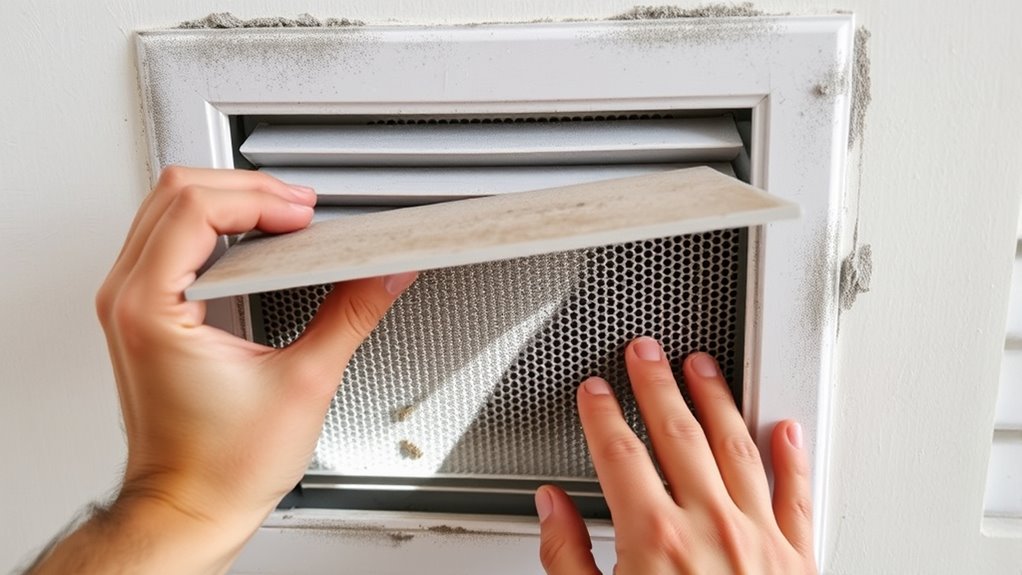
Have you ever wondered how clean the air in your home really is? It’s easy to overlook the importance of maintaining your air vents and returns, but doing so plays a vital role in ensuring good indoor air quality. One of the first steps you can take is focusing on air filter maintenance. Regularly changing or cleaning your air filters can drastically reduce dust, allergens, and other airborne particles that circulate through your HVAC system. A dirty filter not only hampers airflow but also forces your system to work harder, increasing energy bills and decreasing efficiency. Make it a habit to check your filters every month—especially during peak allergy seasons—and replace them at least every three months, or sooner if they look visibly dirty.
Regularly checking and replacing air filters keeps indoor air clean and HVAC systems running efficiently.
In addition to air filter maintenance, understanding duct cleaning techniques can make a significant difference. Over time, dust, pet dander, mold spores, and debris tend to accumulate inside your ductwork, creating a breeding ground for potential allergens. You don’t need to do this yourself; professional duct cleaning involves specialized tools like rotary brushes, high-powered vacuums, and compressed air to dislodge and remove buildup from your air ducts. This process improves airflow, enhances system efficiency, and reduces indoor pollutants. If you notice persistent musty odors or uneven airflow, it’s a clear sign that your ducts may need cleaning. Regular duct cleaning, every few years, can help maintain a healthier home environment.
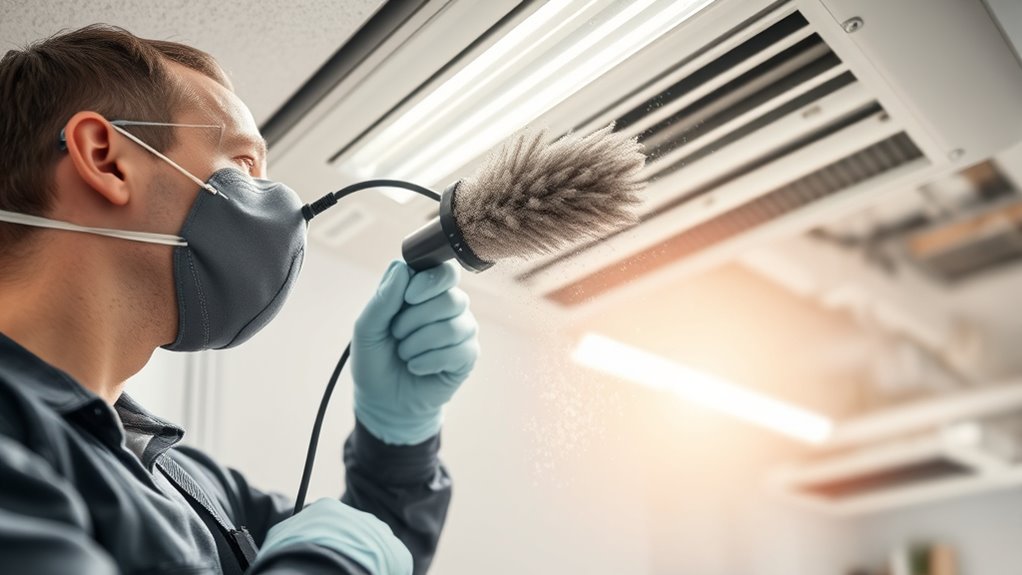
When cleaning your vents and returns, start by turning off your HVAC system. Remove the vent covers and wash them with warm, soapy water. Use a vacuum with a brush attachment to clean out the inside of the duct openings, removing loose dust and debris. For a deeper clean, you might consider using a soft brush or cloth to wipe down the vent louvers. While doing this, check for signs of mold or pests—these issues require prompt professional intervention. It’s also beneficial to keep the area around your vents clear of dust-accumulating clutter, which can hinder airflow and promote dirt buildup. Regular maintenance not only improves air quality but also prolongs the lifespan of your HVAC system.
Incorporating routine air filter maintenance and periodic duct cleaning techniques into your home care routine ensures your HVAC system runs smoothly and your indoor air stays fresh. Don’t underestimate the impact of clean vents on your overall health and comfort. A little effort now goes a long way toward creating a cleaner, healthier living space. Staying proactive with these simple steps can improve air quality, reduce allergens, and help your system operate at peak efficiency, making your home a safer, more comfortable place to be. Proper ventilation system upkeep is essential for maintaining a healthy indoor environment.
Frequently Asked Questions
How Often Should Air Vents Be Cleaned for Optimal Air Quality?
You should clean your air vents every 1 to 3 months to maintain ideal air quality. Regular cleaning helps guarantee ventilation system hygiene and prevents dust buildup that can impair air circulation. By staying consistent with air quality maintenance, you reduce allergens and pollutants, creating a healthier indoor environment. Remember, frequent vent cleaning keeps your ventilation system functioning efficiently and contributes to better overall air quality in your home.
Can I Clean Air Vents Without Professional Help?
Yes, you can clean air vents yourself with DIY tips and the right vent cleaning tools. Start by turning off your HVAC system, then remove the vent covers. Use a vacuum with a brush attachment to loosen dust, and a microfiber cloth or brush to scrub the vents. Be cautious and wear a mask if needed. Regular cleaning helps maintain good air quality without professional help.
What Tools Are Best for Cleaning Air Return Vents?
You should use a vacuum with attachments like a brush or crevice tool to remove dust from your air return vents. Pair this with microfiber cloths to wipe down the vent covers and surrounding areas. The vacuum helps loosen debris, while microfiber cloths trap dust without spreading it around. Together, these tools make cleaning efficient and thorough, ensuring your vents stay free of dust and improve indoor air quality.
Are There Any Risks Associated With Cleaning Air Vents?
Cleaning air vents is like tending a delicate garden—you must be cautious. Ventilation safety is essential; improper cleaning can lead to chemical exposure from cleaning agents or dust particles. Always wear gloves and masks, guarantee good ventilation, and choose non-toxic cleaners. Rushing or neglecting safety can cause health issues. So, take your time, follow proper procedures, and protect yourself while maintaining a healthy indoor environment.
How Do I Prevent Mold Buildup in Air Vents?
To prevent mold buildup in air vents, you should prioritize regular air vent maintenance and implement mold prevention strategies. Keep vents clean by dusting and inspecting them frequently, and replace filters as recommended. Make certain your home is well-ventilated to reduce humidity, which fosters mold growth. Using dehumidifiers and fixing leaks also help. These steps keep your air vents dry and mold-free, improving indoor air quality.
Conclusion
Now, imagine fresh, crisp air flowing freely through your clean vents, filling your home with a invigorating breeze. As you finish wiping away dust and debris, picture your space breathing easier, healthier, and more inviting. Regularly maintaining your vents transforms your home into a sanctuary of purity, where every breath feels lighter and more invigorating. Enjoy the satisfaction of knowing you’ve created a cleaner environment, one breath at a time, with just a simple, routine touch.