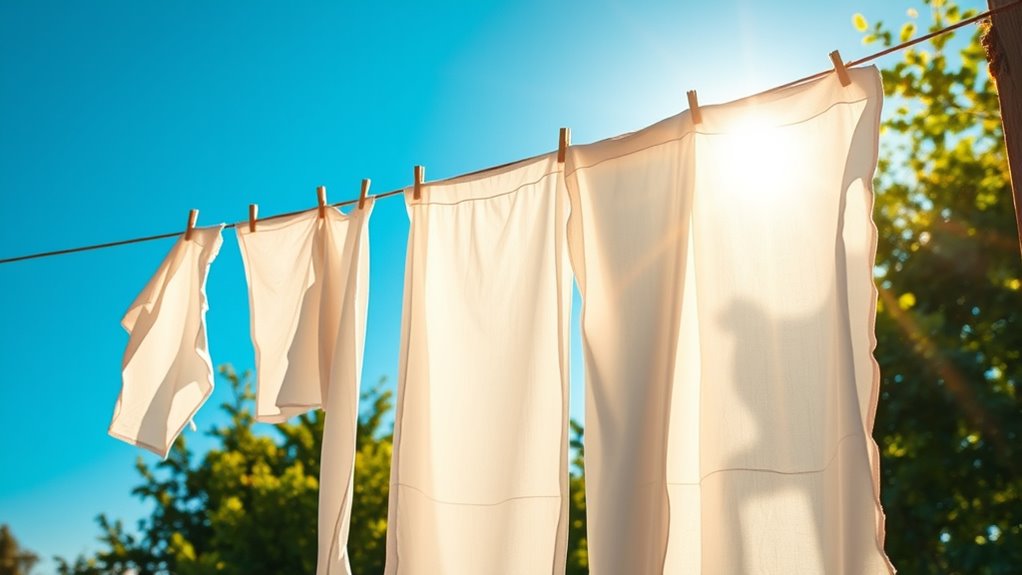

Sunlight’s UV rays can naturally disinfect surfaces and air by damaging germs’ DNA, but they only work when there’s direct exposure. Shaded areas, cracks, or indoor spaces where UV doesn’t reach remain contaminated, so sunlight alone isn’t enough for complete disinfection. Proper humidity levels can also boost its effectiveness, but relying solely on sunlight leaves some risks. Keep exploring to discover how to maximize your disinfection efforts effectively.
Key Takeaways
- Sunlight’s UV rays can inactivate bacteria and viruses but require direct exposure for effective disinfection.
- Sunlight cannot reach shaded, covered, or hidden areas, limiting its germicidal reach.
- Weather conditions like overcast skies reduce UV intensity, decreasing disinfection effectiveness.
- UV sterilization is less effective indoors or in cracks and shadows where UV penetration is limited.
- Combining sunlight with other methods, such as humidity control and cleaning, enhances overall air-dry disinfection.
Have you ever wondered how air-dry disinfection effectively eliminates germs without the use of liquids or chemicals? The answer lies in understanding the role of UV sterilization and humidity control. Sunlight, particularly its ultraviolet component, can naturally disinfect surfaces and air by disrupting the DNA of bacteria, viruses, and other pathogens, rendering them inactive. This process, known as UV sterilization, is a powerful tool in air-dry disinfection because it helps reduce microbial presence in the environment without introducing harsh chemicals. When sunlight penetrates a space, the UV rays can kill or weaken many germs, making the environment safer. However, relying solely on sunlight has its limits. For instance, UV sterilization depends on direct exposure; if surfaces are shaded or covered, the germs may survive. This means that sunlight alone isn’t always sufficient for thorough disinfection, especially in areas with poor sunlight exposure or in shaded corners.
Humidity control plays a vital role in enhancing air-dry disinfection, too. Maintaining ideal humidity levels helps inhibit microbial growth and prolongs the disinfecting effects of natural sunlight. When humidity is too high, mold and bacteria can thrive, negating the benefits of UV sterilization. Conversely, if the air is too dry, it can cause static buildup and damage certain materials. Striking the right balance with humidity control ensures that the environment remains inhospitable to germs while supporting the natural disinfecting effects of sunlight. Proper humidity levels also help prevent the formation of moisture that could promote mold growth, which sunlight can’t address directly. By managing humidity, you create an environment where UV sterilization can work more effectively and sustainably. Additionally, understanding the limitations of UV sterilization—such as its inability to penetrate into cracks or shaded areas—highlights the importance of complementary disinfection strategies.
It’s important to recognize what sunlight can and can’t do in the domain of air-dry disinfection. While UV rays can drastically reduce microbial loads on exposed surfaces, they don’t penetrate into cracks, shadows, or covered areas. Sunlight also can’t eliminate germs in hidden crevices or beneath surfaces that don’t receive direct exposure. Additionally, environmental factors such as overcast weather or indoor settings limit the intensity of UV rays, reducing their germicidal effectiveness. Therefore, while sunlight is a valuable component of air-dry disinfection when combined with proper humidity control, it isn’t a standalone solution. To maximize disinfection, you should complement natural sunlight with other strategies like air circulation and cleaning practices. This integrated approach ensures a more complete reduction of germs, leveraging both the natural power of UV sterilization and the environmental benefits of humidity management.

GermGuardian HEPA Air Purifier – Large Room Air Purifier for Bedroom, Office, Dorm, and Home – Filters Pet Dander, Dust, Pollen, Smoke, Scents – AC4825E – 22" Tower – Gray
- Effective for Small and Large Rooms: Cleans 153 sq. ft. in 12.5 min, 743 sq. ft. hourly
- Reduces Odors and Scents: Activated carbon filter minimizes cooking and pet smells
- High-Performance HEPA Filter: Captures 99.97% of allergens as small as 0.1 microns
As an affiliate, we earn on qualifying purchases.
As an affiliate, we earn on qualifying purchases.
Frequently Asked Questions
Can Sunlight Effectively Disinfect All Types of Bacteria?
Sunlight can’t effectively disinfect all types of bacteria because of variations in bacterial resistance. UV spectrum in sunlight can kill some bacteria, but certain strains have developed resistance, making sunlight less reliable for thorough disinfection. You shouldn’t rely solely on sunlight for complete bacterial elimination, especially for pathogens with high resistance. Instead, combine sunlight with other disinfection methods to ensure better safety and hygiene.
How Long Does Sunlight Need to Expose Items for Effective Disinfection?
You need to give sunlight enough time to work its magic, usually around 2 to 3 hours of direct exposure, depending on UV intensity. The longer you leave items in the sun, the better the disinfection, but don’t forget that UV intensity varies with time of day and weather. Think of it as a race against nature—consistent, adequate exposure duration is key for effective results.
Does Cloud Cover Affect Sunlight’s Disinfectant Properties?
Cloud cover does affect sunlight’s disinfectant properties by reducing sunlight penetration, which lessens the UV rays reaching your items. When it’s cloudy, the UV intensity decreases, so disinfection takes longer or becomes less effective. You should keep items exposed to sunlight longer on cloudy days, but don’t rely solely on sunlight for thorough disinfection. For better results, consider combining sunlight with other cleaning methods.
Can Sunlight Eliminate Viruses as Well as Bacteria?
While sunlight’s UV spectrum can weaken viruses, it’s not a guaranteed elimination method, especially for bacteria. Sunlight’s effectiveness depends on surface porosity, which can shelter microbes from UV rays. You shouldn’t rely solely on sunlight for disinfection, as some viruses and bacteria can withstand exposure. To guarantee safety, combine sunlight with proper cleaning methods, understanding that UV light offers partial help rather than total eradication.
Are There Materials That Should Not Be Exposed to Sunlight for Disinfection?
You should avoid exposing delicate materials like certain plastics, fabrics, and artwork to direct sunlight for disinfection, as it can cause damage or degrade their surface integrity. Always consider materials safety and surface compatibility before relying on sunlight for disinfection. For example, leather, rubber, or painted surfaces may fade or warp. Check manufacturer guidelines and test small areas first to prevent unintended damage while using sunlight as a disinfectant.
Conclusion
Remember, sunlight is like a gentle guardian—able to ward off some germs but not all. It’s a shining sentinel that can dry and brighten your space, yet it’s no magic wand for complete disinfection. Think of sunlight as a warm hug from nature, comforting but not all-powerful. To truly protect yourself, combine its warmth with proper cleaning methods. Let the sun be your ally, but don’t rely on it alone to keep your world safe and clean.