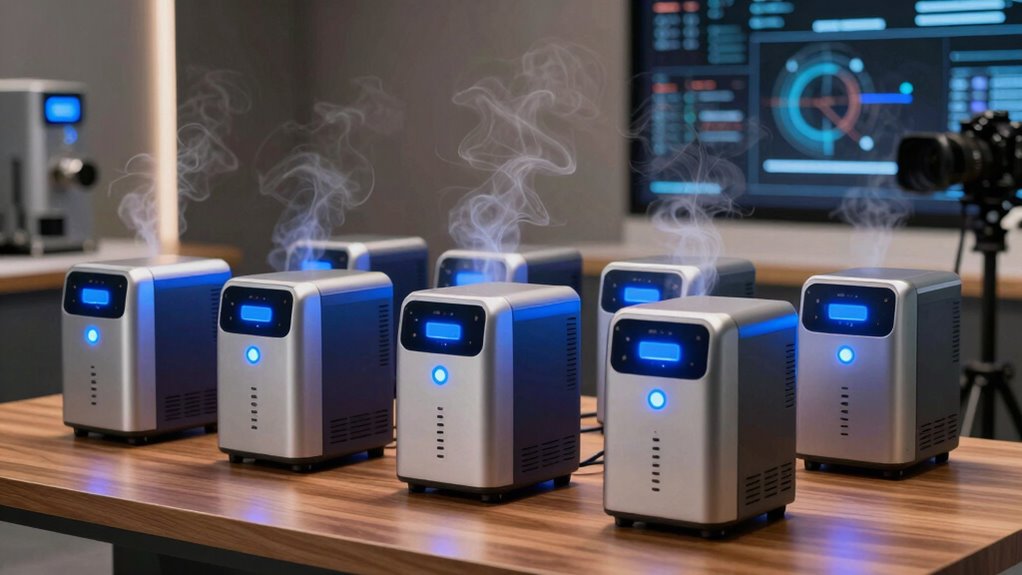
If you are choosing a hydroxyl generator for odor removal, the key differences are the size and type of space each unit suits, the treatment technology, and whether ozone is part of the setup. I put the OdorStop OS3000H first for its 500 CFM blower, charcoal filter, and stated capacity for large spaces. The 1000 Hydroxyl Generator is a more focused residential pick with a stated 10,000-cubic-foot coverage figure, while the Slimline Commercial Hydroxyl Generator stands out for treatment in occupied spaces. Those strengths do not make the models interchangeable: the Sylvan HX-3000 is restricted to professional restoration use and has a selectable ozone function, while the OdorStop’s larger footprint of work can be excessive in a small room. I ranked these around odor-removal fit and practical limits, not a claim that one machine suits every job.

Get cleaning gear delivered free with Prime
- Fast, free delivery on millions of items
- Prime Video, Amazon Music and more included
- Member-only deals all year
Complete the kit

Key Takeaways
- I rank the OdorStop OS3000H as the broadest large-space choice, with a 500 CFM blower, charcoal filter, and stated coverage up to 3,000 square feet.
- The 1000 Hydroxyl Generator has a stated 10,000-cubic-foot capacity, but that is a volume measurement, not a square-foot room size; it also needs moisture to work effectively.
- The Slimline Commercial model is the clearest fit when occupied-space operation is a priority, though its positioning is commercial and professional rather than casual home use.
- The Sylvan HX-3000 is the specialist option: its selectable 3,500 mg/hr ozone function and compact build come with a firm professional-use restriction.
- I would match the machine to the odor source and room conditions; no listed coverage or technology claim means the underlying source of smoke, water damage, or other odor is repaired.
| OdorStop OS3000H Hydroxyl Generator and UV Air Purifier |  | Best Overall for Large, Difficult Odor Jobs | Coverage: Up to 3,000 sq ft | Blower capacity: 500 CFM | Filter: Charcoal | VIEW ON AMAZON | See Our Full Breakdown |
| 1000 Hydroxyl Generator Professional Air Treatment System |  | Best for Residential Spaces with a Defined Capacity | Coverage: Up to 10,000 cu ft | Technology: Photocatalytic | UVA wavelength: 365–385 nm | VIEW ON AMAZON | See Our Full Breakdown |
| Slimline Commercial Hydroxyl Generator, Black |  | Best for Occupied-Space Commercial Treatment | Technology: UV-based hydroxyl generation | Application: Restoration, remediation, odor control | Occupancy: Described as safe for occupied spaces | VIEW ON AMAZON | See Our Full Breakdown |
| Sylvan HX-3000 Hydroxyl Generator with Optional Ozone Machine |  | Best Specialist Pick for Professional Restoration | Dimensions: 8.25 × 7 × 6 in | Net weight: 5 lb | Ozone output: 3,500 mg/hr | VIEW ON AMAZON | See Our Full Breakdown |
| hydroxyl generator for odor removal | Coverage | Technology | Timer | Application |
|---|---|---|---|---|
| OdorStop OS3000H Hydroxyl Gene | Up to 3,000 sq ft | Hydroxyl generator, UV, TiO2 | 12-hour with hold option | — |
| 1000 Hydroxyl Generator Profes | Up to 10,000 cu ft | Photocatalytic | — | Residential |
| Slimline Commercial Hydroxyl G | Not specified in supplied details | UV-based hydroxyl generation | — | Restoration, remediation, odor control |
| Sylvan HX-3000 Hydroxyl Genera | — | — | 1 hour with hold function | — |
More Details on Our Top Picks
OdorStop OS3000H Hydroxyl Generator and UV Air Purifier
I rank the OdorStop OS3000H first because its feature set is the most complete for a buyer facing a large area and persistent odors. The stated coverage reaches up to 3,000 square feet, and its 500 CFM blower moves air through a charcoal filter alongside hydroxyl and UV/TiO2 technology. That combination gives it a stronger case for broad smoke, pet, and water-damage odor work than the smaller Sylvan, whose compact design is aimed at professional restoration use rather than a stated large-area capacity.
The OdorStop is also comparatively approachable: it arrives with no assembly required, offers a 12-hour timer with hold, and includes a five-year limited warranty. Those conveniences matter for a buyer coordinating a longer treatment, though they do not remove the need to clean the UV bulbs and filters periodically. I would not choose it simply because the coverage figure is largest; its scale is a mismatch for small rooms, and the listed capacity does not promise a particular odor-removal result. Compared with the 1000 model, it gives a square-foot figure and high airflow, while the 1000 gives a cubic-foot figure and calls out moisture dependence. For a broad job, OdorStop is my most rounded pick; for a compact or narrowly defined space, it may be more machine than needed.
Pros:- Stated coverage up to 3,000 square feet and a 500 CFM blower suit larger spaces.
- Combines hydroxyl generation, UV/TiO2 technology, and a charcoal filter.
- No assembly is required, and the timer has a hold option.
- Includes a five-year limited manufacturer’s warranty.
Cons:- Its capacity may be excessive for a small room or localized odor.
- UV bulbs and filters need periodic cleaning.
Best for: Buyers treating large residential or commercial areas with smoke, pet, or water-damage odors who want strong airflow and a filter-based component.
Not ideal for: People treating one small room, or buyers who do not want periodic UV-bulb and filter cleaning.
- Coverage:Up to 3,000 sq ft
- Blower capacity:500 CFM
- Filter:Charcoal
- Technology:Hydroxyl generator, UV, TiO2
- Timer:12-hour with hold option
- Warranty:5-year limited
- Assembly:No assembly required
- EPA establishment number:94721-CHN-1
Our verdict“I would choose the OS3000H for a large, demanding odor-removal job where airflow and a charcoal filter matter more than a compact footprint.”
1000 Hydroxyl Generator Professional Air Treatment System
The 1000 Hydroxyl Generator is my pick for a residential buyer who wants a stated treatment volume rather than the OdorStop’s square-foot capacity. Its listed coverage is up to 10,000 cubic feet, and it uses UVA lamps at 365–385 nm with a TiO2-coated reactor to produce hydroxyl radicals. That gives shoppers more detail about the photocatalytic process than the Slimline listing provides, though a technical description does not by itself confirm how quickly a particular room’s odor will clear.
The biggest practical qualifier is moisture in the air: the product information says it needs moisture to work effectively. I would factor that into room conditions and avoid assuming that the unit will perform identically in every climate or environment. Also, cubic feet cannot be directly compared with the OdorStop’s up-to-3,000-square-foot claim without knowing ceiling height and room layout. Compared with the Slimline, this model has a more specific residential application and coverage figure; compared with OdorStop, it has less listed detail about airflow, filtration, and maintenance. It makes sense when the room volume fits and humidity is suitable, but buyers wanting a stated occupied-space claim or high-CFM blower should look elsewhere.
Pros:- States coverage of up to 10,000 cubic feet.
- Uses UVA lamps and a TiO2-coated photocatalytic reactor.
- The listing identifies residential spaces as an application.
- Provides specific UVA wavelength information.
Cons:- Requires moisture in the air for effective operation.
- The cubic-foot figure is not directly comparable with square-foot ratings.
- Airflow and filter specifications are not provided in the supplied details.
Best for: Residential buyers who can estimate room volume and have enough ambient moisture for the photocatalytic system to operate effectively.
Not ideal for: People who need a square-foot capacity comparison, are treating very dry air, or want listed airflow and filter details.
- Coverage:Up to 10,000 cu ft
- Technology:Photocatalytic
- UVA wavelength:365–385 nm
- Reactor:TiO2-coated
- Application:Residential
- Color:Black
Our verdict“I would choose the 1000 for a residential room with suitable humidity and a volume that fits its stated capacity, not for a buyer who needs a square-foot rating or detailed airflow data.”
Slimline Commercial Hydroxyl Generator, Black
The Slimline takes a different route from the two capacity-focused picks: its standout distinction is the stated ability to operate in occupied spaces. For remediation or odor-control work where clearing the space is not practical, that claim may be more useful than a large coverage number. The product description points to UV-based hydroxyl generation for odors, smoke residue, and airborne contaminants, and its slimline form is intended to make placement flexible across different spaces.
I place it behind the 1000 and OdorStop for buyers who want measurable room-planning details, because the supplied specifications do not state a coverage figure, blower capacity, timer, or filter. The 1000 names a 10,000-cubic-foot volume, while the OdorStop lists both 500 CFM and a 3,000-square-foot capacity; those details make their use cases easier to gauge. The Slimline instead wins on its stated occupancy positioning, but I would read and follow its operating instructions rather than treat the claim as a blanket guarantee for every setting. This is professional and commercial equipment, not my first recommendation for a casual household odor issue. It is most compelling when placement flexibility and treatment during occupancy carry more weight than published capacity data.
Pros:- Designed for use in occupied spaces, according to the product description.
- UV-based hydroxyl generation is aimed at odors and smoke residue.
- Slimline form supports flexible placement.
- Positioned for restoration, remediation, and odor-control projects.
Cons:- Primarily intended for professional and commercial use.
- The supplied specifications do not state a coverage figure or blower capacity.
- No filter, timer, or warranty details are provided in the supplied information.
Best for: Restoration and remediation teams seeking a slim-profile hydroxyl unit described for operation in occupied spaces.
Not ideal for: Home users wanting a clearly stated coverage rating, consumer-focused setup, or listed airflow and maintenance details.
- Technology:UV-based hydroxyl generation
- Application:Restoration, remediation, odor control
- Occupancy:Described as safe for occupied spaces
- Form factor:Slimline
- Color:Black
- Coverage:Not specified in supplied details
Our verdict“I would favor the Slimline when occupied-space positioning and flexible placement matter more than a published capacity or a home-user feature set.”
Sylvan HX-3000 Hydroxyl Generator with Optional Ozone Machine
The Sylvan HX-3000 is the most specialized option here. Its compact 8.25-by-7-by-6-inch body weighs five pounds, making it easier to transport than the large-area OdorStop. It also has a selectable ozone mode listed at 3,500 mg/hr, plus a one-hour timer with a hold function. That dual-function setup may suit a restoration professional who needs the ozone option for a task and can manage the equipment under appropriate procedures.
That flexibility is also the key reason I would not recommend this as a general household purchase. The product is strictly intended for professional water and fire restoration companies, and ozone is not a feature to treat casually or assume can be used in an occupied room. Its supplied details do not give a coverage rating, so I cannot place it ahead of the OdorStop for large-space jobs or the 1000 for residential capacity planning. Compared with the Slimline, the Sylvan has the stronger portability story and an ozone mode; the Slimline is the clearer fit when occupied-space use is the priority. I see the HX-3000 as a specialist tool rather than a versatile home odor purifier. Buyers outside its intended professional setting should skip it.
Pros:- Compact dimensions and five-pound weight support transport between jobs.
- Selectable ozone function is listed at 3,500 mg/hr.
- One-hour timer includes a hold function.
- Combines hydroxyl treatment with an additional selectable mode.
Cons:- Restricted to professional water and fire restoration use.
- Ozone mode requires careful attention to professional operating procedures.
- No coverage figure is provided in the supplied specifications.
Best for: Professional water and fire restoration companies that need a compact unit with a selectable ozone function.
Not ideal for: Residential buyers, casual odor-control users, or anyone seeking a unit for occupied-space ozone operation.
- Dimensions:8.25 × 7 × 6 in
- Net weight:5 lb
- Ozone output:3,500 mg/hr
- Timer:1 hour with hold function
- Intended use:Professional water and fire restoration
- Ozone function:Selectable
Our verdict“I would choose the HX-3000 only for qualified restoration work where portability and selectable ozone have a defined professional purpose.”

How We Picked
I ranked these four models by how clearly their stated features map to a real odor-removal job. I gave weight to coverage information, air movement, and treatment method, then weighed the limits that shape practical use: professional-only positioning, moisture needs, cleaning, or ozone restrictions. A room-size claim is useful only when its unit is clear, so I distinguish the OdorStop’s square-foot figure from the 1000’s cubic-foot figure rather than comparing them as if they measured the same thing.
I also separated occupied-space claims from ozone-based treatment. The Slimline description says it is designed to operate in occupied spaces; the Sylvan description instead identifies ozone as a selectable mode and limits the product to professional water and fire restoration companies. Buyers should follow the manufacturer’s operating guidance, particularly around occupancy and ozone. I did not treat marketing language about speed or effectiveness as a guarantee: odor results can depend on room layout, ventilation, humidity, contamination, and whether the source has been removed. My ranking favors a useful fit and clearly stated tradeoffs over the most dramatic-sounding feature.
| hydroxyl generator for odor removal | Coverage | Technology | Application |
|---|---|---|---|
| OdorStop OS3000H Hydroxyl Gene | Up to 3,000 sq ft | Hydroxyl generator, UV, TiO2 | — |
| 1000 Hydroxyl Generator Profes | Up to 10,000 cu ft | Photocatalytic | Residential |
| Slimline Commercial Hydroxyl G | Not specified in supplied details | UV-based hydroxyl generation | Restoration, remediation, odor control |
| Sylvan HX-3000 Hydroxyl Genera | — | — | — |
Factors to Consider When Choosing Hydroxyl Generator For Odor Removal
I would start with the odor source, space, and operating conditions, then compare machine features. A hydroxyl generator is a treatment tool, not a substitute for fixing a leak, removing contaminated material, or cleaning smoke residue from surfaces.Match the capacity figure to the room
Coverage numbers are only useful when they describe the same kind of measurement. The OdorStop lists up to 3,000 square feet, while the 1000 lists up to 10,000 cubic feet. Room volume depends on both floor area and ceiling height, so I would not call one rating larger without converting with the actual room dimensions. The Sylvan and Slimline details supplied here do not provide a coverage figure; for either, I would ask the seller or manufacturer for guidance before sizing a job. Large rooms may also have adjoining areas and airflow patterns that a headline rating does not capture.
Separate hydroxyl treatment from ozone use
The Sylvan has a selectable ozone function, while the Slimline is described as suitable for occupied spaces. I would not treat those as equivalent claims. Follow the manufacturer’s instructions for occupancy and operating modes, especially where ozone is involved, and do not infer that an ozone setting is appropriate while people or pets remain in the treated area. If treatment must happen while a space stays occupied, the Slimline’s stated positioning is more relevant than the Sylvan’s dual-mode flexibility. Confirm the rules for your particular model and application before operation.
Check humidity, airflow, and maintenance
The 1000 explicitly requires moisture in the air to work effectively, so a dry environment is a reason to compare other choices. Air movement and filtration are clearer on the OdorStop, with its 500 CFM blower and charcoal filter. Those details may help circulate room air, but they do not prove a specific outcome for every odor. Maintenance matters too: the OdorStop calls for periodic cleaning of UV bulbs and filters. The Slimline and Sylvan descriptions provide less maintenance information, so I would check the manual and replacement-part details before committing to ongoing use.
Treat the cause, not only the smell
Hydroxyl treatment may be part of an odor-control plan, but persistent smoke, pet, or water-damage odors can remain when the source is still present. I would first identify and address the material causing the smell, then use a machine suited to the room and task. Do not read a coverage rating as a guarantee: room contents, ventilation, humidity, contamination, and treatment time can all affect results. For serious water or fire damage, the Sylvan’s professional-only restriction is a meaningful boundary; household users should choose a model positioned for their setting or work with a restoration professional.
Frequently Asked Questions
Which hydroxyl generator is the best fit for a large odor-removal job?
I would start with the OdorStop OS3000H for a large area because it lists coverage up to 3,000 square feet and a 500 CFM blower. That makes its capacity easier to match to a broad space than the Sylvan or Slimline, whose supplied details do not state coverage. Confirm the room size and follow the product’s directions; a stated capacity does not guarantee that every odor source will be removed.
Can hydroxyl generators be used while people are in the room?
The Slimline is specifically described as designed for occupied-space operation. I would still follow its instructions for the particular setting and avoid extending that claim to the other models. The Sylvan includes a selectable ozone mode and is restricted to professional restoration use, so buyers should not assume it is appropriate to run around people or pets. Check the manufacturer’s operating guidance before use.
Is the 1000 model’s 10,000-cubic-foot rating larger than 3,000 square feet?
Those figures measure different things, so I would not compare them directly. Cubic feet measure room volume, while square feet describe floor area. Ceiling height is needed to convert floor area to volume, and room layout may affect how treatment reaches different areas. Use your room dimensions and the manufacturer’s sizing advice rather than treating the two figures as competing ratings.
Does hydroxyl treatment remove the source of a smoke or water-damage odor?
No machine should be treated as a replacement for source removal and cleanup. I would view a hydroxyl generator as one part of an odor-control plan, alongside addressing smoke residue, wet or damaged materials, or another underlying cause. Results depend on the condition and space, so a machine’s description or coverage figure should not be read as a promise that a serious odor will disappear.
Which model should a homeowner skip?
Most homeowners should skip the Sylvan HX-3000 unless they are part of a professional water or fire restoration company. Its description restricts it to that professional use, and its ozone option calls for close attention to operating procedures. For a residential buyer, the 1000 is the more directly residential pick if its moisture requirement and volume rating fit; the OdorStop is a stronger match for larger spaces.
Conclusion
I would choose the OdorStop OS3000H for a large space where its 500 CFM airflow, charcoal filter, and square-foot coverage claim are useful. For a residential room with suitable humidity, the 1000 Hydroxyl Generator offers a stated volume rating and a specified photocatalytic system. I would pick the Slimline when occupied-space positioning is the leading need and commercial use fits the job. The Sylvan HX-3000 belongs with professional restoration teams that have a clear reason to use its ozone option. Before deciding, match the machine to the room, address the odor source, and follow the manufacturer’s instructions for operation and occupancy.