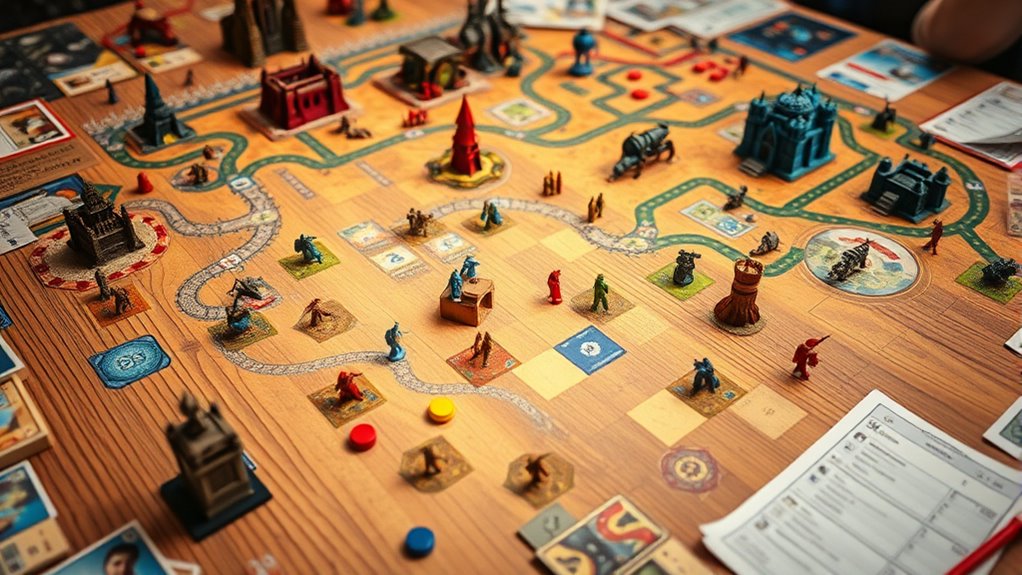

Azul is my best overall pick for strategy lovers: its clear rules lead to tough tile-placement choices without a long setup or play time. Wingspan stands out for players who want layered engine-building, while CATAN brings negotiation and resource planning to a lively group. The main tradeoff is between quick, focused decisions and longer games with more player interaction; heavier strategy can also mean more rules and a narrower audience. I compare all 13 games by strategic depth, accessibility, group fit, and replay potential below. Continue reading for the full breakdown and a guide to choosing the right kind of challenge.

Get cleaning gear delivered free with Prime
- Fast, free delivery on millions of items
- Prime Video, Amazon Music and more included
- Member-only deals all year
Complete the kit


Key Takeaways
- Azul offers the strongest balance of depth and accessibility: it makes each tile choice matter without requiring the rules investment of CATAN or Risk.
- Wingspan is the standout for strategic engine-building: its card-driven planning suits players who like shaping a long-term plan, though it is less about direct conflict.
- CATAN and Risk serve different social appetites: CATAN puts trading and shared resource pressure at the center, while Risk leans on territorial conflict and unpredictable battles.
- Several picks favor short, focused play over extended planning: Rubik’s Race, Shifting Stones, and No Escape suit groups seeking tactical decisions without a long campaign-style session.
- The family and theme-led games vary in how much strategy they demand: Trekking the National Parks and Plunder pair accessible play with strong themes, while MasterPieces NFL Gameday and Twisted Cryptids are more niche choices.
| Azul Tile-Placement Strategy Board Game |  | Best Overall | Players: 2–4 | Recommended age: 8 years and up | Playing time: 30–45 minutes | VIEW ON AMAZON | See Our Full Breakdown |
| MasterPieces NFL Gameday Board Game |  | Best for Football Fans | Players: 2–4 | Board dimensions: 9.5 × 9.5 inches | Recommended age: 12 years and up in product details; title states 9+ | VIEW ON AMAZON | See Our Full Breakdown |
| Wingspan Board Game by Stonemaier Games |  | Best for Engine-Building Strategy | Players: 1–5 | Playing time: 60–90 minutes | Setup time: About 6 minutes | VIEW ON AMAZON | See Our Full Breakdown |
| Shifting Stones Family Strategy Game |  | Best Compact Strategy Game | Players: 2–5 | Age range: 8 years and up | Playing time: About 20 minutes | VIEW ON AMAZON | See Our Full Breakdown |
| Trekking the National Parks Board Game, 3rd Edition |  | Best for Geography-Minded Strategy | Edition: 3rd Edition | Players: 1–5 | Recommended age: 12 years and up | VIEW ON AMAZON | See Our Full Breakdown |
| No Escape Strategy Board Game for 2–8 Players |  | Best for Large, Competitive Groups | Players: 2–8 | Genre: Strategy | Game mechanics: Maze runner, sabotage, and traitor mechanics | VIEW ON AMAZON | See Our Full Breakdown |
| Rubik’s Race Ace Edition Two-Player Strategy Game |  | Best for Quick Head-to-Head Strategy | Players: 1–2 | Edition: Ace Edition | Genre: Strategy | VIEW ON AMAZON | See Our Full Breakdown |
| CATAN Board Game, 6th Edition |  | Best for Trading and Resource Strategy | Players: 3–4 | Recommended age: 10 years and up | Playing time: 60–90 minutes | VIEW ON AMAZON | See Our Full Breakdown |
| Plunder: A Pirate’s Life Family Board Game |  | Best for Flexible Group Battles | Players: 2–6, with team play option | Average playing time: About 20 minutes per player | Recommended age: 10 years and up | VIEW ON AMAZON | See Our Full Breakdown |
| Carcassonne Tile Placement Strategy Board Game |  | Best for Accessible Tile-Placement Strategy | Players: 2–5 | Playing time: About 35 minutes | Recommended age: 7 years and up | VIEW ON AMAZON | See Our Full Breakdown |
| A Place for All My Books Board Game |  | Best for Short, Spatial Strategy | Players: 1–4 | Recommended age: 10 years and up | Estimated playing time: 60 minutes listed; description says 15–20 minutes per player | VIEW ON AMAZON | See Our Full Breakdown |
| Unstable Games Twisted Cryptids Base Card Game |  | Best for Casual Bluffing and Misdirection | Players: 2–4 | Playing time: About 60 minutes | Recommended age: 8–10 years | VIEW ON AMAZON | See Our Full Breakdown |
| Risk Strategy Board Game for 2–5 Players, Ages 10+ |  | Best for Long, Direct Conflict | Players: 2–5 | Age range: 10+ years | Playing time: 120 minutes | VIEW ON AMAZON | See Our Full Breakdown |
| board games for strategy lover | Players | Recommended age | Playing time |
|---|---|---|---|
| Azul Tile-Placement Strategy B | 2–4 | 8 years and up | 30–45 minutes |
| MasterPieces NFL Gameday Board | 2–4 | 12 years and up in product details; title states 9+ | — |
| Wingspan Board Game by Stonema | 1–5 | — | 60–90 minutes |
| Shifting Stones Family Strateg | 2–5 | — | About 20 minutes |
| Trekking the National Parks Bo | 1–5 | 12 years and up | 30–60 minutes |
| No Escape Strategy Board Game | 2–8 | — | — |
| Rubik’s Race Ace Edition Two-P | 1–2 | 7 years and up | — |
| CATAN Board Game | 3–4 | 10 years and up | 60–90 minutes |
| Plunder: A Pirate’s Life Famil | 2–6, with team play option | 10 years and up | — |
| Carcassonne Tile Placement Str | 2–5 | 7 years and up | About 35 minutes |
| A Place for All My Books Board | 1–4 | 10 years and up | — |
| Unstable Games Twisted Cryptid | 2–4 | 8–10 years | About 60 minutes |
| Risk Strategy Board Game for 2 | 2–5 | — | 120 minutes |
More Details on Our Top Picks
Azul Tile-Placement Strategy Board Game
Azul earns my Best Overall spot for strategy lovers who want meaningful choices without a long rules teach. Drafting tiles from shared displays makes every pick a tradeoff: improve your own mosaic, or take a tile that leaves an awkward remainder for an opponent. That interaction gives its accessible rules more bite than a quiet puzzle, while the 30–45-minute playtime keeps it easier to fit in than Wingspan. The colorful resin tiles also make the developing board easy to read across the table. The catch is that leftover tiles can cost points, so a poorly timed draft can sting. Compared with the quicker Shifting Stones, Azul offers a fuller shared-draft contest, but takes longer and asks players to plan several moves ahead.
Pros:- Simple rules lead quickly to consequential tile-drafting choices.
- Shared displays let players affect opponents as well as their own boards.
- Works with two to four players.
- Resin tiles and mosaic boards make progress easy to see.
Cons:- Leftover tiles can count against a player’s score.
- The 30–45-minute format may feel brief to players seeking extended strategic development.
Best for: Players who want an approachable tile-drafting game with tactical interaction for two to four people.
Not ideal for: Players who dislike penalties from leftover pieces or want a longer campaign-style strategy experience.
- Players:2–4
- Recommended age:8 years and up
- Playing time:30–45 minutes
- Game mechanic:Shared-display tile drafting and mosaic placement
- Tiles:100 resin tiles
- Player boards:4
- Factory displays:9
- Award:2018 Spiel des Jahres
Our verdict“Choose Azul for a polished, approachable strategy game where shared tile drafts create plenty of tactical tension in under an hour.”
MasterPieces NFL Gameday Board Game
MasterPieces NFL Gameday suits a strategy table where football knowledge is part of the fun. Its mix of trivia, memory challenges, and strategy gives fans more than a team-branded board, and the inclusion of all 32 NFL teams makes it an easy thematic pick for a group with divided loyalties. The compact 9.5-inch-square board is also simpler to pack away or take along than Trekking the National Parks, whose map and wooden pieces give it a broader educational focus. The tradeoff is that this game’s appeal depends heavily on players enjoying NFL questions and recall; it is less clearly a deep strategy choice than Azul or Wingspan. Age guidance also conflicts between the title and product details, so I would check the packaging before introducing it to younger players.
Pros:- Features all 32 NFL teams.
- Combines strategy with trivia and memory challenges.
- Supports two to four players.
- Compact board needs no assembly and is easy to store.
Cons:- The NFL focus may leave non-fans with little reason to engage.
- Age information conflicts: the title says 9+ while product details say 12+.
- Small parts may be unsuitable for younger children.
Best for: NFL fans looking for a compact group game that mixes team themes with trivia and memory challenges.
Not ideal for: Players seeking a strategy-first game without sports knowledge, or families needing clear age guidance for younger children.
- Players:2–4
- Board dimensions:9.5 × 9.5 inches
- Recommended age:12 years and up in product details; title states 9+
- NFL teams:All 32
- Game elements:Strategy, trivia, and memory challenges
- Material:Plastic
- Assembly:No assembly required
- Included components:Board game
Our verdict“Pick NFL Gameday when your group enjoys football trivia and a portable format more than the deeper engine-building of Wingspan.”
Wingspan Board Game by Stonemaier Games
Wingspan is my pick for players who enjoy building a plan over the course of a longer game. Collecting birds and combining their abilities across habitats creates an engine-building puzzle: choices made early can shape the value of later turns. Its 170 unique bird cards add variety, while the solo mode gives a single player a structured way to play—advantages that distinguish it from the direct tile contest in Azul. Wingspan also supports up to five players, though its 60–90-minute sessions ask for more table time than Trekking the National Parks. The game is described as medium-weight, so it offers layers without being a heavy rules test; still, players who want fast, highly confrontational turns may find its gradual card combinations too measured.
Pros:- Bird abilities build combinations across three habitats.
- 170 unique bird cards create variety between games.
- Solo mode and support for up to five players broaden its use.
- Includes custom dice, egg miniatures, player mats, and a teaching guide.
Cons:- A 60–90-minute session is longer than Azul or Shifting Stones.
- Its medium-weight card and habitat planning may feel slow to players seeking direct conflict.
- The many components and cards require more setup and table organization than compact options.
Best for: Players who like medium-weight planning, card combinations, detailed themes, and the option to play solo.
Not ideal for: Groups wanting a short, direct tactical contest or players who prefer games with little setup and a brisk pace.
- Players:1–5
- Playing time:60–90 minutes
- Setup time:About 6 minutes
- Game type:Set collection and hand management strategy game
- Bird cards:170 unique cards
- Bonus goal cards:26
- Goal tiles:8
- Designer and publisher:Elizabeth Hargrave; Stonemaier Games
- Award:2019 Kennerspiel des Jahres
Our verdict“Choose Wingspan if you want a thoughtful, card-driven strategy game with solo play and time to develop an engine.”
Shifting Stones Family Strategy Game
Shifting Stones makes its strategy fit into a short, portable format: players flip and rearrange a nine-tile grid to match patterns on cards. The 20-minute playtime makes it a more convenient choice than Azul when the group has time for a quick contest rather than a full session, and solo play gives the small box another use. Its central decision is neatly constrained: a card can reward a pattern, but playing it may give up the chance to manipulate the board. That hand-versus-board tension is the game’s main source of planning. Compared with Azul’s shared tile drafting, Shifting Stones is more about adapting a small puzzle than denying opponents specific pieces. Players seeking a sprawling strategy arc may find the compact grid and quick turns limited.
Pros:- Quick sessions take about 20 minutes.
- Compact 7.9-inch-square format is easy to transport.
- Supports two to five players and includes solo play.
- The nine-tile grid makes pattern planning easy to grasp.
Cons:- Playing a scoring card can limit a player’s ability to manipulate the board.
- The small grid offers less strategic breadth than Wingspan or Trekking the National Parks.
Best for: Families and travelers who want a short, portable pattern-planning game for two to five players or solo play.
Not ideal for: Strategy fans who want a long game with expanding systems, extensive player interaction, or a large board.
- Players:2–5
- Age range:8 years and up
- Playing time:About 20 minutes
- Tiles:9
- Cards:77
- Dimensions:7.9 × 7.9 inches
- Weight:0.5 kg
- Language:English
Our verdict“Choose Shifting Stones for quick, portable pattern strategy, not for the longer development and broader choices found in Azul.”
Trekking the National Parks Board Game, 3rd Edition
Trekking the National Parks pairs strategic movement and card drafting with a subject that gives each turn a sense of place. Its area-control and piece-movement mechanics make it a broader map game than Shifting Stones, while the national parks theme adds geography and travel learning along the way. The 1–5 player range and solo mode suit households that want the option to play alone or bring a larger group together. Sessions run 30–60 minutes, putting it between Azul’s shorter tile contest and Wingspan’s longer engine-building game. That range can help it fit different evenings, but the 12-and-up recommendation and small parts make it a less natural choice for younger families. Buyers wanting strategy without an educational theme may prefer Azul’s more focused drafting puzzle.
Pros:- Combines area control, card drafting, and piece movement.
- National parks theme connects play with geography and travel.
- Supports one to five players and includes solo play.
- Wooden pieces and illustrated cards complement the map board.
Cons:- Recommended for ages 12 and up, limiting its fit for younger families.
- Small parts may pose a choking hazard.
- The educational travel theme may not appeal to players seeking abstract strategy.
Best for: Geography-minded families and groups seeking a map-based strategy game with card drafting, movement, and solo play.
Not ideal for: Households with children under 12, or players who want an abstract strategy game without an educational theme or small components.
- Edition:3rd Edition
- Players:1–5
- Recommended age:12 years and up
- Playing time:30–60 minutes
- Game mechanics:Area control, card drafting, and piece movement
- Components:Cards, wooden pieces, and board map
- Dimensions:11.6 × 11.5 inches
- Weight:770 g
- Educational topics:Geography, national parks, travel, and STEM
Our verdict“Choose Trekking the National Parks for map-based strategy with a geography theme and solo flexibility, provided the age range suits your group.”
No Escape Strategy Board Game for 2–8 Players
Changing maze routes and sabotage make No Escape a social strategy pick: players must adapt as paths shift, while traitor mechanics add uncertainty about whom to trust. Its support for 2–8 players gives it a broader group range than CATAN, which is designed for 3–4 in its base edition. Quick setup and approachable rules also make it easier to bring to a mixed-experience game night than a heavier strategy session.
The tradeoff is that its appeal depends on players enjoying direct competition and potentially deceptive play; it offers less of the constructive resource planning found in CATAN. The 13-and-up age guidance also makes it a less natural fit for younger family groups than Carcassonne. I’d choose No Escape when a larger group wants shifting tactical problems and table interaction, not a quiet, low-conflict puzzle.
Pros:- Supports 2–8 players, making it suitable for larger gatherings.
- Changing maze layouts create tactical choices as routes shift.
- Sabotage and traitor mechanics add player interaction and uncertainty.
- Quick setup and easy-to-learn rules lower the barrier for casual game nights.
Cons:- Recommended for ages 13 and up, limiting its fit for younger family groups.
- Direct sabotage and traitor play may frustrate players who prefer cooperative or low-conflict strategy.
- Its shifting maze focus offers less long-term resource planning than CATAN.
Best for: Groups of friends aged 13 and up who want an easy-to-start game with changing routes, sabotage, and room for up to eight players.
Not ideal for: Families with younger children or players who prefer calm, low-conflict planning over sabotage and traitor mechanics.
- Players:2–8
- Genre:Strategy
- Game mechanics:Maze runner, sabotage, and traitor mechanics
- Age recommendation:13 years and up
- Included components:Cards, dice, meeples, and tiles
- Language:English
- Weight:2.8 pounds
- Model number:OMG00300
Our verdict“Choose No Escape for a larger group that enjoys quick, confrontational strategy and changing maze puzzles.”
Rubik’s Race Ace Edition Two-Player Strategy Game
Rubik’s Race Ace Edition turns strategy into a brisk spatial contest: slide tiles to reproduce a 3×3 color pattern before your opponent, while blockers and wild tiles add complications beyond the basic challenge. Compared with Carcassonne, where decisions unfold through a shared landscape over about 35 minutes, this is built for short, direct bouts of pattern recognition and tactical adjustment. The added tile options give experienced players more to work around without making the game a long rules lesson.
That focus is also its limit. It is primarily a two-player showdown, so it cannot serve the larger game-night role of No Escape or Plunder. The listing also includes no manufacturer warranty. I’d pick it for a quick rematch-friendly contest, but skip it if your group wants negotiation, shared world-building, or a strategy game that accommodates several players at once.
Pros:- Fast, competitive rounds make it easy to fit in repeated games.
- Blockers and wild tiles add tactical variety to the pattern-matching challenge.
- Encourages spatial reasoning and quick problem-solving.
- Can be played solo or head-to-head.
Cons:- Designed primarily for two-player competition, so it is a poor fit for larger groups.
- Pattern matching and speed are central, leaving less room for long-term strategic planning.
- No manufacturer warranty is listed.
Best for: Two players, including families with children aged 7 and up, who want short spatial challenges and fast rematches.
Not ideal for: Groups looking for a multiplayer game-night centerpiece or players who prefer long-term resource planning and negotiation.
- Players:1–2
- Edition:Ace Edition
- Genre:Strategy
- Recommended age:7 years and up
- Included components:1 Rubik’s Race game and instructions
- Added gameplay elements:Six tiles, blockers, and wild tiles
- Brand:Rubik’s
- Model number:6067876
Our verdict“Pick Rubik’s Race Ace Edition for quick, competitive spatial strategy between one or two players.”
CATAN Board Game, 6th Edition
CATAN earns its place through resource management, trading, and route-building: players weigh what to gather, what to exchange, and where to build while racing to 10 victory points. Its modular island changes the board layout between games, so opening plans must respond to the available terrain rather than follow a fixed script. Compared with Carcassonne’s tile-by-tile landscape and shorter playtime, CATAN adds negotiation and competition over shared resources, giving strategic choices a distinctly social dimension.
The base game is limited to 3–4 players; a separate extension is needed for five or six, unlike Plunder, which supports up to six without that stated add-on. Its 60–90-minute playtime also asks for a longer session than the quicker, more focused Rubik’s Race. I’d choose CATAN for players who enjoy planning around scarcity and trading, but not for groups seeking a short game or a self-contained option for a larger table.
Pros:- Resource gathering, trading, and construction create several connected strategic decisions.
- Modular terrain changes the board layout and calls for fresh plans between games.
- The race to 10 victory points gives players a clear way to measure progress.
- Wooden pieces, cards, terrain hexes, and player aids provide a substantial game set.
Cons:- The base game supports only 3–4 players; expansion support for 5–6 is sold separately.
- A 60–90-minute playtime is longer than Carcassonne’s listed 35 minutes.
- Trading and competition over shared resources may not suit players who prefer less negotiation.
Best for: Three or four players who enjoy bargaining, managing limited resources, and building routes and settlements over a substantial game session.
Not ideal for: Groups larger than four who do not want to add a separate extension, or players seeking a short, low-negotiation game.
- Players:3–4
- Recommended age:10 years and up
- Playing time:60–90 minutes
- Edition:6th Edition
- Language:English
- Included components:19 terrain hexes, 6 sea frame pieces, 18 number discs, 4 player aids, 2 bonus victory point tiles, 96 wooden player pieces, 2 card trays, 2 dice, 120 cards, and rules
- Manufacturer:Asmodee
- Model number:CN3081
Our verdict“Choose CATAN if your group wants a medium-length strategy game built around trading, resource choices, and settlement growth.”
Plunder: A Pirate’s Life Family Board Game
Plunder pairs fleet upgrades and island conquest with a changing ocean map, giving players a reason to balance expansion, resource collection, and battles against rival captains. Its double-sided tiles vary the map, while the no-elimination rule means a setback does not remove someone from the game. That makes it a more forgiving fit for family competition than a format where an early loss can end a player’s evening. It also accommodates 2–6 players and offers team play, a wider group range than CATAN’s 3–4-player base game.
The main cost in time is tied to group size: play takes about 20 minutes per player, so larger tables can mean a longer session. Compared with Carcassonne’s listed 35-minute game, Plunder is less predictable as a quick choice. I’d favor it for families who want direct conflict and a variable map, but not for groups with a tight time limit or players who dislike battles over territory.
Pros:- Double-sided ocean tiles create a different map from game to game.
- Supports 2–6 players and includes a team play option.
- No player elimination keeps everyone involved through the game.
- Overview guide and accessible rules help newer players get started.
Cons:- At about 20 minutes per player, a full game can run long with more players.
- Battles and island conquest may not suit players who want low-conflict strategy.
- The game contains small parts and poses a choking hazard.
Best for: Families and groups of 2–6 who want map variation, ship upgrades, direct competition, and the option to play in teams.
Not ideal for: Players with limited time, especially at a full table, or those who prefer peaceful tile placement over battles and island conquest.
- Players:2–6, with team play option
- Average playing time:About 20 minutes per player
- Recommended age:10 years and up
- Language:English
- Edition:Standard Edition
- Theme:Pirate
- Dimensions:12.8 × 12.8 × 4.2 inches
- Weight:6.3 pounds
Our verdict“Choose Plunder for a flexible-size group that wants pirate-themed conflict without eliminating players.”
Carcassonne Tile Placement Strategy Board Game
Carcassonne makes strategic choices approachable through one tile at a time: each placement grows a shared medieval landscape, while meeples let players claim cities, roads, fields, and monasteries for points. That compact decision loop is easier to teach than CATAN’s resource trading, yet it still asks players to judge how a placement shapes both their own scoring options and their rivals’. Randomized tiles change the map each game, and the included River and Abbot mini-expansions add extra elements without requiring a separate purchase.
Its 35-minute playtime and age recommendation of 7 and up make it a more approachable family pick than No Escape, which is recommended for ages 13 and up. The tradeoff is a smaller table range: Carcassonne supports 2–5 players, while Plunder can accommodate six. Players wanting negotiation, ship battles, or an eight-player option should look elsewhere; this is best for groups who prefer measured spatial planning over direct confrontation.
Pros:- Straightforward tile placement makes strategic decisions accessible to newer players.
- Randomized tiles create a different landscape and fresh choices each game.
- Meeple claims connect placement decisions to scoring across several landscape features.
- Includes The Abbot and The River mini-expansions.
Cons:- Supports only 2–5 players, fewer than No Escape or Plunder.
- Players who want negotiation or direct conflict may find its tile-building focus restrained.
Best for: Families and strategy newcomers aged 7 and up who want a teachable tile-placement game with meaningful choices in a roughly 35-minute session.
Not ideal for: Groups larger than five or players who want direct battles, trading, or a longer campaign of resource planning.
- Players:2–5
- Playing time:About 35 minutes
- Recommended age:7 years and up
- Edition:Classic Edition
- Genre:Strategy
- Included expansions:The Abbot and The River
- Language:English
- Brand:Z-Man Games
Our verdict“Pick Carcassonne for accessible, replayable spatial strategy that fits a short family game session.”
A Place for All My Books Board Game
A Place for All My Books makes spatial planning the center of its strategy: players arrange illustrated book tiles in apartments while pursuing projects, managing social energy, and collecting books. That mix gives each placement several possible purposes, rather than reducing the game to filling a grid. Compared with Azul, it adds card-driven goals and a cozy apartment theme; it is a better fit for players who want several small planning decisions instead of a single, highly focused tile puzzle. Solo play also gives it an edge for people who want a strategy session without organizing a group. The main tradeoff is the time estimate: the description says 15–20 minutes per player, while the specs list 60 minutes. Its layered objectives may also be more to manage than someone seeking a very light filler wants.
Pros:- Solo and multiplayer modes support different group sizes
- Tile placement combines spatial planning with collection and project goals
- Illustrated, engraved book tiles add tactile appeal
- Social energy creates an additional resource to manage
Cons:- Play-time information conflicts between the description and listed specifications
- Several overlapping goals may feel busy to players seeking a very simple puzzle
- Its cozy, personal-building focus offers less direct confrontation than Risk
Best for: Solo players and small groups who enjoy spatial tile placement, changing objectives, and a cozy theme.
Not ideal for: Buyers seeking a consistently brief game with one clear play-time estimate, or players who prefer direct conflict over personal planning.
- Players:1–4
- Recommended age:10 years and up
- Estimated playing time:60 minutes listed; description says 15–20 minutes per player
- Game type:Strategy board game
- Book tiles:130
- Cards:111
- Apartment mats:4
- Solo content:15-card solo game addition
- Brand:Smirk & Dagger Games
Our verdict“Choose this for solo-friendly, multi-goal tile planning, but verify the expected session length if timing matters.”
Unstable Games Twisted Cryptids Base Card Game
Twisted Cryptids suits strategy fans who would rather read opponents than build a long-term map or engine. Hoaxes, decoys, and hidden traits make deception the central tool: players try to outwit rivals while building a cryptid’s legend. Its easy-to-learn framing makes it a more approachable entry point than Risk, whose army movement and territory battles can occupy a much longer session. That accessibility comes with a different kind of tension, though: the take-that mechanics put rivals directly in one another’s way, which can be lively with a competitive group and frustrating with players who dislike interference. At about 60 minutes, it is also not a particularly quick card game. I’d pick it for casual gatherings that enjoy bluffs and reversals, not for a calm, low-conflict strategy night.
Pros:- Easy-to-learn rules lower the barrier for casual players
- Hidden traits, hoaxes, and decoys reward observation and misdirection
- Supports 2–4 players
- Cryptid meeples and tarot-sized cards give the game a distinctive table presence
Cons:- Take-that mechanics may frustrate players whose plans are repeatedly disrupted
- A roughly 60-minute session is lengthy for a casual card game
- The listed component description is vague, identifying only one board game
Best for: Families and casual groups who enjoy bluffing, reading opponents, and playful moves that disrupt rival plans.
Not ideal for: Players who dislike take-that interaction, want a quiet solitaire-style puzzle, or need a very short card game.
- Players:2–4
- Playing time:About 60 minutes
- Recommended age:8–10 years
- Material:Paper
- Included components:One board game
- Game format:Strategy card game
- Brand:Unstable Games
Our verdict“Pick Twisted Cryptids for accessible bluffing and direct rivalry, not for a relaxed or especially short strategy game.”
Risk Strategy Board Game for 2–5 Players, Ages 10+
Risk is the pick here for strategy lovers who want a shared map, expanding armies, and opponents whose moves can overturn a plan. Territory control, surprise attacks, and alliances make the contest explicitly confrontational, while four ways to play—including Secret Mission Risk—offer different goals within the same core setting. Compared with Twisted Cryptids, Risk focuses less on bluffing through individual card effects and more on positioning forces across a board; compared with A Place for All My Books, it trades personal spatial planning for direct competition over territory. The cost is time: a listed 120-minute session asks for a committed group, and elimination or setbacks may leave some players waiting. Optional Alexa play is an extra, not a complete substitute for the physical game, since it requires a separate compatible device.
Pros:- Four play modes include the alternative objective of Secret Mission Risk
- Territory control and army movement make strategic choices visible across the board
- Supports 2–5 players
- Storage crates help organize armies and dice
Cons:- Listed playing time of about 120 minutes requires a substantial time commitment
- Direct attacks and shifting alliances may not suit conflict-averse groups
- Optional Alexa play requires a separate compatible device
Best for: Groups who enjoy direct territorial competition, alliance-making, and longer sessions with multiple strategic routes.
Not ideal for: Players with limited time, groups that dislike aggressive conflict or extended setbacks, and buyers without a compatible Echo device who expect Alexa play.
- Players:2–5
- Age range:10+ years
- Playing time:120 minutes
- Genre:Strategy
- Edition:Standard Edition
- Risk cards:56
- Dice:5
- Armies:5
- Alexa compatibility:Optional Alexa skill; compatible Echo device sold separately
Our verdict“Choose Risk when your group wants a long, confrontational territory battle and has time for the full session.”

How We Picked
I compared these games on the strategic decisions players make, how clearly those decisions connect to the outcome, and how much rules learning stands between a new player and meaningful choices. I also looked at play style: tile placement, resource management, engine-building, deduction, negotiation, and head-to-head tactics serve different kinds of strategy fans. Accessibility, group size, likely session commitment, replay potential, and the fit between theme and mechanics all shaped the evaluation.
The ranking favors games that deliver satisfying decisions for their intended audience without asking buyers to accept avoidable friction. That puts Azul first for its broad appeal and focused choices, while Wingspan ranks highly for players seeking more layered planning. Games built around specific tastes—such as sports, pirates, or direct conflict—can be a better match for the right group, but they rank lower as all-purpose strategy recommendations. Short puzzle-style options remain useful picks when a fast, concentrated contest matters more than a sprawling game.
Factors to Consider When Choosing Board Games For Strategy Lovers
Strategy is not one single experience: a game can reward long-range planning, reading opponents, adapting to random outcomes, or spotting a tactical opening. I suggest choosing by the decisions your group wants to make and the time it can give them, rather than by complexity alone.
Choose the Kind of Strategy You Enjoy
Start by deciding whether your group prefers building a plan, disrupting opponents, or solving a compact puzzle. Engine-building and resource games reward players who prepare several turns ahead, while negotiation games ask them to read the table and change plans quickly. Abstract tile and pattern games put more weight on spatial choices and timing than on theme or conflict. A common buying mistake is treating all strategic games as interchangeable because they share a reputation for thoughtful play. Match the decision style to the group: a player who loves tactical interaction may find a quiet optimization game flat, and vice versa.
Match Complexity to the Whole Group
Rules weight only matters alongside how easily players can see what their options accomplish. A longer rules explanation can be worthwhile when the group enjoys mastering systems, but it can keep casual players from making confident decisions. Think about who will teach the game and whether new players can learn by watching a round. Avoid buying a complex game solely because one person wants more depth; repeated reluctance from the rest of the table can leave it unused. For mixed-experience groups, clear turns and visible consequences often create a better strategic contest than a larger rulebook.
Treat Player Count as a Gameplay Choice
A game that supports a wide player range may change substantially as the table fills. More players can add negotiation, competition for shared opportunities, or simply longer waits between turns. Two-player games often need tighter interaction to keep both players involved, while larger groups benefit from simultaneous decisions or short turns. Check the expected count for your regular game night, not just the maximum printed on the box. If your group size changes often, prioritize games whose pace and interaction remain satisfying across those counts.
Balance Play Time Against Strategic Payoff
Longer sessions can allow plans to develop, but duration alone does not guarantee deeper decisions. A short game may offer excellent tactical tension when every move has a clear cost, while a long game can feel repetitive if turns are mostly procedural. Factor in setup, teaching, and downtime as well as the advertised play session. Groups with limited time may get more use from a concise game they can replay than from an ambitious one that rarely reaches the table. Pay more in time and learning effort only when your group genuinely wants that extended arc.
Decide How Much Luck and Conflict You Want
Randomness can create changing problems that reward adaptation, but it can also blunt the feeling that careful planning decided the result. Direct conflict adds memorable interaction for some groups and frustration for players who prefer building without interference. Before choosing, ask whether your table enjoys negotiation, blocking, battles, or surprises—or would rather compete through parallel plans. Do not assume a strategic label means low luck or low confrontation. The best fit gives players the kind of uncertainty they enjoy managing, not merely the highest number of choices.
Look Beyond Theme When Buying for a Group
A strong theme can bring hesitant players to the table, but it cannot carry a game if the mechanics do not suit them. Check whether the theme affects decisions or mainly provides atmosphere, then consider how familiar it is to everyone who will play. Sports and hobby-specific themes can make a game an easy gift for a fan while limiting its appeal to other groups. Family-oriented themes may help with approachability, but they do not automatically mean the game is strategically light. Choose the theme as a way to invite players in, then make the final call on play style.
Frequently Asked Questions
Which game in this roundup is the safest choice for a mixed-experience group?
I would start with Azul: its core decisions are easy to see, yet choosing tiles still creates meaningful tradeoffs for experienced players. It asks less rules-learning time than CATAN or Risk, so newcomers can join without waiting through a long explanation. The tradeoff is that it offers less negotiation and direct interaction than those larger group games. If your group prefers a theme-led shared experience, Trekking the National Parks may be a better fit, but Azul is the more focused strategic introduction.
Which picks work best when we only have time for a short game?
Rubik’s Race and Shifting Stones are the clearest choices for a compact, concentrated contest, with No Escape also aimed at tactical play in a shorter format. These picks deliver decisions without the broader arc of games such as Wingspan, CATAN, or Risk. Short play does not mean no strategy, but it usually shifts the emphasis toward immediate tactics rather than plans that develop over many turns. Check the group’s preferred level of head-to-head pressure before choosing, since a quick competitive game can feel intense even when it is brief.
Should I choose Wingspan or CATAN for a group that likes planning ahead?
Choose Wingspan if your group enjoys building an engine and refining a personal plan over the course of play. CATAN is a better fit when planning should include trades, shared resource scarcity, and negotiation with other players. The distinction is less about which has more strategy and more about where the strategy happens: Wingspan emphasizes development, while CATAN makes table interaction central. If your group dislikes bargaining or direct competition for shared resources, Wingspan is the safer direction; if lively negotiation is a draw, lean toward CATAN.
Are family-themed games in this list too light for strategy fans?
No; a family-friendly theme or presentation does not tell you how demanding the decisions will feel. Trekking the National Parks and Plunder offer accessible entry points with distinct thematic appeal, while Azul provides a more abstract, concentrated challenge. The right choice depends on whether your group values theme, easy onboarding, or sharper tactical competition most. I would avoid judging by the word “family” alone and instead match the game’s decision style to the players at your table.
When does Risk make more sense than a shorter strategy game?
Risk makes more sense when your group wants territorial conflict, a shared map, and a session that can develop through shifting alliances and battles. A shorter option such as Rubik’s Race is better when players want a clear finish and little downtime. Risk’s appeal depends heavily on the group enjoying direct attacks and the uncertainty that comes with battle outcomes. If players take setbacks personally or prefer strategies that unfold without being disrupted, a less confrontational pick from this list is likely to see more play.
Conclusion
For the best overall balance, choose Azul: it pairs accessible rules with decisions that reward attention. For best value as a versatile strategy pick, choose Carcassonne if your group enjoys building a shared landscape through tile placement. For a premium-feeling planning experience, choose Wingspan for its layered engine-building; I recommend it to players who want a longer, more developed plan rather than constant confrontation. For beginners, start with Azul, while Rubik’s Race suits quick two-player contests and CATAN suits groups that want negotiation. Choose Risk for direct territorial conflict, or Trekking the National Parks when theme and a welcoming group experience matter most. The best match is the game whose decisions your group will want to revisit—not simply the one with the most rules.
Fall Picks

eufy Security Essential 7-Piece Alarm System with HomeBase Mini
As an affiliate, we earn on qualifying purchases.