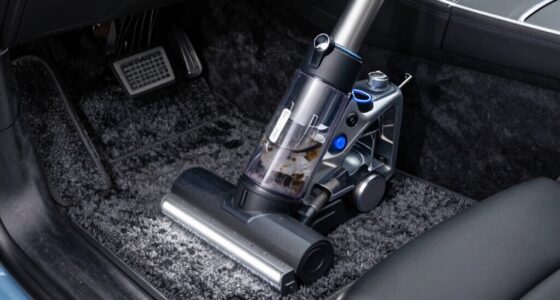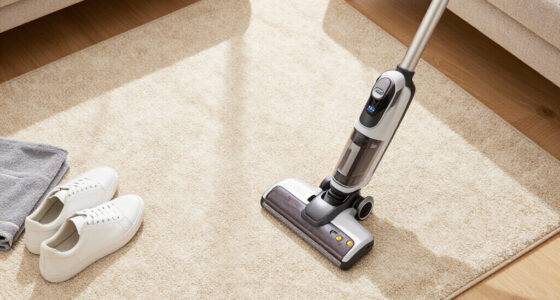

For a HEPA vacuum for mold spore cleanup, I’d pick the ProTeam ProVac FS 6 with Residential Kit as the best overall for contained, dry household cleanup, thanks to its HEPA filtration and home-focused tools. The Enviromaster Critical HEPA is a better match for demanding abatement work, while the Dapper Supply extractor stands out for renovation dust with its auto-start feature and stated airflow and suction figures. The main tradeoff is portability versus capacity and jobsite features: a backpack is easier to move around a home, while a wet/dry extractor suits heavier work. Filter and bag compatibility matter too, and one product in this lineup does not state a HEPA filter in its listing. Read on for the full comparison and guidance on matching a vacuum to the cleanup task.

Get cleaning gear delivered free with Prime
- Fast, free delivery on millions of items
- Prime Video, Amazon Music and more included
- Member-only deals all year
Complete the kit


Key Takeaways
- The ProTeam ProVac FS 6 Residential Kit is the most balanced home pick: it combines stated HEPA filtration with a residential tool kit, unlike the more specialized industrial options.
- The Enviromaster is the clearest fit for serious abatement work, with Critical HEPA in the product name and an abatement kit; its 15-gallon format is less suited to quick, small-room jobs.
- The Dapper Supply extractor offers the most specific published performance details among the wet/dry picks, including 140 CFM, 20 kPa suction, and tool auto-start.
- The Atrix Ergo Pro stands out for a feature-rich backpack setup, with a stated 106 CFM, 8-quart capacity, and a broad tool set; the Atrix Lil Red is the simpler canister alternative.
- A cleanroom label alone does not confirm HEPA filtration: the Nilfisk listing does not name a HEPA filter, so I would verify its exact filter configuration before using it for mold cleanup.
| ProTeam ProVac FS 6 Commercial Backpack Vacuum Cleaner with HEPA Filtration and Residential Kit | 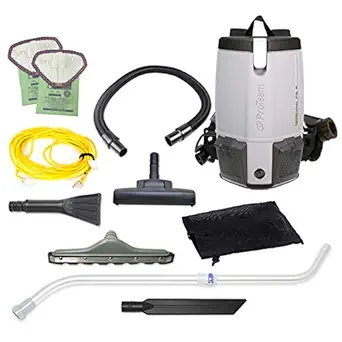 | Best Overall for Large Residential Areas | Model: ProVac FS 6 | Capacity: 6 quarts | Power: 1108 watts / 9.5 amps | VIEW ON AMAZON | See Our Full Breakdown |
| Atrix Ergo Pro Backpack Vacuum Cleaner, 8-Quart HEPA Filtration |  | Best for Long Sessions and Larger Bag Capacity | Model: VACBPAI | Capacity: 8 quarts | Motor power: 1400 watts | VIEW ON AMAZON | See Our Full Breakdown |
| Atrix Lil Red Canister Vacuum with HEPA Filter and Variable Speed Motor |  | Best Compact Pick for Small, Routine Jobs | Filtration: 3-stage system with HEPA filter | Bag capacity: 2-quart HEPA bag | Motor power: 1200 watts | VIEW ON AMAZON | See Our Full Breakdown |
| Dapper Supply Wet/Dry Dust Extractor/Vacuum with Auto HEPA Filter, 8 Gallon |  | Best for Renovation Dust Source Capture | Capacity: 8 gallons | Motor power: 1200 watts | Airflow: Up to 140 CFM | VIEW ON AMAZON | See Our Full Breakdown |
| ProTeam ProVac FS 6 Commercial Backpack Vacuum with Power Nozzle Tool Kit |  | Best for Carpeted Homes and Upholstery | Capacity: 6 quarts | Color: Gray | Filtration: Four-level advanced filtration with HEPA media filter | VIEW ON AMAZON | See Our Full Breakdown |
| ProTeam ProVac FS 6 Commercial Backpack Vacuum with HEPA Media Filtration and Restaurant Tool Kit, 6 Quart, Corded |  | Best for Large, Mostly Dry Areas | Capacity: 6 quarts | Filtration: Four-level filtration with HEPA media filter | Filter efficiency: 99.97% at 0.3 microns and larger | VIEW ON AMAZON | See Our Full Breakdown |
| Enviromaster Critical HEPA Wet/Dry Vacuum 15 Gallon Asbestos Abatement Kit |  | Best for Professional Abatement | Tank capacity: 15 gallons | Filtration: Triple-stage HEPA filtration | HEPA filter efficiency: 99.97% at 0.3 microns; hot DOP certified | VIEW ON AMAZON | See Our Full Breakdown |
| 8 Gallon 6 Peak HP Wet/Dry Dust Extractor Vacuum with HEPA Filter, Auto-Start, Air Tool Connector, 2-Year Warranty |  | Best for Tool-Connected Renovation Cleanup | Capacity: 8 gallons | Motor power: 1,200 watts; 6 peak HP | Airflow: 140 CFM | VIEW ON AMAZON | See Our Full Breakdown |
| Nilfisk Cleanroom Dry Vacuum, 3.25 Gal, 1.5 HP |  | Best for Cleanroom Hard-Floor Dust | Tank size: 3.25 gallons | Dry capacity: 2.25 gallons | Filtration: ULPA | VIEW ON AMAZON | See Our Full Breakdown |
| hepa vacuum for mold spores cleanup | Airflow | Filtration | Capacity |
|---|---|---|---|
| ProTeam ProVac FS 6 Commercial | 159 CFM | HEPA media filter | 6 quarts |
| Atrix Ergo Pro Backpack Vacuum | 106 CFM | Four levels: HEPA bag, cloth shakeout bag, HEPA premotor filter, and exhaust filter | 8 quarts |
| Atrix Lil Red Canister Vacuum | — | 3-stage system with HEPA filter | — |
| Dapper Supply Wet/Dry Dust Ext | Up to 140 CFM | — | 8 gallons |
| ProTeam ProVac FS 6 Commercial | — | Four-level advanced filtration with HEPA media filter | 6 quarts |
| ProTeam ProVac FS 6 Commercial | 159 CFM | Four-level filtration with HEPA media filter | 6 quarts |
| Enviromaster Critical HEPA Wet | 112 CFM | Triple-stage HEPA filtration | — |
| 8 Gallon 6 Peak HP Wet/Dry Dus | 140 CFM | — | 8 gallons |
| Nilfisk Cleanroom Dry Vacuum | 80 CFM | ULPA | — |
More Details on Our Top Picks
ProTeam ProVac FS 6 Commercial Backpack Vacuum Cleaner with HEPA Filtration and Residential Kit
I’d put the ProTeam ProVac FS 6 first for routine dry cleanup across larger homes: its 159 CFM airflow, 50-foot cord, and residential tool kit make it easier to cover rooms and reach stairs without repeatedly changing outlets. Its stated 65.8 dBA noise level is lower than the Atrix Ergo Pro’s 72 dB, while the adjustable harness helps when cleaning takes longer than a quick spot job. The tradeoff is a corded backpack format that may feel like too much equipment for a small apartment, and the product data does not establish mold-abatement certification. Compared with the compact Atrix Lil Red, this model has more reach and a larger capacity, but it is less convenient to store. I’d reserve it for dry, non-hazardous cleanup rather than active mold remediation.
Pros:- 159 CFM airflow and 96-inch static lift are specified for strong pickup.
- 50-foot cord reduces outlet changes during larger cleaning jobs.
- 65.8 dBA listed noise level is quieter than the Atrix Ergo Pro’s stated 72 dB.
- Residential kit includes a turbo brush and several detail tools.
Cons:- Corded operation restricts movement compared with cordless options.
- Backpack form and commercial build may be excessive for a small home.
- The product data does not state certification for hazardous mold remediation.
Best for: Homeowners cleaning multiple rooms, stairs, and upholstery who want long cord reach, a backpack design, and HEPA media filtration for routine dry debris.
Not ideal for: Small-space owners seeking a compact vacuum, or anyone needing a vacuum specifically rated for hazardous mold-remediation work.
- Model:ProVac FS 6
- Capacity:6 quarts
- Power:1108 watts / 9.5 amps
- Airflow:159 CFM
- Static lift:96 inches
- Noise level:65.8 dBA
- Cord length:50 feet
- Filtration:HEPA media filter
- Warranty:3-year parts, labor, and motor; lifetime body
Our verdict“Choose this ProTeam for broad, routine residential dry cleanup where long reach and a quieter backpack setup matter more than compact storage.”
Atrix Ergo Pro Backpack Vacuum Cleaner, 8-Quart HEPA Filtration
The Atrix Ergo Pro stands out for its 8-quart HEPA bag and four filtration stages, including premotor and exhaust filters. That larger bag can mean fewer interruptions than the 6-quart ProTeam ProVac FS 6 during extended cleaning, and its included floor, upholstery, and crevice tools suit mixed-surface work. The 1400-watt motor is paired with 106 CFM airflow, below the ProTeam’s listed 159 CFM, so the ProTeam has the stronger stated airflow figure. One limitation matters especially for this topic: the product description says not to use it for hazardous particulate. I would treat it as an option for routine, non-hazardous dust after appropriate remediation, not as a mold-abatement vacuum. At 19.25 pounds and 72 dB, it may also feel bulky and loud for some home users.
Pros:- 8-quart HEPA bag has more capacity than the 6-quart ProTeam ProVac FS 6.
- Four filtration components include a HEPA bag, cloth shakeout bag, premotor filter, and exhaust filter.
- Includes tools for floors, upholstery, crevices, and detail cleaning.
- 106 CFM airflow and 1400-watt motor are specified.
Cons:- Manufacturer description says not to use it for hazardous particulate.
- At 19.25 pounds, it may be a tiring choice for some users during long sessions.
- Its stated 106 CFM airflow is lower than the ProTeam ProVac FS 6’s 159 CFM.
Best for: Professional cleaners or homeowners handling extended, routine indoor cleaning who value an 8-quart bag and a broad tool set, without needing hazardous-particulate use.
Not ideal for: Anyone vacuuming active mold contamination or other hazardous particulate; the product description explicitly says it should not be used for hazardous particulate.
- Model:VACBPAI
- Capacity:8 quarts
- Motor power:1400 watts
- Airflow:106 CFM
- Weight:19.25 pounds
- Dimensions:27.5 × 13 × 14 inches
- Noise level:72 dB
- Filtration:Four levels: HEPA bag, cloth shakeout bag, HEPA premotor filter, and exhaust filter
- Warranty:1-year limited manufacturer warranty
Our verdict“Pick the Ergo Pro for longer routine cleaning sessions and greater bag capacity, but skip it for hazardous mold cleanup.”
Atrix Lil Red Canister Vacuum with HEPA Filter and Variable Speed Motor
For a small room, a quick dry pickup, or a vacuum that is easier to store, the Atrix Lil Red has a clearer role than either backpack model. At 6.5 pounds, with a 2-quart HEPA bag and variable-speed motor, it is the most compact choice in this group and allows suction adjustment for different surfaces. That convenience comes with less capacity: the ProTeam ProVac FS 6’s 6-quart tank is better suited to longer whole-home sessions, while the Atrix will need more frequent bag changes. Its 16-foot cord also offers far less reach than the ProTeam’s 50-foot cord. The product data describes three-stage filtration, but does not identify mold-abatement certification, so I’d keep this pick to routine, non-hazardous dry cleaning—not active mold remediation.
Pros:- 6.5-pound weight makes it easier to carry and store than the backpack models.
- Variable-speed motor allows suction adjustment across surfaces.
- Three-stage filtration includes a disposable HEPA bag and washable filters.
- Telescopic wand has 17 height settings.
Cons:- 2-quart bag fills sooner than the 6-quart ProTeam and 8-quart Atrix backpack bags.
- 16-foot cord has substantially less reach than the ProTeam ProVac FS 6’s 50-foot cord.
- Requires disposable HEPA bags and is not described as certified for hazardous mold work.
Best for: Apartment residents or homeowners who need a lightweight vacuum for small areas, detail jobs, and routine dry debris, and can manage a smaller bag.
Not ideal for: People cleaning large homes or substantial debris loads, or anyone seeking equipment specified for hazardous mold remediation.
- Filtration:3-stage system with HEPA filter
- Bag capacity:2-quart HEPA bag
- Motor power:1200 watts
- Weight:6.5 pounds
- Dimensions:13.5 × 10 × 8 inches
- Cord length:16 feet
- Wand:Telescopic extension wand with 17 height settings
Our verdict“Choose the Lil Red for compact, everyday dry cleaning in smaller spaces, not for extended or hazardous mold cleanup.”
Dapper Supply Wet/Dry Dust Extractor/Vacuum with Auto HEPA Filter, 8 Gallon
The Dapper Supply 8-Gallon Extractor is the jobsite choice here, not a direct substitute for a household backpack vacuum. Its tool-activated outlet starts and stops the extractor with a connected power tool, while automatic filter cleaning every 25 seconds is designed to keep suction from dropping as dust collects. That makes it more relevant to renovation work than the ProTeam ProVac FS 6, which is built around mobile room-to-room cleaning. The Dapper also handles wet spills and includes a rolling base, but its 8-gallon body and 19.7-foot cord are less convenient for stairs or tight rooms. Although its title specifies an auto HEPA filter, the provided information does not establish mold-remediation certification or safe handling of hazardous contamination. I’d use it for controlled source capture and ordinary jobsite cleanup, following the maker’s instructions.
Pros:- Tool-activated outlet starts and stops collection with compatible tools up to 5.5 amps.
- Automatic filter cleaning every 25 seconds is designed to reduce suction loss during use.
- 140 CFM airflow and 20 kPa suction are specified for jobsite dust collection.
- Wet/dry design and rolling base add flexibility around workshops and renovation areas.
Cons:- Large 8-gallon rolling unit is less convenient to carry on stairs or maneuver in cramped spaces.
- The 19.7-foot cord offers less reach than the ProTeam ProVac FS 6’s 50-foot cord.
- Provided product details do not confirm suitability or certification for hazardous mold remediation.
Best for: DIY renovators and workshop users seeking tool-triggered dust collection, automatic filter cleaning, and wet/dry capability for routine jobsite cleanup.
Not ideal for: People needing a lightweight vacuum for stairs, small rooms, or equipment specifically documented for hazardous mold remediation.
- Capacity:8 gallons
- Motor power:1200 watts
- Airflow:Up to 140 CFM
- Suction:20 kPa
- Static water lift:84.3 inches
- Filter cleaning:Automatic, every 25 seconds
- Power tool outlet:Tool-activated; supports tools up to 5.5 amps
- Cord and hose:19.7-foot power cord; 13.1-foot hose with 1-1/4-inch diameter
- Warranty:2-year parts and labor
Our verdict“Choose this extractor for tool-connected renovation dust collection and wet/dry jobs, but not as a documented mold-abatement vacuum.”
ProTeam ProVac FS 6 Commercial Backpack Vacuum with Power Nozzle Tool Kit
This ProTeam’s standout difference is its commercial power nozzle tool kit, which gives it a stronger case for carpeted rooms, stairs, and upholstery than the standard residential-kit ProVac FS 6. It also lists a four-level filtration system with a HEPA media filter and a padded, open-weave FlexFit harness for extended cleaning. The product details do not provide specific weight, airflow, or suction figures, though, so I can’t compare its pickup performance as directly with the other ProTeam, whose airflow and static lift are stated. For hard-floor detail work in a small space, the 6.5-pound Atrix Lil Red is easier to store and carry. This backpack’s corded commercial format is better for broader cleaning runs, but its HEPA description alone does not establish suitability for hazardous mold remediation.
Pros:- Commercial power nozzle tool kit targets carpet, stairs, and upholstery.
- Four-level filtration includes a HEPA media filter.
- FlexFit harness has padding and open-weave fabric for wearable use.
- 6-quart capacity supports longer sessions than the Atrix Lil Red’s 2-quart bag.
Cons:- Specific weight, airflow, and suction figures are not provided in the product details.
- Backpack design and commercial tool kit may be excessive for small, mostly hard-floor spaces.
- Product details do not establish certification for hazardous mold remediation.
Best for: Homeowners with carpet, stairs, or upholstered furniture who want a backpack vacuum with a power-nozzle kit and multi-level HEPA filtration.
Not ideal for: Buyers who need published airflow or weight figures for comparison, prefer a compact canister, or require documented hazardous mold-remediation equipment.
- Capacity:6 quarts
- Color:Gray
- Filtration:Four-level advanced filtration with HEPA media filter
- Harness:FlexFit open-weave fabric with padding
- Vacuum format:Commercial backpack
- Included tool kit:Commercial power nozzle tool kit
- Listed applications:Carpets, stairs, and upholstery
Our verdict“Pick this ProTeam when carpet and upholstery tools matter most, while recognizing that its performance metrics are less complete than those of the other ProVac FS 6.”
ProTeam ProVac FS 6 Commercial Backpack Vacuum with HEPA Media Filtration and Restaurant Tool Kit, 6 Quart, Corded
I rank the ProVac FS 6 for cleanup across large areas where moving quickly around furniture matters more than collecting liquid or hazardous debris. Its listed HEPA media filtration captures 99.97% of particles at 0.3 microns and larger, and the 50-foot cord and included hard-floor, carpet, upholstery, and crevice tools suit varied surfaces. Compared with the 8-gallon dust extractor, this backpack is easier to maneuver through crowded rooms, but it has less capacity and no wet/dry function. The six-quart bag also means more frequent changes during a substantial cleanup. I would use it for ordinary dry debris after mold remediation, not as a substitute for containment equipment or a way to remove active mold growth. Its restaurant-focused tools and harness are less compelling for occasional household use.
Pros:- HEPA media filter is specified to capture 99.97% of particles at 0.3 microns and larger.
- 50-foot power cord reduces outlet changes across large rooms.
- Included tools cover hard floors, carpet, upholstery, and narrow gaps.
- Backpack format improves maneuverability around tables and furniture.
Cons:- Six-quart capacity requires more frequent bag changes than the 8- or 15-gallon options.
- Dry-only design cannot collect standing water or wet debris.
- A backpack format may be uncomfortable for buyers who prefer wheeled equipment.
Best for: Cleaning crews handling dry dust and debris across large, furnished indoor areas who want HEPA media filtration and a long cord.
Not ideal for: Homeowners cleaning active mold growth, wet materials, or regulated hazardous debris; this is a dry backpack vacuum, not a wet/dry abatement unit.
- Capacity:6 quarts
- Filtration:Four-level filtration with HEPA media filter
- Filter efficiency:99.97% at 0.3 microns and larger
- Airflow:159 CFM
- Static lift:96 inches
- Motor:1,108 watts; 9.5 amps
- Power cord:50 feet
- Noise level:65.8 dBA
Our verdict“Choose this backpack for maneuverable dry cleanup across large rooms, but pick a sealed abatement wet/dry vacuum for hazardous mold work.”
Enviromaster Critical HEPA Wet/Dry Vacuum 15 Gallon Asbestos Abatement Kit
For licensed remediation crews, I place the Enviromaster Critical HEPA ahead of general-purpose extractors because its listed kit is built around hazardous-material containment: a triple-stage filtration system, asbestos-specific supplies, and a 15-gallon tank. The product description specifies a hot DOP-certified HEPA filter rated at 99.97% at 0.3 microns, plus intermediary filtration and labeled collection bags. That is a more job-specific setup than the 8-gallon extractor, whose supplied details do not describe abatement consumables or an equivalent containment system. The tradeoff is substantial: this unit weighs 161 pounds, so it is not a practical choice for carrying between rooms or routine home cleaning. I would reserve it for trained crews following applicable procedures; a HEPA vacuum alone does not make mold remediation safe or replace containment and protective equipment.
Pros:- Triple-stage filtration includes a specified HEPA filter rated 99.97% at 0.3 microns.
- Kit includes labeled bags, intermediary filters, and an asbestos-specific cylindrical filter.
- 15-gallon tank reduces interruptions for emptying during extended jobs.
- Wet/dry capability supports liquid recovery as well as dry debris pickup.
Cons:- At 161 pounds, it is difficult to move between rooms and job locations.
- Specialized abatement supplies and procedures may be unnecessary for ordinary household dust.
- Large tank and industrial configuration take up substantial storage space.
Best for: Licensed abatement and environmental remediation crews needing a high-capacity wet/dry unit with specified hazardous-material consumables.
Not ideal for: Homeowners, small cleaning teams, or anyone needing a lightweight unit; its 161-pound weight and specialized kit are excessive for routine household cleanup.
- Tank capacity:15 gallons
- Filtration:Triple-stage HEPA filtration
- HEPA filter efficiency:99.97% at 0.3 microns; hot DOP certified
- Motor:2 HP; 1,492 watts
- Airflow:112 CFM
- Water lift:106 inches
- Hose:1.5-inch diameter by 10 feet
- Weight:161 pounds
- Power:Corded electric; 120 volts
Our verdict“Choose this for trained abatement work that calls for a large wet/dry machine and the listed containment supplies, not casual home cleanup.”
8 Gallon 6 Peak HP Wet/Dry Dust Extractor Vacuum with HEPA Filter, Auto-Start, Air Tool Connector, 2-Year Warranty
I see this 8-gallon dust extractor as the flexible middle ground for renovation dust and general jobsite cleanup, rather than a dedicated mold-abatement machine. Its listed 140 CFM airflow, wet/dry pickup, and semi-automatic filter cleaning make it more adaptable than the dry-only ProTeam backpack when a project includes both dust and spills. Auto-start can link the vacuum to a power tool, while the air-tool connector adds another workshop use. But the auto-start is limited to tools up to 5.5 amps, and the product data does not state a HEPA capture-efficiency rating or describe a sealed abatement system. That makes it a less clearly specified choice for mold-spore containment than the Enviromaster. I would favor it for general construction cleanup, and skip it for regulated remediation or buyers who need a compact machine.
Pros:- Wet/dry pickup handles spills as well as dry jobsite debris.
- Semi-automatic HEPA filter cleaning helps clear the filter during use.
- Auto-start can coordinate vacuum operation with compatible power tools.
- Four wheels and an 8-gallon tank suit workshop and renovation tasks.
Cons:- Provided product data does not give a HEPA efficiency rating or specify a sealed abatement design.
- Auto-start is limited to tools up to 5.5 amps.
- Heavy, bulky construction is less convenient for carrying between rooms.
- No wet-cleaning accessories are listed as included.
Best for: DIY renovators and workshop users who want wet/dry pickup, tool-linked operation, and filter cleaning in one jobsite vacuum.
Not ideal for: Remediation crews requiring documented abatement containment, or buyers needing a light, easy-to-carry vacuum.
- Capacity:8 gallons
- Motor power:1,200 watts; 6 peak HP
- Airflow:140 CFM
- Vacuum pressure:18 kPa
- Static water lift:72.3 inches
- Filter:HEPA; semi-automatic filter cleaning
- Hose length:7.5 feet
- Power:Corded electric; 120 volts
- Warranty:2 years
Our verdict“Pick this for mixed renovation and workshop cleanup with compatible tools, but choose the Enviromaster when mold containment documentation and abatement supplies matter more.”
Nilfisk Cleanroom Dry Vacuum, 3.25 Gal, 1.5 HP
The Nilfisk Cleanroom Dry Vacuum is the specialist pick for controlled indoor spaces, not a general mold-remediation workhorse. Its listed ULPA filtration and ESD-safe construction suit cleanroom settings and sensitive equipment, while the aluminum tank and hard-floor focus favor tidy, dry collection. Compared with the ProTeam backpack, it has a smaller 3.25-gallon tank and lower listed airflow, but its cleanroom-oriented design gives it a distinct role. It is also not a wet/dry option like the Enviromaster or the 8-gallon extractor, and the provided description does not identify an asbestos-style containment kit. Because the listed efficiency figure alone does not establish suitability for a specific mold job, I would match it to a defined cleanroom protocol rather than assume it is an abatement vacuum. Its weight and bagged collection also limit convenience.
Pros:- ULPA filtration is designed for critical-area and cleanroom use.
- ESD-safe construction suits sensitive electronic environments.
- Aluminum tank provides a durable collection body.
- Compact 3.25-gallon size fits controlled indoor cleaning tasks.
Cons:- Dry-only design cannot collect water or wet debris.
- Smaller capacity means more frequent bag changes than the larger wet/dry models.
- At 25 pounds, it is relatively heavy for a compact vacuum.
- Product information does not list a mold-specific abatement kit.
Best for: Cleanroom operators and facilities teams collecting dry dust from hard floors around sensitive, ESD-sensitive equipment.
Not ideal for: Mold remediation crews needing wet pickup, a large collection tank, or a listed abatement kit and containment system.
- Tank size:3.25 gallons
- Dry capacity:2.25 gallons
- Filtration:ULPA
- Filter efficiency:99.97% at 0.3 microns
- Airflow:80 CFM
- Static pressure:84 inches
- Power:1,100 watts; 110–120V AC; 10 amps
- Weight:25 pounds
- Hose diameter:1.25 inches
Our verdict“Choose the Nilfisk for dry hard-floor cleaning in cleanroom settings, but not as a stand-in for a wet/dry mold-abatement vacuum.”

How We Picked
I ranked these vacuums by how clearly their listed filtration and included collection setup fit mold-related cleanup, then weighed the practical differences buyers will face: dry versus wet pickup, capacity, stated airflow or suction, tool selection, portability, and maintenance needs. I gave more weight to products that explicitly name HEPA filtration or a Critical HEPA setup than to a cleanroom label without a stated filter grade. I also treated the intended work area as part of the ranking: a home-focused backpack can be a better everyday choice than a larger abatement extractor, even when the latter is built for tougher jobs.
The order reflects task fit and clarity of the listed features, not hands-on testing or a claim that any vacuum makes a mold problem safe on its own. Kit differences matter: the three ProTeam FS 6 listings pair the same backpack family with residential, power-nozzle, and restaurant tools, so I ranked them by likely use rather than treating them as interchangeable. Where a listing leaves a key detail unstated, such as the Nilfisk filter grade, I treat that uncertainty as a real limitation for this use case.
Factors to Consider When Choosing Hepa Vacuum For Mold Spores Cleanup
Before choosing a model, I’d match the vacuum to the cleanup plan, not just the word HEPA on its listing. These factors help separate routine pickup of settled dust from work that needs specialized containment and collection procedures.
Match the Vacuum to the Scope of Cleanup
A small, contained area with dry surface dust calls for a different setup from widespread growth, hidden contamination, or a renovation site. For larger or recurring problems, I’d put the remediation plan ahead of vacuum selection and use qualified help where the scope calls for it. A household backpack may be easier to maneuver, but that convenience does not make it an abatement system. A common mistake is buying a large industrial extractor for a minor task, or expecting a compact vacuum to handle extensive debris. Choose around the size, location, and control measures of the job rather than the room’s floor area alone.
Check the Full Filtration and Collection Path
A HEPA filter is only one part of the collection system; the bag, seals, filter installation, and exhaust path also affect how dust is handled. Read the manual for the exact filter and bag requirements, and confirm that replacement parts are available for the configuration you plan to use. Do not treat terms such as cleanroom or high-efficiency as proof of a particular HEPA grade when the listing does not say so. Another common misstep is focusing on the filter while overlooking how collected material is removed and contained. I’d prioritize explicit filter details and compatible collection bags over broad claims.
Decide Whether You Need Dry-Only or Wet/Dry Pickup
Backpack and canister models in this group are dry vacuums, while the extractors add wet/dry capability for varied jobsite cleanup. That extra flexibility can help with renovation work, but it does not mean every vacuum is suitable for every kind of contaminated liquid or damp material. Check the manufacturer’s instructions for wet pickup, filter changes, and disposal before using that mode. Buying wet/dry capacity you will never use can add bulk, while choosing a dry-only unit for a task involving liquid can be a poor fit. Pick the pickup mode your cleanup actually requires, not the broadest feature list.
Choose Tools for the Surfaces and Work Position
Floor tools, upholstery tools, crevice tools, and power nozzles change where a vacuum can work effectively and how often you need to reposition it. A backpack can reduce repeated trips across a room, while a canister may feel simpler for short, localized tasks. Carpeted spaces may benefit from a power nozzle, but that adds a tool-specific setup compared with a basic hard-floor kit. Before buying, check whether the included tools match the surfaces involved and whether the hose and wand reach awkward areas without forcing contact with suspect material. The right kit can matter more than a small difference in motor figures.
Balance Capacity, Handling, and Disposal
A larger tank means fewer interruptions to empty it, but a full wet/dry vacuum can be harder to move and store than a backpack or small canister. Capacity also does not tell you how easy the collected material is to remove safely; bag compatibility and the maker’s disposal instructions matter. For repeated jobsite work, a larger extractor may earn its footprint, while a small, occasional cleanup may favor easier storage. I would not choose a vacuum based on tank size alone, since handling and post-cleanup maintenance shape the work as much as runtime. Check the emptying procedure before committing to a format.
Pay for Job-Specific Features, Not Spec Sheets Alone
Higher stated airflow or suction can be useful context, but figures from different products do not tell the whole story about filtration, tool fit, or collection. Auto-start can be valuable when a vacuum is paired with a power tool, yet it adds little for simple room cleanup. A specialist abatement kit may be the right choice for demanding work, but can be more machine than a homeowner needs. Conversely, choosing the least complex option without confirming its filter setup can leave an important gap. Spend more for features tied to your actual workflow, and verify the maintenance requirements before purchase.
Frequently Asked Questions
Is a vacuum labeled HEPA enough for mold spore cleanup?
Not by itself. I’d check the complete filtration and collection setup, including the filter specification, compatible bag, seals, and the manufacturer’s instructions. A HEPA label does not mean the vacuum can fix the source of moisture or make a large contamination problem safe. For extensive growth, hidden mold, or work that needs containment, use a qualified remediation plan. Treat the vacuum as one tool within that plan, not as the whole solution.
Should I choose a backpack vacuum or a wet/dry extractor?
I’d choose a backpack for dry cleanup across rooms where easier movement and a useful attachment kit matter more than tank capacity. A wet/dry extractor makes more sense for jobsite work or tasks that call for wet pickup, subject to the maker’s rules for contaminated material. The larger format can take up more storage space and be less convenient for brief household jobs. Compare the included tools and collection method as well as the vacuum type. Neither format is a substitute for choosing the right containment and disposal steps.
Can I use a cleanroom vacuum if the listing does not say HEPA?
I would not assume that the word cleanroom confirms a HEPA filter or a particular filter grade. Ask the seller or manufacturer for the exact filter specification and compatible collection setup before using it for mold cleanup. This matters especially for the Nilfisk listing here, which names a cleanroom dry vacuum but does not state HEPA filtration in its product title. If you cannot verify the filter configuration, choose a model whose listing clearly identifies its filtration. A label that sounds suitable is not a substitute for the exact specification.
Is a wet/dry vacuum safe to use on damp or moldy material?
That depends on the model’s instructions and the material being collected, so I would not assume wet pickup is appropriate just because a vacuum is labeled wet/dry. Check whether the filter must be changed for wet use and how the manufacturer directs you to contain and dispose of collected material. Damp debris can also point to an ongoing moisture problem that vacuuming alone will not address. Avoid using a dry-only model for wet material. If the job involves substantial contamination, follow a remediation plan rather than improvising with general-purpose equipment.
When should I hire a mold remediation professional instead of buying a vacuum?
I’d seek qualified help when the affected area is extensive, hidden, recurring, or tied to a moisture source that has not been corrected. A vacuum can collect some settled dust, but it cannot identify the full extent of contamination or repair the cause. Work that requires containment, specialized procedures, or careful disposal is a poor place to rely on a household vacuum alone. For a small, contained task, choose equipment with clearly stated filtration and follow its instructions. If you are unsure about the scope, get an assessment before starting cleanup.
Conclusion
My best overall pick is the ProTeam ProVac FS 6 with Residential Kit for contained dry cleanup where a HEPA backpack and home-oriented tools suit the work. For best value by included capability, I’d look at the Atrix Ergo Pro: it lists 106 CFM, an 8-quart capacity, quiet operation, and a varied tool set. The Atrix Lil Red is my best beginner-friendly canister for buyers who want variable speed and a simpler format. For specialty and demanding abatement work, the Enviromaster Critical HEPA stands apart, while the Dapper Supply extractor is the more specific fit for renovation dust and tool-linked collection. Choose the ProTeam power-nozzle kit for carpet-focused work, the restaurant kit for its distinct tool set, and verify the Nilfisk’s filter grade before treating it as a mold-cleanup option.
Halloween Picks
halloween
As an affiliate, we earn on qualifying purchases.