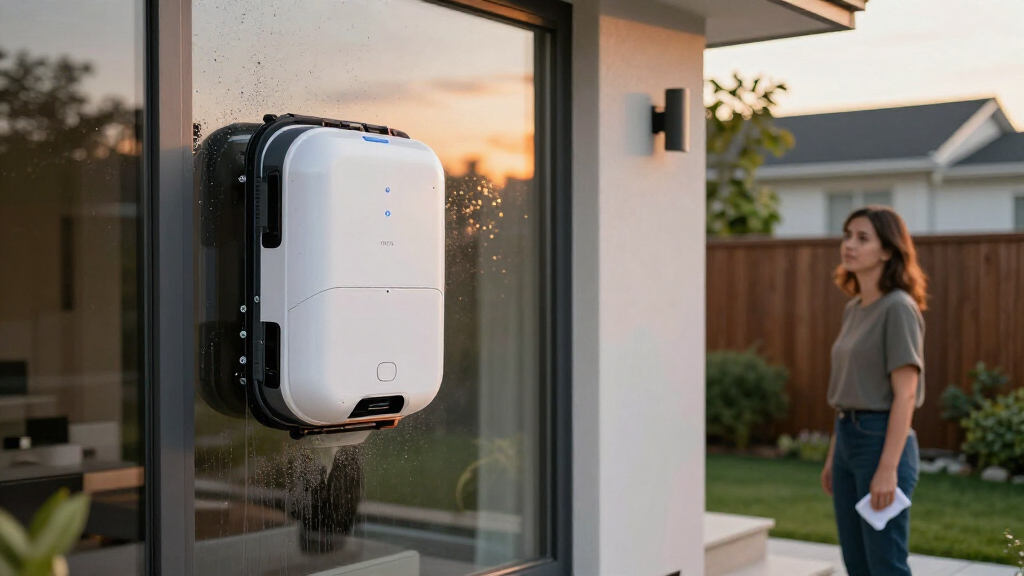

Robot window cleaners have moved from novelty gadgets to genuinely useful machines, but the category splits sharply between full-station systems like the ECOVACS WINBOT W3 Omni — my best overall pick for its self-cleaning dock and strong suction — and simpler corded units that cost far less and do a respectable job on straightforward glass. The ECOVACS WINBOT W2 PRO Omni stands out for larger homes with its multifunction station, while budget options like the HUTT Round-Square make sense for first-timers who don’t want a big investment. The main tradeoff you’ll face is convenience versus price and control: station-based models automate pad rinsing and route planning but carry premium pricing, while manual-spray models demand more babysitting yet handle framed and textured glass more predictably. Continue reading for the full breakdown of all 15 models.

Get cleaning gear delivered free — and shop member deals
- Fast, free delivery on millions of items
- Access to Prime Big Deal Days deals on October 6–7
- Prime Video, Amazon Music and more included
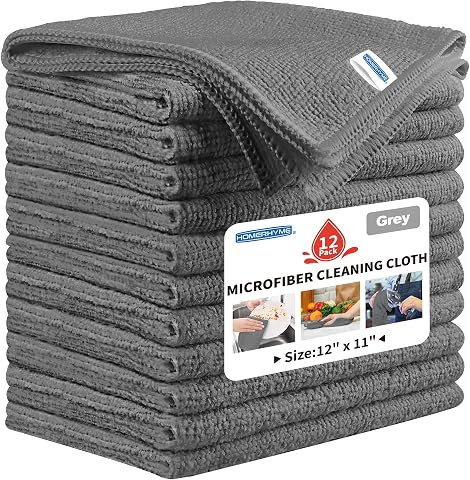
Complete the kit


Key Takeaways
- Self-cleaning stations (W3 Omni, W2 PRO Omni) were the biggest differentiator in this roundup — they solve the messiest part of robot window cleaning, dirty pad maintenance, which cheaper models leave entirely to you.
- Suction power claims clustered around 6000–6500Pa among budget models (BOJUK, X6), but raw suction mattered far less than route logic and edge detection for streak-free results.
- Dual-spray systems (Tosima X1, WA9C Pro, HIXZAP Z9Pro) consistently outperformed single-spray and dry-pad designs on dried-on grime, though they require refills mid-session on large windows.
- Compact models (WINBOT Mini, MINI 2) traded cleaning width for reach into small panes and French doors — a worthwhile trade only if your windows are subdivided.
- The generic ‘Automatic Window Cleaning Robot’ entries with dual spray and double helix suction landed mid-pack: capable hardware, but weaker support ecosystems and app polish than ECOVACS and TOSIMA.
| Automatic Window Cleaning Robot with Dual Spray and Edge Detection |  | Best Value Pick | Suction power: 3000 Pa | Spray system: Dual atomizing nozzles; 0.05 ml per cycle | Water tank capacity: 50 ml | VIEW LATEST PRICE | See Our Full Breakdown |
| Tosima X1 Window Cleaning Robot with Dual Ultrasonic Spray Nozzles |  | Best for Overhead and Skylight Glass | Water tank capacity: 85 ml | Spray system: Dual ultrasonic nozzles | Cleaning path: S-shaped, 8-inch width | VIEW LATEST PRICE | See Our Full Breakdown |
| ECOVACS WINBOT W3 Omni Robot Window Cleaner with Self-Cleaning Station |  | Best Premium Setup | Navigation: WIN-SLAM 5.0 | Spray system: Triple-nozzle wide-angle spray | Edge cleaning: TruEdge scrubber at 200 RPM | VIEW LATEST PRICE | See Our Full Breakdown |
| ECOVACS WINBOT Mini Window Cleaning Robot |  | Best for Beginners and Small Windows | Form factor: Compact — 8.46 x 8.46 x 2.17 in | Control: App control | Spray: Dual ultrasonic nozzles | VIEW LATEST PRICE | See Our Full Breakdown |
| ECOVACS WINBOT W2 PRO Omni Window Cleaning Robot with Multifunction Station |  | Best Cordless Freedom | Battery life: Up to 110 minutes | Power modes: Battery and plugged-in | Spray system: Three-nozzle wide-angle spray | VIEW LATEST PRICE | See Our Full Breakdown |
| Tosima W5 Window Cleaning Robot |  | Best for Tall or Hard-to-Reach Windows | Maximum suction: 6400 Pa | Cleaning path width: 6 inches | Backup battery life: Up to 25 minutes | VIEW LATEST PRICE | See Our Full Breakdown |
| Automatic Window Cleaning Robot with Double Helix Suction |  | Best Smart Dirt Detection | Suction power: 4800–6400 Pa | Water tank capacity: 85 ml | Spraying: Bidirectional ultrasonic atomization; sprays twice per movement | VIEW LATEST PRICE | See Our Full Breakdown |
| TOSIMA WA9C Pro Window Cleaning Robot with Dual Spray |  | Best Accessory Bundle | Suction force: 2600–3200 Pa | Spray nozzles: 4 | Cleaning modes: N-shape, Z-shape, manual | VIEW LATEST PRICE | See Our Full Breakdown |
| ECOVACS WINBOT W2S Window Cleaning Robot |  | Best Overall Control and Precision | Cleaning modes: Fast, Deep, Thorough, Edge, Spot, Zone, Heavy-Duty | Navigation: WIN-SLAM 4.0 | Spray system: Three wide-angle nozzles | VIEW LATEST PRICE | See Our Full Breakdown |
| BOJUK Window Cleaning Robot, 6500Pa Suction, 3 Cleaning Modes |  | Best Value for Strong Suction | Suction: 6500 Pa | Cleaning modes: Top-Down, Left-Down, Right-Down | Water tank capacity: 60 ml | VIEW LATEST PRICE | See Our Full Breakdown |
| X6 Window Cleaning Robot with 6400Pa Suction |  | Best for Grimy Glass | Suction power: 6400Pa | Cleaning time: 7 minutes per 3.3㎡ window | Power outage backup: Up to 30 minutes | VIEW LATEST PRICE | See Our Full Breakdown |
| HIXZAP Z9Pro Window Cleaning Robot with 4 Sprayers |  | Best Budget Entry Point | Sprayers: 4 | Suction power: 3200 Pa | Control method: Remote control | VIEW LATEST PRICE | See Our Full Breakdown |
| HIXZAP Window Cleaning Robot with Double Helix Suction |  | Best Adjustable Suction | Suction: 4800–6400 Pa (variable frequency) | Water tank capacity: 85 ml | Battery life: 5 hours | VIEW LATEST PRICE | See Our Full Breakdown |
| HUTT Round-Square Window Cleaning Robot |  | Best Corner and Edge Coverage | Cleaning technology: Round-square dual-stage | Suction: Up to 6500 Pa | Cleaning pressure: 55 N (12.3 lbs) | VIEW LATEST PRICE | See Our Full Breakdown |
| ECOVACS WINBOT MINI 2 Compact Window Cleaning Robot |  | Best for Small and Framed Windows | Dimensions: 8.46 x 8.46 x 2.17 in | Minimum window size: 8.66 x 9.84 in | Suction: 8000 Pa | VIEW LATEST PRICE | See Our Full Breakdown |
More Details on Our Top Picks
Automatic Window Cleaning Robot with Dual Spray and Edge Detection
This is the pick for buyers who want the core robot window cleaner experience — spray, suction, and edge detection — without paying for a premium ecosystem. The 3000 Pa suction and 50 ml tank get the basics done, and the inclusion of 10 microfiber cloths plus a 4 m safety rope means fewer day-one accessory purchases than most rivals. Compared with the Tosima X1, its tank is smaller (50 ml vs 85 ml), so expect more refills on big window banks, but the three cleaning paths give it more route flexibility than the X1’s single S-shaped pattern. The 15–20 minute UPS backup covers short outages, matching the X1’s safety approach. The tradeoff is honesty of scope: heavy grime needs manual pre-cleaning, and it’s corded-only, unlike the battery-capable ECOVACS WINBOT W2 PRO Omni.
Pros:- Dual spray system with three selectable cleaning paths
- Edge detection handles frameless windows safely
- Safety rope plus UPS backup battery included
- Ten microfiber cloths in the box
Cons:- Corded-only design limits movement on large or awkward windows
- Smaller 50 ml tank means frequent refills on multi-window jobs
- Not suitable for curved glass or horizontal surfaces
Best for: Budget-conscious buyers with framed or frameless glass who want a complete accessory bundle out of the box
Not ideal for: Homes with heavily weathered exterior windows — baked-on grime still requires hands-on scrubbing first
- Suction power:3000 Pa
- Spray system:Dual atomizing nozzles; 0.05 ml per cycle
- Water tank capacity:50 ml
- Cleaning paths:3
- Safety features:Edge detection, 4 m safety rope, UPS backup battery (15–20 min)
- Power source:Corded electric
- Included cloths:10 microfiber cloths
- Suitable surfaces:Smooth glass — windows, doors, skylights, mirrors
Our verdict“A sensible entry point that covers the essentials and includes the accessories others sell separately, as long as your windows aren’t rescue cases.”
Tosima X1 Window Cleaning Robot with Dual Ultrasonic Spray Nozzles
What separates the X1 from budget rivals like the Dual Spray and Edge Detection model is its 85 ml tank — the largest in this batch — and its explicit support for overhead glass. That combination makes it the practical choice for skylights and tall conservatory panels where you can’t stop halfway to refill. The 25-minute backup battery outlasts most competitors’ emergency hold times, which matters more when the robot is above your head rather than on a wall. Its S-shaped path on an 8-inch width is less flexible than the three-route options elsewhere, and it’s still tethered to a cord during normal cleaning, so it won’t match the freedom of the ECOVACS WINBOT W2 PRO Omni. The 30 × 30 cm minimum window size is also a real constraint for homes with small panes or divided lights.
Pros:- Largest water tank in the lineup at 85 ml
- Rated for overhead as well as vertical glass
- 25-minute backup battery during power outages
- Remote allows manual steering corrections
Cons:- Single S-shaped path is less adaptable than multi-route rivals
- Requires a power cord during normal operation
- Cannot clean windows smaller than 30 × 30 cm
Best for: Owners of skylights, conservatories, or large overhead glass panels who need long runtime between refills
Not ideal for: Cottage-style homes with small or divided window panes under 30 × 30 cm
- Water tank capacity:85 ml
- Spray system:Dual ultrasonic nozzles
- Cleaning path:S-shaped, 8-inch width
- Backup battery runtime:About 25 minutes during a power outage
- Minimum window size:30 × 30 cm
- Power source:Corded electric
- Noise level:65 dB
- Operating temperature:0 °C to 40 °C
Our verdict“The clear choice for hard-to-reach overhead glass, provided your panes are large enough and you accept the cord.”
ECOVACS WINBOT W3 Omni Robot Window Cleaner with Self-Cleaning Station
The W3 Omni earns the premium slot for one reason: it removes the grimiest part of robot window cleaning — the pads. Its self-cleaning station washes the mop pads with 16 high-pressure nozzles, so you’re not rinsing dirty cloths after every room like you would with the Tosima X1 or the Dual Spray budget pick. The TruEdge scrubber spinning at 200 RPM attacks edges and corners where flat pads typically smear dirt around, and WIN-SLAM 5.0 navigation with 1 mm obstacle avoidance is a generation ahead of simpler remote-steered models. Three cleaning modes let you dial intensity per window. The cost isn’t just financial: you need floor space and a water supply for the station, making this a poor fit for cramped interiors. Compared with the W2 PRO Omni, it trades that model’s battery freedom for a more autonomous maintenance routine.
Pros:- Station automatically washes mop pads between tasks
- 200 RPM TruEdge scrubber reaches corners and frame edges
- Three cleaning modes plus zone cleaning
- 1 mm obstacle avoidance precision
Cons:- Requires a bulky cleaning station and water supply
- Higher investment than corded basic models
- Indoor glass focus limits exterior window use
Best for: Buyers with many large windows who want minimal hands-on maintenance and the most thorough edge cleaning available
Not ideal for: Small apartments — the station needs dedicated space and access to water
- Navigation:WIN-SLAM 5.0
- Spray system:Triple-nozzle wide-angle spray
- Edge cleaning:TruEdge scrubber at 200 RPM
- Station:Automatic mop-pad washing, 16 high-pressure nozzles
- Cleaning modes:Fast, Intensive, Zone
- Obstacle avoidance:1 mm precision
- Protection:12 levels
Our verdict“The most self-sufficient option here for households that clean lots of glass often and hate pad maintenance most of all.”
ECOVACS WINBOT Mini Window Cleaning Robot
Where the WINBOT W3 Omni is a full system, the Mini is deliberately simple: an 8.46-inch compact body, app control, and dual ultrasonic spray with intelligent path planning handling the rest. That small footprint is the real selling point — it can work panes that larger units like the Tosima X1 (30 × 30 cm minimum) physically cannot fit on, making it the go-to for divided windows and smaller glass. Operation is quiet and genuinely beginner-friendly, with a 9-stage protection system and washable pads keeping ownership fuss low. The honest limitation is cleaning power on neglected glass: for heavy buildup, expect to refresh the pad or run extra cycles, something the W3 Omni’s scrubber handles in a single pass. Think of it as a maintenance tool rather than a deep-clean machine — ideal for glass that gets regular attention.
Pros:- Compact 8.46-inch body fits small and divided panes
- Beginner-friendly app control with three cleaning modes
- Quiet enough for everyday household use
- Washable pads and 9-stage protection system
Cons:- Heavy buildup requires extra cycles or a pad refresh
- Lower cleaning intensity than scrubber-equipped models
Best for: First-time buyers and anyone with smaller or divided window panes who wants simple app control
Not ideal for: Deep-cleaning neglected or exterior windows with heavy soil buildup
- Form factor:Compact — 8.46 x 8.46 x 2.17 in
- Control:App control
- Spray:Dual ultrasonic nozzles
- Cleaning modes:3
- Protection system:9-stage
- Filter type:Washable
- Battery type:Lithium-ion
Our verdict“The easiest way into robot window cleaning if your panes are small and your expectations are about upkeep, not restoration.”
ECOVACS WINBOT W2 PRO Omni Window Cleaning Robot with Multifunction Station
The W2 PRO Omni is the only model in this batch that can clean fully cordless for up to 110 minutes, and that single feature changes where a robot window cleaner is useful — upper-floor windows, far from outlets, or frameless and tilting panes where a dangling cord snags. The multifunction station doubles as controller, charger, and storage, a tidier package than the loose cords and remotes of the Dual Spray budget pick, though less automated than the W3 Omni’s pad-washing station. Its three-nozzle spray and WIN-SLAM 4.0 path planning deliver efficient coverage with 12-stage protection and anti-fall safeguards. Compared with the Tosima X1, you give up the bigger tank but gain true mobility. The limit is runtime: on very glass-heavy homes, a 110-minute ceiling plus a mid-job recharge is a real planning constraint, and it remains an indoor, glass-only machine.
Pros:- Up to 110 minutes of cordless cleaning per charge
- Dual power modes — battery or plugged in
- Multifunction station handles control, charging, and storage
- Supports frameless and tilting window types
Cons:- Battery runtime caps long cleaning sessions
- Indoor glass-only design excludes other surfaces
Best for: Homes with outlet-poor rooms, high upper-floor windows, or frameless and tilting glass where cords are impractical
Not ideal for: Houses with massive glass coverage needing continuous multi-hour cleaning sessions
- Battery life:Up to 110 minutes
- Power modes:Battery and plugged-in
- Spray system:Three-nozzle wide-angle spray
- Path planning:WIN-SLAM 4.0
- Controller:App control
- Protection:12-stage, anti-fall, edge cleaning
- Power levels:5
- Window compatibility:Frameless and tilting windows
Our verdict“The most flexible placement option in the lineup for homes where the nearest outlet is the real obstacle.”
Tosima W5 Window Cleaning Robot
The Tosima W5 earns its spot with a genuinely reassuring safety package: edge detection, a safety rope, and a backup battery that keeps suction alive if the power cuts mid-clean. That combination makes this model better suited than the BOJUK to second-story windows where a fall would be catastrophic. The dual-spray system does real work here, loosening dried-on dirt before the dual-spiral pads pass over it, which cuts down on repeat passes. Its 6400 Pa adaptive suction also adjusts grip as it travels, something the fixed-range TOSIMA WA9C Pro can’t match. The tradeoff is the 6-inch cleaning path — narrower than the WA9C Pro’s 8 inches — so large picture windows take longer. And like most robots in this lineup, it’s strictly a smooth-glass machine.
Pros:- Adaptive suction that adjusts grip across the surface
- Dual-spray system loosens dirt before the pads pass
- Backup battery plus safety rope for fall protection
- Remote control and automatic navigation simplify operation
Cons:- Narrow 6-inch path makes big windows a slow job
- Backup battery lasts only about 25 minutes
- Limited to smooth glass surfaces
Best for: Homeowners with tall, hard-to-reach glass who prioritize anti-fall protection above speed
Not ideal for: Households with textured or framed glass panels — the suction system is built for smooth surfaces only
- Maximum suction:6400 Pa
- Cleaning path width:6 inches
- Backup battery life:Up to 25 minutes
- Battery:14.8V lithium-ion
- Controls:Button and remote control
- Special features:Dual-spray, edge detection, anti-fall, 360-degree swivel
- Recommended surface:Glass windows
Our verdict“This pick makes the most sense for anyone cleaning high exterior glass where safety redundancy matters more than cleaning speed.”
Automatic Window Cleaning Robot with Double Helix Suction
What separates this model from the pack is its variable-frequency suction, which ramps grip up or down depending on how dirty the glass is. Compared with the Tosima W5’s adaptive suction, this goes a step further by reading dirt levels rather than just the surface, which should mean fewer wasted passes on lightly dusty panes. The bidirectional ultrasonic atomization is also a smarter way to wet glass than a simple spray — finer mist means less streaking and less water running down the frame. The 85 ml tank is generous next to the BOJUK’s 60 ml, but you’ll still be refilling on multi-window sessions. The honest caveat: this is a lesser-known brand with little independent feedback, so buyers are taking more of a gamble than with the ECOVACS WINBOT W2S.
Pros:- Variable-frequency suction that responds to dirt levels
- Ultrasonic atomization sprays a fine, streak-reducing mist
- Air-pressure sensor and AI edge detection prevent falls
- 85 ml tank is larger than many rivals
Cons:- Requires water refills during longer cleaning sessions
- Minimal independent review history to verify performance claims
Best for: Tech-comfortable buyers who want automatic dirt-responsive cleaning and fine mist spraying on a budget
Not ideal for: Buyers who want a proven track record — this model lacks established independent feedback
- Suction power:4800–6400 Pa
- Water tank capacity:85 ml
- Spraying:Bidirectional ultrasonic atomization; sprays twice per movement
- Safety features:Air-pressure sensor and AI-powered edge detection
Our verdict“A reasonable gamble for early adopters who like the dirt-sensing concept, but cautious buyers may prefer a name-brand option like the WINBOT W2S.”
TOSIMA WA9C Pro Window Cleaning Robot with Dual Spray
The WA9C Pro wins on out-of-the-box readiness: four cleaning mops, replacement nozzles, an unclogging needle kit, a water bottle, and a safety rope all ship in the box. Compared with the Tosima W5, you get a wider 8-inch cleaning path that covers large panes faster, plus three cleaning modes (N-shape, Z-shape, manual) for flexibility on awkward layouts. The four spray nozzles blanket the pad evenly, which helps avoid dry streaks on wide glass. The catch is suction: at 2600–3200 Pa, it’s roughly half the pull of the W5 or BOJUK, so it relies more on moisture and pad contact than raw grip. It held its place on vertical glass in normal use, but buyers with very dirty or cold panes may find themselves wanting the stronger motors elsewhere in this lineup.
Pros:- Complete accessory bundle including four mops and spare nozzles
- Wide 8-inch cleaning path speeds up large windows
- N-shape, Z-shape, and manual modes for different layouts
- Suction monitoring and drop sensors plus battery backup
Cons:- Suction of 2600–3200 Pa is noticeably weaker than rivals
- Safety rope must be anchored for overhead use
- Battery backup capped at 25 minutes
Best for: First-time robot window cleaner buyers who want everything included and a wide path for large panes
Not ideal for: Anyone cleaning heavily soiled glass — the lower suction force relies on pads doing more of the work
- Suction force:2600–3200 Pa
- Spray nozzles:4
- Cleaning modes:N-shape, Z-shape, manual
- Cleaning path width:8 inches
- Battery backup:Up to 25 minutes (lithium-ion)
- Control:Remote control
- Recommended surface:Glass windows
- Included accessories:4 mops, replacement nozzles, unclogging needle kit, water bottle, safety rope, AC adapter
Our verdict“This model is better suited to buyers who value a full starter kit and wide coverage over maximum suction power.”
ECOVACS WINBOT W2S Window Cleaning Robot
The WINBOT W2S is the most polished package in this batch. Its seven app-controlled modes — from Fast to Heavy-Duty to Spot — give it far more flexibility than the BOJUK’s three directional paths, and WIN-SLAM 4.0 navigation means it cleans systematically instead of wandering. The dedicated Edge mode with TruEdge scrubbers gets within about 1.1 mm of the frame under lab conditions, attacking the grime line that cheaper robots like the double-helix model leave behind. The tradeoffs are real, though: it’s corded and needs an outlet the entire time (the internal battery only maintains suction during interruptions), and it’s picky about glass — minimum 30 × 40 cm, 3 mm thick, tilted no more than 45°, and no curves, cracks, or heavy texture. Frames can also disrupt its route.
Pros:- Seven app-controlled cleaning modes for tailored jobs
- TruEdge scrubbers with a dedicated edge mode for frame-line grime
- WIN-SLAM 4.0 systematic navigation
- Three wide-angle spray nozzles with automatic solution spray
Cons:- Must stay plugged into a working outlet during cleaning
- Strict glass requirements: min 30 × 40 cm, 3 mm thick, ±45° tilt
- Not suitable for curved, cracked, or heavily textured glass; frames may block routes
Best for: Buyers who want app control, systematic navigation, and precise edge cleaning on standard modern windows
Not ideal for: Homes with small, old, thin, or textured panes — the size, thickness, and tilt limits rule those out
- Cleaning modes:Fast, Deep, Thorough, Edge, Spot, Zone, Heavy-Duty
- Navigation:WIN-SLAM 4.0
- Spray system:Three wide-angle nozzles
- Minimum glass size:11.8 × 15.7 in (30 × 40 cm)
- Minimum glass thickness:0.12 in (3 mm)
- Supported tilt angle:±45°
- Power:Corded; requires working outlet
- Edge cleaning distance:Approx. 1.1 mm (laboratory conditions)
Our verdict“For buyers with standard, compliant windows who want the most controllable and precise clean in this batch, the W2S is the pick to beat.”
BOJUK Window Cleaning Robot, 6500Pa Suction, 3 Cleaning Modes
The BOJUK delivers the strongest pull in this batch at 6500 Pa, edging out the Tosima W5’s 6400 Pa while adding a 5-meter safety rope and a 25-minute UPS backup. Its three directional cleaning paths (Top-Down, Left-Down, Right-Down) are simpler than the WINBOT W2S’s seven app modes, but they cover the basics without an app or learning curve — a plus for less tech-inclined users. The 60 ml tank with dual nozzles is adequate but smaller than the double-helix model’s 85 ml, so expect more refills. Its real limitation is honesty in the description: this is a routine-cleaning machine, and caked-on stains need pre-cleaning or repeat cycles. Pads also need proper dampening and post-run care, which adds chore-like maintenance the premium ECOVACS options largely avoid.
Pros:- Class-leading 6500 Pa suction with anti-fall protection
- Three automatic cleaning paths plus edge detection
- Dual spray nozzles with remote control
- Works on windows, tiles, and glass doors
Cons:- Stubborn stains need pre-cleaning or extra cycles
- Pads require proper dampening and cleaning after each use
- 60 ml tank demands frequent refills on multi-window jobs
Best for: Value-focused buyers who want maximum grip and simple remote operation without app complexity
Not ideal for: Anyone expecting one-pass removal of stubborn, caked-on stains — this machine is built for maintenance cleaning
- Suction:6500 Pa
- Cleaning modes:Top-Down, Left-Down, Right-Down
- Water tank capacity:60 ml
- Battery backup:25 minutes (lithium-ion UPS)
- Safety rope:5 meters
- Cleaning path width:8 inches
- Dimensions and weight:11 × 5.6 × 3.5 in; 4.6 lb
- Control:Remote control
- Recommended surfaces:Windows, tiles, glass doors
Our verdict“This pick makes the most sense for buyers who want raw suction power and straightforward operation for regular upkeep rather than deep restoration.”
X6 Window Cleaning Robot with 6400Pa Suction
Where most budget window robots struggle with dried-on dirt, this option stands out for its combination of strong 6400Pa suction and dual spray nozzles, which loosen grime before the pads pass over it. Compared with the HIXZAP Z9Pro, which relies on four sprayers but only 3200Pa of suction, the X6 presses pads more firmly against the glass, which matters when you’re tackling windows that haven’t been cleaned in a season or more. The UPS backup that keeps it attached for up to 30 minutes matches the HUTT’s safety coverage and beats the Z9Pro’s 20 minutes, giving extra peace of mind on upper floors. The honest tradeoff: heavily soiled panes often need two passes and a fresh pad, and overspraying leads to streaks, so patience is part of the deal.
Pros:- Dual spray nozzles distribute water evenly across the glass
- 6400Pa suction presses pads firmly against dirty panes
- UPS backup, 150-lb-rated safety cable, and anti-fall sensors included
- Handles windows, skylights, mirrors, and tile walls
Cons:- Very dirty glass often needs two cleaning passes
- Pads require timely replacement and over-spraying causes streaks
Best for: Homeowners with neglected, dirt-heavy exterior windows who prioritize suction power and long power-outage protection
Not ideal for: Buyers wanting a single-pass, hands-off clean — very dirty glass requires repeat passes and pad swaps
- Suction power:6400Pa
- Cleaning time:7 minutes per 3.3㎡ window
- Power outage backup:Up to 30 minutes
- Safety cable capacity:≥150 lbs
- Navigation:AI edge detection and path planning
- Controls:Remote control
- Warranty:1 year
Our verdict“This pick makes the most sense for seriously grimy windows, as long as you’re willing to run extra passes and manage pads carefully.”
HIXZAP Z9Pro Window Cleaning Robot with 4 Sprayers
Among the lower-cost options here, the Z9Pro’s headline feature is its four-sprayer system, which wets a wider band of glass per pass than the two-nozzle X6 — helpful for routine maintenance cleaning rather than deep scrubbing. Its 3200Pa suction is the weakest in this lineup, so it’s better suited to lightly dusty glass than the baked-on grime the X6 handles; that’s the real reason it costs perception as the budget pick. On safety, the 20-minute emergency backup and tether fall short of the 30 minutes offered by the X6 and HUTT, though both keep the robot attached long enough to retrieve it. Z-shape and Spot modes give it more cleaning flexibility than a basic single-mode unit, and the included water tank and reusable cloths keep running costs down.
Pros:- Four-sprayer system covers a wide band of glass per pass
- Z-shape and Spot cleaning modes via remote control
- Emergency power backup and safety tether included
- Reusable cloths and included water tank reduce ongoing costs
Cons:- 3200Pa suction is weak compared with 6400–8000Pa rivals
- Only rated for smooth glass surfaces
- Listed dimensions of 1 × 1 × 1 inch appear unreliable, making fit planning difficult
Best for: Budget-conscious buyers maintaining relatively clean interior glass, mirrors, and shower doors
Not ideal for: Anyone with heavily soiled exterior windows — the modest suction won’t shift embedded dirt in one pass
- Sprayers:4
- Suction power:3200 Pa
- Control method:Remote control
- Cleaning modes:Z-shape and Spot
- Emergency power backup:20 minutes
- Battery life:5 hours
- Recommended use:Window cleaning
Our verdict“A sensible low-cost entry for light, frequent cleaning — just don’t expect it to rescue long-neglected windows.”
HIXZAP Window Cleaning Robot with Double Helix Suction
This model’s variable-frequency suction (4800–6400 Pa) is its defining advantage: unlike the fixed 3200Pa of the HIXZAP Z9Pro or the fixed 6500Pa of the HUTT, you can dial adhesion up or down, which protects delicate mirrors while still gripping stubborn vertical panes. Its bidirectional ultrasonic atomization produces a finer mist than the Z9Pro’s sprayers, wetting glass without pooling — a streak-reduction benefit for interior glass. The 85ml tank slightly outsizes the HUTT’s 80ml, meaning marginally fewer refills mid-session. On the downside, its listed 1 × 1 × 1 inch dimensions are almost certainly erroneous, so verify actual size before buying for narrow window frames. It’s also the least documented product here, with thin independent feedback compared with the established ECOVACS and HUTT lines.
Pros:- Adjustable 4800–6400 Pa suction suits both delicate and dirty glass
- Bidirectional ultrasonic atomization mists finely to reduce streaks
- Edge detection and air-pressure anti-drop sensor for safer operation
- Automatic spraying while cleaning reduces manual prep
Cons:- Listed dimensions of 1 × 1 × 1 inch appear inaccurate, complicating fit checks
- Little independent feedback available to verify real-world performance
Best for: Buyers cleaning a mix of surfaces — from delicate mirrors to dirtier windows — who want tunable suction in one machine
Not ideal for: Shoppers who want well-documented sizing and a proven track record before trusting a robot on high glass
- Suction:4800–6400 Pa (variable frequency)
- Water tank capacity:85 ml
- Battery life:5 hours
- Control method:Remote
- Weight:2 lb
- Recommended use:Window cleaning
Our verdict“The flexible pick if one robot must handle everything from mirrors to grimy windows — just confirm actual dimensions before ordering.”
HUTT Round-Square Window Cleaning Robot
The HUTT earns its place with a genuinely different cleaning approach: a round-square dual-stage system where a round module handles broad surfaces and square tracks work the edges — attacking the corner streaks that plague round-only designs like the ECOVACS WINBOT MINI 2’s pad-and-brush setup. Its 6500Pa suction with constant 55N pressure keeps pads seated on vertical glass, and 14 sensors plus a 30-minute backup battery put its safety kit on par with the X6. The accessory bundle is the most generous here — six nozzles, three pad pairs, spray bottle — cutting the running-cost gap versus cheaper rivals like the Z9Pro. The catch is upkeep: drive tracks and pads must stay clean and dry or the robot slips and drifts off course, and the manufacturer recommends purified water to avoid clogging nozzles with minerals.
Pros:- Hybrid round-square design improves edge and corner coverage while reducing streaks
- 6500Pa suction with constant 55N pressure for reliable vertical cleaning
- Works on small glass from just 30 × 30 cm, ideal for divided panes
- Generous accessory bundle including 6 nozzles and 3 pairs of pads
Cons:- Drive tracks and pads must be kept clean and dry to prevent slipping or path drift
- Purified water recommended to avoid mineral buildup and nozzle clogs
Best for: Detail-oriented buyers frustrated by streaked corners and edges on standard panes, mirrors, and sliding doors
Not ideal for: Low-maintenance owners — dirty tracks, damp pads, or tap water will cause slipping, drift, and clogged nozzles
- Cleaning technology:Round-square dual-stage
- Suction:Up to 6500 Pa
- Cleaning pressure:55 N (12.3 lbs)
- Water tank capacity:80 ml
- Coverage per refill:Up to 60 m² (646 sq ft)
- Sensors:14
- Battery backup:Up to 30 minutes
- Minimum glass surface:30 × 30 cm
Our verdict“The strongest choice if corner and edge streaks are your biggest frustration, provided you’ll commit to regular pad and track maintenance.”
ECOVACS WINBOT MINI 2 Compact Window Cleaning Robot
Where the HUTT needs at least a 30 × 30 cm pane, the WINBOT MINI 2 works down to 8.66 × 9.84 inches, making it the clear choice for divided window grids, small bathroom mirrors, and framed panes that block bigger robots. Its 8000Pa suction is the highest in this batch — well beyond the HUTT’s 6500Pa — and its edge-cleaning brushes with up to 90% edge coverage take a different route to the same corner problem the HUTT solves mechanically. Unlike the remote-only X6 and HIXZAP models, this one offers app control with five modes (Fast, Thorough, Deep, Spot, Edge Clean) plus WIN-SLAM 4.0 route planning. The tradeoffs: heavily soiled glass still needs multiple cycles or a mid-clean pad swap, and the safety rope must be anchored before every use — an extra step absent from nothing in this category, but a real chore on quick jobs.
Pros:- Compact body handles panes as small as 8.66 × 9.84 inches
- Edge-cleaning brushes and wings reach up to 90% edge coverage
- Five app-controlled modes with WIN-SLAM 4.0 smart route planning
- 8000Pa suction is the strongest adhesion in this lineup
Cons:- Heavily soiled glass may require multiple cycles or a cleaned pad
- Safety rope must be anchored before every use
- Small pad area limits coverage speed on large windows
Best for: Owners of small, framed, or divided windows and mirrors who want app control and premium navigation
Not ideal for: Households with large picture windows and heavy soiling — its small pad area means more cycles and less raw coverage per session
- Dimensions:8.46 x 8.46 x 2.17 in
- Minimum window size:8.66 x 9.84 in
- Suction:8000 Pa
- Edge coverage:Up to 90%
- Cleaning modes:Fast, Thorough, Deep, Spot, Edge Clean
- Navigation:WIN-SLAM 4.0
- Control:App control; Bluetooth directional control
- Battery life:200 minutes
- Noise level:65 dB
Our verdict“The go-to pick for small, framed, or grid-divided glass where bigger robots simply won’t fit — accept the extra cycles on filthy panes.”

How We Picked
I ranked these 15 robot window cleaners around four factors that actually decide whether you’ll keep using the machine or shelve it. Cleaning performance came first: suction consistency, spray coverage, and whether the route logic actually covers full panes without leaving streaks or missed corners. Maintenance burden came second — models with self-cleaning stations scored higher because dirty, reuse-limited pads are the single most common complaint in this category. Third, I weighed safety and usability: backup power, cable management, anti-fall sensors, remote/app control, and how forgiving each unit is on framed, tinted, or slightly textured glass. Finally, I considered versatility and value — cleaning width, pane-size handling, and whether the price premium buys real capability rather than marketing.
The ranking logic follows from those weights: full-station ECOVACS models lead because they score across all four factors, dual-spray TOSIMA units fill the mid-tier where performance-per-dollar peaks, and suction-focused budget models (BOJUK, X6, HIXZAP double-helix) rank lower not because they can’t clean, but because they demand more operator attention and pad upkeep. Compact models are placed by fit rather than power — they earn their spots for small-pane households specifically.
Factors to Consider When Choosing Robot Window Cleaners
Before choosing a specific model, it helps to understand the category’s broader fault lines. Robot window cleaners vary more in day-to-day usability than in raw cleaning ability, and the wrong pick for your window layout can turn a time-saver into a frustration.Station or No Station: The Real Cost Split
Self-cleaning stations like those on the WINBOT W3 Omni and W2 PRO Omni aren’t a gimmick — they change the entire ownership experience. Without one, you’re rinsing pads by hand after every session, and pads degrade faster when they sit dirty, which quietly raises running costs. The station also keeps suction pads conditioned, which affects consistency over months of use. My advice: if you clean more than about ten windows regularly, the station pays for itself in reduced hassle. If you have a small apartment with four or five panes, skip it — you’ll barely notice the manual step.
Your Window Layout Matters More Than Specs
Buyers routinely over-index on suction power and under-index on the shape of their windows. Large uninterrupted panes reward wide cleaning heads and smart route planning; subdivided French doors and small colonial panes punish them, because the robot spends more time crossing frames than cleaning glass. Compact models like the WINBOT Mini line exist precisely for this second scenario. Measure your smallest pane before buying — if it’s narrower than the robot’s cleaning head plus margin for edge detection, that model physically cannot serve you well. This single check eliminates more returns than any spec comparison.
Spray Systems and Water Management
Dual-spray and quad-spray systems (Tosima X1, WA9C Pro, HIXZAP Z9Pro) dissolve grime that dry-pad robots just smear. But spray capacity is the hidden limit: small reservoirs mean refilling halfway through a large window wall, and over-spraying on vertical glass causes drips that leave mineral marks if your water is hard. If you live in a hard-water area, use distilled water regardless of model. Also check where the reservoir sits — top-mounted tanks that must be removed mid-session force you to lift the running robot off the glass, which is the riskiest moment of any clean.
Safety Features You Shouldn’t Compromise On
Every model here climbs glass with fans or pumps, which means a power interruption is a fall risk unless backup batteries are built in. Verify the unit has a UPS-style backup power feature and a safety rope as a second line of defense — especially for second-story exterior windows. Cable management deserves more attention than buyers give it: a tangled cord is the most common cause of a robot peeling off mid-clean. Cheaper generic units often bundle shorter, stiffer cables, which is a real usability cost on tall windows even when the cleaning hardware itself is adequate.
Framed, Tinted, and Textured Glass Compatibility
Not all robots handle non-standard glass. Tinted and coated windows can confuse edge-detection sensors, and deeply textured or frosted panes can defeat suction seals entirely. Models with adjustable suction modes — like the BOJUK’s three-mode system — give you a fallback when auto detection struggles. If most of your glass is standard float glass, ignore this section; if you have stained-glass accents, leaded windows, or film-coated panes, prioritize manual-mode flexibility over automated route planning, because you’ll be driving the robot yourself anyway.
Ongoing Costs: Pads, Filters, and Parts Availability
Cleaning pads are consumables, and availability varies dramatically by brand. ECOVACS and TOSIMA maintain reliable replacement-part channels; generic-brand models often depend on third-party pad sellers, which can dry up within a couple of years. Budget an extra set of pads and a spare filter in your total cost comparison — a cheap robot with irreplaceable consumables is more expensive long-term than a mid-tier one with a healthy ecosystem. This is also why I ranked branded mid-tier units above similarly performing generics even when hardware specs looked equal on paper.
Frequently Asked Questions
Are self-cleaning stations worth the extra cost, or is a regular robot enough?
For households with many windows or exterior glass on upper floors, stations earn their premium quickly. They rinse and dry pads automatically, which extends pad life and removes the grimiest chore in the routine. They also keep the robot’s suction components conditioned, improving consistency over months. If you only clean a handful of ground-level panes once a month, a well-built non-station model like the Tosima W5 or HUTT delivers nearly identical cleaning results — you just spend five extra minutes at the sink afterward.
Can a robot window cleaner fall off the glass if the power cuts out?
Quality models include backup batteries that hold suction for several minutes after a power loss, plus a physical safety rope or lanyard as a redundant anchor. Both ECOVACS and TOSIMA units here include these protections, and most mid-tier generics do as well — but verify before buying, because a few budget listings ship without the rope. The bigger real-world risk is actually cable tangle: a snagged cord can peel an edge off the glass even with power intact. Route the cable and attach the rope to a fixed point every session, and falls become extremely unlikely.
Do these robots work on framed windows, French doors, and small panes?
They can, but performance depends on the robot’s frame-crossing behavior and the size of each pane. Edge-detection sensors stop most models at frames, so on subdivided doors the robot must be manually repositioned to each pane — workable but slow. Compact units like the WINBOT Mini and MINI 2 are built for exactly this, fitting panes that wider cleaning heads can’t navigate. If your home is mostly large picture windows, skip the compacts; their narrow cleaning paths make big jobs drag on unnecessarily.
How much suction power do I actually need?
Less than the spec race suggests. Anything above roughly 3000Pa holds a robot securely to clean vertical glass; the 6000–6500Pa figures on models like the BOJUK and X6 mainly add holding strength on slightly textured or very large panes. Suction also trades off against maneuverability — extremely high suction makes the robot slower and can leave more visible pad trails. Route planning and spray quality influence final streak-free results more than raw suction numbers. Treat suction as a floor requirement, not a ranking criterion.
Is it better to buy an ECOVACS model or a cheaper generic with similar specs?
The hardware gap has narrowed, but the support gap hasn’t. ECOVACS offers consistent firmware updates, a polished app, and dependable replacement pads — all of which affect the second and third year of ownership more than the first week. Generic units like the dual-spray Automatic and HIXZAP models can clean comparably today, but consumable availability and app quality are less predictable. If you’re budget-driven and comfortable with that uncertainty, generics are a fair bet. If you want a five-year appliance rather than a two-year experiment, the brand premium is justified.
Conclusion
For best overall, the ECOVACS WINBOT W3 Omni wins on the strength of its self-cleaning station, reliable route planning, and mature app — the most complete package in this lineup. The W2 PRO Omni is my best premium pick for large homes that need the multifunction station’s capacity. For best value, the Tosima X1 with its dual ultrasonic nozzles delivers station-brand cleaning quality at a mid-tier price, with the WA9C Pro as a close alternative if you prefer its spray layout. Beginners should start with the HUTT Round-Square or Tosima W5 — simple, forgiving, and cheap enough that a mismatch with your expectations won’t sting. For small-pane and French-door households, the WINBOT Mini or MINI 2 is the right tool, and tall single panes are best served by the W2S with its long-reach handling. Whatever you choose, measure your smallest pane first and match the station decision to how many windows you actually clean — those two choices narrow this list faster than any spec sheet.
Fall Picks
fall essentials
As an affiliate, we earn on qualifying purchases.