TL;DR

Get cleaning gear delivered free — and shop member deals
- Fast, free delivery on millions of items
- Access to Prime Big Deal Days deals on October 6–7
- Prime Video, Amazon Music and more included
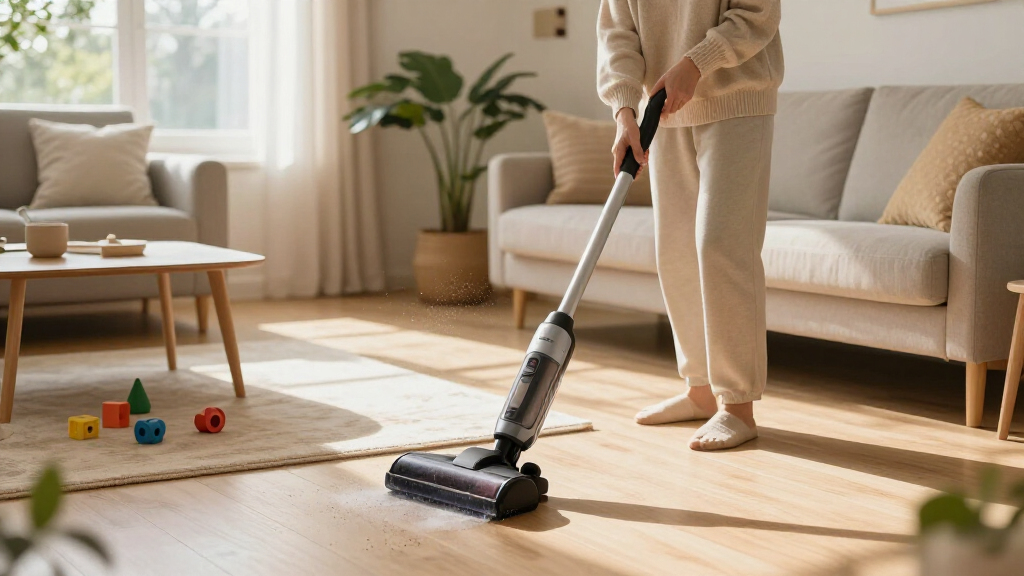
A cordless stick vacuum is a battery-powered, bagless cleaner that handles daily messes in seconds — suction power is measured in air watts (top models hit 230+ AW) and runtime typically ranges from 15–60+ minutes depending on power mode. For small to medium homes with mostly hard floors, a good one can fully replace a corded vacuum; for thick carpets and large homes, it works best as a sidekick. Expect to pay $200–450 for the sweet spot, and budget for a replacement battery in 2–5 years.
Your phone rings. It’s your mother-in-law, ten minutes out. There’s a trail of crumbs from the counter to the couch, and your vacuum lives in a hall closet behind the winter coats. That’s the exact moment a cordless stick vacuum earns its price tag: grab, swoop, done, dock.
But these machines range from $100 to over $1,000, and the differences aren’t always obvious on the shelf. Some are genuine corded-vacuum replacements. Others are overpriced dustbusters with good marketing.
This guide gives you an overview for a smart purchase: how they work, what the numbers actually mean, which features are worth paying for, and the honest answer to whether one can replace the vacuum you already own.
Judge suction by air watts (AW), not voltage or wattage — 100+ AW handles most homes, 230+ AW is flagship territory.
Check runtime at max power, not eco: a ’60-minute’ vacuum may only run 10–15 minutes on turbo, which matters for carpets.
The $200–450 mid-range (Shark, Tineco, Dreame, Roborock) now delivers near-Dyson performance — spend the savings on a spare battery instead.
If you have allergies, buy a sealed HEPA system and wash the filter monthly; it’s the difference between clean air and recirculated dust.
Battery failure is the most common death of a stick vacuum — swappable-battery models and monthly filter washing stretch a 5–8 year lifespan to the full term.
How They Work: The 60-Second Explanation That Makes Everything Else Make Sense
A cordless stick vacuum is a lightweight, battery-powered cleaner built around three parts: a lithium-ion battery, a cyclonic suction motor, and a small bagless canister that separates dust from air by spinning it — no bags, ever. Pull a trigger or press a button, and the whole wand snaps to life in under a second. Most models detach at the handle and convert into a handheld vacuum for stairs, car seats, and sofa cushions.
That bagless canister with cyclonic separation is the same basic idea Dyson popularized in the 1990s, shrunk down and cut loose from the wall. Air spins fast inside the bin, dust gets flung outward and drops, clean air exits through a filter. Simple, effective, and — when the bin gets full — occasionally dusty to empty.
Picture your Tuesday morning: coffee grounds under the grinder, glitter from a school project near the door. With a corded vacuum, that’s a two-minute unwinding ritual. With a stick vacuum, you’re done before the kettle boils. That convenience, not raw power, is why they’ve taken over the market.
The Numbers That Matter (and the Ones That Don’t)
Suction power is measured in air watts (AW), and this is the only power number worth comparing — top models like the Dyson V15 and Gen5detect series reach 230+ AW, while budget models sit around 20–60 AW. Ignore voltage and motor wattage in marketing copy; they tell you almost nothing about real cleaning performance.
Here’s the comparison that actually matters when you’re shopping:
| Spec | Budget ($100–200) | Mid-range ($200–450) | Premium ($500–1,000+) |
|---|---|---|---|
| Suction | 20–60 AW | 100–180 AW | 230+ AW |
| Runtime | 15–25 min | 30–45 min | 60–70 min (eco) |
| Charging | 4–5 hours | 3–4 hours | 3–4 hours |
| Swappable battery | Rare | Sometimes | Often standard |
| Weight | 2.5–3 kg | 3–4 kg | 3–4 kg |
One caveat: max-suction runtime is brutally short. A machine rated “60 minutes” might run only 10–15 minutes on turbo mode — just enough for one stubborn rug, not a whole house. Always check the runtime at each power setting, not just the headline number.
Can a Cordless Stick Really Replace Your Corded Vacuum? The Honest Answer
Yes — if your home is small to medium with mostly hard floors. No — if you have wall-to-wall carpet, a large house, or heavy pet shedding. That’s the straight answer, and the deciding factor is suction time, not suction strength.
Here’s a real scenario: a two-bedroom apartment with hardwood and tile floors, about 70 square metres. A mid-range stick with 40 minutes of runtime handles that whole space on one charge, including a quick pass under the sofa. Now flip it: a four-bedroom house with thick carpet throughout. Deep carpet cleaning at high suction drains the battery in 15 minutes, and embedded carpet dirt genuinely needs the sustained power of a corded machine.
The rule of thumb: cordless stick as your daily driver, corded vacuum (or a robot vacuum) for deep-clean days. Many households run exactly this two-machine setup.
Noise is another factor people underestimate. Stick vacuums run at roughly 70–80 dB — about as loud as a busy restaurant — so nap-time cleaning is off the table in eco mode only.
5 Features Worth Paying Extra For (and 2 You Can Skip)
The features that justify a higher price tag are the ones that save you time or money across the machine’s 5–8 year lifespan. Here’s the ranking, most valuable first:
- Anti-tangle brush rolls. Comb-like structures on the roller stop pet hair from wrapping around it. Shark, Dyson, and Samsung all offer versions now — if you have a shedding dog, this alone saves you scissors-and-frustration sessions every month.
- Swappable batteries. Tineco, Bosch, and some Shark models let you swap in a fresh pack mid-clean. This doubles your effective runtime and means battery failure isn’t the end of the machine. Replacement batteries run $50–150.
- Sealed HEPA filtration. Non-negotiable if anyone in your house has allergies. A sealed system keeps fine particles inside the bin instead of blowing them back into the air.
- LED headlights on the brush head. Sounds like a gimmick; it isn’t. Under a couch at dusk, that light reveals a startling amount of dust you’d otherwise miss.
- Auto-suction adjustment. Dirt sensors (like Dyson’s piezo dust detection) ramp suction up when the floor is dirty and down when it’s clean, stretching battery life without you touching anything.
What you can skip: app connectivity and voice prompts (Tineco and Roborock make a lot of these — fun for a week, then ignored), and bending wands. The flexible wand on the Samsung Bespoke Jet and Dyson Gen5detect is clever for under-furniture cleaning, but a low-profile head achieves 80% of the same result.
Where the Value Is: Brands and Price Tiers Compared
The best value in cordless stick vacuums right now sits in the $200–450 mid-range, where Chinese brands like Tineco, Dreame, and Roborock deliver Dyson-level performance at two-thirds the price. Why does this tier exist? These brands manufacture at enormous scale for their domestic market, and they’ve compressed the engineering cycle — a Tineco flagship this year often matches last year’s Dyson flagship on suction and runtime. You’re essentially buying one generation-old flagship performance for a third less money, and the tradeoff is mostly cosmetic: plastickier builds, less-refined docks, and thinner dealer networks if something breaks.
Think of the market as three tiers, and understand what each price jump actually buys you. Premium ($500–1,000+): Dyson and the Samsung Bespoke Jet — the money goes to maximum suction (230+ AW), laser dust detection, and the nicest docking stations. What it doesn’t buy is proportionally better cleaning: going from 180 to 230 AW matters on dense carpet, but on hard floors the difference is nearly invisible because hard-surface dirt sits on top and needs little suction to lift. Mid-range ($200–450): Shark, Tineco, Dreame, Roborock — this is where diminishing returns kick in hardest, which is why it’s the smart money zone for most homes. Budget ($100–200): Black+Decker, Hoover, Bissell — the real cost isn’t the lower 20–60 AW suction, it’s the hidden expenses: weaker cyclonic separation that clogs faster, batteries that degrade in 18–24 months, and filters you’ll replace more often. A $150 vacuum that frustrates you into disuse is the most expensive option on the shelf.
Is Dyson worth it? Here’s how to decide honestly: if you have thick carpets and heavy pet hair, the 230+ AW suction genuinely out-cleans cheaper machines, because embedded dirt requires sustained airflow that mid-range motors can’t maintain. If your home is hard floors and daily crumbs, a $300 Tineco will feel nearly identical in use — and the $300 you save covers a spare battery and five years of filters. Your floors decide, not the badge.
One more implication worth understanding: EU right-to-repair rules are pushing brands toward replaceable batteries and spare parts. This matters more than it sounds, because the resale and repair ecosystem determines whether a vacuum is a 3-year appliance or an 8-year one. A mid-range machine with a swappable, purchasable battery can outlast a premium machine with a glued-in pack — which means repairability, not price tier, is quietly becoming the better predictor of long-term value.
Make It Last: 4 Maintenance Habits That Add Years to Your Vacuum
Most stick vacuums die from battery degradation or clogged filters, not motor failure — and both are preventable. Follow these four habits and a 5–8 year lifespan is realistic.
- Wash the filter monthly. Rinse it in warm water, let it dry fully (24 hours — seriously, a damp filter kills suction), and reinstall. Washable filters save you $20–40 a year in replacements.
- Empty the bin every time. The 0.3–0.8 L canister is small — the single most common owner complaint. A full bin chokes cyclonic suction, so empty it into an outdoor bin to avoid a dust cloud back into your living room.
- Clear the brush roll weekly. Hair wraps around the roller and strains the motor. Even with anti-tangle designs, a 60-second check keeps things spinning free.
- Store it on the dock, battery half-charged if unused. Lithium-ion batteries degrade fastest at 100% charge in a hot closet. If your vacuum sits unused for weeks, charge it to about half before storing.
Budget for reality: even with perfect care, expect to buy a replacement battery in 2–5 years at $50–150. Factor that into your total cost of ownership — a $350 vacuum plus one battery over six years is about $8 a month. Cheap, honestly, for never untangling a cord again.
Frequently Asked Questions
How long do cordless stick vacuums last?
Typically 5–8 years, with the battery as the first failure point — usually degrading noticeably within 2–5 years. Replacement batteries cost $50–150, and models with swappable batteries (Tineco, Bosch, some Sharks) make this a cheap fix rather than a death sentence. Regular filter washing and brush roll cleaning push the machine toward the upper end of that range.
Are cordless stick vacuums good on carpets and pet hair?
They handle low-pile rugs and everyday pet hair well, especially models with anti-tangle brush rolls like Shark’s and Dyson’s. Thick, plush carpet is harder — deep-down embedded dirt needs sustained high suction, which drains batteries fast. For heavy shedding and deep carpet, most homes are happiest pairing a stick vacuum with a corded machine for deep-clean days.
Is Dyson worth the extra money over Shark or Tineco?
Only if you need maximum suction. Dyson’s flagship models reach 230+ air watts, which genuinely out-cleans cheaper machines on dense carpet. But on hard floors and light daily messes, a $300 Tineco or Shark feels nearly identical in use. Chinese brands like Tineco, Dreame, and Roborock have closed most of the performance gap at two-thirds the price.
Are wet-dry stick vacuums worth buying?
For hard floors, increasingly yes — models like the Tineco Floor One series and Bissell CrossWave vacuum and wash in a single pass, which is a real time-saver for kitchens and entryways. The tradeoffs: higher price, more cleaning of the machine itself, and they can’t be used on carpet like a traditional vacuum. They work best as a complement to, not a replacement for, a regular stick vacuum.
Is emptying a bagless vacuum messy?
Somewhat, yes — that’s the honest tradeoff for never buying bags. The 0.3–0.8 L canister needs emptying frequently, and tapping it open releases a puff of fine dust. Empty it into an outdoor bin (or a bag held around the bin opening) and the mess stays contained. Allergy sufferers should look for hygienic ejection mechanisms that push dust out without shaking.
Conclusion
Buy the vacuum that matches your floors, not the one with the best commercial. Hard floors and a small-to-medium home? A $200–450 mid-range stick with a swappable battery is all you need. Thick carpets and big square footage? Pair a stick for daily crumbs with a corded machine for deep cleans.
Because the real luxury isn’t suction power. It’s grabbing a vacuum off the wall dock, cleaning up the mess in ninety seconds, and putting it back — before the kettle even boils.
Fall Picks
fall essentials
As an affiliate, we earn on qualifying purchases.