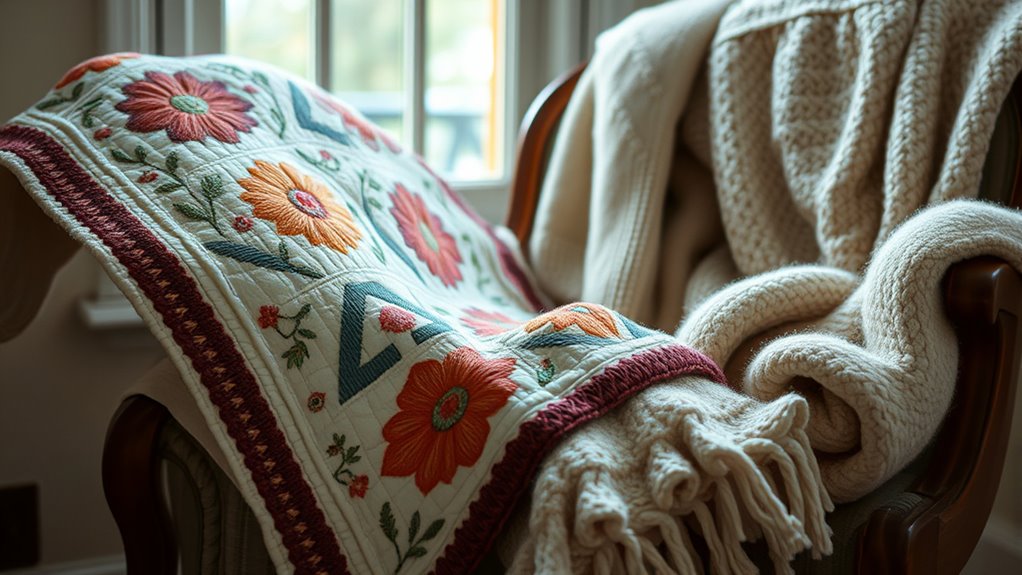

To care for quilts, throws, and winter textiles, always handle them with clean hands and follow the manufacturer’s instructions. Use gentle, pH-balanced detergents and wash in cool or lukewarm water to prevent damage. Spot clean stains quickly with natural solutions like vinegar or baking soda, and avoid harsh chemicals. Air dry in a shaded, well-ventilated space and store in a cool, dry place. Continue exploring for more tips on maintaining their beauty and durability.
Key Takeaways
- Handle quilts and winter textiles with clean hands and avoid harsh detergents to preserve fabric integrity.
- Wash in cool or lukewarm water using a gentle, pH-balanced detergent suited for delicate fabrics.
- Spot clean stains promptly with natural solutions like vinegar or baking soda, testing on small areas first.
- Air dry in a well-ventilated space away from direct sunlight to prevent fading and fiber damage.
- Store textiles in a cool, dry place using breathable covers, and regularly inspect for pests or deterioration.

Have you ever wondered how to keep your quilts, throws, and winter textiles looking their best for years to come? Proper care begins with understanding fabric preservation and stain removal. These two elements are essential to maintaining the beauty, softness, and longevity of your cherished textiles. First, always handle your items with clean hands to prevent transfer of oils, dirt, or lotions that can stain or damage fibers over time. When it comes to fabric preservation, gentle cleaning is necessary. Avoid harsh detergents or bleach, which can weaken fibers and cause colors to fade. Instead, opt for a mild, pH-balanced detergent specifically designed for delicate fabrics. Wash your textiles in cool or lukewarm water, as hot water can cause shrinking or fading. Always follow the manufacturer’s care instructions, as some quilts or throws might require dry cleaning or hand washing. Incorporating proper laundering techniques can further extend the life of your textiles.
Stain removal is a delicate process that, if done correctly, can greatly extend the life of your textiles. The moment you notice a stain, act quickly. Blot—don’t rub—the area with a clean, damp cloth to lift as much of the stain as possible. For stubborn spots, create a gentle cleaning solution using natural ingredients like white vinegar or baking soda mixed with water. Test any stain removal method on a small, inconspicuous area first to ensure it won’t harm the fabric. For greasy or oily stains, sprinkle baking soda or cornstarch to absorb the grease before brushing it off gently. For protein-based stains like blood or sweat, use cold water and a small amount of enzymatic cleaner, but always check the fabric’s compatibility beforehand. Avoid using hot water or harsh chemicals, as these can set stains and make removal more difficult.
Once cleaned, make sure your textiles are thoroughly dried to prevent mold or mildew. Air drying in a well-ventilated space is best, avoiding direct sunlight which can cause fading. If you need to machine dry, choose the lowest heat setting and add clean, dry towels to help absorb excess moisture. Proper storage also plays an important role in fabric preservation. Store your quilts and throws in a cool, dry place away from direct sunlight and pests. Use breathable storage bags or cotton sheets to prevent dust buildup and allow air circulation. Regularly inspect your textiles for signs of damage or pests, and address issues promptly. By consistently applying gentle cleaning techniques, quick stain removal, and careful storage, you’ll preserve the fabric quality and appearance of your winter textiles for many seasons to come.

Heritage Park Silk & Wool Fragrance Free, Hypoallergenic, pH-Neutral Laundry Detergent – Dermatologist-tested, Sensitive Skin-Friendly, Enzyme-Free, Concentrated Up to 64 loads (32 fl oz)
Gentle & pH-Neutral for Delicates: Specially formulated for silk, wool, cashmere, alpaca, and other protein-based fabrics, this natural…
As an affiliate, we earn on qualifying purchases.
As an affiliate, we earn on qualifying purchases.
Frequently Asked Questions
How Can I Prevent Color Fading in Winter Textiles?
To prevent color fading in winter textiles, you should use colorfast techniques during washing and drying, like washing in cold water and avoiding harsh detergents. Additionally, apply UV protection methods by keeping textiles out of direct sunlight or using window UV filters. These steps help preserve vibrant colors, ensuring your textiles stay beautiful throughout the season. Always follow care instructions to maintain their color and longevity.
What Are Eco-Friendly Cleaning Options for Delicate Quilts?
You can opt for eco-friendly cleaning options like gentle, plant-based detergents instead of fabric softeners that contain chemicals. For delicate quilts, consider using eco-friendly dry cleaning methods that avoid harsh chemicals. Hand washing with cold water and natural soap also works well. These methods protect your quilt’s fibers, keep colors vibrant, and are better for the environment, ensuring your textiles stay beautiful and eco-conscious.
How Do I Repair Minor Tears in Antique Quilts?
You can repair minor tears in antique quilts by carefully mending fabric with gentle sewing techniques. Use a fine needle and matching thread to stitch the tear closed, employing small, even stitches to minimize stress on the fabric. For delicate areas, consider hand sewing with a running stitch or slip stitch to keep the repair discreet. Always handle the quilt gently to preserve its integrity and historical value.
Can I Store Quilts With Moth Repellents Safely?
Yes, you can store quilts with moth repellents safely by choosing natural pest prevention options like cedar blocks, lavender sachets, or herbal pouches instead of chemical moth repellents. These alternatives are effective and safe for your textiles, helping prevent moth damage without risking fabric damage or chemical exposure. Just guarantee your quilts are clean, dry, and stored in breathable containers to maximize protection and maintain their condition.
What Is the Best Way to Remove Stubborn Stains From Throws?
To remove stubborn stains from throws, start with stain removal techniques like gently blotting the area with a clean, damp cloth. Apply a fabric pretreatment spray or a mixture of mild detergent and water directly onto the stain, letting it sit for 15-30 minutes. For best results, gently rub the fabric, then wash as recommended. Always test pretreatment on a small, hidden area first to avoid damage.

Root & Splendor Non Toxic Stain Remover – Natural Stain Remover for Laundry | Eco Friendly, Plant Based, EWG Verified, Unscented, 16 fl oz
Eco-Friendly Stain Remover: Our non toxic laundry stain remover is crafted from plant-based ingredients, offering an organic stain…
As an affiliate, we earn on qualifying purchases.
As an affiliate, we earn on qualifying purchases.
Conclusion
So, go ahead and treat your quilts, throws, and winter textiles like royalty—they’ll thank you with warmth and longevity. Ironically, the more you fuss over them, the longer they’ll last, yet they probably just want to be loved and used. Remember, a little care goes a long way—so don’t be surprised if your favorite cozy textiles outlive your fashion sense. After all, they’re the true heroes of winter comfort, quietly waiting for your next cuddle session.

31×62 inches Extra Large Clear Drawstring Dust Covers Plastic Storage Bags Set of 4 Multi-Purpose for Storage and Keeping Luggage, Suitcase Good for Household Organizing Reusable
【Large Capacity】The giant storage bag comes in a set of 4, and each bag measures 31×62 inch with…
As an affiliate, we earn on qualifying purchases.
As an affiliate, we earn on qualifying purchases.

Vikaqi Clothes Drying Rack 79 Inches Folding Indoor Outdoor, Drying Rack Clothing Collapsible, Foldable Laundry Drying Rack, Heavy Duty Stainless Steel Clothesline, Garmet Rack, 20 Hooks 12 Clips
Save Money & Energy: The indoor clothes drying rack serves as a home humidifier during winter, adding moisture…
As an affiliate, we earn on qualifying purchases.
As an affiliate, we earn on qualifying purchases.