AIThis post was created with the assistance of artificial intelligence (AI).

TL;DR

Cordless handheld vacuum cleaners are compact, battery-powered cleaners made for quick, localized jobs such as crumbs, pet hair and car interiors. Compare runtime by power setting, usable attachments, bin and filter care, weight, and replacement parts; these details matter more than a single headline suction figure. A handheld vacuum can make small messes easy to catch, but it rarely replaces a full-size vacuum for large floors or deep-pile carpet.

A bowl of cereal hits the kitchen floor, and suddenly the crumbs are everywhere: under the table, in the rug, and around the chair legs. A cordless handheld vacuum lets you tackle that small mess without dragging a full-size machine across the room. Its convenience is real, but so are its limits: a small battery and bin have to work within the time and space they can provide. This guide explains what cordless handheld vacuum cleaners handle well, what to check before you buy, and how to get useful life from the battery, filter and attachments. You’ll see why a crevice tool can matter more than a big power number, how to judge advertised runtime, and when a wet-and-dry model is the only safe choice. Think of a handheld vacuum as a pocketknife for cleanup: handy for the right task, but not your whole toolbox.
At a glance
Cordless Handheld Vacuum Cleaners: What to Know
Key insight
A vacuum’s advertised maximum runtime usually reflects a lower power setting, so checking runtime by mode gives you a more realistic picture of whether one charge can clean your car seats or upholste…
Key takeaways
1

Choose runtime by power mode, not just the longest advertised figure.

2

Match the nozzle to the job: crevice tools reach gaps, and powered mini brushes help with embedded pet hair.

3

Check bin emptying, filter care, handle comfort and noise because they shape everyday use.

4

Use liquids only with models explicitly rated for wet pickup; follow warnings for hot ash and fine construction dust.

5

Compare replacement battery and filter availability alongside the initial price.

Step by step
1
How should you compare battery life and suction?
Compare **runtime by power setting**, because a maximum runtime figure usually describes the lowest setting and may shrink sharply on boost.
Before you orderOffer from Amazon

Get cleaning gear delivered free with Prime

  • Fast, free delivery on millions of items
  • Prime Video, Amazon Music and more included
  • Member-only deals all year
Start your free Prime trial Free trial for eligible customers · Cancel anytime
As an affiliate, we earn on qualifying purchases.

What can a cordless handheld vacuum clean well?

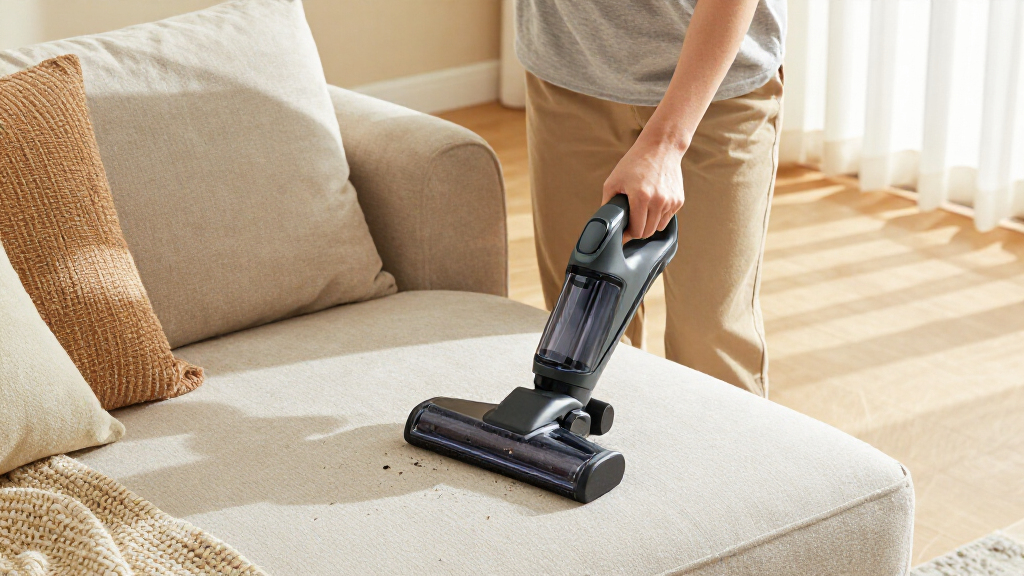
A **cordless handheld vacuum** is a compact, battery-powered cleaner designed for quick pickups and small areas. It works best when you need to clear crumbs from a counter, loose hair from a car seat, or dust from stairs without setting up a larger vacuum. Treat it like a short-reach brush: useful for a precise job, but not built to sweep an entire house. These **powered cleaners designed for quick pickups** suit messes that are scattered or awkward to reach. For example, if your dog sheds on the sofa, you can grab the vacuum, use a fabric attachment, and clean one cushion before the hair settles into the weave. A small bin means you may have to empty it during a larger job, especially when collecting fluffy pet hair. A handheld model usually cannot match a full-size vacuum’s sustained cleaning on a large floor or deep-pile carpet. The motor, airflow, nozzle and surface all affect performance, so a single wattage or “air watts” figure cannot tell you how well a particular model will pick up debris. A narrow crevice tool can reach crumbs between car seats; a powered mini brush can help lift embedded hair from upholstery. For instance, a parent cleaning cracker crumbs from a child seat might value a slim nozzle and easy emptying more than a high boost setting. **Cordless handheld vacuums** make that kind of small cleanup easier because the machine is ready to grab, but they are a supporting tool, not a floor-cleaning workhorse.

Products Worth Considering

Ring Battery Doorbell 2K Plus, Indoor Cam 2K, and Window & Door Sensor Bundle

Ring Battery Doorbell 2K Plus, Indoor Cam 2K, and Window & Door Sensor Bundle

Ring Battery Doorbell Plus (2nd Gen) and Chime Plus Bundle, Nickel Silver and White

Ring Battery Doorbell Plus (2nd Gen) and Chime Plus Bundle, Nickel Silver and White

eufy Baby Monitor E21 with 4K UHD Camera and 5-Inch 720p Screen

eufy Baby Monitor E21 with 4K UHD Camera and 5-Inch 720p Screen

As an affiliate, we earn on qualifying purchases.

How should you compare battery life and suction?

Compare **runtime by power setting**, because a maximum runtime figure usually describes the lowest setting and may shrink sharply on boost. Battery capacity, attachments, age and the surface you clean all affect how long a charge lasts. If you plan to vacuum a car interior, check whether the stated runtime applies to the mode and tool you’ll actually use. A practical buying check takes a few minutes:
  1. Find runtime figures for each power mode, including boost if available.
  2. Check the charging time and whether the battery is replaceable or sold separately.
  3. Match the nozzle to the job: a crevice tool for gaps and a powered brush for fabric and pet hair.
  4. Compare bin capacity, weight, grip and how the vacuum empties.
  5. Look up filter care, warranty terms and the availability of replacement parts.
Imagine a quick car cleanup after a weekend trip. A low-power setting may handle dry sand on floor mats, while a powered brush on upholstery can drain the battery faster. A replaceable battery can extend the machine’s useful life and let you keep a spare charged, but only if the manufacturer sells one at a sensible price. Suction claims also need context. A powerful motor cannot make up for a nozzle that skips debris or a brush that clogs with hair. **Battery support, useful tools and measured runtime** tell you more about everyday value than a headline power figure alone.

Which attachments make the biggest difference?

The right **attachment helps the vacuum reach or lift the mess** that a plain nozzle would leave behind. A crevice tool directs airflow into narrow gaps; a dusting brush loosens debris from delicate surfaces; and a motorized mini brush agitates fabric to lift hair and grit. Some car kits add a flexible hose, which can reach between seats without forcing your wrist into an awkward angle. Consider the crumbs in a car seat seam. A wide nozzle may glide over the surface while crumbs remain tucked beside the buckle. A crevice tool can pull them out, and a flexible hose can help you reach under the seat. For pet hair pressed into a sofa cushion, a powered brush often does more than simply increasing suction. Before buying accessories, check what comes in the box and whether extra tools fit the model. A cheap vacuum with no upholstery tool may cost more once you add the piece you need. Some products combine a handheld unit with a detachable stick-vacuum body; others focus on car cleaning or wet-and-dry pickup. Their design can make one machine useful across several rooms, but the added body or dock may take more storage space. Pick attachments based on your home and routine. If you mostly clean kitchen crumbs, a simple nozzle may be enough. If you have fabric seats and a shedding pet, **a powered mini brush and a crevice tool** may be the difference between a quick pass and a frustrating second round.

What trade-offs should you expect at home?

The main trade-offs are **shorter runtime, smaller capacity and less sustained suction** than most full-size vacuums. You may need to empty a small dust bin several times while cleaning stairs or gathering pet hair. A vacuum that feels light in your hand can still feel awkward if the handle is poorly balanced or the trigger strains your finger. Noise and grip matter most when the job takes longer than a few seconds. For example, if you clean a car every Sunday, a heavy model with a stiff trigger may make you stop halfway through, even if its specifications look impressive. Try to judge the whole experience: where your thumb rests, how the weight sits above your wrist, and whether you can reach under a seat without twisting your arm. Storage and charging can also shape whether you use the machine. A wall dock keeps a vacuum ready, but needs a suitable place near an outlet; a simple stand may be easier if you rent or move often. Recent designs advertise brushless motors, larger lithium-ion batteries, power modes and smart docks. Those features vary widely, so compare **actual runtime, bin volume and replacement-battery access** rather than assuming a newer feature guarantees better cleaning. A compact model may be an easy win for a small apartment with tile floors and occasional crumbs. The same machine may disappoint a household that expects to clean several carpeted rooms on one charge. **Your routine, storage space and comfort** should guide the purchase as much as the feature list.

How do you clean and store a handheld vacuum safely?

Follow the manufacturer’s instructions for **emptying, filter care and battery charging** to keep a handheld vacuum working well. A full bin or clogged filter can reduce airflow, while a washable filter that goes back in damp can cause trouble. Check the care guide for cleaning frequency and let washable parts dry completely before reinstalling them. Emptying is part of everyday usability, not a small detail. If dust puffs into the air when you open the bin, you may prefer a design that releases debris directly into a rubbish bag. Someone with allergies should check the maker’s filtration specifications and sealing claims, then take care when emptying or cleaning the filter, since those tasks can release dust. Use a dry-only machine for **dry debris only**. Never pick up a spill unless the model is explicitly rated for wet pickup; liquid can damage a dry-only vacuum and make use unsafe. Follow the maker’s warnings for hot ash and fine construction dust as well, since those materials can pose hazards or damage the machine. Keep the charging setup dry and use the supplied charger as directed. After a weekend of car cleaning, remove tangled hair from the brush roll, clear dust from the bin, and inspect the filter. If the pickup weakens even after cleaning, the filter may need replacement. A model with available filters and batteries can be a better long-term buy than one that is cheap today but difficult to maintain.

When is a handheld model worth the price?

A handheld vacuum is worth paying for when it saves you time on **small, repeated cleanups** that would otherwise wait until later. Occasional cereal crumbs may call for a basic model with a comfortable grip and easy emptying. Frequent pet hair cleanup may justify a powered mini brush, stronger battery support and replacement parts you can actually buy. Think about a busy morning: toast crumbs scatter across the counter just as you need to leave. A vacuum that hangs in a charging dock near the kitchen can clear them in a minute. But if you expect the same device to clean a full living room, a car and a thick rug without recharging, its small bin and battery will become daily annoyances. Compare purchase price with ownership costs. Filters, brush rolls and batteries may need cleaning or replacement; check their availability and price before you decide. Product prices and models change often, and marketing around filtration, smart charging or power modes does not make products directly comparable. Check current prices, warranty details and independent tests for the surfaces you have. The best choice depends on **how often you use it and what you ask it to pick up**. A lower-cost vacuum can suit a studio and occasional crumbs. A household with pets, stairs and a frequently used car may get more value from a durable machine with the right brush, a replaceable battery and easy-to-find filters.

Frequently Asked Questions

Are cordless handheld vacuums powerful enough for everyday cleaning?

They handle quick, localized jobs such as crumbs, loose pet hair and car interiors. They generally cannot replace a full-size vacuum for large floor areas or deep-pile carpet. Match the tool and power setting to the surface you clean.

How long does the battery last?

Runtime depends on the model, power mode, attachment and battery age. Maximum runtime usually refers to a lower setting, so check figures by mode before judging whether a charge will cover your car seats or stairs.

Can a cordless handheld vacuum pick up pet hair?

Many models can collect loose hair, but a motorized mini brush often works better on upholstery and car seats. Empty the bin regularly, since fluffy hair can fill a small dust cup quickly.

Can I use a handheld vacuum to clean my car?

Yes. A crevice tool helps reach seat gaps, while a flexible hose can make awkward spaces easier to clean. Check that the included tools suit your car and that runtime is long enough for the power setting you plan to use.

Can a handheld vacuum pick up liquids?

Only use a model that the manufacturer explicitly rates for wet pickup. A dry-only vacuum can be damaged by liquid and may be unsafe to use on a spill.

Are handheld vacuums suitable for people with allergies?

They can help with small cleanups, but check the maker’s filter and sealing specifications because filtration claims vary. Emptying the bin or cleaning the filter can release dust, so follow the care instructions and handle those tasks thoughtfully.

Conclusion

Choose a cordless handheld vacuum for the messes you can name: crumbs after breakfast, hair on the sofa, or grit between car seats. Match its tools and real runtime to those jobs, then check that you can empty, clean and maintain it without a fuss. The right small vacuum is like a tidy shortcut tucked beside your daily routine: ready when a mess appears, and gone again before it takes over your day.
You May Also Like

Pet-Friendly Holiday Cleanup Tips

Pet-friendly holiday cleanup tips promote safety and joy; discover essential precautions to protect your furry friends during festive tidying.

Back-to-School Cleaning Spree: Get Your Home Organized for the School Year

Unearth simple tips to declutter and organize your home for a smoother school year—discover how to create a fresh, tidy space your kids will love.

After-Guests Turnover Cleaning Checklist

Loving your home means knowing the essential steps for a thorough after-guest cleaning checklist that keeps your space fresh and inviting—discover how to streamline your routine.

Cleaning for Events: Tips for a Spotless Venue

Spotless venues enhance events; discover essential cleaning tips that will ensure your guests are impressed and the atmosphere is inviting.