
TL;DR
Apartment Therapy describes using distilled white vinegar in a dishwasher-safe bowl on the top rack as a DIY rinse aid, including for hard-water marks. It advises against pouring vinegar into the rinse-aid compartment because it could compromise the compartment’s gaskets; the article also outlines a vinegar cycle for cleaning the machine.
Apartment Therapy has outlined a DIY dishwasher method that uses 1 to 2 cups of distilled white vinegar in a dishwasher-safe bowl on the top rack, rather than in the appliance’s rinse-aid compartment. The advice is aimed in part at reducing hard-water spots on dishes, while the same approach can also be used as a cleaning cycle for the dishwasher.

Get cleaning gear delivered free with Prime
- Fast, free delivery on millions of items
- Prime Video, Amazon Music and more included
- Member-only deals all year
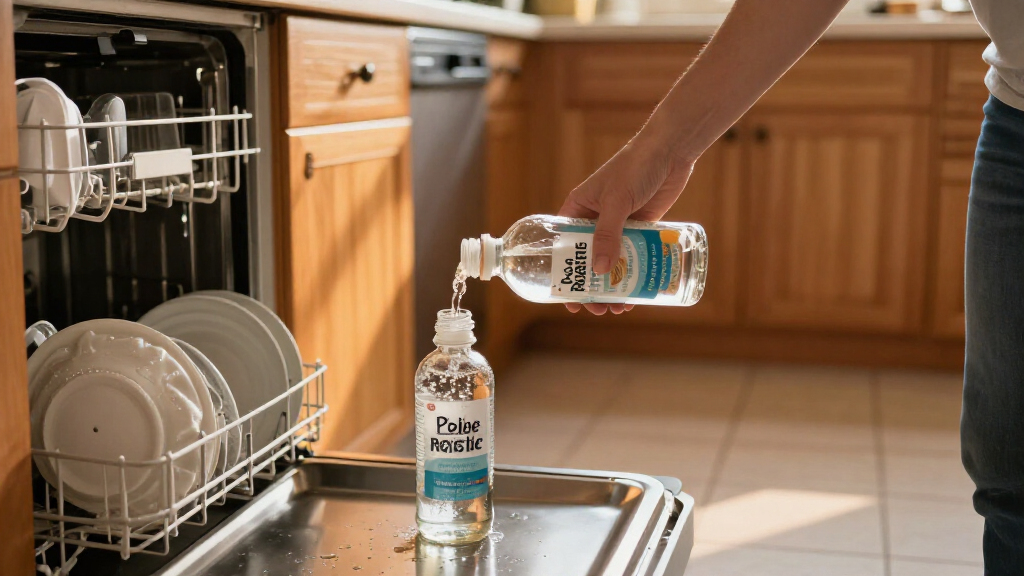
For the rinse-aid method, Apartment Therapy recommends placing 1 to 2 cups of white vinegar in a dishwasher-safe bowl on the top rack before running a normal wash cycle. The bowl is removed when the cycle ends. The publication says this placement can help vinegar reach dishes affected by hard-water marks, which can leave spots or make glassware look cloudy.
Apartment Therapy cautions against putting vinegar directly into the designated rinse-aid compartment. The article says vinegar could compromise the compartment’s gaskets, but does not provide details about testing or manufacturer guidance. It presents the bowl-on-rack method as an alternative to filling that compartment.
For cleaning the dishwasher itself, Apartment Therapy recommends first removing and cleaning the filter, then placing a bowl containing 1 to 2 cups of vinegar on the top rack and running a hot-water cycle. The article says this may help remove lingering grease or grime and prevent musty odors.
A vinegar rinse aid for dishwasher cycles
Apartment Therapy describes a bowl-on-rack method for spotty dishes and a separate hot-water cycle for cleaning the machine.
For spotty dishes
The article presents this as an option for hard-water marks, not a guaranteed fix.
Add 1 to 2 cups of distilled white vinegar to a dishwasher-safe bowl.
Place the bowl securely on the top rack, run a normal cycle, then remove it when the cycle ends.
Two uses, different cycles
The same bowl placement is described for dishes and for cleaning the appliance.
- Normal wash cycle
- Aims to reduce marks on dishes and cloudy glassware
- Clean the filter first for a deeper clean
- Run a hot-water cycle to target grease, grime, and possible musty odors
Protect the appliance
The article cautions against pouring vinegar directly into the rinse-aid compartment.
A Simple Option for Spotty Dishes
Apartment Therapy presents the method as an option for households dealing with hard-water deposits that leave spots on plates or cloudiness on glasses. The article notes that water hardness varies by location, so the problem may be more noticeable in some homes than others. It frames vinegar as a household tip, not a guaranteed fix for every dishwasher or water supply.
The placement advice also matters for appliance care: Apartment Therapy recommends using a separate bowl rather than putting vinegar into a compartment whose gaskets may be affected. Readers should check their dishwasher’s instructions before trying a cleaning method not specified by its manufacturer. The article does not establish that vinegar is suitable for every machine, finish, or cycle.
Products Worth Considering

Bose Home Speaker 500 Smart Bluetooth Speaker with Alexa, Black

Ring Alarm 8-Piece Home Security System Kit

Ring Alarm 14-Piece Security Kit
As an affiliate, we earn on qualifying purchases.
Two Uses for a Vinegar Cycle
Apartment Therapy describes two related uses for white vinegar: helping reduce visible residue on dishes and cleaning the dishwasher interior. The first method uses a regular cycle and focuses on the dishes. For the second, the publication recommends a hot-water cycle and, for a deeper clean, cleaning the filter beforehand.
The distinction is practical. Apartment Therapy describes the rinse-aid approach as a way to address marks on dishware, while the machine-cleaning cycle is intended to target grease, grime, and possible musty odors inside the appliance. The article gives the same bowl-and-top-rack placement for both methods, but does not specify how often either should be repeated or provide a product comparison.
Machine Compatibility Is Not Specified
Apartment Therapy does not identify which dishwasher brands or models were tested, or whether manufacturers generally approve vinegar use. Its warning about possible gasket damage is not accompanied by a named expert, technical documentation, or a stated level of risk. The advice should therefore be understood as the publication’s household recommendation, not a universal manufacturer instruction.
The article also does not explain how well the method works in different water conditions, how it compares with commercial rinse aid, or how often a vinegar cleaning cycle would be appropriate. It provides no measured results or long-term appliance assessment. Readers concerned about materials or warranties can consult their owner’s manual or dishwasher manufacturer before trying it.
Check Your Dishwasher Guidance
Apartment Therapy’s article does not announce a product test, follow-up study, or scheduled update. Anyone considering its tip can first check the dishwasher manual for guidance on vinegar, rinse aids, and cleaning cycles. If the manual does not address the method, the manufacturer can clarify whether vinegar is compatible with the appliance’s components.
For the approach described by Apartment Therapy, use only a dishwasher-safe bowl, place it securely on the top rack, and follow the appliance’s normal operating instructions. For the deeper-clean version, the article says to clean the filter before running a hot-water cycle. Stop using the method if the manufacturer advises against it or if the dishwasher shows signs of damage or unusual operation.
Source: rss
Key Questions
How do you use vinegar as a DIY dishwasher rinse aid?
Apartment Therapy’s method is to pour 1 to 2 cups of distilled white vinegar into a dishwasher-safe bowl, put it on the top rack, and run a normal cycle. Remove the bowl after the cycle ends.
Can vinegar go in the rinse-aid compartment?
Apartment Therapy advises against that. The article says vinegar could compromise the compartment’s gaskets and recommends using a separate bowl on the top rack instead. Check the dishwasher manual for model-specific instructions.
Can vinegar help with hard-water spots?
Apartment Therapy says the method is intended in part to combat hard-water marks, which can spot dishes and make glasses cloudy. The article does not provide measured results or guarantee that it will work in every home.
How does the article suggest cleaning the dishwasher with vinegar?
Apartment Therapy recommends cleaning the dishwasher filter first for a deeper clean. Then put 1 to 2 cups of vinegar in a dishwasher-safe bowl on the top rack and run a hot-water cycle, subject to the appliance manufacturer’s guidance.
Source: apartmenttherapy.com