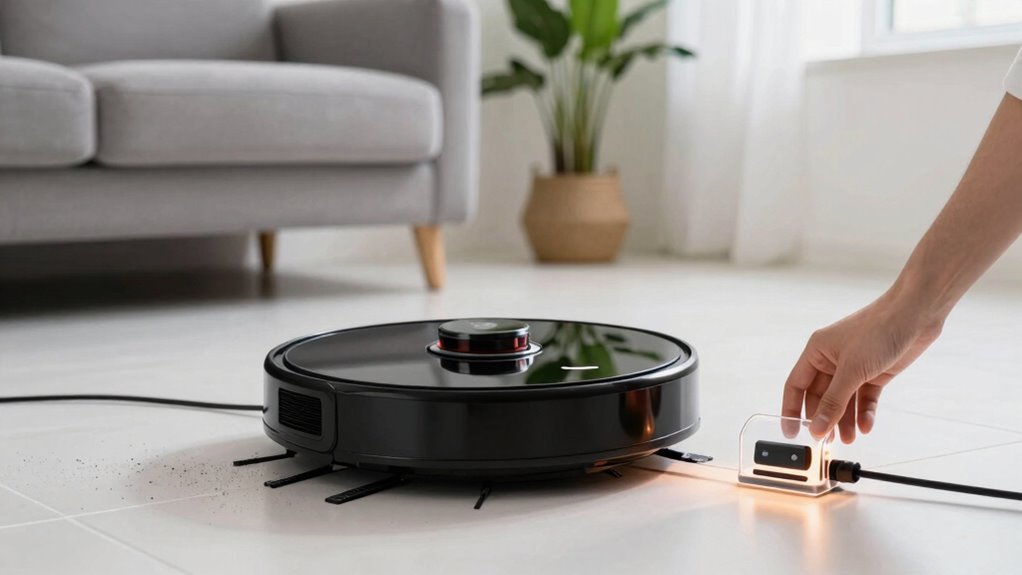
Self-emptying robot vacuums still need your oversight because they can encounter issues like battery drain, obstructions, or software glitches that automation can’t fully handle. You need to monitor noise levels, check filters and brushes, and clear blockages to keep the device running smoothly. Occasionally, human intervention is necessary for troubleshooting and maintenance, ensuring thorough cleaning and longer device lifespan. If you want to know how to keep your vacuum in top shape, keep exploring.

Get cleaning gear delivered free with Prime
- Fast, free delivery on millions of items
- Prime Video, Amazon Music and more included
- Member-only deals all year
Key Takeaways
- Self-emptying bins require human intervention for periodic emptying to prevent overfilling and maintain optimal function.
- Human oversight ensures timely maintenance, such as filter cleaning and obstruction removal, to prevent malfunctions.
- Monitoring battery levels and operational issues helps avoid incomplete cleaning cycles or device damage.
- Regular inspections and firmware updates mitigate software glitches and improve device performance.
- Human oversight addresses unexpected problems like navigation errors or unusual noise, ensuring thorough cleaning.
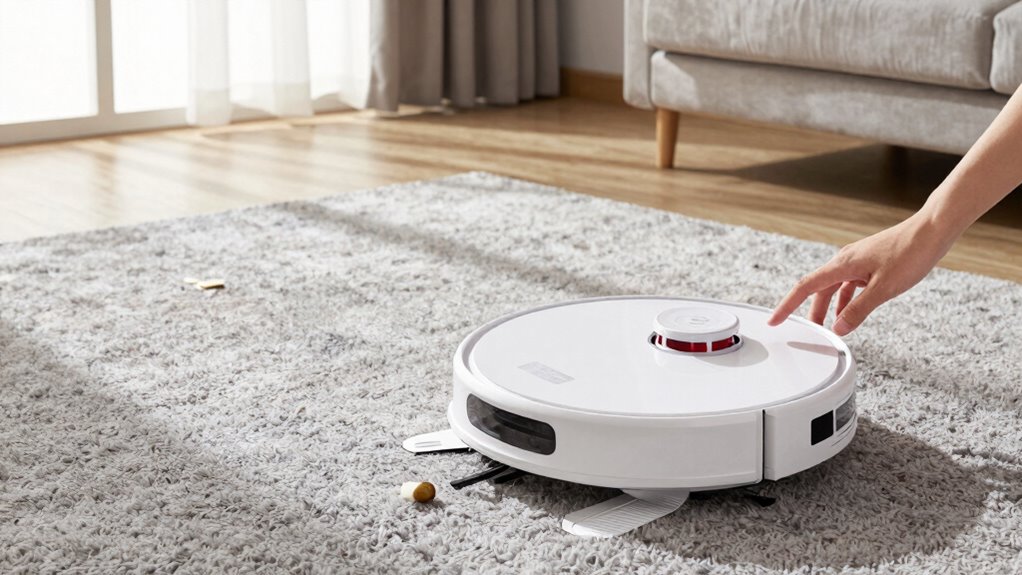
Have you ever wondered how robot vacuums can clean your home with minimal effort on your part? It’s pretty impressive how these devices can navigate around furniture, pick up dirt, and even empty their dustbins without your direct involvement. But despite their advanced technology, self-emptying robot vacuums still need your oversight. While they’re designed to be largely autonomous, understanding their limitations ensures you get the most out of them.
One aspect to consider is battery life. Even the most sophisticated robot vacuums have a finite battery capacity. When they run out of power, they need to return to their charging dock to recharge before completing the cleaning cycle. Sometimes, this means the vacuum might leave a room half-cleaned if it runs out mid-task, especially in larger spaces. Monitoring battery levels helps you schedule cleaning sessions more effectively, preventing incomplete jobs. You might also need to intervene if the robot gets stuck or encounters an obstacle that drains its battery prematurely. Overseeing Battery management is a crucial aspect of maintaining optimal performance. Understanding the navigation technology used by your vacuum can also help you anticipate and prevent potential issues.
Monitoring battery levels ensures your robot vacuums finish cleaning efficiently without leaving areas incomplete.
Noise levels are another factor that requires your attention. While robot vacuums are generally quieter than traditional vacuums, they still produce noise that can be disruptive, especially during quiet hours or when you’re working from home. Some models operate more quietly than others, but even the quietest can be noticeable. If you notice the vacuum making unusual noises or if it’s operating during sensitive times, you might need to pause or manually stop the device. Listening to how loud it gets can also alert you to potential maintenance issues, like a clogged brush or debris caught in the wheels, which could cause excessive noise or damage.
Beyond battery life and noise, your oversight is essential for maintaining the vacuum’s performance over time. Regularly checking filters, emptying the self-emptying bin when needed, and clearing obstructions keep the device operating smoothly. Though these vacuums empty themselves, they still require periodic human intervention to maintain optimal function. Additionally, unexpected issues like software glitches or navigation errors can arise, and your input or troubleshooting can prevent minor problems from becoming major. Regularly updating the vacuum’s firmware can improve its functionality and help prevent such issues. Familiarity with robot vacuum technology can also help you better understand how to troubleshoot and optimize your device’s performance.
In essence, self-emptying robot vacuums are a fantastic convenience, but they aren’t completely hands-off. Your oversight ensures they work efficiently, last longer, and keep your home cleaner. Keeping an eye on battery levels, noise, and general maintenance allows you to enjoy the benefits of automation without sacrificing control or cleanliness.
self-emptying robot vacuum filters
As an affiliate, we earn on qualifying purchases.
As an affiliate, we earn on qualifying purchases.
Frequently Asked Questions
How Long Do Self-Emptying Robot Vacuum Batteries Last?
Self-emptying robot vacuum batteries typically last around 1 to 3 years, depending on usage, with battery longevity influenced by charging cycles. Each cycle, from full charge to depletion, gradually wears down the battery. You’ll notice shorter run times over time. To maximize lifespan, avoid frequent full discharges and keep the vacuum charged properly. Regular maintenance helps guarantee the battery remains efficient for as long as possible.
Can Self-Emptying Vacuums Clean Multiple Types of Flooring?
Yes, self-emptying vacuums excel at multi-surface cleaning, effortlessly adapting to varied flooring types. You’ll appreciate their smooth floor shift performance, switching seamlessly from carpets to hard floors. However, occasional oversight helps optimize results, especially on tricky surfaces or uneven transitions. Your vigilance ensures thorough cleaning, preventing missed spots and maintaining peak performance across all your flooring, making your home cleaner and more comfortable.
Are Self-Emptying Vacuums Suitable for Pet Hair?
Self-emptying robot vacuums are generally suitable for pet hair removal, but they may struggle with thick or tangled fur. You’ll notice noise levels increase during heavy pet hair cleaning, which can be disruptive. While these vacuums handle pet hair well for daily maintenance, you might still need to manually clean the brushes or empty the bin occasionally to guarantee peak performance and prevent clogs.
What Is the Average Lifespan of a Self-Emptying Robot Vacuum?
On average, a self-emptying robot vacuum lasts about 3 to 5 years. You need to follow regular maintenance routines like cleaning filters and brushes to extend its lifespan. Recent technology advancements have improved durability, but components still wear out over time. You’ll want to stay vigilant and perform routine checks, as even the best models benefit from human oversight to keep them running smoothly and prolong their useful life.
Do These Vacuums Work Well in Cluttered or Tight Spaces?
Self-emptying robot vacuums often struggle with cluttered navigation and tight space maneuvering. You might find they get stuck or miss spots in cluttered areas because their sensors can’t handle complex arrangements well. Tight spaces can be challenging too, as their small size doesn’t always mean better agility in confined areas. You’ll need to monitor these vacuums closely in such environments to guarantee thorough cleaning.
Conclusion
Even with self-emptying robot vacuums, you’re not quite off the hook. Imagine a tiny robot taking on the Herculean task of managing your entire home’s dirt, yet still somehow needing your oversight—like a superhero with a sidekick. No matter how advanced they get, they can’t replace your eagle eye or your quick thinking. So, stay vigilant, because your perfect cleaning buddy still needs you to keep the chaos in check!
Halloween Picks
halloween
As an affiliate, we earn on qualifying purchases.