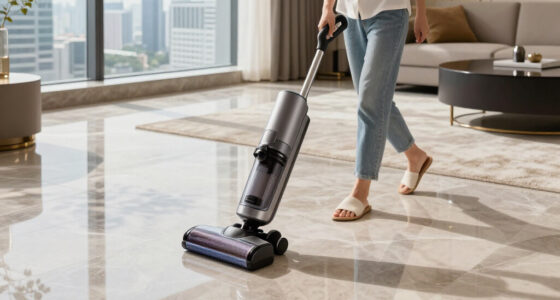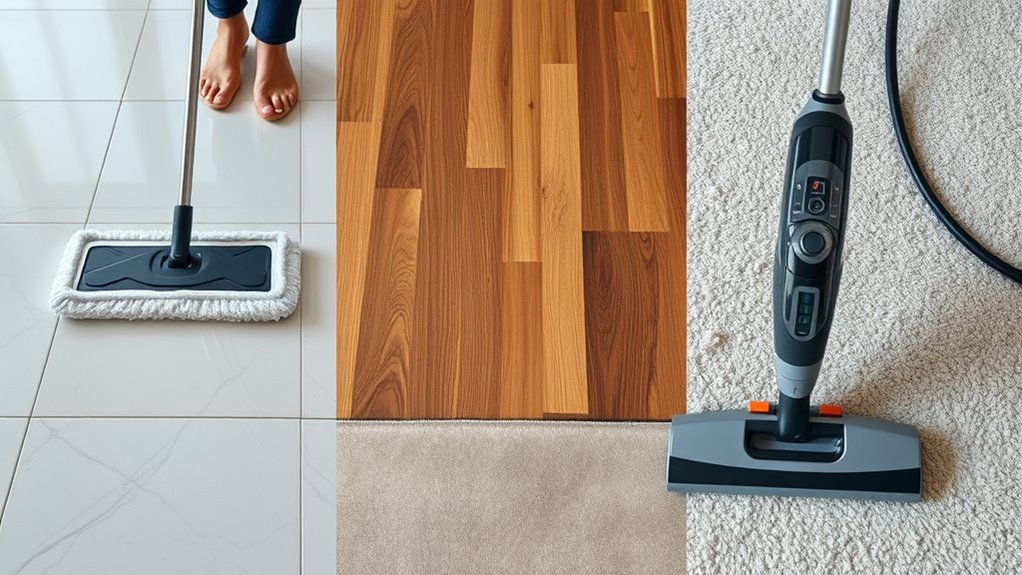

To clean different floor types effectively, use appropriate mopping techniques: for tile and ceramic floors, opt for gentle solutions and rinse frequently; for hardwood floors, use a damp mop with specific cleaning products and avoid excess water; for vinyl and linoleum, apply vinegar or compatible cleaners and change water often. Regular maintenance of your mop and equipment ensures ideal results and prevents damage. Want to discover more about tailored methods for each surface? Keep exploring to learn how.

Get cleaning gear delivered free with Prime
- Fast, free delivery on millions of items
- Prime Video, Amazon Music and more included
- Member-only deals all year
Key Takeaways
- Use mild, floor-specific cleaning solutions, avoiding harsh chemicals to prevent damage or discoloration.
- For tile and ceramic floors, rinse mop frequently and wring out excess water to protect grout lines.
- Damp mop hardwood floors with microfiber mops and a gentle solution to prevent warping or scratches.
- Apply diluted vinegar or suitable vinyl cleaners for vinyl and linoleum, rinsing often to remove grime.
- Regularly clean and inspect mop heads and equipment to maintain hygiene and effective cleaning across all floor types.

Choosing the right mopping method for your floor type is essential to keep your surfaces clean and undamaged. The type of flooring you have determines the cleaning solutions you should use and how you should maintain your equipment. Using inappropriate cleaning solutions can cause discoloration or deterioration, while neglecting equipment maintenance can lead to inefficient cleaning and even damage to your mop or bucket. To ensure your floors stay pristine, you need to understand the specific requirements of each surface and adjust your approach accordingly.
For tile and ceramic floors, you want to focus on using mild cleaning solutions that effectively remove dirt without causing harm. A simple mixture of warm water and a gentle tile cleaner usually works well. Be sure to rinse your mop frequently and wring it out thoroughly to prevent excess water from seeping into grout lines, which could lead to mold or deterioration over time. Regular equipment maintenance, such as cleaning your mop head after each use, keeps bacteria and residue from building up. This ensures your cleaning solutions remain effective and prevents spreading germs across your floors. Avoid using harsh chemicals that might damage the tile or cause discoloration; instead, stick to products designed specifically for tile surfaces. Proper equipment maintenance and choosing the correct solutions also help prevent bacterial buildup, which is important for health and hygiene.
If you’re cleaning hardwood floors, you need to be especially cautious with moisture. Excess water can warp or stain wood, so opt for a damp mop rather than a soaking wet one. Use a hardwood-specific cleaning solution, or a mix of water with a few drops of gentle dish soap. This combination cleans effectively without leaving excess moisture. Regular equipment maintenance, such as changing or rinsing your mop head frequently, ensures you’re not spreading dirt or introducing grit into the wood’s surface. Use a microfiber mop for better absorption and a gentle clean, and avoid aggressive scrubbing, which could scratch or damage the finish.
Vinyl and linoleum floors require cleaning solutions that are safe yet effective at removing dirt and grease. A diluted vinegar solution or a commercial vinyl floor cleaner works well, provided it’s compatible with your floor’s finish. Make sure to rinse your mop often and change the water frequently to prevent spreading grime. Proper equipment maintenance involves cleaning your mop head after each use and inspecting it for wear. This prevents dirt buildup that could scratch or dull the surface. Keep your mop’s components in good condition to ensure it functions smoothly and cleans thoroughly.
In all cases, consistent equipment maintenance and the correct choice of cleaning solutions are your best tools for keeping floors in top shape. Regularly cleaning your tools prevents bacteria buildup and maintains their effectiveness, making your mopping efforts more efficient. When you match the right solutions and keep your equipment in excellent condition, you not only extend the life of your floors but also achieve a cleaner, healthier environment.
microfiber mop for hardwood floors
As an affiliate, we earn on qualifying purchases.
As an affiliate, we earn on qualifying purchases.
Frequently Asked Questions
How Often Should I Mop Different Floor Types?
You should mop different floor types based on their material and your cleaning schedule. For high-traffic areas, mop hardwood or tile floors at least twice a week using the right mop material, like microfiber for better dirt removal. Less-used surfaces can be mopped once weekly. Always adapt frequency depending on dirt buildup, spills, or pets. Properly maintaining your mopping routine ensures your floors stay clean and in good condition.
Can I Use the Same Mop for Multiple Floor Types?
Using the same mop for multiple floor types can be risky, like wearing the same shoes for different terrains. Your mop material and cleaning solutions matter—microfiber mops work well on hardwood and tile, but may trap grit on delicate floors. To avoid damage, change or thoroughly clean your mop when switching surfaces, ensuring you protect your floors and keep them shining.
Are There Eco-Friendly Mopping Solutions for Specific Floors?
Yes, you can find eco-friendly solutions tailored for specific floors. Look for floor-specific detergents that are biodegradable and free from harsh chemicals. These eco-friendly solutions effectively clean without harming the environment or damaging your floors. Always choose products labeled as environmentally safe, and follow manufacturer instructions. By using these eco-friendly solutions, you protect your flooring and contribute to a healthier planet, making your cleaning routine both effective and sustainable.
How Do I Prevent Streaks on Polished Floors?
To prevent streaks on polished floors, focus on proper polish maintenance and streak prevention techniques. Use a clean, damp mop with a gentle, non-abrasive cleaner to avoid residue buildup. Always rinse your mop frequently and dry the floor with a microfiber cloth afterward to eliminate excess moisture. Regularly reapply polish as needed, and avoid using harsh chemicals that can dull or streak the surface. This approach keeps your floors shiny and streak-free.
What Safety Precautions Are Recommended When Mopping?
Think of floor cleaning as steering a busy street—you need safety gear to stay protected. Always wear non-slip shoes to prevent falls, gloves to avoid skin irritation, and a mask if using strong chemicals. Clear the area of obstacles, and follow manufacturer instructions for cleaning solutions. Keep cords out of the way, and work slowly on wet floors. These precautions help keep you safe while maintaining a clean, streak-free surface.
Conclusion
Choosing the right mopping method based on your floor type is like selecting the perfect brush for a masterpiece. Imagine each floor as a unique canvas—tile, hardwood, or laminate—demanding its own care to shine. When you match your technique to the surface, you’re not just cleaning; you’re restoring its natural beauty, much like a gentle artist revealing vibrant colors beneath layers of dust. With the right approach, your floors will look stunning and last longer.
Fall Picks
fall essentials
As an affiliate, we earn on qualifying purchases.