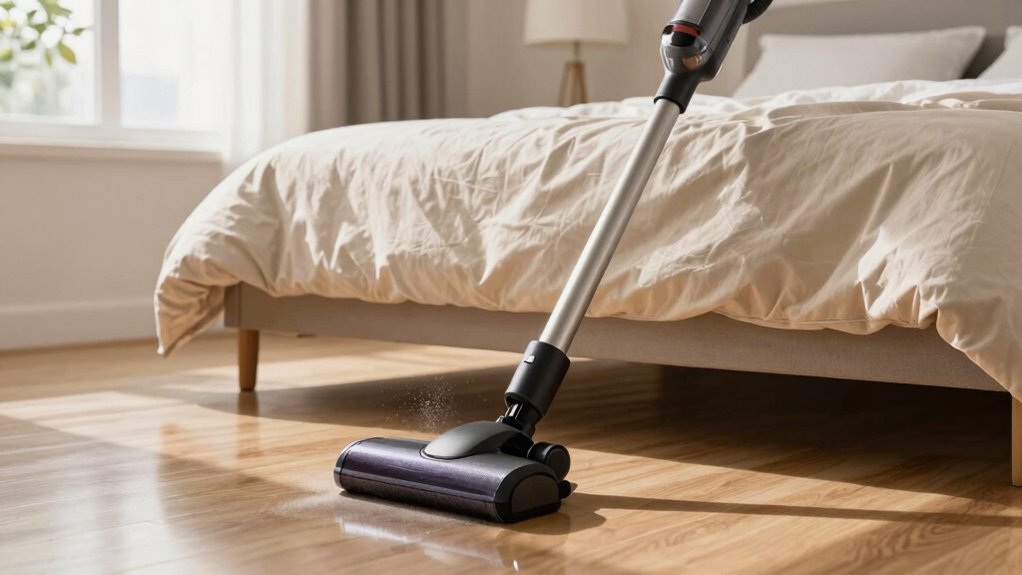
To clean under your bed without making dust fly, start by opening windows or running an exhaust fan to improve airflow. Use a slightly damp microfiber cloth or mop to gently wipe beneath the bed, avoiding dry dusting. Follow up with a HEPA vacuum close to surfaces to trap remaining dust without stirring it up. Keep the area well-ventilated and consider running an air purifier afterward for extra cleanliness—learn more about effective dust control strategies as you go.
Key Takeaways
- Use a slightly damp microfiber cloth or mop to gently lift dust without creating airborne particles.
- Keep windows open or run an air purifier during cleaning to improve airflow and reduce dust dispersion.
- Employ a vacuum with a hose attachment close to the surface to suck up dust without stirring it up.
- Prepare the area by opening windows and turning on exhaust fans before cleaning thoroughly.
- Follow damp cleaning with vacuuming to ensure all dust is effectively removed from under the bed.
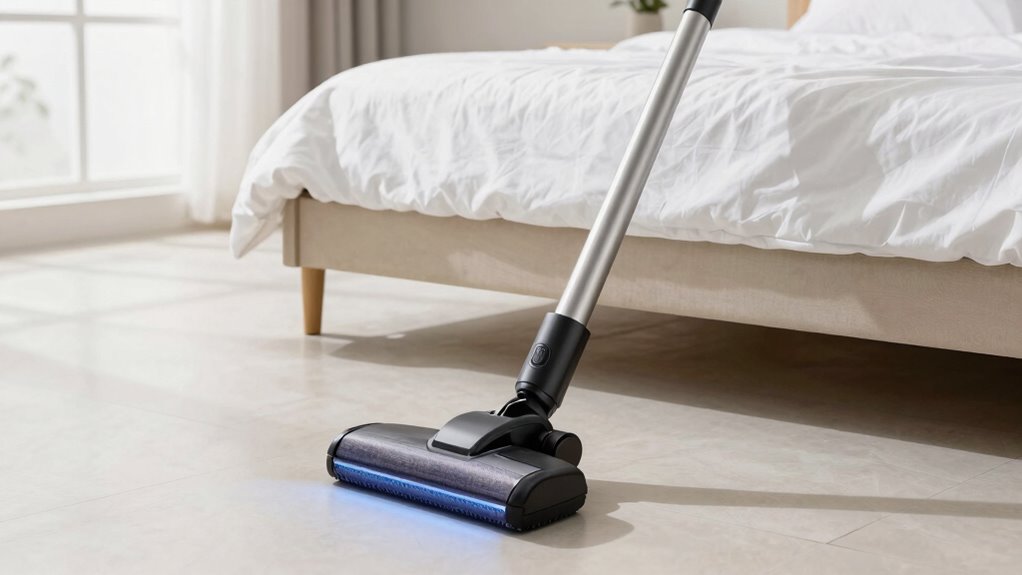
Cleaning under your bed can be a dusty, frustrating chore, especially when dust clouds rise with every sweep. You’ve likely experienced the dust storm that follows, settling on nearby furniture and making the whole process feel endless. But there’s a smarter way to tackle this task—one that minimizes dust flying everywhere. By focusing on air filtration and dust suppression, you can keep your space cleaner and breathe easier.
Start by preparing your space before you even reach for your cleaning tools. Open windows or turn on an exhaust fan to improve airflow. Good air filtration is key; using a HEPA filter vacuum cleaner can make a world of difference. HEPA filters trap tiny particles that standard vacuums might miss, preventing dust from simply being pushed around or released back into the air. As you vacuum, keep the nozzle close to the surface, but don’t press too hard. This helps lift dust rather than disturb it, keeping airborne particles to a minimum. For areas where dust tends to settle, like under the bed’s frame or corners, use a microfiber cloth or a damp cloth to trap dust without kicking it up.
Open windows and use a HEPA vacuum to trap dust and improve airflow during cleaning.
Dust suppression techniques are equally important. Instead of sweeping or dry dusting, opt for damp cleaning methods. Slightly dampen a microfiber cloth or a mop and run it along the floor and under the bed. The moisture grabs dust particles and prevents them from becoming airborne. If you’re using a vacuum with a hose attachment, keep the hose close to the surface to avoid stirring up dust clouds. For stubborn dust buildup, you may want to run a slightly damp mop or cloth first, then follow up with your vacuum for a thorough clean. Incorporating proper dust control practices can greatly reduce airborne particles during cleaning, especially when combined with air filtration devices like portable air purifiers with HEPA filters.
During the process, wear a mask if you’re sensitive to dust, and consider running an air purifier with a HEPA filter nearby. This will catch any dust particles that escape during cleaning, further reducing airborne dust. After you’ve finished, leave windows open or run the air purifier for a few extra minutes to clear out any residual dust. This way, you not only achieve a cleaner under-bed area but also maintain better air quality in your room. Implementing dust management strategies can make your cleaning routine more effective and healthier for you.
HEPA filter vacuum cleaner with hose attachment
As an affiliate, we earn on qualifying purchases.
As an affiliate, we earn on qualifying purchases.
Frequently Asked Questions
What Tools Are Safest for Cleaning Under Beds?
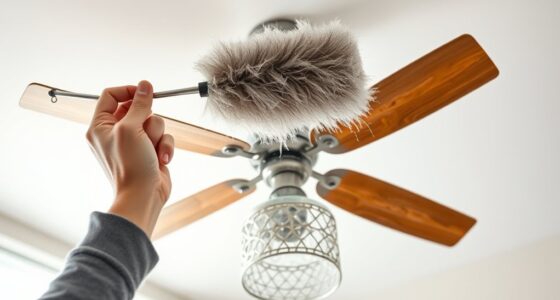
You should use tools that promote dust containment, like a vacuum with a HEPA filter and a long, narrow attachment, to clean under beds safely. Microfiber dusters with extendable handles can also help trap dust effectively without stirring it up. These tools prevent airborne dust, aiding allergy prevention, and keep your space cleaner. Always seal bags tightly after disposal to maintain dust containment and reduce allergens in your home.
How Often Should I Clean Under My Bed?
You should clean under your bed at least once a month to maintain mattress cleanliness and prevent dust mites. Regular cleaning helps remove accumulated dust, dirt, and allergens, promoting better air quality and healthier sleep. Use a gentle vacuum with an extendable attachment to reach tight spots without disturbing dust. Incorporate dust mite prevention by washing bedding weekly and keeping the area dry to reduce allergy triggers.
Can I Use a Vacuum With Pets Around?
Yes, you can use a vacuum around pets. Choose one with a HEPA filter to effectively trap pet hair, dander, and allergens, helping with allergen control. Make sure to select a vacuum with good suction and a brush attachment designed for pet hair removal. Always supervise your pets during cleaning to keep them safe, and regularly clean or replace filters to maintain peak performance.
What Are Eco-Friendly Cleaning Options?
Imagine a cleaner world—eco-friendly cleaning options make that possible. You can opt for sustainable cleaning by choosing natural products like vinegar, baking soda, and lemon, which cut through grime without harming the environment. These options are safe for pets and family, too. By switching to natural products, you embrace sustainable cleaning practices that protect our planet while keeping your home fresh and spotless.
How Do I Reach Tight Spaces Easily?
To reach tight spaces easily, use a small, flexible cleaning accessory compatible with your vacuum or duster. Focus on maneuvering techniques like angling the tool and using gentle, deliberate movements to navigate narrow gaps. This allows you to access tricky spots without hassle or dust flying everywhere. Make sure your tools are compatible with your device, so switching between attachments is smooth and effective, making cleaning tight spaces a quick, simple task.
Conclusion
Now that you’ve discovered this game-changing method, cleaning under your bed becomes an effortless breeze—no dust clouds, no sneezing fits, just pristine floors and fresh air. Imagine transforming what used to be a dreaded chore into a swift, elegant ritual that leaves your space spotless and your lungs happy. With this technique, you’ll conquer dust like a cleaning maestro, turning chaos into calm with a single sweep. Say goodbye to dust storms forever—your perfect, dust-free sanctuary awaits.