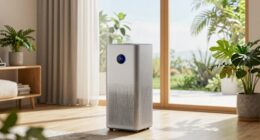
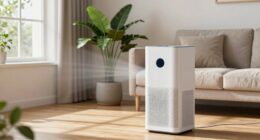
To reduce allergens in your bedroom, choose hypoallergenic bedding and wash sheets weekly in hot water. Use an air purifier with a HEPA filter, keeping it running consistently, and replace filters regularly. Keep your space clutter-free, vacuum with a HEPA vacuum, and dust surfaces with a damp cloth. Consider hard flooring over carpets and use allergen-proof covers on your mattress and pillows. Small, regular updates can make a big difference in allergy relief. Learn more tips below.
Key Takeaways
- Use HEPA filters in air purifiers and operate them continuously to trap airborne allergens.
- Wash bedding weekly in hot water (at least 130°F) and use hypoallergenic covers on mattresses and pillows.
- Vacuum carpets and rugs regularly with a HEPA-filter vacuum and consider replacing them with washable or hard flooring.
- Dust surfaces frequently with a damp cloth and reduce clutter to minimize dust accumulation.
- Maintain a consistent cleaning routine, including filter replacements, to ensure ongoing allergy relief.
Are allergies making your bedroom unbearable? If so, it’s time to take some targeted steps to reduce airborne allergens and create a more comfortable space. One of the most effective ways to start is by focusing on your air purifier selection. Not all air purifiers are created equal, so look for models with high-efficiency particulate air (HEPA) filters designed to trap dust mites, pet dander, pollen, and other common allergens. Make sure the purifier is appropriately sized for your room, so it can circulate air efficiently. Running it consistently—preferably 24/7—can considerably cut down allergy triggers and improve your sleep quality. Keep in mind, an air purifier isn’t a one-time fix; regular filter replacements are essential to maintain its effectiveness.
Beyond air purifiers, your bedding material choices play a vital role in allergy management. Opt for hypoallergenic bedding that resists dust mites and mold growth. Materials like tightly woven cotton or hypoallergenic synthetic fabrics are better options than traditional feather or down comforters, which can harbor allergens. Consider using allergy-proof covers for mattresses and pillows; these create a barrier that blocks dust mites and other microscopic irritants from penetrating your bedding. Wash your sheets, pillowcases, and blankets weekly in hot water—at least 130°F—to kill dust mites and remove accumulated allergens. Avoid heavy or textured fabrics that trap dust and make cleaning more difficult.
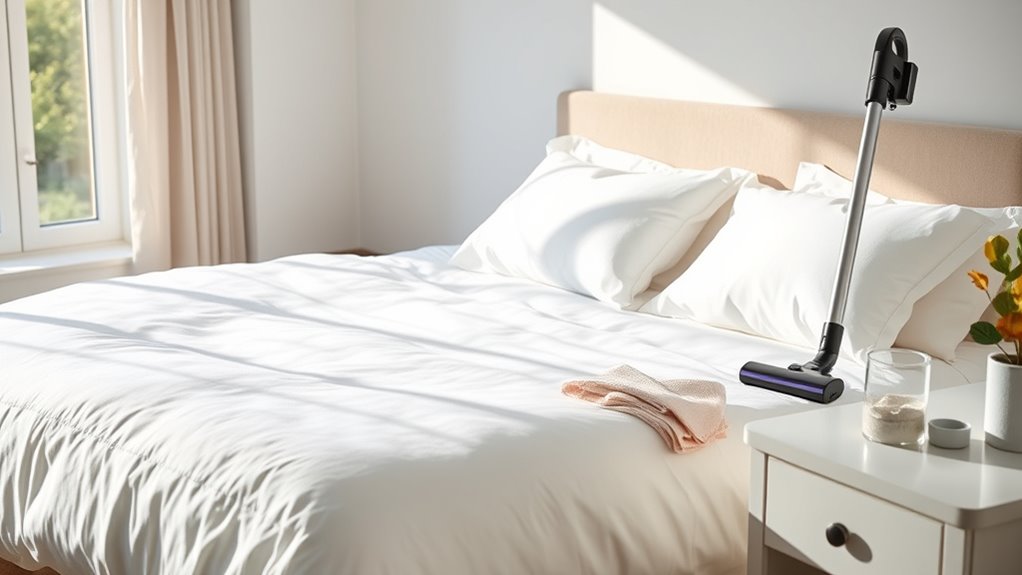
Incorporating these bedding material choices into your routine complements the benefit of a good air purifier, creating a layered defense against allergens. Keep your bedroom clutter-free because dust and allergens tend to settle on unnecessary items. Vacuum carpets and rugs regularly with a HEPA-filter vacuum cleaner, and consider removing carpets altogether if you’re highly sensitive, replacing them with washable rugs or hard flooring. Dust surfaces frequently with a damp cloth to prevent stirring up dust, and don’t forget to clean curtains and upholstery. Remember, the key is consistency—regular cleaning and maintenance are your best allies in making your bedroom an allergy-friendly sanctuary. Small changes in your bedding and air quality management can lead to noticeable relief, helping you breathe easier and enjoy restful sleep every night. Additionally, choosing a home theater projector with high contrast ratios can minimize the need for darkened rooms, making it easier to maintain a bright, allergen-reducing environment.
Frequently Asked Questions
How Often Should I Replace My Bedding for Allergy Reduction?
You should replace your bedding every 1 to 2 weeks to maintain an allergy-friendly environment. Stick to a consistent bedding replacement schedule to reduce dust mites and allergens. Opt for allergy-friendly fabric choices like tightly woven cotton or hypoallergenic materials, which help prevent allergen buildup. Regularly washing and replacing bedding minimizes triggers, making your bedroom a healthier space. Prioritize these habits for effective allergy reduction and better sleep quality.
Are Natural Cleaning Products Effective Against Common Bedroom Allergens?
Think of natural cleaning products as gentle warriors in your battle against allergens. Their chemical effectiveness depends on ingredient safety, which allows them to tackle dust mites and pet dander without the harshness of synthetic chemicals. While they may not always be as potent as traditional cleaners, their mild yet effective nature makes them a wise choice for reducing bedroom allergens, creating a safer, healthier sanctuary for your sleep.
Can Air Purifiers Improve Allergy Symptoms in Bedrooms?
Yes, air purifiers can improve your allergy symptoms in bedrooms. Look for models with HEPA filters, which trap tiny allergens like dust mites and pet dander effectively. make certain of good air circulation by placing the purifier in strategic spots and keeping doors and windows open when possible. Regularly changing filters and maintaining your air purifier helps keep allergens low, making your bedroom a more comfortable, allergy-free space.
What Are the Best Storage Solutions to Minimize Dust Accumulation?
Imagine waking up feeling refreshed, free from sneezing fits. To achieve this, you should use closet organizers and under bed storage to keep dust off surfaces. These solutions reduce clutter, making it easier to clean thoroughly and prevent dust from settling. Regularly organizing your bedroom with these storage options minimizes dust accumulation, helping you breathe easier and enjoy a healthier, allergy-friendly space every day.
Do Hypoallergenic Mattresses Significantly Reduce Allergy Symptoms?
Yes, hypoallergenic mattresses can substantially reduce allergy symptoms. They help prevent dust mites and allergens from settling into your bedding. Using hypoallergenic bedding and mattress protection creates a barrier against allergens, keeping your sleep environment cleaner. Regularly washing bedding and vacuuming your mattress also helps. These steps work together to minimize allergy triggers, making your bedroom a healthier, more comfortable space for you.
Conclusion
By regularly cleaning your bedroom with allergy-reduction methods, you create a healthier space that minimizes triggers and improves sleep. Some might think it’s too much effort, but the benefits outweigh the work—fewer sneezes, clearer breathing, and better overall well-being. Plus, once you establish a routine, it becomes second nature. So, don’t let dust and allergens take over your sanctuary; take control today and enjoy a fresher, allergy-friendly bedroom every night.