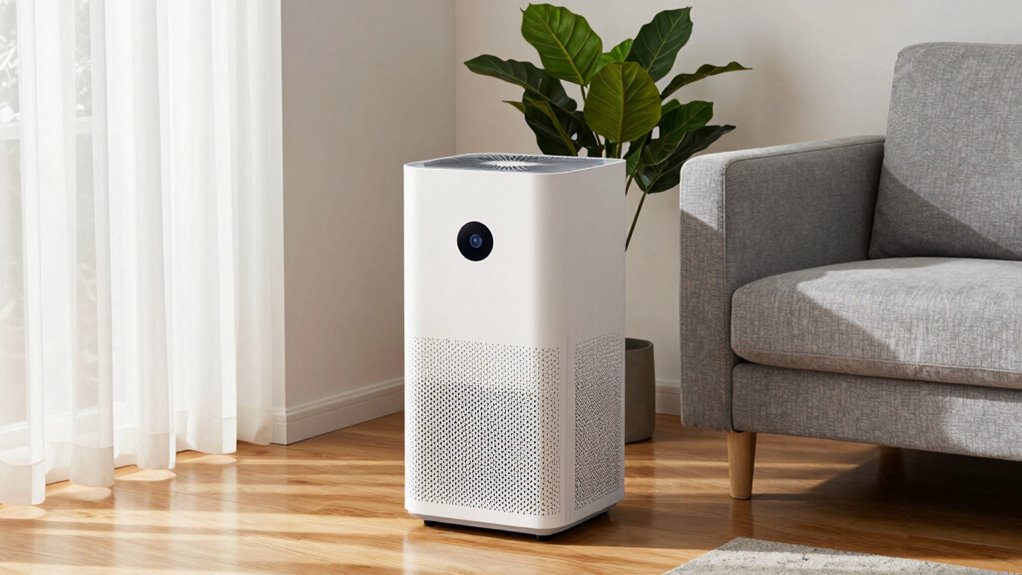

The key to maximizing your air purifier’s effectiveness is proper placement. Position it in high-traffic or frequently used rooms, away from walls, windows, and sources of moisture or heat. Keep it clear of vents and guarantee good airflow around the device. Avoid placing it near sleep or work areas if noise is an issue. By understanding these simple tips, you can dramatically improve indoor air quality—plus, you’ll discover more about optimizing placement along the way.
Key Takeaways
- Place the air purifier in a central location away from walls and obstructions to ensure optimal airflow and filtration.
- Avoid positioning near windows, doors, or vents to prevent outdoor air interference and energy loss.
- Keep the device away from moisture, heat sources, or high-traffic areas to prevent damage and improve efficiency.
- Balance noise levels by choosing quieter models or placing them away from sleep and work zones.
- Experiment with different spots to find the position that maximizes air circulation and filtration effectiveness.

Placing your air purifier in the right spot can considerably improve your indoor air quality. Many people overlook this essential step, assuming the device works just by being turned on, but placement makes a significant difference. If you want cleaner air and better overall health, it’s important to position your air purifier strategically. When you choose the right location, you guarantee it captures airborne pollutants effectively, whether dust, pet dander, or smoke particles. Poor placement can reduce its efficiency, meaning you might not see the air quality improvements you’re expecting. So, think about high-traffic areas or rooms where you spend most of your time, like your living room or bedroom, and position your purifier there.
Proper placement of your air purifier boosts air quality and overall health.
Another key aspect to weigh is noise levels. Air purifiers aren’t silent, but some models generate more noise than others. When you place your purifier near you—say, on a nightstand or desk—it’s essential to find a spot where noise won’t disrupt your sleep or concentration. Many units have different fan speeds; setting it to a lower setting can reduce noise, but this might also lower its effectiveness. Conversely, placing the purifier far from your usual seating or sleeping area might keep noise to a minimum, but it could sacrifice air quality if the air in that space isn’t circulating well. Striking the right balance between noise and performance is key. If noise levels bother you, look for models designed with quieter operation in mind or consider placing your purifier in a corner of the room where it won’t directly interfere with your daily activities. Additionally, understanding air circulation and how it affects purifier efficiency can help you choose the best spot for optimal results. Proper airflow around the device ensures better filtration and overall performance. It’s also helpful to consider room size when positioning the purifier to ensure it’s capable of effectively cleaning the air in the space.
Furthermore, understanding how air quality varies in different parts of your home can guide you in selecting the most effective placement. You should also avoid placing your air purifier near sources of moisture or heat, such as bathrooms or near heating vents, because these can interfere with its operation or cause damage. Keep it away from windows or doors where outdoor air might blow in and reduce its efficiency. Positioning it where air can flow freely around the device guarantees top performance, rather than blocking vents or placing it in cramped spots that restrict airflow.
Ultimately, the best spot for your air purifier depends on your room layout and personal preferences. Experiment with different locations to see where it performs best without creating excessive noise or inconvenience. Remember, a well-placed air purifier doesn’t just improve air quality; it also makes your environment more comfortable and healthier to live in.
As an affiliate, we earn on qualifying purchases.
Frequently Asked Questions
How Often Should I Replace the Air Purifier Filters?
You should replace your air purifier filters based on the filter lifespan, which typically ranges from three to six months, depending on usage and air quality. Check the manufacturer’s recommendations for replacement frequency, as filters can become less effective over time. Regularly inspecting your filters helps guarantee ideal air quality, so mark your calendar or set reminders to swap them out before they lose their efficiency.
Can Multiple Air Purifiers Improve Air Quality Faster?
Yes, using multiple air purifiers can clear the air faster, like a whirlwind sweeping through a room. To maximize their effect, focus on airflow optimization—place them strategically for even coverage. Keep noise considerations in mind, so they don’t disturb your peace. Proper placement and balancing the number of units help improve air quality quickly without creating chaos or discomfort.
Is It Better to Place the Purifier Near a Window?
Placing your air purifier near a window isn’t ideal because it can reduce airflow efficiency and let in outside pollutants. Instead, focus on window placement for airflow optimization by keeping the purifier in central locations away from windows and vents. This guarantees better air circulation throughout the room. Proper placement helps your purifier work more effectively, capturing pollutants before they spread, and improves overall indoor air quality.
Do Air Purifiers Work Effectively in Large Open Spaces?
Yes, air purifiers work effectively in large open spaces if you focus on airflow enhancement and room size compatibility. You need a unit with sufficient capacity to cover the entire area, guaranteeing good circulation. Position it centrally or in high-traffic zones, avoiding obstructions. This setup maximizes efficiency, helps filter out pollutants better, and guarantees clean air throughout your space. Always choose an air purifier suited for the room’s size for best results.
How Do I Know if My Air Purifier Is Working Properly?
You’ll know your air purifier works properly if you notice cleaner air and fewer odors. Regular air purifier maintenance, like changing filters on time, guarantees it runs efficiently. Check the filter lifespan suggested by the manufacturer—when it’s due for a new filter, replace it. Also, listen for unusual noises or reduced airflow, which might indicate a problem. Consistent upkeep keeps your purifier functioning at its best and improves indoor air quality.
Conclusion
Think of your air purifier as a lighthouse guiding your home’s health through foggy, polluted waters. By placing it thoughtfully, you’re not just filtering air—you’re illuminating a safe harbor for your family’s well-being. Don’t underestimate this simple step; it’s the beacon that keeps hidden dangers at bay. When you position it wisely, you’re anchoring your home in clarity and clean air, ensuring a brighter, healthier future for everyone under your roof.