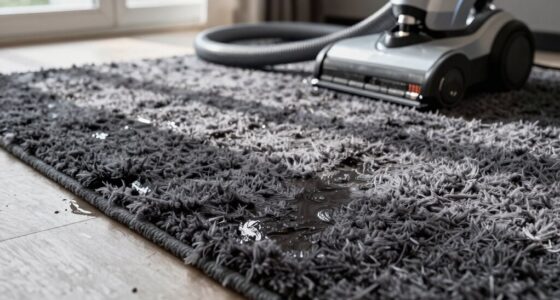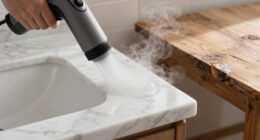
When cleaning around delicate surfaces, always use gentle techniques and appropriate tools to avoid scratches or damage. Test cleaning solutions on small areas first, and never rub or apply excessive pressure. Use soft cloths, microfiber, or gentle brushes to remove dust and stains carefully. Follow manufacturer instructions for specific surfaces, and choose eco-friendly products whenever possible. Staying cautious will help your surfaces stay beautiful and intact—keep exploring to discover even more tips for safe cleaning.
Key Takeaways
- Always test cleaning solutions on small areas before applying broadly to prevent damage.
- Use gentle tools like microfiber cloths or soft brushes to avoid scratching delicate surfaces.
- Follow manufacturer guidelines to ensure proper cleaning methods and avoid voiding warranties.
- Avoid excessive moisture; dampen cloths sparingly to protect moisture-sensitive materials.
- Prioritize eco-friendly products and techniques to maintain surface integrity and environmental health.

Have you ever struggled to clean surfaces that are easily scratched or damaged? If so, you’re not alone. Delicate surfaces, like glass, antique wood, or soft stone, require a careful approach to cleaning that prevents harm while still removing dirt and grime. Understanding how to handle these surfaces is essential to maintaining their beauty and integrity. One key aspect is mastering proper stain removal techniques. When dealing with stubborn stains, you need to be gentle and avoid harsh chemicals that can etch or discolor the material. Instead, opt for mild solutions tailored to the surface type—like a mixture of water and a gentle soap for wood or a specialized cleaner for glass. Always test a small, inconspicuous area first to ensure the solution won’t cause damage. When removing stains, patience is your best ally. Blot rather than rub, which can spread the stain or scratch the surface. Use soft cloths or sponges, and avoid abrasive scrubbers that can leave marks or scratches. For surfaces like marble or polished stone, quick action helps prevent stains from setting in, but always remember to be gentle in your approach. Additionally, understanding the importance of biodiversity in our environment highlights the need for careful and sustainable cleaning practices that do not harm delicate ecosystems. Incorporating eco-friendly cleaning methods can also help preserve the natural integrity of these surfaces and their surroundings. Being aware of environmental impact can guide you toward more sustainable choices that benefit both your surfaces and the planet. Using appropriate cleaning tools designed specifically for delicate surfaces can make a significant difference in achieving safe, effective cleaning. Dusting delicate surfaces requires a different set of dusting techniques. Instead of harsh or sweeping motions, use a feather duster or a microfiber cloth that attracts dust without scratching. Light, gentle strokes are more effective and safer, especially on fragile or intricately designed surfaces. When dusting, avoid applying too much pressure, as this can cause damage or dislodge delicate finishes. If the surface is textured or has crevices, use a soft brush or compressed air to reach into hard-to-access areas without risking scratches. Regular dusting is better than waiting for buildup, which can be harder to remove and increase the risk of damage during cleaning. It is also helpful to understand the material composition of your surfaces, as different materials require different cleaning techniques and products. Also, keep in mind that some delicate surfaces are sensitive to moisture, so damp cloths should be used sparingly. Always follow the manufacturer’s guidelines for cleaning to prevent voiding warranties or causing unintended harm. By understanding the proper cleaning techniques, you can extend the lifespan and maintain the beauty of your delicate surfaces more effectively.
microfiber cleaning cloth for delicate surfaces
As an affiliate, we earn on qualifying purchases.
As an affiliate, we earn on qualifying purchases.
Frequently Asked Questions
Can I Use Homemade Cleaning Solutions on Delicate Surfaces?
You can use homemade solutions on delicate surfaces, but you need to prioritize surface safety. Stick to gentle ingredients like vinegar diluted with water or mild dish soap. Always test a small, hidden area first to make sure it doesn’t cause damage. Avoid harsh chemicals or abrasive scrubbers. By choosing safe, homemade solutions, you protect your delicate surfaces and keep them looking their best without risking harm.
How Often Should Delicate Surfaces Be Cleaned?
You should clean delicate surfaces regularly enough to prevent dirt buildup, but not so often that you risk damage. Using eco-friendly options and professional cleaning tips, aim for gentle cleaning once a week or as needed, especially in high-touch areas. Think of delicate surfaces like fragile art—cleaning with care preserves their beauty, reminding you that mindfulness in maintenance protects their integrity over time.
Are There Specific Tools Best for Cleaning Delicate Surfaces?
You should use microfiber tools and soft brushes when cleaning delicate surfaces. Microfiber cloths are gentle yet effective at trapping dust and dirt without scratching, making them ideal. Soft brushes help loosen debris without damaging fragile materials. Avoid harsh scrubbers or abrasive cleaners, and always test a small area first. Using the right tools guarantees your delicate surfaces stay pristine and undamaged during cleaning.
What Are Common Mistakes to Avoid When Cleaning Delicate Surfaces?
Avoid common mistakes like using harsh chemicals or abrasive tools that can damage delicate surfaces. Always prioritize surface protection by choosing gentle cleaners and soft cloths. Be cautious with chemical safety—read labels carefully and test a small area first. Rushing or applying too much pressure can cause scratches or discoloration. Taking these precautions guarantees you preserve the integrity of your surfaces while cleaning effectively.
How Do I Remove Stubborn Stains Without Damaging Delicate Materials?
Removing stubborn stains from delicate materials is like trying to untangle a knot—patience is key. You should use eco-friendly products designed for sensitive surfaces and apply them gently. Opt for professional techniques, like light blotting instead of harsh scrubbing, to avoid damage. Test any cleaner on a small, hidden area first. This approach guarantees you lift stains safely without compromising the integrity of the delicate surface.
Conclusion
Now that you know the secrets to cleaning around delicate surfaces, you’re practically a cleaning ninja! Remember, a gentle touch can save your favorite surfaces from a fate worse than a paper cut—damage that’s almost impossible to repair. Treat your delicate items like royalty, and they’ll reward you with lasting beauty. With these tips, you’ll keep your home looking pristine without risking a tiny mistake turning into a cleaning catastrophe. You’ve got this—clean like a pro!